CNC Machining Aluminum vs Stainless Steel: Which Metal Is Right for Your Part?
For CNC machined parts, aluminum is the right choice when weight reduction, thermal conductivity, and machining speed are your priorities, while stainless steel is the right choice when corrosion resistance, strength, and wear resistance dominate your design requirements. Aluminum 6061-T6 offers a tensile strength of 45,000 psi and machines at roughly 3 times the speed of stainless steel 304, but stainless steel maintains its mechanical properties at temperatures up to 870°C. Your final decision hinges on the operating environment, mechanical load, and total cost of ownership, not just the raw material price per kilogram.
What Are the Key Mechanical Differences Between Aluminum and Stainless Steel?
The fundamental mechanical difference lies in strength-to-weight ratio and hardness. Aluminum 6061-T6 has a density of 2.70 g/cm³, while stainless steel 304 has a density of 8.00 g/cm³, making steel nearly three times heavier for the same volume. In terms of yield strength, stainless steel 304 offers 30,000 psi, which is higher than aluminum 6061-T6's 40,000 psi yield strength is actually misleading because aluminum is typically used in thicker sections to compensate for its lower modulus of elasticity (10,000 ksi versus 28,000 ksi for steel). For stiffness-critical applications like frames or enclosures, stainless steel provides superior rigidity without requiring additional material thickness, whereas aluminum parts often need ribbing or increased wall thickness to achieve equivalent deflection resistance.
Hardness also differentiates these metals significantly. Aluminum 6061-T6 has a Brinell hardness of 95, while stainless steel 304 measures 123 on the Brinell scale. This affects not only wear resistance but also surface finishing quality after machining, as stainless steel can hold a finer surface finish down to Ra 0.4 micrometers without additional processing, while aluminum typically requires anodizing or polishing to achieve similar smoothness.
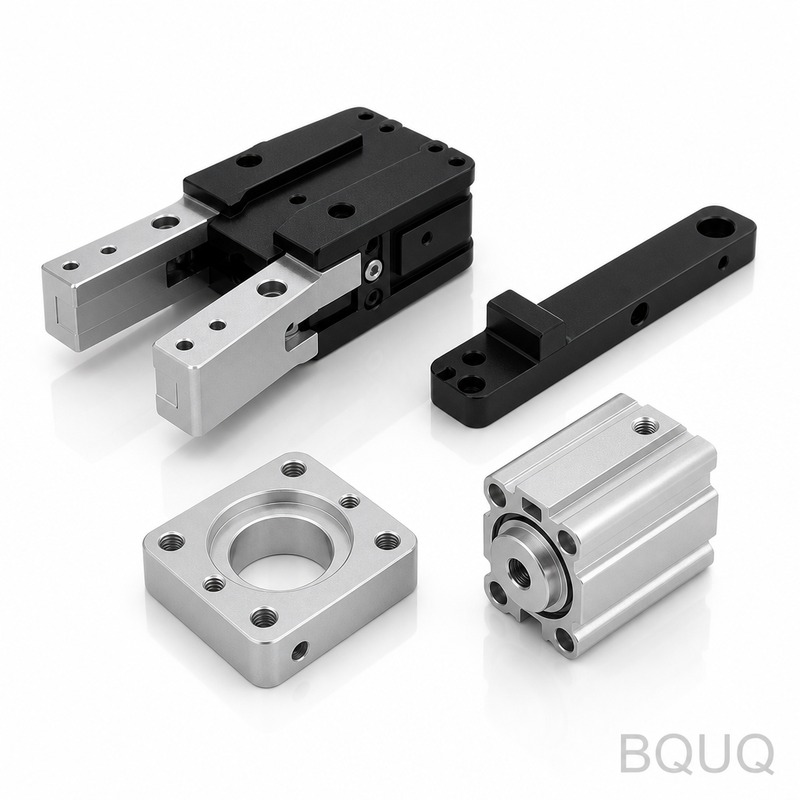
How Do Machining Costs Compare Between Aluminum and Stainless Steel?
Machining cost differences are substantial and directly impact your per-part price. Raw material costs for aluminum 6061 average 2.80 USD per kilogram, while stainless steel 304 averages 3.50 USD per kilogram, but the real cost divergence appears in machining time and tool wear. Aluminum can be machined at spindle speeds of 8,000 to 12,000 RPM with feed rates up to 0.15 mm per tooth, whereas stainless steel requires reduced speeds of 3,000 to 5,000 RPM and feed rates of 0.05 to 0.08 mm per tooth to prevent work hardening.
Tool life also varies dramatically. Carbide end mills machining aluminum can last 4 to 6 hours of continuous cutting, while the same tools machining stainless steel typically last 1.5 to 2 hours before requiring replacement. This translates to a 25 to 35 percent higher machining cost per part for stainless steel when factoring in machine time, tooling, and labor. For a typical bracket part measuring 100 mm by 50 mm by 10 mm, aluminum machining costs approximately 18 to 25 USD per part, while the same geometry in stainless steel costs 28 to 38 USD per part, representing a 55 percent cost increase.
| Property | Aluminum 6061-T6 | Stainless Steel 304 |
| Density (g/cm³) | 2.70 | 8.00 |
| Tensile Strength (psi) | 45,000 | 75,000 |
| Yield Strength (psi) | 40,000 | 30,000 |
| Hardness (Brinell) | 95 | 123 |
| Thermal Conductivity (W/m·K) | 167 | 16.2 |
| Max Service Temperature (°C) | 150 | 870 |
| Relative Machining Cost per Part | 1.0x | 1.55x |
| Typical Surface Finish (Ra, µm) | 0.8 | 0.4 |
Why Does Corrosion Resistance Matter for Your Application?
Corrosion resistance is often the deciding factor between these metals, and the difference is not simply about rusting. Aluminum naturally forms a protective oxide layer that prevents further corrosion in atmospheric conditions, but this layer breaks down in chloride-rich environments such as saltwater or de-icing chemicals, leading to pitting corrosion at rates of 0.5 to 1.0 mm per year. Stainless steel 304 contains 18 percent chromium and 8 percent nickel, creating a passive film that resists corrosion in most environments, with a pitting resistance equivalent number (PREN) of 19, making it suitable for food processing, marine, and chemical applications.
For outdoor enclosures or components exposed to humidity, stainless steel is the safer choice if the part must survive more than 10 years without protective coating. Aluminum requires anodizing (typically 5 to 25 micrometers thickness) or powder coating to achieve comparable corrosion resistance, adding 5 to 15 percent to the part cost. However, in controlled indoor environments with relative humidity below 60 percent, bare aluminum 6061-T6 performs adequately for 5 to 8 years without significant corrosion, making it a cost-effective option for consumer electronics and automotive interior components.
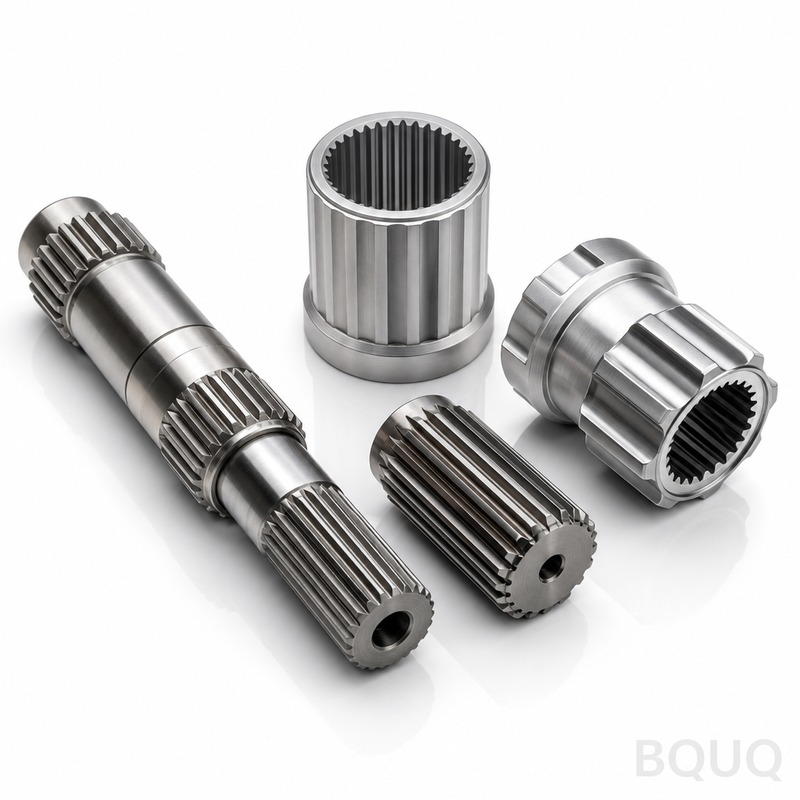
Which Applications Suit Aluminum CNC Machining Best?
Aluminum is the optimal material for applications where weight reduction is critical, thermal management is required, or part complexity demands fast machining cycles. The aerospace industry uses aluminum 7075-T6 for structural components because its strength-to-weight ratio of 196 kN·m/kg outperforms stainless steel's 94 kN·m/kg, enabling significant fuel savings in aircraft. Heat sinks for electronics are almost exclusively aluminum because its thermal conductivity of 167 W/m·K is 10 times higher than stainless steel's 16.2 W/m·K, allowing efficient heat dissipation from CPUs and power modules.
Prototyping and low-volume production also favor aluminum because of its machinability. A complex housing with multiple pockets and drilled holes can be machined from aluminum in 45 minutes, while the same part in stainless steel requires 2 hours and 15 minutes. Aluminum's lower cutting forces also allow for thinner wall sections down to 0.5 mm, enabling lighter designs that would be impractical in stainless steel. For automotive components that do not require high-temperature resistance, such as brackets, covers, and pulley systems, aluminum offers the best balance of performance and cost.
When Should You Specify Stainless Steel Instead of Aluminum?
Specify stainless steel when your part must operate in corrosive environments, bear high static or dynamic loads, or function at elevated temperatures above 150°C. Medical instruments and surgical tools must use stainless steel 316L because it is biocompatible and can withstand repeated autoclave sterilization at 121°C without degradation. Food processing equipment requires stainless steel to meet FDA and NSF regulations, as aluminum can react with acidic foods and contaminate products.
For structural components under repeated cyclic loading, stainless steel's higher fatigue strength of 34,000 psi at 10 million cycles outperforms aluminum's 14,000 psi at the same cycle count, reducing the risk of fatigue failure in springs, fasteners, and load-bearing frames. In high-temperature applications such as exhaust components, furnace parts, or engine manifolds, stainless steel maintains its strength up to 870°C, while aluminum begins to lose mechanical properties above 150°C and melts at 660°C. Stainless steel is also preferred for parts requiring a superior surface finish, as it can be polished to a mirror finish of Ra 0.1 micrometers, which is impossible to achieve on aluminum without specialized plating.
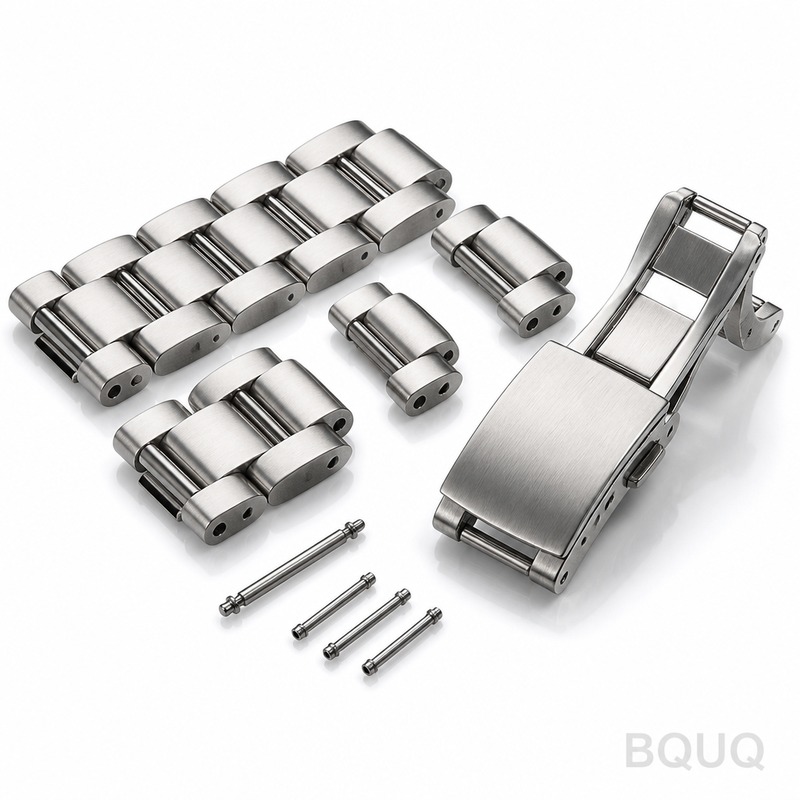
How Do Thermal Properties Influence Material Selection?
Thermal performance is a critical differentiator that engineers often overlook during initial design. Aluminum's thermal conductivity of 167 W/m·K makes it the default choice for heat sinks, cooling plates, and LED housings where heat must be transferred away from sensitive components. A typical aluminum heat sink for a 100-watt LED can maintain a junction temperature of 85°C with a thermal resistance of 0.5°C/W, while an equivalent stainless steel heat sink would require 4 times more surface area to achieve the same thermal performance.
Conversely, stainless steel's low thermal conductivity of 16.2 W/m·K is advantageous for applications requiring thermal insulation, such as vacuum flasks, high-temperature gaskets, or components near heat sources that must not conduct heat to surrounding parts. Stainless steel also has a lower thermal expansion coefficient of 17.3 micrometers per meter per degree Celsius compared to aluminum's 23.6, meaning stainless steel parts maintain dimensional stability better in fluctuating temperature environments, which is essential for precision instruments and measurement equipment.
What Surface Finishing Options Are Available for Each Metal?
Surface finishing options differ significantly between aluminum and stainless steel, affecting both aesthetics and functional performance. Aluminum can be anodized in a variety of colors with thicknesses from 5 to 25 micrometers, providing a hard, wear-resistant surface with a hardness of 300 to 400 HV, which is ideal for consumer products requiring both corrosion protection and visual appeal. Hard anodizing can achieve a coating thickness of 50 micrometers, increasing surface hardness to 500 HV and improving wear resistance by 10 times compared to bare aluminum.
Stainless steel cannot be anodized, but it can be electropolished to achieve a bright, smooth surface with reduced surface roughness and improved corrosion resistance. Passivation treatments using nitric or citric acid remove free iron from the surface, enhancing the natural oxide layer and increasing corrosion resistance by up to 30 percent. For both metals, powder coating is available, but stainless steel typically requires no coating for most applications, while aluminum often benefits from a protective layer to prevent galvanic corrosion when in contact with dissimilar metals.
Can You Weld or Join These Metals in CNC Machined Assemblies?
Welding and joining considerations are crucial for multi-part assemblies. Aluminum 6061-T6 is weldable using TIG or MIG processes with a 5356 filler wire, but the heat-affected zone loses its heat-treated strength, dropping to 50 percent of its original tensile strength in the weld area. This necessitates post-weld heat treatment for structural applications, adding cost and lead time. Stainless steel 304 is readily weldable using standard TIG or MIG methods with 308L filler wire, and the weld retains 85 percent of its original strength without post-weld treatment.
For mechanical fastening, aluminum requires careful consideration of galvanic corrosion when using steel fasteners, necessitating insulating washers or aluminum-compatible fasteners. Stainless steel fasteners are directly compatible with stainless steel parts, simplifying assembly and reducing the risk of corrosion at joints. Threads in aluminum also have lower pull-out strength, requiring longer thread engagement or thread inserts for high-load applications, while stainless steel threads maintain integrity with standard engagement lengths.
What Are the Most Common Questions About Aluminum vs Stainless Steel CNC Machining?
How Much Weight Can You Save by Using Aluminum Instead of Stainless Steel?
You can save approximately 66 percent of the part weight by switching from stainless steel to aluminum for the same geometry. For a typical 1-kilogram stainless steel part, the equivalent aluminum part weighs only 0.34 kilograms, which is critical for aerospace, automotive, and portable device applications where every gram matters.
Which Metal Has Better Dimensional Stability During Machining?
Stainless steel has better dimensional stability because its thermal expansion coefficient is 27 percent lower than aluminum, meaning less thermal distortion during cutting. However, aluminum's higher machinability allows for easier control of thin features, but you must account for spring-back and thermal growth when holding tight tolerances below 0.05 mm.
Can Aluminum Parts Be Used in Food Contact Applications?
Bare aluminum is not recommended for food contact due to potential reactions with acidic foods. However, anodized aluminum is FDA-approved for dry food contact, but for wet or acidic food processing, stainless steel 304 or 316 is the mandatory choice due to its non-reactive nature and ease of sanitation.
What Is the Maximum Part Size for Each Material in CNC Machining?
For CNC machining, aluminum parts can be produced up to 2000 mm by 1000 mm by 500 mm depending on the machine bed size, while stainless steel is limited to 1500 mm by 800 mm by 400 mm due to weight and rigidity constraints. Larger stainless steel parts require special fixturing and increased machining time, adding 40 to 60 percent to the cost.
How Long Does Tooling Take for Aluminum vs Stainless Steel Parts?
Tooling fabrication time is identical for both materials, typically 3 to 7 days for custom fixtures. However, machining cycle time is 2 to 3 times longer for stainless steel, extending overall lead time from 7 to 10 days for aluminum to 12 to 18 days for stainless steel parts.
Does Stainless Steel Require Special Cutting Tools?
Stainless steel requires carbide tools with specialized coatings such as TiAlN (titanium aluminum nitride) to withstand the high cutting temperatures and prevent work hardening. Standard HSS tools are adequate for aluminum but will fail quickly on stainless steel, increasing tooling costs by 20 to 30 percent.
Which Metal Is More Recyclable After the Part's Service Life?
Both aluminum and stainless steel are 100 percent recyclable, but aluminum recycling consumes only 5 percent of the energy required for primary production, while stainless steel recycling saves about 60 percent of energy. Aluminum scrap commands a higher recycling value at approximately 1.20 USD per kilogram versus 0.80 USD per kilogram for stainless steel scrap.
What Is the Best Approach for Choosing Between Aluminum and Stainless Steel?
The best engineering approach is to evaluate your part's functional requirements first, then calculate the total cost of ownership over the product's lifecycle. If your part operates in a corrosive environment, experiences temperatures above 150°C, or must withstand high cyclic loads, stainless steel is the correct choice despite its higher initial cost. If weight reduction, thermal management, or rapid prototyping are your primary needs, aluminum delivers superior performance at a lower cost. For medium-volume production runs, request quotes for both materials with your specific geometry and compare the final cost per part, including surface treatment. BQUQ's engineering team can provide a detailed material comparison for your specific application within 12 hours. Contact us at sc@bquq.com or WhatsApp +86 13713157787, or visit www.bquq.com to submit your drawings for an immediate quote.
Related Articles
- Custom CNC Machining Services: A Complete Guide for Engineers
- How Much Does CNC Machining Cost in 2026? A Complete Pricing Guide
- CNC Turn-Mill Composite Machining, Turn-Mill Machine Tools, One-Time Forming, B-Axis Turn-Mill Center, Multi-Process Integration, Complex Rotary Part Machining, Medical Device Precision Machining