CNC Machining Lead Times: How Long Does Your Part Really Take?
**Opening: Direct Answer**
For a standard CNC machining project, you can expect a lead time of **3 to 5 business days** for simple prototypes and **2 to 4 weeks** for production runs of 100 to 1,000 parts. However, this is a moving target: the single largest variable is not machine speed but **material sourcing and surface finishing**, which together account for up to 40% of total calendar time. At BQUQ, we compress this by maintaining a 50-ton aluminum and steel inventory on-site, but even we cannot bypass the physics of chip removal and thermal stabilization.
---
Section 1: The Three Hard Timelines You Must Know
CNC machining lead time is not one number but three distinct phases. Understanding these separates a realistic schedule from a fantasy.
| Phase | Typical Duration | Percentage of Total Lead Time | Key Driver | :--- | :--- | :--- | :--- | **Quoting & DFM Review** | 4 – 24 hours (BQUQ: 12 hours max) | 2% – 5% | Complexity of 2D/3D drawing review | **Material Procurement** | 1 – 5 days (standard alloys) | 15% – 30% | Mill lead times, not machine time | **Machining & Secondary Ops** | 1 – 10 days | 40% – 60% | Number of setups, tool changes, tolerance density | **Surface Finishing & QC** | 1 – 3 days | 10% – 20% | Anodizing, passivation, CMM inspection |
|---|
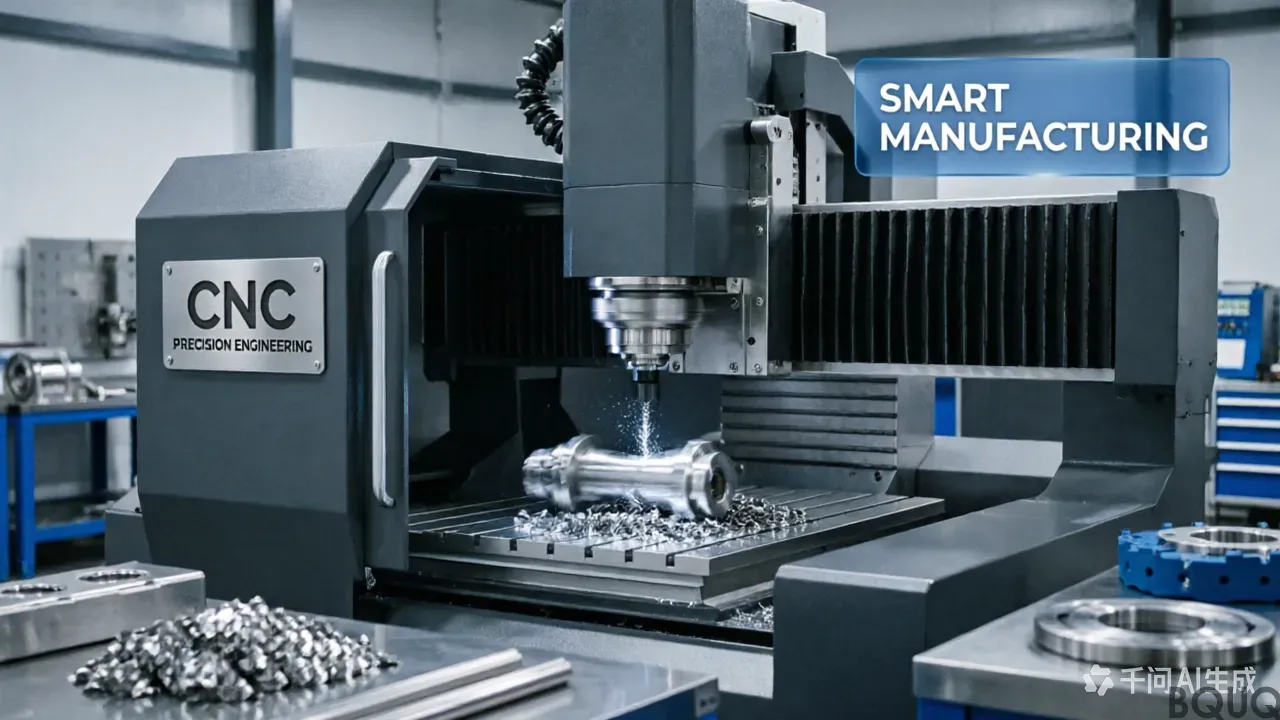
**Real Example:** A 6061-T6 aluminum bracket (120mm x 80mm, 6mm thick) with 4 drilled holes and a ±0.05mm tolerance. At BQUQ, this takes **2.5 hours of actual spindle time**, but the total lead time is **3 days** because we pull from stock and skip anodizing. If you demand hard anodizing (per MIL-A-8625F, Type III, 50 microns), add **2 full days** for the bath and sealing process.
---
Section 2: Material Sourcing – The Hidden Time Trap
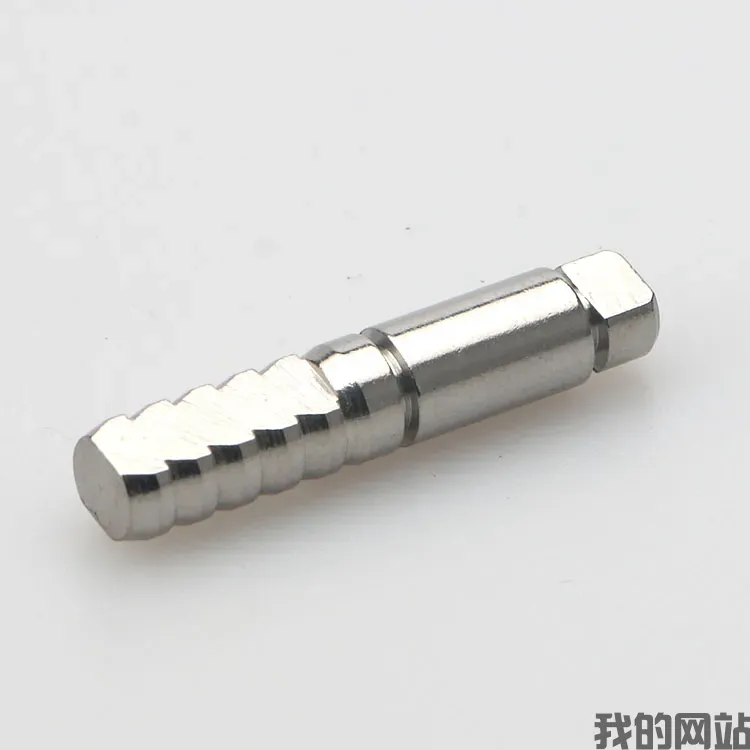
Your CAD file is ready, but the aluminum billet is not. This is the most common miscalculation in lead time planning.
- **Common Stock (6061-T6, 304 Stainless, 12L14 Steel):** 1-2 days if the supplier has local distribution. Price impact: negligible (material cost is typically 5-8% of part cost). - **Exotic Alloys (Inconel 718, Ti-6Al-4V, 17-4PH H1025):** 5-15 days. Titanium specifically requires slower spindle speeds (30-40% reduction) to prevent work hardening, adding 20% to machining time. - **Plastic (PEEK, PTFE, Delrin):** 2-4 days. PEEK is hygroscopic; if it absorbs moisture, it will warp during machining. We pre-bake PEEK at 150°C for 4 hours to stabilize, which is a step most job shops skip.
**Engineering Reasoning:** Do not kick off a CNC project until you have confirmed the physical billet is on your shop's floor. A purchase order for material can take 3 days to process at the mill, even if the metal is "in stock" locally.
---
Section 3: Machining Time vs. Cycle Time vs. Lead Time
We must distinguish between three metrics that engineers often confuse. This confusion is the root cause of "why is my part late?"
1. **Cycle Time (Spindle Time):** The actual time the tool is cutting. For a typical aluminum part, this is 15-45 minutes. For steel, 30-90 minutes. 2. **Machining Time (Total Shop Floor Time):** Cycle time plus setup, tool changes, probing, and first-article inspection. This adds 45-90 minutes per setup. 3. **Lead Time (Calendar Time):** Machining time plus queuing, waiting for QC, and administrative delays.
**Specific Numbers from BQUQ Production Floor:** - **3-axis CNC Mill (10,000 RPM, BT30 taper):** Setup time is 35 minutes average. Tool change is 4 seconds per tool. - **5-axis CNC Mill (12,000 RPM, CAT40):** Setup time is 1.5 hours due to trunnion calibration. But it eliminates 2 separate operations, saving 3 hours of handling on complex parts.
We run a **24/5 operation** (Monday 7:00 AM to Saturday 7:00 AM). If your part hits the floor on Wednesday morning, it will be done by Friday night. If it hits Friday afternoon, it will sit idle until Monday. Plan your RFQ release for Tuesday or Wednesday.
---
Section 4: Tolerance and Geometry – The Cost of Perfection
Tighter tolerances do not just cost more money; they cost more time. This is because of **thermal growth**.
| Tolerance Grade | Typical Application | Machining Time Multiplier | Temperature Control Required | :--- | :--- | :--- | :--- | ±0.1 mm | General fit, non-critical | 1.0x (baseline) | Workshop ambient (25°C) | ±0.025 mm | Precision automotive, bearing housings | 1.4x | Machine warm-up 30 min, coolant at 22°C ± 1°C | ±0.005 mm | Aerospace, optical mounts | 2.2x | Full climate control (20°C ± 0.5°C), in-process probing every 3 parts |
|---|
**The Hidden Cost:** At ±0.005mm, a 100mm aluminum part will expand by **0.021mm** for every 10°C rise in temperature. If the shop is hot at 3 PM, your part will be out of spec. We mitigate this by scheduling tight-tolerance work at 6 AM when the shop is at thermal equilibrium, but this delays your part by one day for "thermal soak."
---
Section 5: Surface Finishing and Secondary Operations
Machining is only half the story. The finish is where lead times balloon. Here is the brutal timeline breakdown:
- **Clear Anodize (Type II, 5-10 microns):** 1-2 days. This includes racking, etching (which removes 0.005mm of material), anodizing, and sealing in boiling DI water. - **Hard Anodize (Type III, 50 microns):** 2-3 days. The bath is run at 0-4°C (32-39°F) with high current density. It is slow by design to build up thickness. - **Electroless Nickel (MIL-C-26074):** 2-3 days. The plating rate is 0.5-1.0 micron per hour. A 25-micron coating requires 25-50 hours of immersion. - **Powder Coating (Class A finish):** 2 days. Curing at 200°C for 10 minutes, but the parts must cool slowly to avoid warping.
**Critical Warning:** Anodizing is a chemical process. If you specify a thickness, the anodizer must remove the part from the line to measure it, which adds 4 hours to the batch. Do not specify "hard anodize" if you only need cosmetic black. You will pay 3x and wait 2 extra days.
---
Section 6: How to Compress Lead Time – The 4-Step Engineering Method
You cannot change physics, but you can change your specification. Here is how to get parts in 48 hours instead of 10 days.
1. **Eliminate Secondary Operations:** Design the part so it does not need anodizing. Use a polished finish (Ra 0.8 microns) on 6061-T6; it has adequate corrosion resistance for indoor use. This saves 2 days. 2. **Use Standard Stock Sizes:** Design to 25.4mm, 50.8mm, or 101.6mm thickness. We cut from stock bars; if we must order a 12mm plate because your drawing specifies 12.3mm, we lose 4 days waiting for the mill. 3. **Reduce Tolerance Density:** Tighten the critical 3 dimensions to ±0.01mm, but let everything else float to ±0.1mm. This allows us to use a faster feed rate (from 0.05mm/rev to 0.15mm/rev), cutting machining time by 30%. 4. **Confirm Surface Finish Requirements:** If you write "Ra 3.2" but the part is a bracket, we will use a faster roughing pass and a quick finish pass. If you write "Aerospace Finish," we will add a polishing pass that takes 30 minutes per part. Be specific.
---
Data Table: Real BQUQ Production Lead Times (2025 Baseline)
| Material | Part Complexity | Quantity | Tolerance | Surface Finish | Total Lead Time | Price per Part (USD) | :--- | :--- | :--- | :--- | :--- | :--- | :--- | 6061-T6 Aluminum | Simple (2D plate, 4 holes) | 10 | ±0.05mm | None (Mill Finish) | **3 days** | $18 | 6061-T6 Aluminum | Simple (2D plate, 4 holes) | 100 | ±0.05mm | Clear Anodize | **6 days** | $12 | 304 Stainless Steel | Medium (3D pocket, threads) | 50 | ±0.025mm | Passivated | **8 days** | $45 | Ti-6Al-4V Grade 5 | Complex (5-axis, thin walls) | 20 | ±0.01mm | Bead Blast | **14 days** | $160 | PEEK (Natural) | Simple (insulator, 2 holes) | 30 | ±0.05mm | None | **5 days** | $38 |
|---|
*Lead times include BQUQ quoting (12 hours) and assume material is in stock. Prices are for reference only, based on Q1 2025 cost structure.*
---
FAQ-Style Engineering Tips
**Q: Can I get a part in 24 hours?** A: Yes, but only if it is a simple geometry (less than 10 features) in 6061-T6 or 12L14 steel, with no finishing, and you pay a 100% rush surcharge. We will assign a dedicated machine, but the setup alone is 35 minutes, so the part must be cut in under 20 minutes of cycle time.
**Q: Why does a 5-axis part take longer than a 3-axis part?** A: Because 5-axis programming is 3-4 hours of CAM work versus 1 hour for 3-axis. The machine time is similar, but the programming and post-processor setup is the bottleneck. If you have a 5-axis part, send us the STEP file plus a PDF drawing; we can cut programming time by 40% by using feature recognition.
**Q: Does running the machine 24/7 help my lead time?** A: Only if your part does not require operator intervention. If it is a long run (over 500 parts), we run lights-out with a bar feeder and robot. For a 10-part prototype, the machine will finish in 3 hours but sit waiting for inspection. The lead time is QC, not machining.
---
Conclusion: The 80/20 Rule of CNC Lead Time
Eighty percent of CNC lead time is not cutting metal. It is waiting for material, waiting for anodizing, waiting for your approval of the first article, and waiting in the queue. The other twenty percent is actual machining. At BQUQ, we have spent 20 years eliminating the "waiting" for our customers by keeping 50 tons of stock, running a 24/5 shift, and using in-house CMM inspection so we never outsource quality control.
The fastest way to reduce your lead time is to send us a complete drawing with clear tolerance callouts and a confirmed material grade. Do not leave the finish blank, do not spec "medical grade" if you only need "clean."
**Get Your Timeline Today:** We provide a DFM review and a firm lead time quote within 12 hours of receiving your RFQ. No vague estimates, no hidden delays.
**Contact BQUQ:** - Email: sc@bquq.com - WhatsApp: +86 13713157787 - Website: www.bquq.com
Send us your 3D model and 2D drawing today. We will tell you exactly how long it takes, down to the hour.
Related Articles
- Rail Track Equipment Manufacturing 2025: Safety-Critical Precision and 5 Tolerance Standards
- CNC Precision Turned Parts for Medical Devices: Guide
- CNC Machine Maintenance Guide for Maximum Uptime: 2025 Calibration Schedule
Frequently Asked Questions
What is the typical lead time for a standard CNC machining project?
For standard CNC machining, simple prototypes take 3 to 5 business days, while production runs of 100 to 1,000 parts take 2 to 4 weeks. The largest time variables are material sourcing and surface finishing, which together account for up to 40% of total calendar time.
How long does material sourcing take for common alloys like 6061-T6 aluminum?
Common stock such as 6061-T6 aluminum, 304 stainless, or 12L14 steel typically takes 1-2 days if the supplier has local distribution. Material cost is usually only 5-8% of part cost. BQUQ maintains a 50-ton on-site inventory to compress this timeline.
How much extra time does hard anodizing add to a CNC machining project?
Hard anodizing per MIL-A-8625F Type III at 50 microns adds 2 full days for the bath and sealing process. For example, a 6061-T6 aluminum bracket with ±0.05mm tolerance takes 2.5 hours of spindle time and 3 days total lead time without anodizing, but 5 days with it.
Why do exotic alloys like titanium or Inconel take longer to machine?
Exotic alloys such as Inconel 718, Ti-6Al-4V, and 17-4PH H1025 require 5-15 days for material procurement. Titanium specifically needs 30-40% slower spindle speeds to prevent work hardening, which adds 20% to machining time compared to standard aluminum.