CNC Machining vs 3D Printing: The 2026 Prototype Decision Guide
CNC Machining vs 3D Printing: Which Is Better for Prototypes in 2026?
**Direct Answer:** For functional prototypes requiring production-grade materials, tight tolerances (below ±0.05 mm), or accelerated mechanical testing, CNC machining remains the superior choice in 2026. 3D printing wins for rapid visual models, complex internal geometries, and early-stage design iterations where material properties are secondary. The decision hinges on your prototype's purpose: verifying form versus validating function.
The Fundamental Shift in Prototyping Economics (2026)
The prototype landscape has changed dramatically since 2020. Industrial 3D printing (SLS, MJF, and metal DMLS) has seen price-per-part drops of 35-40%, while 5-axis CNC machining centers now offer automated pallet systems that reduce setup labor by 50%. However, the core physics have not changed: additive builds parts layer-by-layer (typically 20-100 microns thick), while subtractive machining starts from a solid billet, preserving the material's original grain structure.
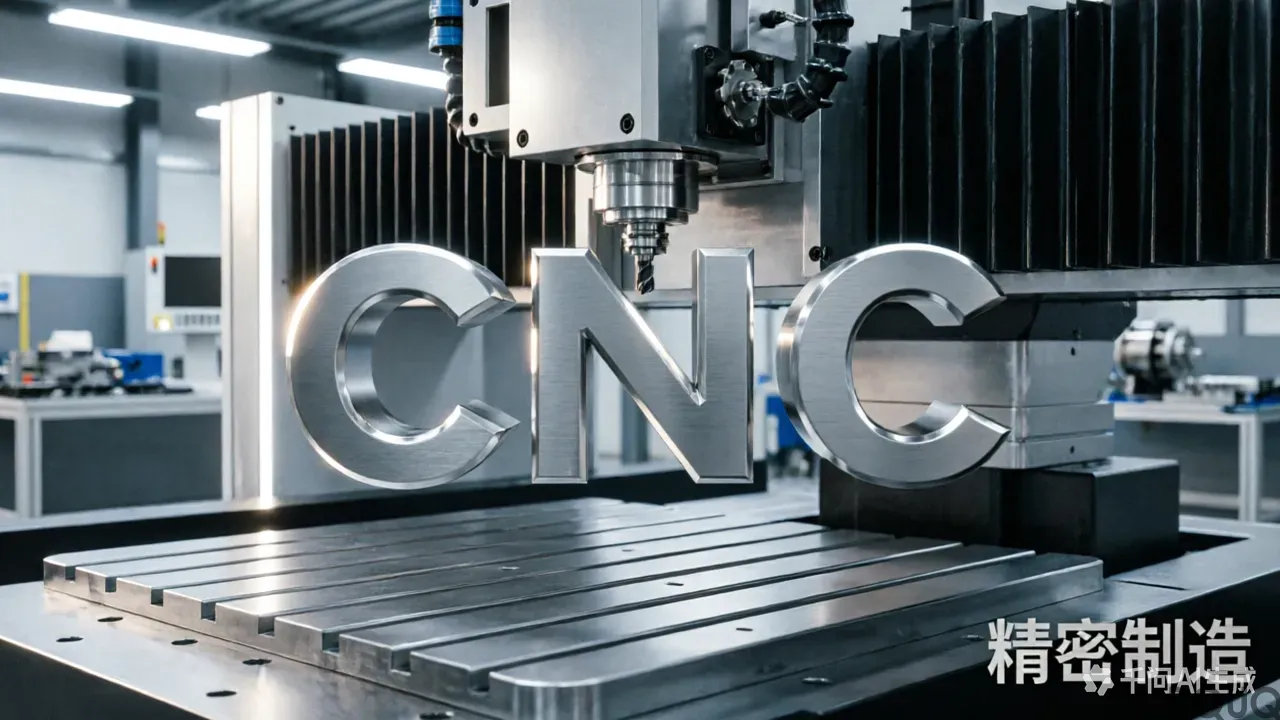
This intrinsic difference dictates the performance envelope. A CNC-machined 6061-T6 aluminum prototype will exhibit a yield strength of 276 MPa, identical to a production part. A 3D-printed AlSi10Mg part, even after T6 heat treatment, typically reaches only 230-250 MPa yield strength due to micro-porosity (0.5-1.5% void content). For 2026, engineers must stop asking "which is cheaper" and start asking "which preserves design intent under load."
Material Properties: The Uncompromising Variable
When your prototype must survive a drop test, thermal cycling, or thread stripping, material integrity is non-negotiable. CNC machining uses certified bar stock or plate with traceable metallurgy. 3D printing uses powders with recycled content ratios that vary by supplier.
| Property (Test Condition) | CNC Machined (ABS) | 3D Printed FDM (ABS) | CNC Machined (6061-T6 Al) | 3D Printed DMLS (AlSi10Mg) | --- | --- | --- | --- | --- | Tensile Strength (MPa) | 43-48 | 28-36 (weaker at Z-axis) | 310 | 230-260 (after T6) | Elongation at Break (%) | 15-20 | 4-10 | 12-17 | 6-9 | Surface Roughness (Ra, μm) | 0.8 - 1.6 (as machined) | 8 - 15 (layer lines) | 0.4 - 1.6 | 5 - 10 (bead blast required) | Max Operating Temp (°C) | 80 (continuous) | 60 (softening) | 200+ | 250+ (after HIP) | Dimensional Tolerance (mm) | ±0.025 (typical) | ±0.2 to ±0.5 (shrinkage) | ±0.05 (standard) | ±0.1 to ±0.2 (thermal stress) | Lead Time (parts in 1-10 qty) | 3-5 days (BQUQ standard) | 1-3 days (in-house) | 3-5 days | 5-7 days (+ heat treat) |
|---|
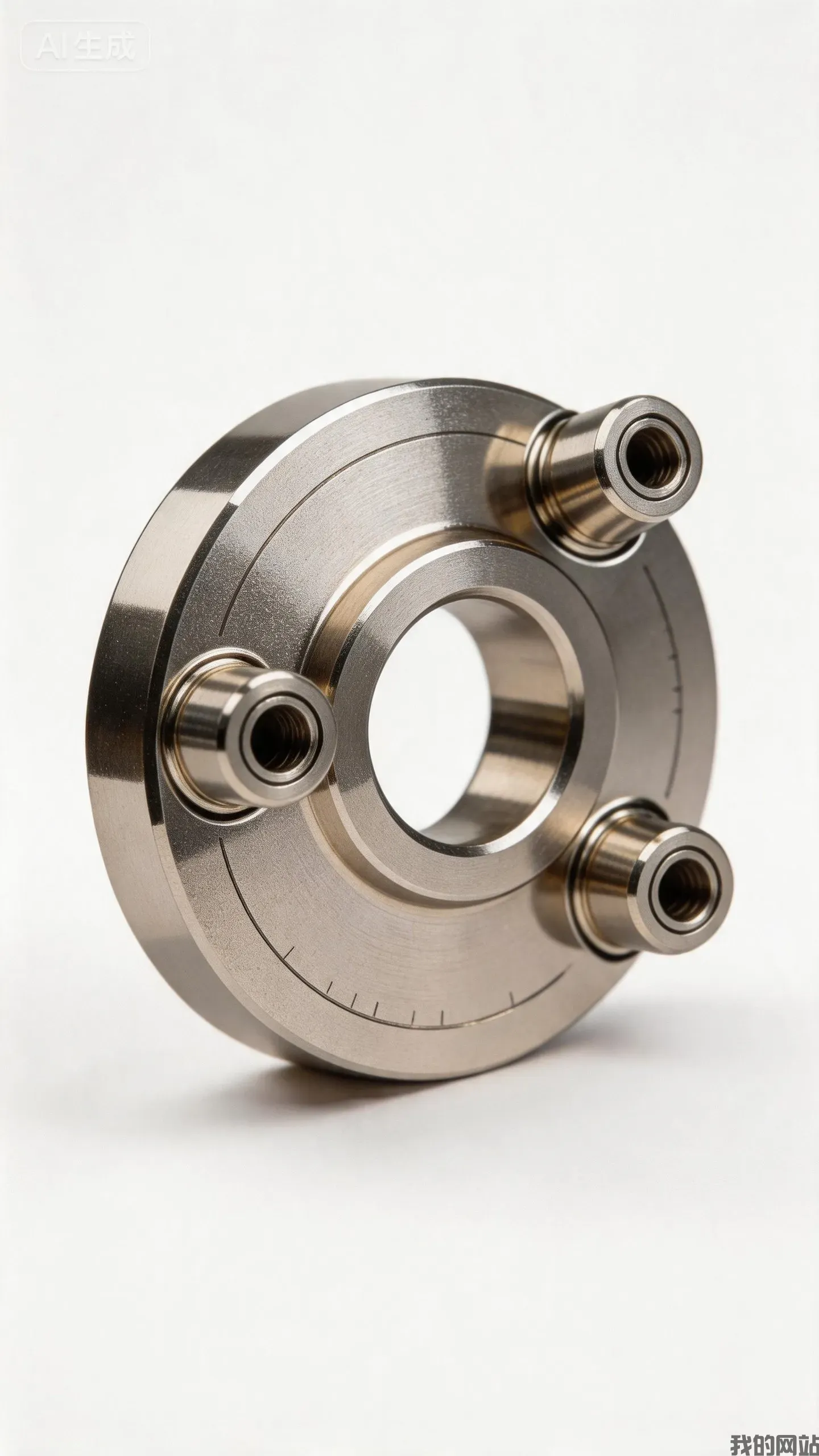
**Key takeaway:** The table above shows a 2-3x reduction in elongation for 3D-printed polymers. For snap-fit enclosures or living hinges, only CNC-machined polypropylene or acetal will survive repeated flexing beyond 100 cycles without cracking.
Tolerance and Surface Finish: Where CNC Irrefutably Wins
In 2026, standard CNC machining centers hold ±0.025 mm (0.001 inch) on features up to 50 mm. High-precision jig grinding can achieve ±0.005 mm. 3D printing, even with advanced closed-loop control on systems like the HP Multi Jet Fusion, struggles to hold better than ±0.2 mm on vertical walls due to thermal contraction during cooling.
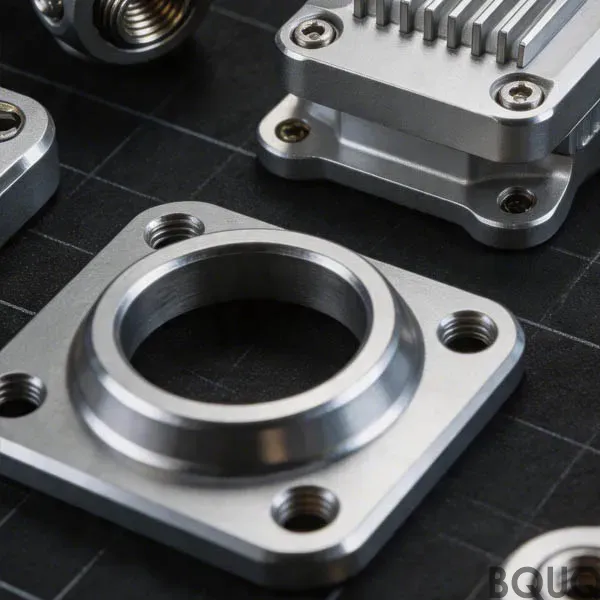
Surface finish is equally critical. A 3D-printed part will have a staircase effect on angled surfaces. This is unacceptable for: - **Fluid channels** (increased friction, turbulence) - **Optical mounts** (surface scatter) - **Sealing surfaces** (leak paths)
CNC machining produces a 1.6 Ra finish directly from the tool path. If you need a mirror polish (0.2 Ra) for a transparent polycarbonate prototype, additive manufacturing cannot achieve this without extensive secondary polishing that costs more than the part itself.
Cost and Lead Time Analysis for 2026 Production Volumes
The price crossover point has shifted. With the 2025-2026 drop in industrial powder costs (nylon PA12 down to $45/kg), 3D printing is now cost-competitive for complex parts up to 5 units. However, CNC machining becomes decisively cheaper above 10 units due to zero per-part setup cost after the first article.
**Real pricing example (BQUQ, Q1 2026, 50mm x 50mm x 50mm bracket with 6 holes and 2 threaded inserts):**
| Production Volume | CNC Machining (AL6061) | 3D Printing (SLS PA12) | 3D Printing (DMLS Ti-6Al-4V) | --- | --- | --- | --- | 1 unit | $58.00 | $42.00 | $185.00 | 5 units | $46.00 each | $38.00 each | $165.00 each | 10 units | $31.00 each | $36.00 each | $158.00 each | 25 units | $22.00 each | $34.00 each (no discount) | $152.00 each |
|---|
**Lead time note:** CNC machining at BQUQ offers same-day CNC milling for simple geometries (under 3 hours). 3D printing requires a 2-4 hour warm-up and cool-down cycle per build, plus 6-12 hours of post-processing (powder removal, media blasting) for SLS.
When 3D Printing Is the Only Logical Choice
Despite CNC's advantages, 2026 sees three clear scenarios where additive wins outright:
1. **Conformal cooling channels** in injection mold inserts. A steel mold with conformal channels (impossible to drill with straight-line tools) can reduce cycle time by 30-40%. This is a production tool, not a prototype. 2. **Topology-optimized brackets** where material is removed from low-stress regions. A generative design may weigh 40% less than any machined equivalent. 3. **Very early design reviews** (day 0-1). If you need a physical part to show stakeholders in 8 hours, a basic FDM print at 0.2 mm layer height costs $5 in material and validates ergonomics.
Practical Recommendations for the 2026 Engineer
**Rule 1: Use CNC for anything that will be tested to failure.** If your prototype must survive vibration testing per MIL-STD-810, tensile testing per ASTM D638, or thermal shock, the anisotropic nature of 3D-printed parts will produce misleading data. A machined part fails like the production part will.
**Rule 2: Use 3D printing for geometric verification only.** When you need to check fit, assembly sequence, or clearance between moving parts, a 3D print at 0.1 mm layer height is sufficient. Do not torque screws into printed threads above 0.5 Nm in plastic.
**Rule 3: Combine both technologies.** For a complex housing prototype, 3D print the main body to verify internal cable routing, then CNC machine only the critical mounting bosses and sealing faces. This hybrid approach saves 30-50% cost versus all-CNC.
**Rule 4: Request a DFM analysis before choosing.** Send your CAD file to BQUQ (sc@bquq.com). Our engineers will identify if the part has undercuts, thin walls (<0.8 mm), or deep slots that force 5-axis CNC or necessitate 3D printing. We provide a free manufacturability report within 4 business hours.
Conclusion: The 2026 Verdict
CNC machining is better for functional prototypes that must validate mechanical performance, thermal behavior, and assembly reliability. 3D printing is better for form-fit checks and complex internal geometries that cannot be machined. In 2026, the professional approach is not choosing one over the other, but specifying the correct process per feature. For production-intent prototypes, CNC is the baseline. Every time we machine a prototype at BQUQ, we use the same fixtures, tooling, and inspection methods as our production runs. This means your prototype test results directly translate to mass production—no surprises, no re-engineering.
For your next prototype, send us the 3D model. We will provide the CNC quote and the 3D printing quote side-by-side, with honest lead times and tolerance analysis. We have been doing this for 20 years in Dongguan, and we will tell you which process is right for your specific application.
**Get a prototype quote within 12 hours:** Email: sc@bquq.com WhatsApp: +86 13713157787 Website: www.bquq.com
Related Articles
- Rail Track Equipment Manufacturing 2025: Safety-Critical Precision and 5 Tolerance Standards
- CNC Precision Turned Parts for Medical Devices: Guide
- CNC Machining for Marine Metal Components | Expert Guide
Frequently Asked Questions
What tolerance can I expect from CNC machining versus 3D printing for my prototype?
CNC machining holds ±0.025 mm on features up to 50 mm, with high-precision jig grinding achieving ±0.005 mm. In contrast, 3D printing typically offers ±0.1 to ±0.2 mm for metal DMLS and ±0.2 to ±0.5 mm for polymers due to shrinkage and thermal stress, making CNC the clear choice for tight tolerances.
Which process is better for functional prototypes that need to survive mechanical testing?
CNC machining is superior for functional prototypes. A CNC-machined 6061-T6 aluminum part has a yield strength of 276 MPa, matching production parts, while 3D-printed AlSi10Mg reaches only 230-250 MPa after T6 treatment due to micro-porosity. CNC also preserves material grain structure, ensuring reliable performance under load.
How do surface finish and material properties compare between CNC and 3D printing?
CNC machining achieves surface roughness of 0.4-1.6 Ra for aluminum and 0.8-1.6 Ra for ABS, while 3D printing leaves layer lines at 5-15 Ra. CNC-machined ABS has tensile strength of 43-48 MPa versus 28-36 MPa for FDM, and elongation is 2-3x higher, making CNC better for snap-fits and living hinges.
What are the lead times for CNC machining versus 3D printing in 2026?
For quantities of 1-10 parts, CNC machining typically takes 3-5 days, matching 3D printing for polymers (1-3 days in-house) but beating metal DMLS, which requires 5-7 days plus heat treatment. CNC offers production-grade materials and tolerances without the extra post-processing time needed for printed parts.