Food-Grade Precision Components: Manufacturing for F&B Industry
When manufacturing precision components for the food and beverage (F&B) industry, the definitive answer is that you must combine FDA-compliant materials, surface finishes below 0.8 Ra micrometers, and tolerance control within ±0.01 mm, while ensuring full traceability through ISO 22000 protocols. The critical differentiator is not just the material grade, but the elimination of bacterial harborage points through controlled machining processes and post-processing passivation. At BQUQ, we have spent 20 years refining these processes for CNC machining, metal stamping, and spring manufacturing specifically for F&B applications, where a single micron of surface deviation can lead to biofilm formation and regulatory failure.
## Material Selection for F&B Compliance The foundation of any food-grade component begins with material certification. For CNC machined parts, we primarily specify 316L stainless steel (UNS S31603) over 304 (UNS S30400) due to its molybdenum content, which provides superior pitting resistance against chlorinated cleaning agents and acidic food products. The price differential is significant: 316L raw material costs approximately 1.8x that of 304 per kilogram, but the extended service life in CIP (Clean-in-Place) cycles justifies the investment. For metal stamping applications, we recommend 430 stainless steel for non-corrosive dry goods environments, reducing costs by 30% while maintaining FDA conformity.
For spring manufacturing, a common critical failure point, we use Inconel X-750 for high-temperature applications above 250°C, though the standard food-grade choice remains 302 stainless steel with a passivated surface. The material must meet ASTM A240/A240M specifications, with mill test certificates (MTC) providing chemical composition within ±0.02% for critical elements. We reject any material showing surface roughness above 0.4 Ra in the as-received condition, as this reduces our ability to achieve final finishing requirements.
## Surface Finish and Roughness Standards The F&B industry mandates surface roughness values that differ dramatically from general industrial applications. Standard machining produces 3.2 Ra micrometers, but food-contact surfaces require 0.8 Ra or better, with crevice-free geometries. Our CNC machining centers achieve 0.4 Ra on 316L through a multi-step process: rough cutting at 0.8 Ra, semi-finish at 0.4 Ra, and final pass with a polished insert at 0.2 Ra. This progression increases machining time by 40% but is non-negotiable for dairy and beverage processing.
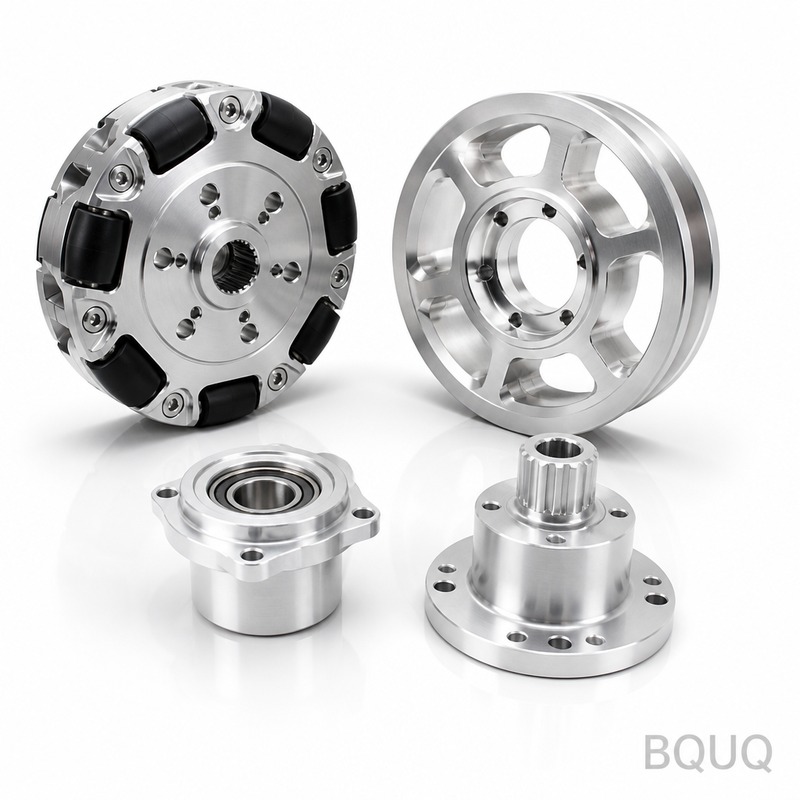
Electropolishing is often required for interior surfaces of fittings and valves, which can reduce roughness from 0.8 Ra to 0.2 Ra while removing 0.005 mm to 0.010 mm of surface material. The cost impact is measurable: a standard CNC machined bracket at $8.50 per unit increases to $11.20 with electropolishing. For stamped components, we use a mechanical polishing step on the die surfaces, achieving 0.4 Ra on the part without additional post-processing. The table below illustrates our standard surface finish specifications across processes.
| Process | Material | Standard Ra (µm) | F&B Ra (µm) | Additional Cost | Typical Lead Time |
| CNC Milling | 316L SS | 3.2 | 0.8 | +25% | 7-10 days |
| CNC Turning | 316L SS | 1.6 | 0.4 | +35% | 5-7 days |
| Metal Stamping | 430 SS | 1.2 | 0.8 | +15% | 12-15 days |
| Spring Coiling | 302 SS | 3.2 | 1.6 | +20% | 8-10 days |
| Electropolishing | Post-Process | 0.8 | 0.2 | +$2.70 per part | +3 days |
## Tolerance Control and Precision Machining Tolerance requirements for F&B components are stricter than typical mechanical parts because loose fits create dead zones where bacteria accumulate. For rotating shafts in mixers and pumps, we hold concentricity within 0.01 mm total indicated reading (TIR) and diameter tolerances of ±0.005 mm. This level of precision requires temperature-controlled machining environments maintained at 20°C ± 1°C, as thermal expansion of 316L is 16.0 x 10⁻⁶ per °C, which translates to 0.016 mm error per 100 mm part for every 10°C shift.
For metal stamping, tolerances are naturally looser at ±0.05 mm for flatness, but we compensate with die compensation calculations that account for springback, which in 430 SS is approximately 2-3 degrees on bent angles. Our stamping presses, ranging from 25 to 200 tons, maintain consistent tonnage within 2% to prevent dimensional drift across high-volume runs. For food-grade springs, we control free length within ±0.1 mm and load at a specified height within ±3%, because inconsistent spring force can cause valve leakage and contamination.
The cost of precision increases non-linearly with tighter tolerances. A tolerance of ±0.05 mm adds 10% to unit cost, while ±0.01 mm adds 30-40%. We recommend specifying only critical dimensions at ±0.01 mm and allowing ±0.05 mm for non-contact surfaces, reducing overall component cost by up to 25% without compromising food safety.
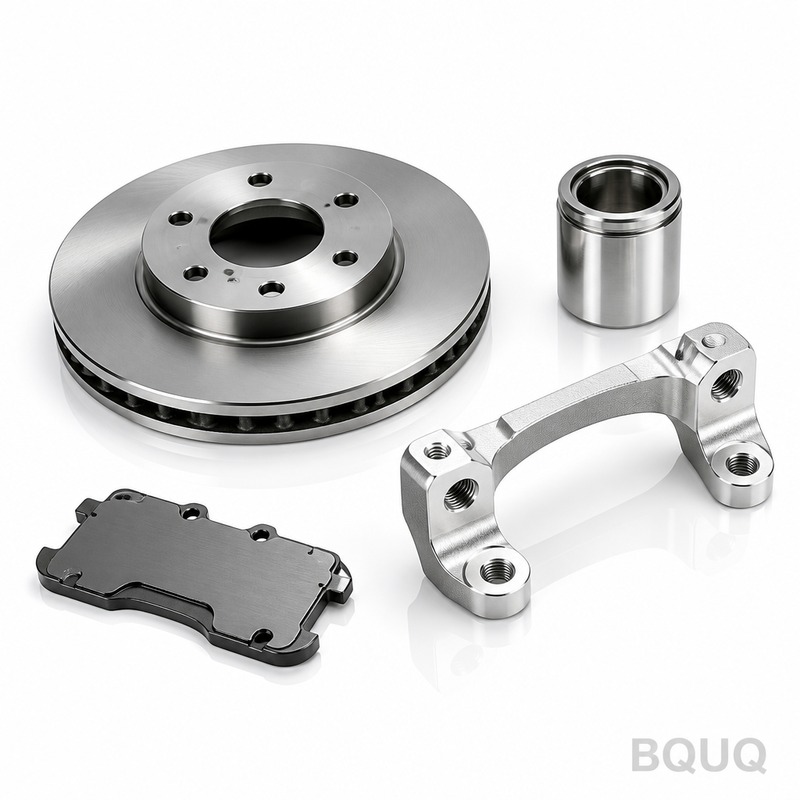
## Temperature Resistance and Thermal Cycling F&B processing exposes components to extreme thermal cycling, from -40°C in cold storage to 200°C in baking ovens, often within minutes. This requires materials and designs that withstand thermal shock without cracking or warping. 316L stainless steel maintains its mechanical properties from -200°C to 800°C, making it the industry standard. However, the manufacturing process must account for residual stresses: we perform stress-relief annealing at 400°C for 2 hours on all CNC machined components over 50 mm in any dimension, preventing distortion during subsequent welding or service.
For gaskets and seals, we no longer machine PTFE due to its cold flow tendency; instead, we recommend PEEK (polyetheretherketone) machined components, which operate continuously at 260°C and withstand steam sterilization cycles. PEEK components cost 3.2x more than PTFE equivalents but last 5x longer in CIP environments. In metal stamping, we use 301 full-hard stainless steel for spring clips exposed to repeated thermal cycling, as it maintains 1,380 MPa tensile strength up to 300°C.
Thermal expansion must be factored into assembly tolerances. A 200 mm long 316L shaft expands 0.64 mm when heated from 20°C to 220°C. We design mating components with a calculated clearance of 0.1 mm at operating temperature, not at assembly temperature, which prevents seizing during production and leakage when cold. This engineering calculation requires precise knowledge of the process temperature profile, which our engineers request before finalizing drawings.
## Quality Assurance and Regulatory Compliance Compliance in F&B manufacturing is not optional; it is a legal requirement. Our facility maintains ISO 22000 certification, and every food-grade component batch is traceable from raw material MTC to final dimensional inspection report. We perform 100% inspection on critical dimensions using CMM (Coordinate Measuring Machine) with an accuracy of ±0.002 mm, and statistical process control (SPC) on all production runs, with a target Cpk of 1.33 or higher. For FDA compliance, we provide a Declaration of Conformity stating that materials meet 21 CFR 177.2600 for rubber and 21 CFR 177.1210 for metal articles.
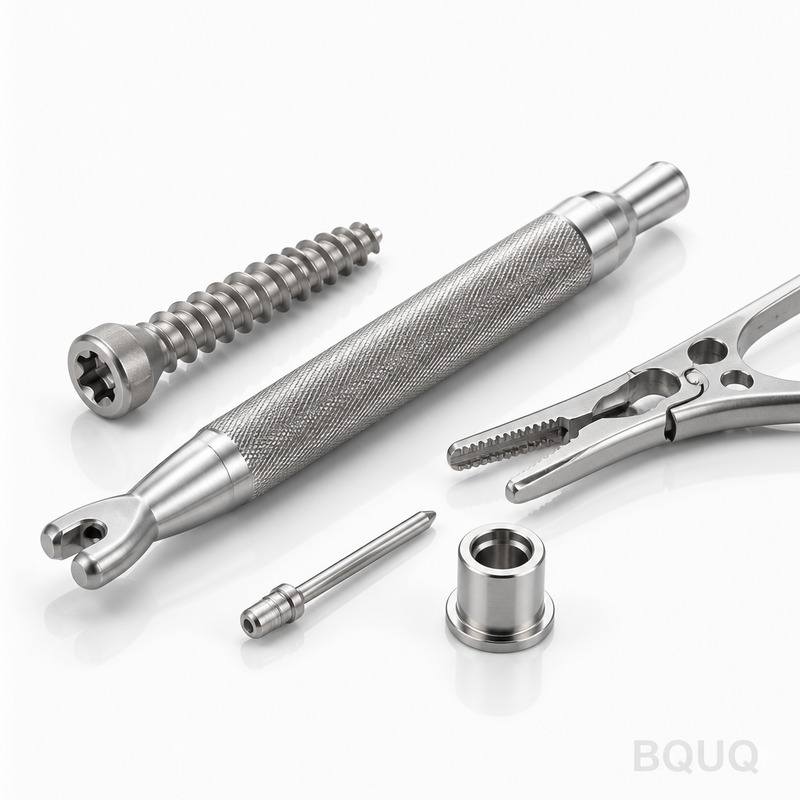
Surface finish verification is conducted using a profilometer with a cutoff length of 0.8 mm, sampling at 5 points per surface. We reject any part exceeding 0.8 Ra by more than 0.05 Ra. Additionally, we perform a dye penetrant test on all welded or brazed components to detect micro-cracks that could harbor bacteria. The cost of this comprehensive QA program adds 8-12% to unit pricing, but it eliminates the risk of product recall, which averages $10 million per incident in the food industry.
## Practical Recommendations for Engineers When specifying food-grade precision components, first define the exact cleaning regime: if the part will be exposed to caustic cleaners with pH above 12, specify 316L over 304. Second, avoid sharp internal corners; design radii of at least 1.5 mm to prevent stress corrosion cracking and allow proper drainage. Third, specify electropolishing only for internal surfaces where product contact occurs, not for external mounting surfaces, to save 15% on finishing costs. Fourth, for spring applications, request load testing at both room temperature and maximum operating temperature to verify performance.
For metal stampings, consider the minimum bend radius: for 430 SS, the minimum is 1x the material thickness to prevent cracking, while for 316L it is 1.5x. Always specify the grain direction on bends to avoid splitting. Finally, provide the operating temperature range and media composition on your RFQ; this allows us to recommend the most cost-effective material that still meets safety requirements. A milk processing component and a dry snack packaging component may look identical but require different materials and finishes.
## Cost Breakdown and Lead Times Understanding cost drivers helps you optimize your budget. For a typical CNC machined food-grade fitting (25 mm diameter, 40 mm length), the cost breakdown is: raw material 30%, machining 45%, surface finishing 15%, quality inspection 10%. The total unit price at 100 pieces is $22.50, dropping to $16.80 at 1,000 pieces due to setup amortization. Metal stamping has lower piece costs but higher tooling: a progressive die for a food-grade bracket costs $8,000-$15,000, with piece prices of $0.85 at 50,000 units. Springs are the most cost-sensitive: a 10 mm diameter compression spring costs $0.45 each at 10,000 pieces, but $0.28 at 100,000 pieces.
Lead times vary by complexity: standard CNC machined parts ship in 7-10 days, stamped parts in 12-15 days after tool approval, and springs in 8-10 days. Rush orders for CNC machining can be completed in 3 days at a 20% surcharge, but we do not recommend this for food-grade parts due to the risk of insufficient passivation time. Prototype quantities of 5-10 pieces are available in 5 days for design verification, allowing you to test form, fit, and function before committing to production tooling.
## Conclusion Manufacturing food-grade precision components requires a holistic approach that integrates material science, precision machining, surface engineering, and rigorous quality control. The non-negotiable standards are 316L or equivalent stainless steel, surface roughness below 0.8 Ra, and tolerances of ±0.01 mm where seals or moving parts are involved. While these requirements increase costs by 15-40% over industrial-grade parts, they are essential for regulatory compliance and consumer safety. With 20 years of experience serving the F&B industry from our Dongguan factory, BQUQ has the engineering expertise to guide you from material selection to serial production. We provide detailed DFM feedback within 12 hours of receiving your drawings, ensuring your components are both manufacturable and compliant.
For a fast, accurate quote on your food-grade precision components, contact our engineering team today at sc@bquq.com or WhatsApp +86 13713157787. Visit www.bquq.com to download our material selection guide and surface finish standards. We respond to all inquiries within 12 hours, with full technical consultation included.
Related Articles
- Custom CNC Machining Services: A Complete Guide for Engineers
- How Much Does CNC Machining Cost in 2026? A Complete Pricing Guide
- CNC Turn-Mill Composite Machining, Turn-Mill Machine Tools, One-Time Forming, B-Axis Turn-Mill Center, Multi-Process Integration, Complex Rotary Part Machining, Medical Device Precision Machining
Frequently Asked Questions
What materials do you recommend for food-grade CNC machined parts, and why?
We primarily specify 316L stainless steel (UNS S31603) over 304 due to its molybdenum content, which provides superior pitting resistance against chlorinated cleaning agents and acidic food products. 316L costs approximately 1.8x more per kilogram than 304, but offers extended service life in CIP cycles. All materials must meet ASTM A240/A240M with mill test certificates.
What surface finish can you achieve for food-contact components?
Our CNC machining centers achieve 0.4 Ra on 316L through a multi-step process, with final polishing reaching 0.2 Ra. Electropolishing can reduce interior surface roughness from 0.8 Ra to 0.2 Ra while removing 0.005-0.010 mm of material. This increases machining time by 40% and adds cost—for example, a standard bracket at $8.50 becomes $11.20 with electropolishing.
What tolerances do you hold for F&B precision components?
We maintain tolerance control within ±0.01 mm for food and beverage components. This precision is critical because a single micron of surface deviation can lead to biofilm formation and regulatory failure. Our 20 years of experience in CNC machining, metal stamping, and spring manufacturing ensures consistent achievement of these tolerances.
Do you offer cost-effective alternatives for non-corrosive dry goods applications?
Yes, for metal stamping in non-corrosive dry goods environments, we recommend 430 stainless steel, which reduces costs by 30% while maintaining FDA conformity. For standard food-grade springs, we use 302 stainless steel with passivated surface. For high-temperature applications above 250°C, we recommend Inconel X-750.