Heat Sink vs Radiator in Electronics: Key Differences and Design Rules
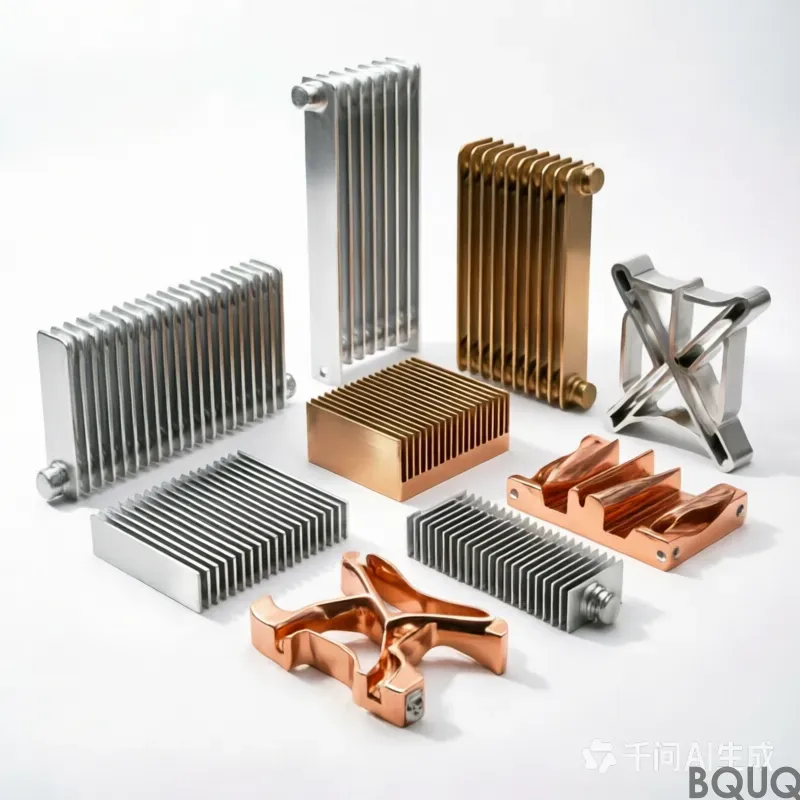
In electronics cooling, a heat sink is a passive component that transfers heat from a specific device, such as a CPU or power transistor, to the surrounding air via conduction and convection. A radiator is a heat exchanger that transfers thermal energy from a circulating liquid (coolant) to the air, often incorporating a pump or fan system. The core difference is medium: heat sinks manage direct solid-to-air dissipation, while radiators manage liquid-to-air heat exchange within a closed loop.
Thermal Transfer Mechanisms and Physical Definition
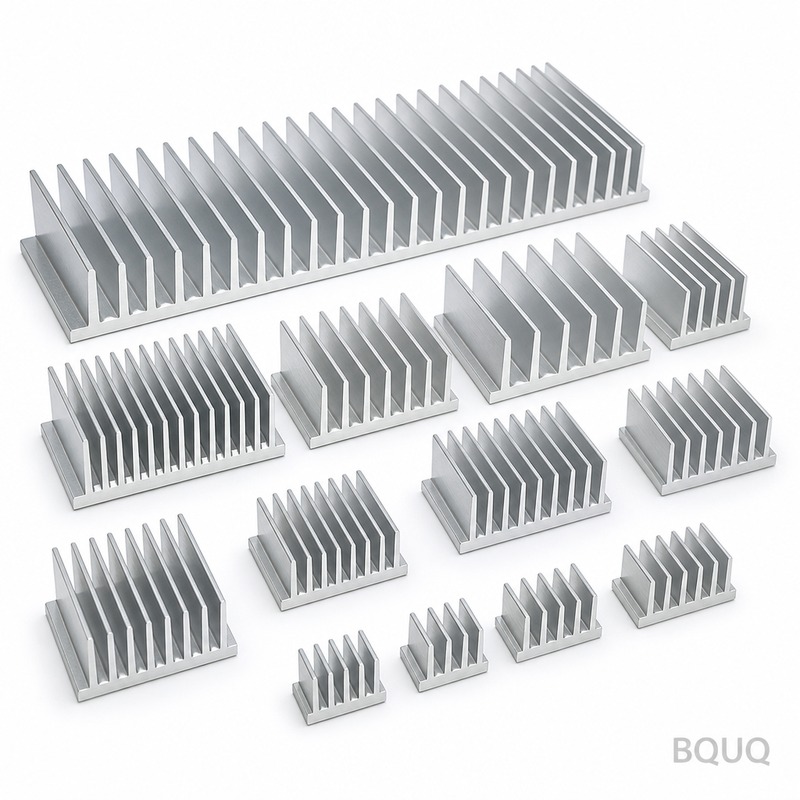
The fundamental engineering distinction lies in how each component manages heat flow. A heat sink operates on the principle of increasing the surface area of a hot solid object to promote natural or forced convection. For example, a standard extruded aluminum heat sink for a TO-247 package has a base thickness of 6.35 mm and 12 fins, each 25 mm tall, achieving a thermal resistance of 1.8°C/W at 200 LFM airflow. It relies on direct contact between the heat source and the sink base, typically with a thermal interface material (TIM) rated at 3.5 W/m·K.
A radiator, in contrast, uses a liquid coolant as an intermediate carrier. The coolant, often a 50/50 ethylene-glycol water mix, enters the radiator at 65°C and exits at 50°C, transferring 500 W of heat. The radiator core, typically made from brazed copper or aluminum with louvered fins, has a fin density of 14 to 18 fins per inch (FPI). This design allows the liquid to release heat to the fin stack, which then dissipates it to ambient air. In electronics, radiators are almost always part of a liquid cooling loop, such as in high-performance computing (HPC) servers or electric vehicle (EV) inverters.
Material and Manufacturing Differences
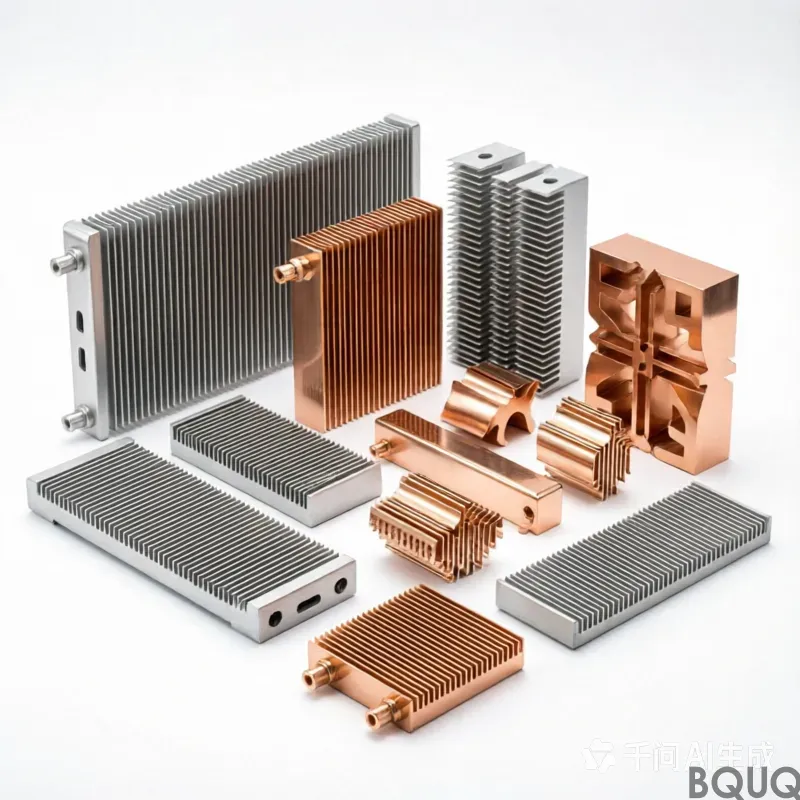
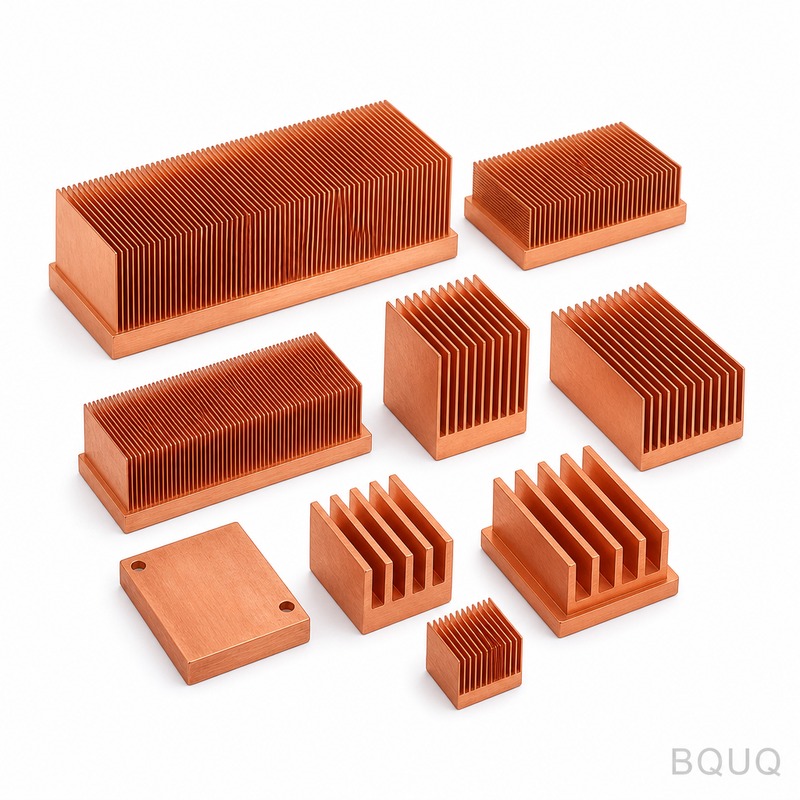
Heat sinks are predominantly manufactured from aluminum 6063-T5 or copper C1100. Aluminum heat sinks are produced via extrusion, with tolerances of ±0.05 mm on fin thickness and ±0.1 mm on overall length. Copper heat sinks, used for high-heat-density applications, are typically machined via CNC with a surface flatness of 0.02 mm on the base to ensure optimal TIM contact. A typical CNC-machined copper heat sink for a 300 W IGBT module has a base size of 100 mm x 80 mm x 8 mm, with a thermal conductivity of 385 W/m·K.
Radiators require more complex construction. The core is fabricated using either mechanical expansion or brazing. For mechanical expansion, aluminum tubes are inserted into stamped aluminum fins, then expanded hydraulically to create a mechanical bond. This process yields a thermal resistance of 0.05°C/W per 100 mm of core length. Brazed copper radiators, often used in aerospace electronics, are joined in a vacuum furnace at 600°C, achieving a burst pressure rating of 1.5 MPa. The header plates and tanks are stamped from 0.8 mm thick aluminum, with a tolerance of ±0.08 mm on the tank depth to prevent coolant leakage.
Performance Metrics and Thermal Resistance
Thermal resistance is the primary comparison metric. For a heat sink, the specification is usually given as junction-to-ambient thermal resistance (Rth(j-a)). A typical forced-convection heat sink for a 150 W LED driver has a Rth(j-a) of 0.35°C/W at an airflow of 3 m/s. In contrast, a radiator is rated by its liquid-to-air thermal resistance (Rth(l-a)). A 240 mm x 120 mm radiator used in a PC liquid cooling loop has a Rth(l-a) of 0.08°C/W at a coolant flow rate of 1.5 L/min and fan speed of 1200 RPM.
The operating temperature limits also differ. Extruded aluminum heat sinks can withstand continuous operation at 150°C junction temperature, while the aluminum fins start to deform at 200°C. Copper heat sinks can handle up to 300°C, but are rarely used above 200°C due to solder or TIM limitations. Radiators are constrained by the coolant boiling point. With a standard water-glycol mix at atmospheric pressure, the coolant boils at 108°C. In pressurized systems, such as EV battery cooling loops operating at 1.2 bar, the radiator can sustain coolant temperatures up to 125°C without vapor lock.
Application Scenarios and Design Constraints
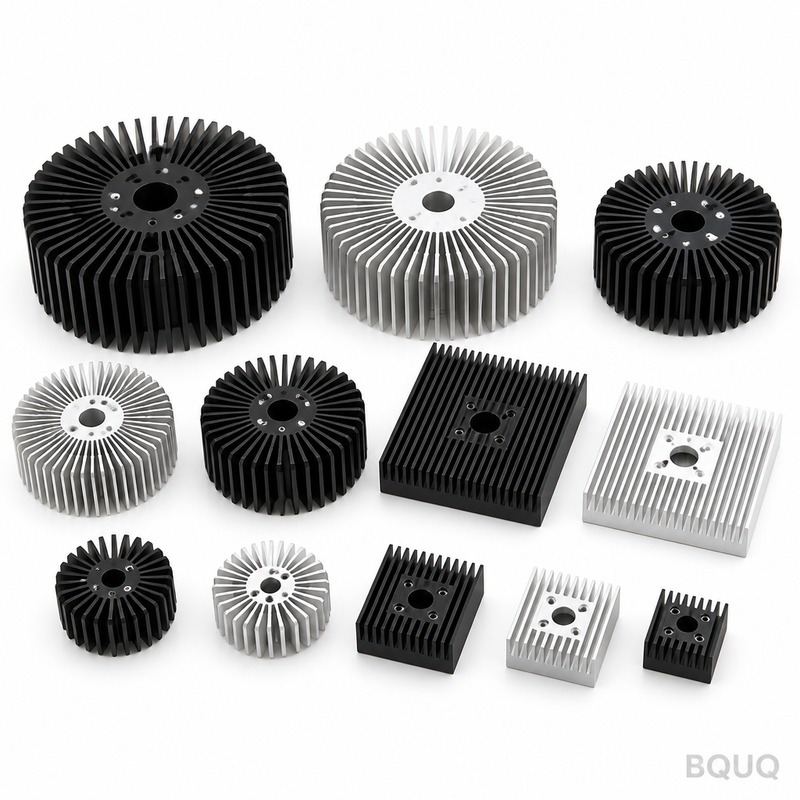
Heat sinks excel in applications where space is limited and the heat source is a single, high-power density component. For example, in a 5G base station power amplifier, a forged aluminum heat sink with a base thickness of 10 mm and 20 fins dissipates 80 W from a single GaN transistor, maintaining a case temperature of 85°C at ambient 40°C. The heat sink is directly mounted to the PCB, with a weight of 350 grams.
Radiators are selected when the total system heat load exceeds the practical capacity of a single heat sink, or when heat sources are distributed. In a 10 kW server rack, a 360 mm x 360 mm copper radiator with a core thickness of 45 mm and 3 fans moves 450 L/min of coolant, extracting 2500 W from the CPU cold plates. The radiator is mounted on the rear door of the rack, with a total system pressure drop of 0.6 bar. Another application is in laser diode stacks, where a micro-channel radiator with 0.5 mm wide channels and a flow rate of 2 L/min removes 1 kW/cm² of heat flux.
Cost, Weight, and Manufacturing Complexity
The cost structure diverges significantly due to manufacturing volume and materials. An extruded aluminum heat sink for a consumer electronics power supply, measuring 50 mm x 50 mm x 20 mm, costs between $0.80 and $1.50 per unit in quantities of 10,000 pieces. The extrusion die costs $800 to $1,200, with a tooling lead time of 2 weeks. A CNC-machined copper heat sink for a high-end audio amplifier, with a complex fin geometry, costs $8 to $15 per unit for a batch of 500, with a lead time of 3 weeks.
Radiators are more expensive due to assembly and joining processes. An automotive-grade aluminum radiator for an EV inverter, with a core size of 200 mm x 150 mm x 27 mm, costs $18 to $25 per unit in volumes of 5,000 pieces. This includes stamped headers, brazed core, and welded tanks. A custom liquid cooling radiator for a medical MRI system, using stainless steel tubes and titanium fins, can cost over $200 per unit due to low volume (100 pieces) and high corrosion-resistant material requirements.
| Parameter | Extruded Heat Sink (Al 6063-T5) | CNC Copper Heat Sink | Liquid Radiator (Al Core) | Brazed Copper Radiator |
| Thermal Conductivity (W/m·K) | 201 | 385 | 201 (core) | 385 (core) |
| Typical Rth (°C/W) | 0.5 to 2.0 | 0.2 to 0.8 | 0.08 to 0.15 (liquid-to-air) | 0.05 to 0.10 (liquid-to-air) |
| Max Operating Temp (°C) | 150 | 300 | 108 (coolant boiling) | 125 (pressurized) |
| Surface Flatness (mm) | 0.10 | 0.02 | 0.15 (header plate) | 0.05 (header plate) |
| Unit Cost (1,000 pcs) | $0.80 - $1.50 | $8.00 - $15.00 | $18.00 - $25.00 | $40.00 - $80.00 |
| Lead Time (weeks) | 2 - 3 | 3 - 4 | 4 - 6 | 6 - 8 |
| Weight (g) for 100W capacity | 180 | 420 | 850 (with pump) | 1200 (with pump) |
How to Choose Between a Heat Sink and a Radiator
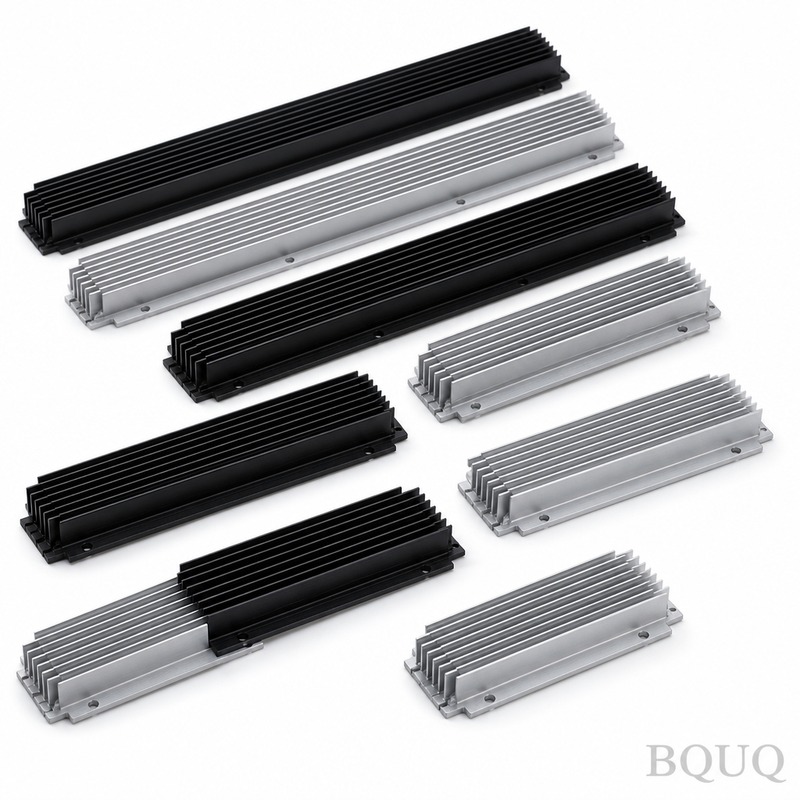
The selection criteria are based on four variables: heat flux, system flow availability, space envelope, and maintenance requirements. If the heat flux is below 50 W/cm² and the device can be mounted directly to a finned surface, a heat sink is the optimal choice. For example, a 75 W CPU cooler using a heat sink with a 4-heat-pipe design and a 92 mm fan achieves a junction temperature of 72°C at 35°C ambient. This solution costs $4.50 in volume and requires zero maintenance.
Choose a radiator when the heat flux exceeds 100 W/cm² or when the heat source is separated from the final dissipation point by more than 100 mm. In a 3 kW motor drive, the IGBT module generates 120 W/cm² of heat. A liquid cold plate captures this heat, transferring it to a radiator mounted on the enclosure wall. This configuration allows the sensitive electronics to be sealed in an IP65 enclosure, while the radiator dissipates heat to ambient air. The radiator solution adds $35 to the BOM but reduces the junction temperature by 15°C compared to a massive heat sink.
For hybrid scenarios, consider a vapor chamber heat sink combined with a small radiator. This is common in high-performance laptop GPUs. The vapor chamber spreads the 150 W heat from the GPU die over a 40 mm x 40 mm area, then transfers it to a 120 mm x 80 mm heat sink with a heat pipe. A small liquid radiator is only used when the laptop exceeds 150 W total power.
FAQ-Style Engineering Tips for Design Validation
When prototyping, verify the heat sink thermal performance using a thermocouple placed in a drilled hole at the base center, 1 mm from the component. The measured temperature should be within ±5°C of the simulated value. For radiators, always test the pressure drop across the core at the specified flow rate. A 240 mm radiator should show less than 0.3 bar pressure drop at 2 L/min; higher values indicate fin blockage or incorrect tube diameter.
Material selection matters for corrosion. In a mixed-metal system, use an aluminum radiator with a 10% ethylene-glycol concentration and add a corrosion inhibitor. Never use copper tubes with an aluminum fin stack without proper isolation, as galvanic corrosion will occur within 500 hours. For long-term reliability, specify a radiator with a 0.05 mm wall thickness on the tubes and a fin thickness of 0.1 mm, ensuring a burst pressure of 1.0 MPa.
Fin spacing is critical for dust-prone environments. In a factory floor application with ambient dust, use a heat sink with a fin pitch of 5 mm or more to prevent clogging. For a radiator in a clean data center, use a high-density core with 16 FPI to maximize surface area. If the radiator is mounted horizontally, ensure the inlet and outlet are on the same side to prevent air pockets.
Conclusion and Specification Guidance
Selecting between a heat sink and a radiator is a thermal and mechanical decision, not a semantic one. For power densities below 50 W/cm² with direct component access, use a CNC-machined or extruded heat sink with a thermal resistance target below 0.5°C/W. For distributed heat loads or sealed enclosures exceeding 100 W/cm², implement a liquid loop with a brazed aluminum radiator rated for 0.10°C/W liquid-to-air resistance. Always verify the interface flatness (heat sink base to 0.02 mm) and the radiator pressure rating (minimum 1.0 MPa) before ordering.
Our engineering team at BQUU has 20 years of experience manufacturing precision heat sinks and liquid radiator cores for electronics from our Dongguan facility. We provide detailed thermal simulation reports with every quotation, confirming your junction temperature targets before production begins. For your current project, send us your component power dissipation, airflow conditions, and dimensional constraints. We will reply with a complete thermal analysis and a CAD model within 12 hours. Contact us at Email: sc@bquq.com, WhatsApp: +86 13713157787, or visit www.bquq.com to start your DFM review and receive a production-quantity price.