Heat Sink vs Radiator in Electronics: Key Differences Explained
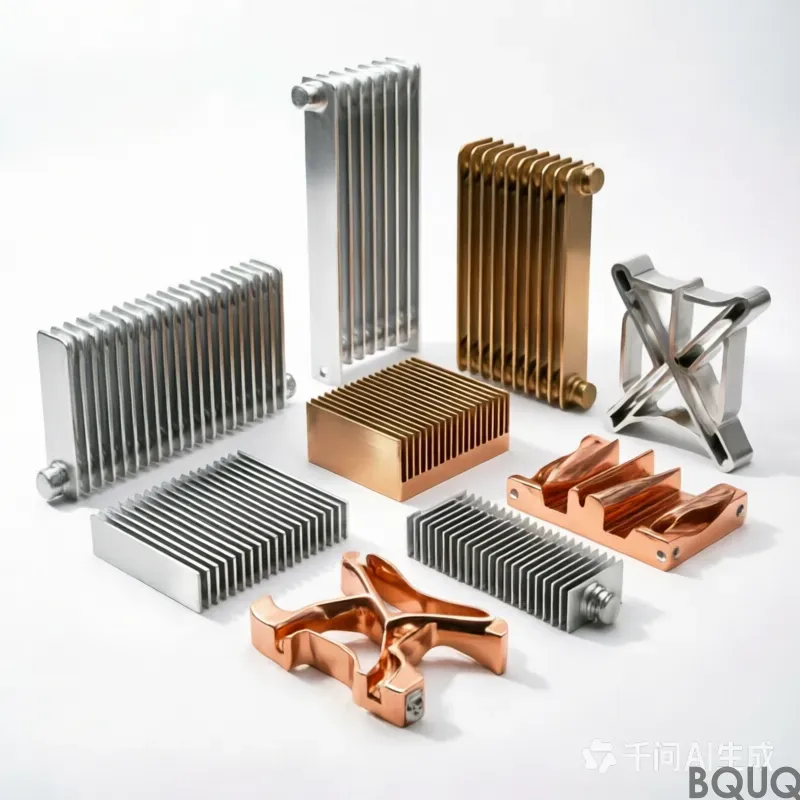
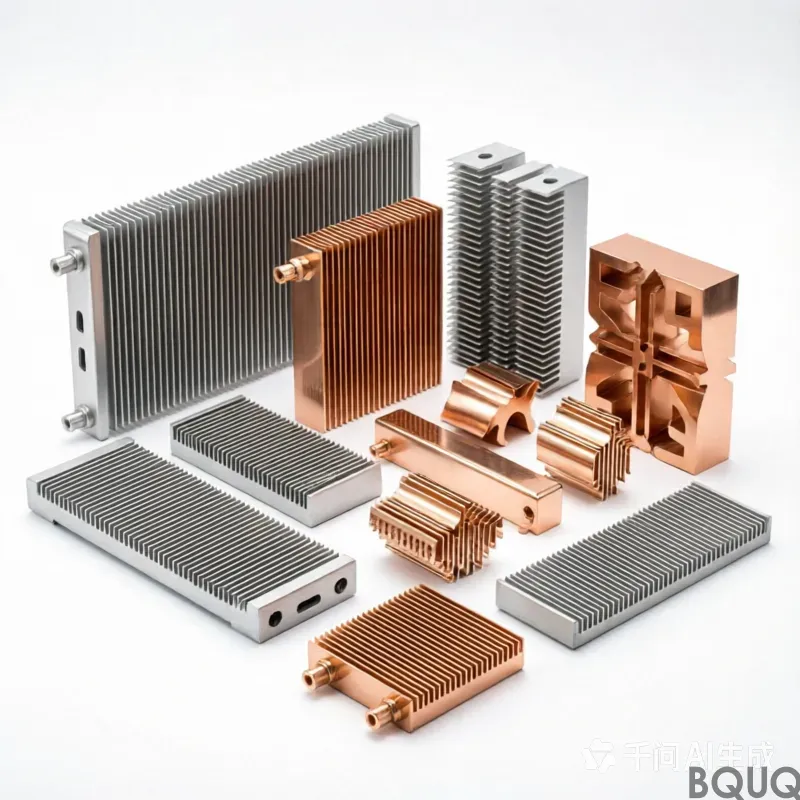
In electronics, a heat sink is a passive component designed to transfer heat from a single high-power device, such as a CPU or IGBT, to the ambient air via conduction and convection. A radiator is a component that actively transfers heat from a liquid coolant to the air, typically involving a pump and fluid loop. The fundamental difference lies in the working medium: heat sinks use direct solid-to-air conduction, while radiators use liquid-to-air heat exchange.
Definition and Thermal Mechanics
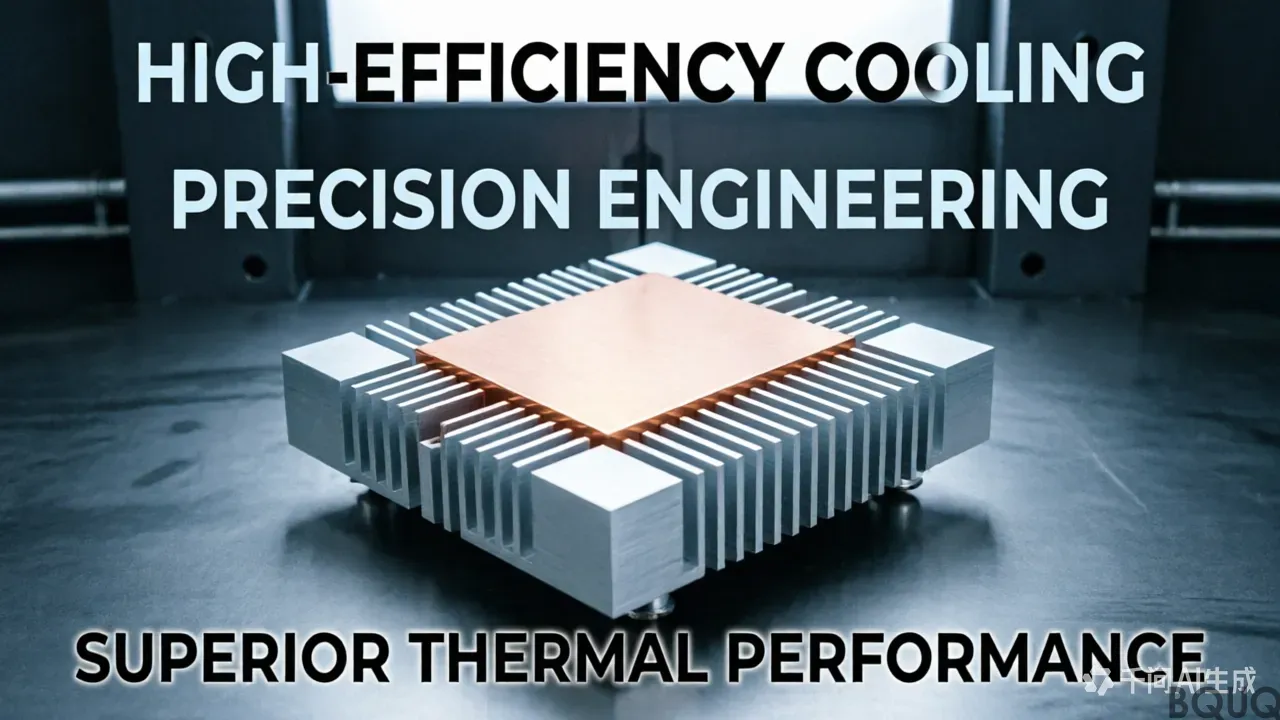
A heat sink operates on the principle of increasing the surface area of a hot component to improve convective heat dissipation. For a typical aluminum 6063-T5 heat sink, the thermal conductivity is approximately 201 W/m·K. When a 100 W processor generates heat, the heat sink conducts that energy through its base (typically 3-5 mm thick) into fins. The thermal resistance of a quality extruded heat sink ranges from 0.5 to 2.5 °C/W, depending on fin density and airflow.
A radiator in electronics, such as those used in liquid cooling loops, transfers heat from a liquid (usually water or a propylene glycol mixture) to air. The liquid passes through a fin-and-tube structure, where copper tubes (thermal conductivity 385 W/m·K) carry the coolant. The radiator's efficiency is measured by its ability to reduce coolant temperature, typically achieving a 5-15 °C drop under full load. For a 240 mm radiator with two 120 mm fans, the heat dissipation capacity is roughly 200-300 W at a 10 °C temperature difference between coolant and ambient air.
Structural Differences and Design Constraints
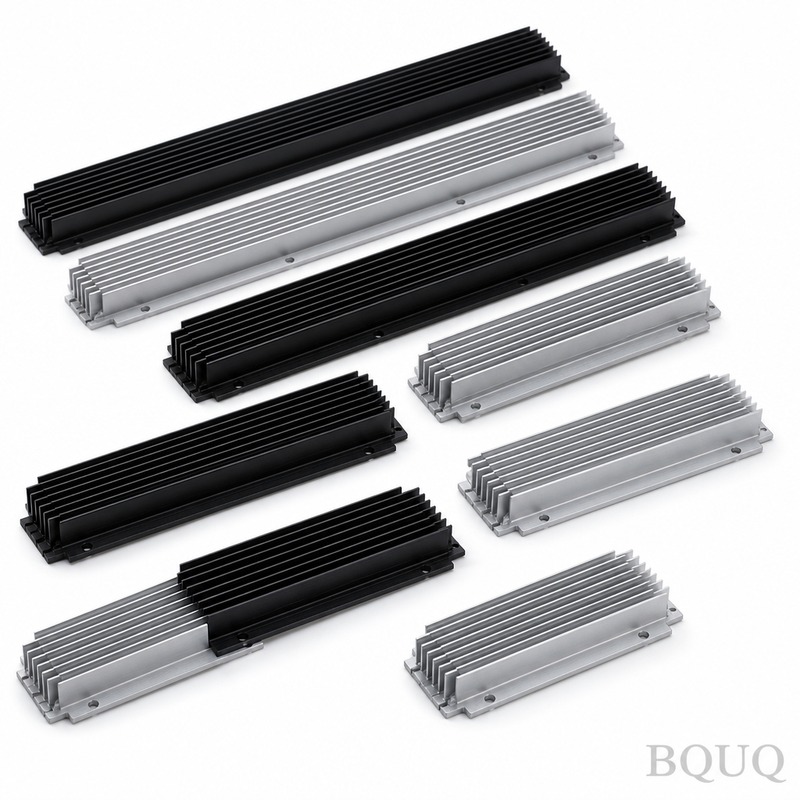
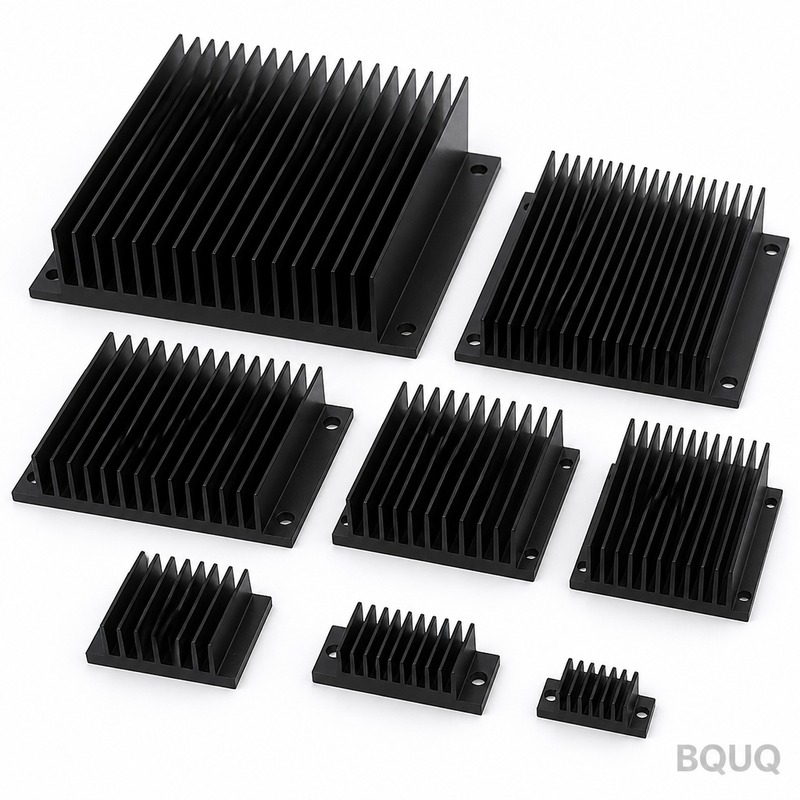
Heat sinks are monolithic or assembled structures made of aluminum, copper, or a combination. Extruded aluminum heat sinks have fin thicknesses of 1.0-1.5 mm and fin pitches of 4-8 mm. Bonded fin heat sinks use epoxy or solder to attach fins, allowing fin thickness down to 0.5 mm and pitches of 2-3 mm, increasing surface area by 30-50% over extrusion.
Radiators are composite assemblies. A typical automotive-grade radiator for power electronics uses a 16 mm thick core with louvered fins. The fin density is 8-12 fins per inch, and the tube dimensions are 10 x 2 mm with a wall thickness of 0.3 mm. The liquid side has a pressure drop of 0.5-1.5 psi at a flow rate of 2-4 liters per minute. Radiator housings are usually made of nylon 66 with 30% glass fiber for pressure resistance up to 3 bar.
Thermal Performance Comparison
The performance metric for both devices is thermal resistance, but the reference points differ. For a heat sink, the thermal resistance is measured from the component case to the ambient air (θca). For a radiator, the resistance is measured from the liquid inlet to the ambient air.
A premium copper heat sink with a 120 x 120 x 40 mm footprint can achieve a thermal resistance of 0.2 °C/W at 200 CFM airflow. In contrast, a 280 mm radiator (3 x 140 mm fans) achieves a thermal resistance from liquid to air of 0.03-0.05 °C/W. However, the radiator requires a pump, reservoir, tubing, and coolant, which add complexity and failure points.
The following table compares the key specifications of typical heat sinks and radiators used in electronics cooling.
| Parameter | Extruded Heat Sink | Bonded Fin Heat Sink | 240mm Liquid Radiator | 360mm Liquid Radiator |
| Material | Al 6063-T5 | Cu base + Al fins | Cu tubes + Al fins | Cu tubes + Al fins |
| Thermal Resistance | 0.8-2.5 °C/W | 0.3-0.8 °C/W | 0.06-0.09 °C/W | 0.04-0.06 °C/W |
| Max Heat Dissipation | 50-150 W | 100-250 W | 200-300 W | 300-450 W |
| Weight | 300-800 g | 500-1200 g | 800-1200 g | 1000-1500 g |
| Fin Pitch | 4-8 mm | 2-3 mm | 1.5-2.5 mm | 1.5-2.5 mm |
| Operating Temp Range | -40 to 150 °C | -40 to 200 °C | -10 to 90 °C (coolant) | -10 to 90 °C (coolant) |
| Typical Cost (100 pcs) | $5-15 | $15-40 | $30-60 | $50-90 |
| Lead Time | 2-3 weeks | 3-4 weeks | 4-6 weeks | 4-6 weeks |
Application Scenarios and Selection Criteria
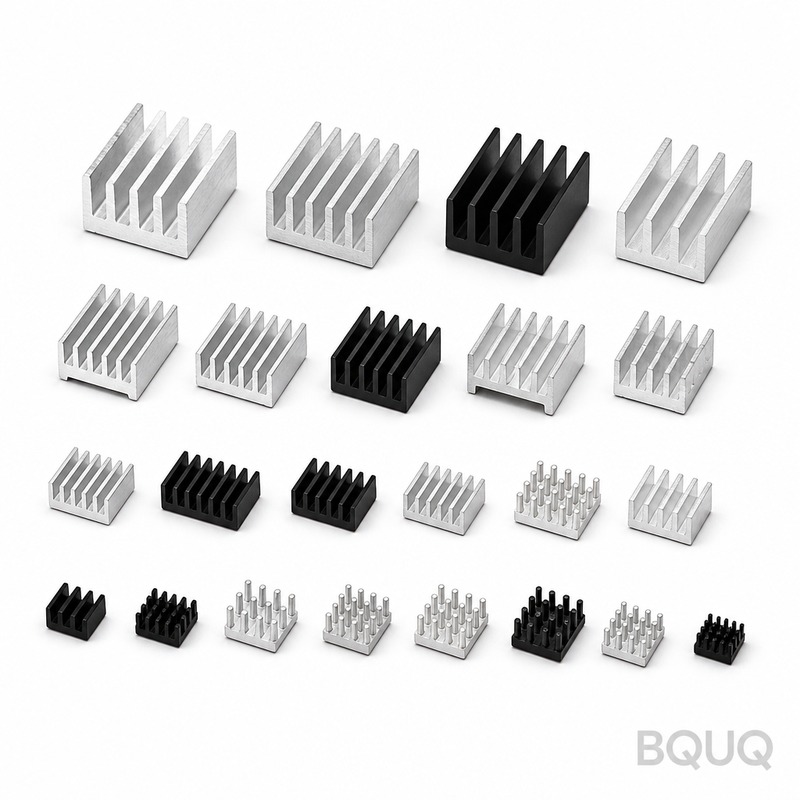
Heat sinks are the default choice for most electronic devices where the heat flux is below 50 W/cm² and the ambient temperature is below 70 °C. They are used in power supplies, LED drivers, motor controllers, and consumer electronics. The key advantage is reliability: a heat sink has no moving parts and a theoretical lifespan exceeding 100,000 hours.
Radiators are selected when the heat load exceeds 300 W, when the component location prevents direct airflow, or when multiple heat sources need to be cooled in a single loop. High-performance computing, electric vehicle inverters, and laser systems use radiators. For example, a 600 W IGBT module in an EV inverter requires a liquid-cooled radiator to maintain junction temperature below 125 °C. The radiator system adds 1.5-2.5 kg of weight but reduces the cooling system volume by 40% compared to a finned heat sink with equivalent performance.
Manufacturing and Cost Considerations
At BQUQ, we manufacture both heat sinks and radiator components. Extruded heat sinks have a die cost of $800-2000, with a minimum order quantity of 500 pieces for cost-effective production. CNC machining for heat sink features like mounting holes or step cuts adds $0.50-2.00 per unit.
Radiator core production involves tube bending, fin stamping, and brazing. The fin stamping dies cost $3000-5000, and the brazing furnace operation adds $3-8 per unit. For low-volume prototyping (10-50 pieces), a heat sink is always more economical. For high-volume production (above 5000 units), a custom radiator can be cost-competitive if the thermal requirement justifies the engineering effort.
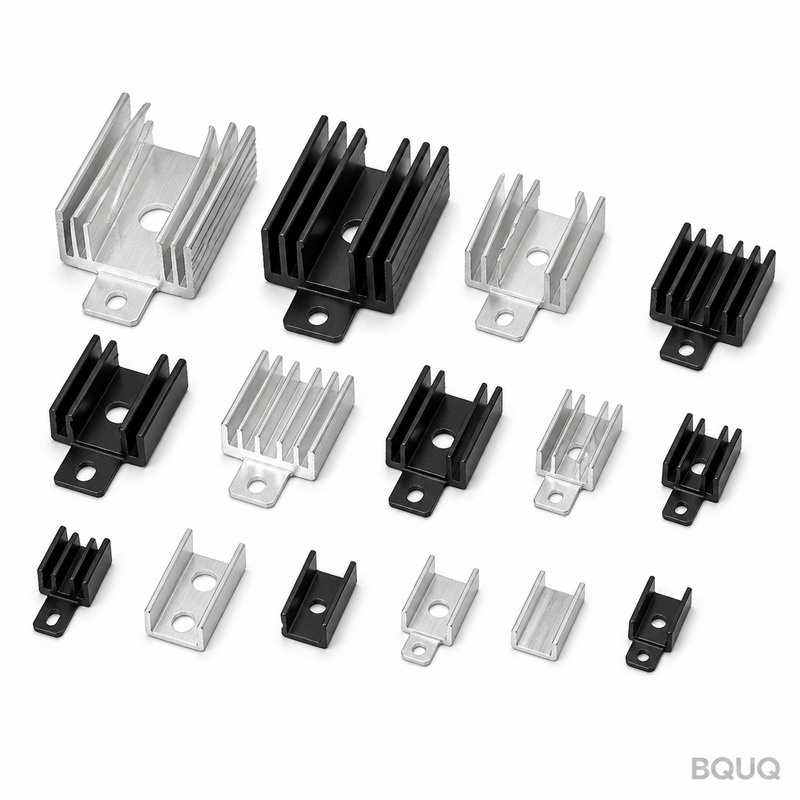
The manufacturing tolerance for heat sink base flatness is 0.05 mm, which ensures proper thermal interface material (TIM) performance. Radiator tube-to-fin joint integrity is verified with a helium leak test to ensure no coolant leakage at 2 bar pressure.
FAQ-Style Engineering Tips
Q: Can I replace a heat sink with a radiator without redesigning the system? A: No. A radiator requires a pump and coolant loop. The electrical and mechanical interfaces are completely different. A heat sink mounts directly on the component; a radiator is remote-mounted with hoses.
Q: Which is better for a 200 W power supply? A: Use a heat sink. A 200 W heat sink with a 120 mm fan at 150 CFM will keep the case temperature below 85 °C. Adding a radiator would introduce pump noise and leakage risk without significant performance gain.
Q: How do I choose between an aluminum and copper heat sink? A: Copper has 1.9 times the thermal conductivity of aluminum but weighs 3.3 times more. Use copper only when the heat flux is above 30 W/cm² and space is severely constrained. For most applications, aluminum with a heat pipe is more cost-effective.
Q: What is the maximum ambient temperature for a radiator system? A: The coolant temperature must stay below the boiling point (100 °C for water at sea level). For high-temperature environments, use a 50/50 propylene glycol-water mix, which raises the boiling point to 108 °C and provides freeze protection to -37 °C.
Conclusion and Practical Recommendation
For electronics cooling, use a heat sink for thermal loads under 300 W and when simplicity is paramount. Use a radiator only when your heat load exceeds 300 W, multiple components require centralized cooling, or ambient temperatures above 50 °C prevent effective heat sink operation. Always calculate the system thermal resistance before choosing: total heat dissipation divided by the allowable temperature rise will give you the required θca. At BQUQ, we recommend prototyping with a heat sink first because the iteration cost is lower. If testing shows the heat sink cannot maintain the junction temperature, we design a liquid cooling loop with a custom radiator.
BQUQ has 20 years of precision manufacturing experience in CNC machining, metal stamping, springs, and heat sinks. Our engineers can help you decide between a heat sink and a radiator for your specific application. We provide a 12-hour quoting service for custom heat sink and radiator components. Contact us at Email: sc@bquq.com, WhatsApp: +86 13713157787, or visit www.bquq.com for a detailed thermal analysis and cost estimate.
Related Articles
- Thermal Management for High Brightness LEDs with Heat Sinks
- Best Copper Heat Sinks for CPU Overclocking in 2025
- Stamped Metal vs Die Cast Heat Sinks: Cost & Quality Comparison
Frequently Asked Questions
What is the main difference between a heat sink and a radiator in electronics?
The fundamental difference is the working medium. A heat sink transfers heat directly from a solid component to air via conduction and convection, while a radiator transfers heat from a liquid coolant to air using a pump and fluid loop. Heat sinks use solid-to-air conduction; radiators use liquid-to-air heat exchange.
What thermal performance can I expect from a typical aluminum heat sink?
A quality extruded aluminum 6063-T5 heat sink has a thermal conductivity of about 201 W/m·K and a thermal resistance ranging from 0.5 to 2.5 °C/W, depending on fin density and airflow. For a 100 W processor, the base is typically 3-5 mm thick to conduct heat into the fins.
How much heat can a 240 mm radiator dissipate?
A 240 mm radiator with two 120 mm fans can dissipate roughly 200-300 W at a 10 °C temperature difference between coolant and ambient air. It typically achieves a 5-15 °C coolant temperature drop under full load, using copper tubes with 385 W/m·K thermal conductivity.
What are the structural differences between heat sinks and radiators?
Heat sinks are monolithic or assembled structures with extruded aluminum fins of 1.0-1.5 mm thickness and 4-8 mm pitch, or bonded fins down to 0.5 mm thickness. Radiators are composite assemblies with a 16 mm core, louvered fins at 8-12 fins per inch, and 10 x 2 mm tubes with 0.3 mm walls, housed in glass-filled nylon 66.