How Can You Get Custom Spring Prototypes Fast From a Factory?
To get custom spring prototypes fast from a factory, you must provide complete engineering data (wire diameter, outer diameter, free length, active coils, material grade, and load requirements) and select a manufacturer with in-house tooling and rapid machining capabilities. A factory like BQUQ in Dongguan can produce CNC-coiled spring prototypes in 24 to 72 hours and stamped spring prototypes in 3 to 5 days, provided you approve a digital quotation and design for manufacturability (DFM) review on the same day. The speed depends less on the factory's physical capacity and more on your ability to eliminate iteration cycles through precise specifications and clear communication.
What Is the Typical Lead Time for Spring Prototypes From a Chinese Factory?
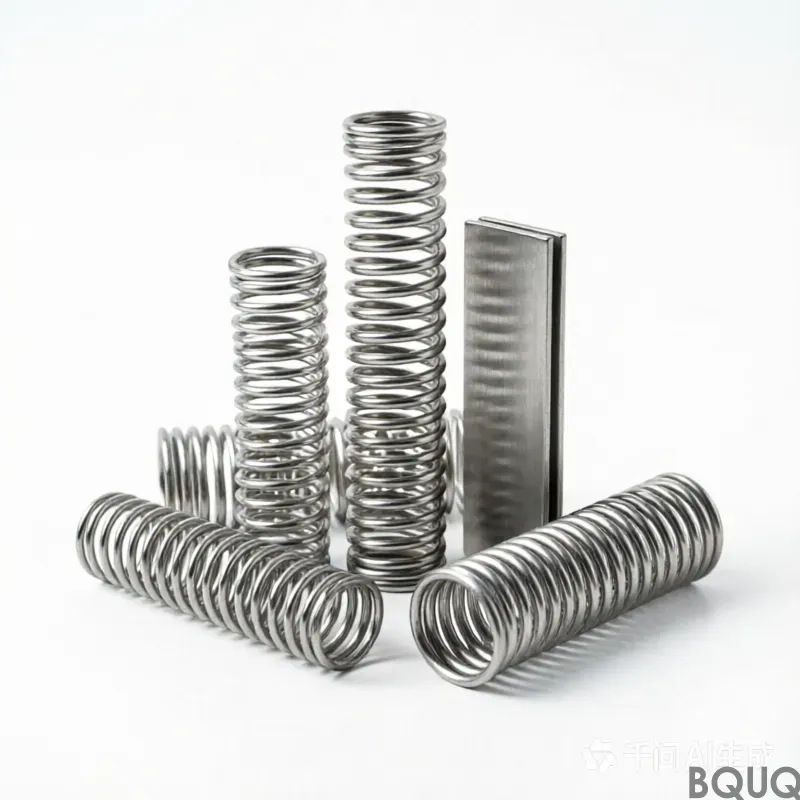
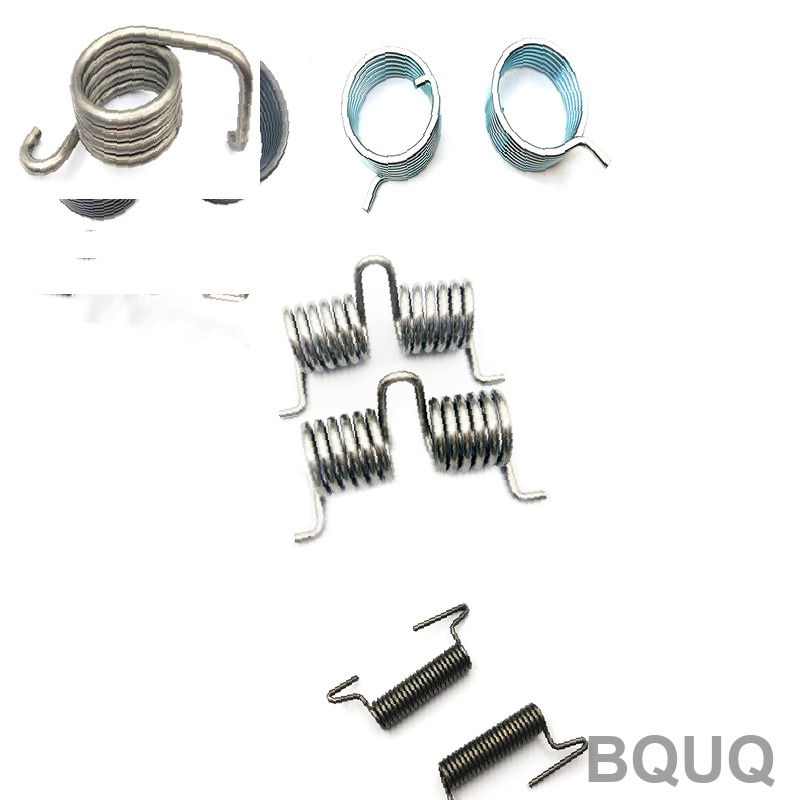
The typical lead time for a custom spring prototype from a Chinese factory with in-house CNC coiling machines is 24 to 72 hours for simple compression springs, 3 to 5 days for torsion or extension springs, and 5 to 7 days for complex stamped spring clips or formed wire parts. These timelines assume standard materials like music wire (ASTM A228), stainless steel 302 (ASTM A313), or spring steel 65Mn (GB/T 1222) are in stock. If you require exotic alloys like Inconel X-750 or Elgiloy, add 5 to 10 days for material sourcing. For comparison, a factory without in-house tooling may require 2 to 3 weeks just to outsource the forming dies or cam tooling.
How Can You Compress the Prototype Quotation and DFM Process to 24 Hours?
You can compress the quotation and design for manufacturability (DFM) process to 24 hours by sending a complete technical drawing with GD&T symbols, a 3D STEP file, and a clear specification sheet on your first email. At BQUQ, we respond with a cost breakdown and DFM comments within 4 to 6 hours if the request arrives before 3 PM China Standard Time (CST). To avoid a 24-hour delay, specify the following: wire diameter tolerance (e.g., ±0.02 mm), outer diameter tolerance (e.g., ±0.10 mm), free length tolerance (e.g., ±0.50 mm), total coils, direction of helix (right or left), and required load at a specific deflection (e.g., 10 N at 5 mm deflection). If you omit load requirements, the factory must calculate spring rate (k = Gd^4 / 8D^3N), which adds 4 to 8 hours of engineering time.
Which Spring Manufacturing Process Is Fastest for Prototypes: CNC Coiling or Stamping?
CNC coiling is the fastest process for round-wire compression, extension, and torsion spring prototypes, with a typical cycle time of 2 to 5 minutes per part after setup. Stamping is faster only for very thin flat springs or clips (material thickness 0.05 mm to 1.5 mm), but it requires a prototype die, which takes 2 to 4 days to machine from tool steel (D2 or A2) and costs $300 to $800. For a single prototype piece, CNC coiling is always cheaper and faster; for 50 to 500 pieces, CNC coiling with a multi-axis former is still optimal. If you need a stamped spring prototype in less than 3 days, we can use wire EDM (electrical discharge machining) to cut the profile directly from a sheet, but this limits production to low volumes and adds a surface recast layer of 0.02 mm that may require secondary grinding.
How Much Does Custom Spring Prototype Tooling Cost and When Is It Waived?
Custom spring prototype tooling costs range from $150 for a simple CNC coiling program to $800 for a progressive stamping die, and most reputable factories waive this cost if you place a production order of 5,000 pieces or more. For CNC-coiled springs, there is no physical tooling cost; we only charge a $50 to $100 programming and setup fee, which is refunded against the first production order. For stamped springs, a prototype hard die (D2 steel, hardened to HRC 58-62) costs $300 to $800, while a soft tool (aluminum or low-carbon steel for 100 to 500 shots) costs $150 to $300. If you need a quote without tooling commitment, specify "prototype only" in your RFQ, but expect a per-piece price of $5 to $20 for CNC-coiled springs and $10 to $50 for stamped springs, depending on material and complexity.
What Materials and Tolerances Should You Specify for Fast Spring Prototyping?
For fast prototyping, specify standard materials that are readily stocked in Guangdong province: music wire (ASTM A228, tensile strength 2300-2700 MPa at 0.5 mm diameter), stainless steel 302 (ASTM A313, tensile 1900-2200 MPa), and hard-drawn steel wire (ASTM A227, tensile 1500-1800 MPa). These materials are available in diameters from 0.10 mm to 12.0 mm with a 24-hour lead time. For tolerances, a CNC-coiled spring prototype can achieve wire diameter ±0.01 mm (as-received), outer diameter ±0.05 mm for coils under 10 mm OD, free length ±0.25 mm, and total coils ±0.25 turns. Do not specify tighter tolerances than necessary; a free length tolerance of ±0.10 mm instead of ±0.25 mm will increase the price by 30% and may require a secondary grinding operation that adds 24 hours. For high-temperature applications (over 200°C), specify Inconel 718 or 17-7PH stainless steel, but be prepared for a 7-day material sourcing delay.
How Do You Validate Spring Prototype Quality Without Waiting for a Test Report?
You can validate spring prototype quality on your own using basic metrology tools within 30 minutes of receiving the parts, and you should request a material certificate (EN 10204 3.1) from the factory to confirm chemical composition and tensile strength. Measure the outer diameter with a micrometer (resolution 0.001 mm) at three different heights, the free length with a height gauge (resolution 0.01 mm), and the spring rate using a simple compression fixture with a load cell (accuracy ±0.5%). For a compression spring with a specified load of 10 N at 5 mm deflection, the factory should deliver a spring with a measured load between 9.5 N and 10.5 N, per ISO 10243 standards. If you do not have a load cell, request a free load-test report from BQUQ; we include it at no charge for any prototype order over $100.
Why Do Prototype Delays Happen and How Can You Prevent Them?
Prototype delays happen for three main reasons: missing load specifications, unapproved surface finish requirements, and time zone communication gaps. The most common delay is a missing load requirement, which forces the factory to calculate an assumed spring rate and then re-coil the spring once you test it, adding 24 to 48 hours. Surface finish requirements like "no scratches" or "mirror polish" are subjective; specify a maximum surface roughness (Ra 0.8 µm or Ra 1.6 µm) and a deburring standard (edge break 0.1 mm max) to avoid rejection loops. To prevent time zone delays, send your RFQ before 3 PM CST (2 AM EST) and request a confirmation within 2 hours; BQUQ operates a 24-hour engineering response line via WhatsApp, so you can get a DFM update at any time.
Data Table: Spring Prototype Lead Times and Costs by Process
| Process | Typical Lead Time | Tooling Cost | Per-Piece Cost (1-10 pcs) | Achievable Tolerance (OD) | Max Wire Diameter |
| CNC Coiling (Compression) | 24-48 hours | $50-$100 (setup) | $5-$15 | ±0.05 mm | 12.0 mm |
| CNC Coiling (Torsion) | 3-5 days | $50-$100 (setup) | $8-$20 | ±0.10 mm | 10.0 mm |
| Stamping (Prototype Die) | 5-7 days | $300-$800 | $10-$50 | ±0.03 mm | 1.5 mm (thickness) |
| Wire EDM (Flat Spring) | 3-4 days | $0 (no die) | $20-$80 | ±0.02 mm | 5.0 mm (thickness) |
| 3D Printed (Polymer) | 2-3 days | $0 | $30-$100 | ±0.20 mm | N/A (not for metal) |
Which Prototype Quantity Should You Order to Balance Speed and Cost?
For the fastest turnaround, order 5 to 10 prototype pieces; this allows the factory to run a single CNC coiling program without interruption and covers your test-to-break and fatigue testing needs. Ordering 1 piece is slower because the factory may batch it with other jobs to justify the setup time, and ordering 100 pieces adds no speed benefit but increases cost by 5 to 10 times. A practical approach is to order 10 pieces for dimensional verification, 10 pieces for load testing, and 10 pieces for your own assembly trial, totaling 30 pieces. At BQUQ, a 30-piece order of a 1.0 mm wire diameter compression spring costs approximately $180 to $250, including material, CNC programming, and a load test report, with shipment via DHL Express (3 to 5 days to the US or Europe).
How Do You Write an RFQ That Guarantees a Same-Day Quote?
Write your RFQ in a structured format with the subject line "RFQ: Spring Prototype – [Your Company] – [Wire Diameter] mm" and include the following six items in the body: (1) drawing file (PDF or STEP), (2) material grade and finish (e.g., stainless 302, bright finish), (3) dimensions: wire diameter, OD, free length, total coils, and leg length for torsion springs, (4) load requirements: force at a specific height or deflection, (5) quantity needed for prototypes and estimated annual production, and (6) target delivery date. This format allows an engineer to quote within 2 hours. If you do not have a drawing, provide a hand sketch with dimensions and a photo of a similar spring; BQUQ can reverse-engineer it within 4 hours at no extra cost, but the prototype lead time extends by 24 hours.
FAQ Section
What Is the Minimum Order Quantity for Custom Spring Prototypes?
The minimum order quantity for custom spring prototypes is 1 piece, but we recommend 10 to 30 pieces to allow for dimensional inspection and destructive testing. A single piece is sufficient only if you are verifying a form fit, not a load requirement. For 1 piece, the price is $15 to $30 due to setup and programming costs.
Can You Provide Spring Prototypes in Stainless Steel 316 for Corrosive Environments?
Yes, we provide spring prototypes in stainless steel 316 (ASTM A313) with a 3 to 5 day lead time, but note that 316 has lower tensile strength (1700-1900 MPa) than 302. For saltwater or chemical exposure, 316 is the correct choice, but for high-cycle fatigue, consider 17-7PH or Inconel 718. We stock 316 wire in diameters from 0.2 mm to 8.0 mm.
How Do You Measure the Spring Rate on a Prototype Without Expensive Equipment?
You can measure the spring rate using a simple digital force gauge (cost $50 to $100) and a dial indicator mounted on a drill press or arbor press. Compress the spring to 20%, 50%, and 80% of its maximum deflection, record the force at each point, and calculate the slope (N/mm). This method has an accuracy of ±3% if you use a calibrated gauge and a flat compression plate.
What Is the Difference Between a Prototype Spring and a Production Spring in Terms of Cost?
A prototype spring costs $5 to $20 per piece, while a production spring costs $0.05 to $0.50 per piece for the same design, due to fully automated coiling and heat treatment processes. The prototype price includes manual setup, individual inspection, and often a load test report. Production pricing applies at 5,000 pieces or more, where we amortize tooling and programming costs.
When Should You Use Wire EDM Instead of CNC Coiling for a Spring Prototype?
Use wire EDM when you need a flat spring, a constant-force spring, or a spring with a non-circular cross-section that cannot be coiled. Wire EDM achieves a tolerance of ±0.02 mm and a surface finish of Ra 1.2 µm, but it is 5 to 10 times slower than CNC coiling. For round wire springs, always choose CNC coiling for speed and cost.
Can You Get a Spring Prototype With a Specific Load Tolerance of ±2%?
Yes, you can get a spring prototype with a load tolerance of ±2%, but this requires a secondary grinding or presetting operation and adds 24 to 48 hours to the lead time. The standard load tolerance for a CNC-coiled prototype is ±5% per ISO 10243. To achieve ±2%, we must measure the load, adjust the free length by grinding, and retest, which increases the prototype cost by 40%.
Do You Offer Free Prototype Samples for Evaluation Before a Production Order?
We offer free prototype samples for evaluation only if your estimated annual production volume exceeds 50,000 pieces and you sign a non-disclosure agreement. For all other requests, we charge a prototype fee that is 100% refundable against your first production order of 5,000 pieces or more. This policy ensures we can cover material and engineering time while demonstrating our commitment to long-term partnerships.
Conclusion and Next Steps for Fast Spring Prototyping
To get custom spring prototypes fast, your best strategy is to prepare a complete RFQ with dimensions, material, load requirements, and tolerances, and send it to a factory with in-house CNC coiling and stamping capabilities. At BQUQ, with 20 years of precision manufacturing experience in CNC machining, metal stamping, springs, and heat sinks, we guarantee a quote within 12 hours and prototype shipment within 72 hours for standard materials. We recommend requesting a DFM review before placing your order, as it can eliminate hidden costs and reduce your iteration cycles by at least one round. For a fast, accurate quotation, email your drawings to sc@bquq.com or message us on WhatsApp at +86 13713157787; our engineers respond within 2 hours during CST business hours. Visit www.bquq.com for more information on our spring manufacturing capabilities and quality certifications.
Related Articles
- Size control and online intelligent detection technology of precision spring
- Hardware spring fatigue failure analysis and life prediction technology
- In-depth analysis of technology and process in the hardware spring industry in 2026: a full-dimensional interpretation of high stress, functional integration and engineering certification