How Do Manufacturers Verify Spring Quality and Consistency Through Load Testing?
Spring load testing is the definitive method manufacturers use to verify that a spring will perform within its specified force limits at defined heights or deflections. By applying a precise axial force and measuring the resulting displacement or load, BQUQ and other precision manufacturers confirm that each spring batch matches the engineering design intent, ensuring safety, performance, and lifespan across automotive, medical, and electronics applications. This process typically involves calibrated testers, statistical process control, and acceptance criteria defined by standards such as DIN 2095, EN 13906, and ISO 26909.
What Are the Core Tests in Spring Load Testing?
The primary tests are the load-at-height test, the rate test, and the solid height check. A load-at-height test measures the force required to compress a spring to one or more specified working heights, usually within a tolerance of +/- 5% of the nominal load. The rate test, or spring constant (k) verification, calculates the change in load per unit of deflection, typically expressed in N/mm, and must fall within a tolerance band of +/- 3% for precision springs. Solid height testing ensures that the spring’s coils do not touch before a defined maximum compression, which is critical for stress and fatigue life.
How Is the Load Testing Procedure Performed on a Production Line?
On a production line, a spring is placed on a compression platen of a motorized or servo-controlled load tester. The machine applies a preload to seat the spring, then compresses it to the first test height at a controlled speed, typically 10 mm/min to 100 mm/min, and records the force after a stabilization period of 2 to 5 seconds. Most automated systems in our Dongguan facility use load cells with an accuracy of +/- 0.5% of the reading, and they can test up to 1,200 springs per hour. The results are compared against the engineering specification, and any spring outside the tolerance band is automatically rejected via a sorting gate.
Which Standards Govern Spring Load Testing Tolerances?
The most common standards are DIN 2095 for cold-coiled compression springs, EN 13906-1 for calculation and design, and ASTM A125 for steel springs. For load tolerances, a standard spring with a free length up to 50 mm typically has a load tolerance of +/- 5%, while a precision spring may require +/- 2%. The rate tolerance is generally tighter, at +/- 3% for commercial grades and +/- 1.5% for high-precision medical or aerospace springs. Temperature also affects results, so standardized testing is performed at 23°C +/- 2°C unless a specific operating temperature is required.
Why Is Set Removal or Scragging Critical Before Load Testing?
Scragging, or presetting, is the process of compressing a spring to solid height to induce beneficial residual stress and eliminate permanent set. Without scragging, a spring will lose load over its first few cycles, often by 1% to 3%, which makes load testing inaccurate. In our production process, we scragg each spring up to 3 times before final load testing to stabilize the material. This ensures that the load measured at final inspection will be the load the customer sees in service, preventing field failures and warranty claims.
How Does Statistical Process Control (SPC) Ensure Consistency Across Batches?
SPC uses control charts to monitor the mean and range of load values from each production batch, typically sampling 5 springs every 30 minutes. For a batch of 10,000 springs, we calculate the process capability index (Cpk), which must be above 1.33 for a stable process, meaning the tolerance band is 4 standard deviations wide. If the Cpk drops below 1.33, we stop the line and adjust the coiling machine parameters, such as wire tension or feed rate, before producing more parts. This proactive approach reduces scrap rates from a typical 2% down to 0.5% or less.
What Are the Key Parameters and Data From a Standard Load Test Report?
A standard load test report will list the spring part number, wire diameter, mean coil diameter, total coils, free length, and the test heights with corresponding loads. The report also includes the measured spring rate, the solid height, and the difference between the first and second reading at the same height to check for drift. Below is a representative table of typical load testing data for a compression spring used in an automotive valve application, with a nominal working load of 100 N.
| Parameter | Specification | Measured Value | Tolerance | Result |
| Load at 25 mm height (N) | 100.0 | 101.2 | +/- 5.0 N | Pass |
| Load at 20 mm height (N) | 150.0 | 148.5 | +/- 7.5 N | Pass |
| Spring rate k (N/mm) | 10.0 | 9.8 | +/- 0.3 N/mm | Pass |
| Free length (mm) | 40.0 | 39.8 | +/- 0.5 mm | Pass |
| Solid height (mm) | 16.5 | 16.4 | Max 17.0 mm | Pass |
| Set after scragging (mm) | 0.1 max | 0.05 | 0.05 mm | Pass |
How Do Temperature and Environmental Factors Affect Load Test Accuracy?
Load testing results are sensitive to temperature, as the modulus of elasticity of spring steel changes by approximately 0.03% per degree Celsius. A test performed at 30°C instead of the standard 23°C will show a load decrease of about 0.2%, which is significant for a spring with a 2% tolerance. Humidity can cause surface corrosion, altering friction and test results, so our lab maintains a controlled environment with humidity below 60% RH. For springs tested at extreme operating temperatures, we use environmental chambers to verify load characteristics at -40°C and +150°C, ensuring performance in real-world conditions.
What Are the Limitations of Load Testing and How Are They Mitigated?
Load testing cannot detect all defects, such as micro-cracks or material inclusions, which require nondestructive testing methods like eddy current or magnetic particle inspection. Also, a spring may pass a static load test but still fail in dynamic fatigue due to poor surface finish. To mitigate this, we combine load testing with surface roughness measurements (Ra below 0.8 µm for critical springs) and fatigue testing on sample lots. For high-volume orders, we use 100% load testing with automated sorting, but for critical safety parts, we also perform 100% eddy current testing to verify material integrity.
How Do You Choose Between a Compression Tester and a Tensile Tester?
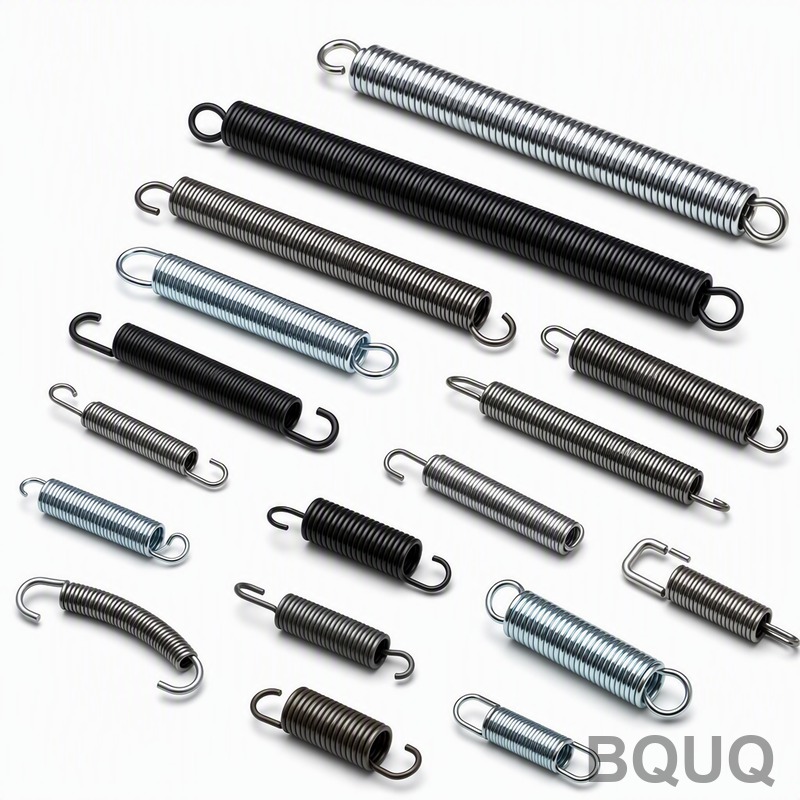
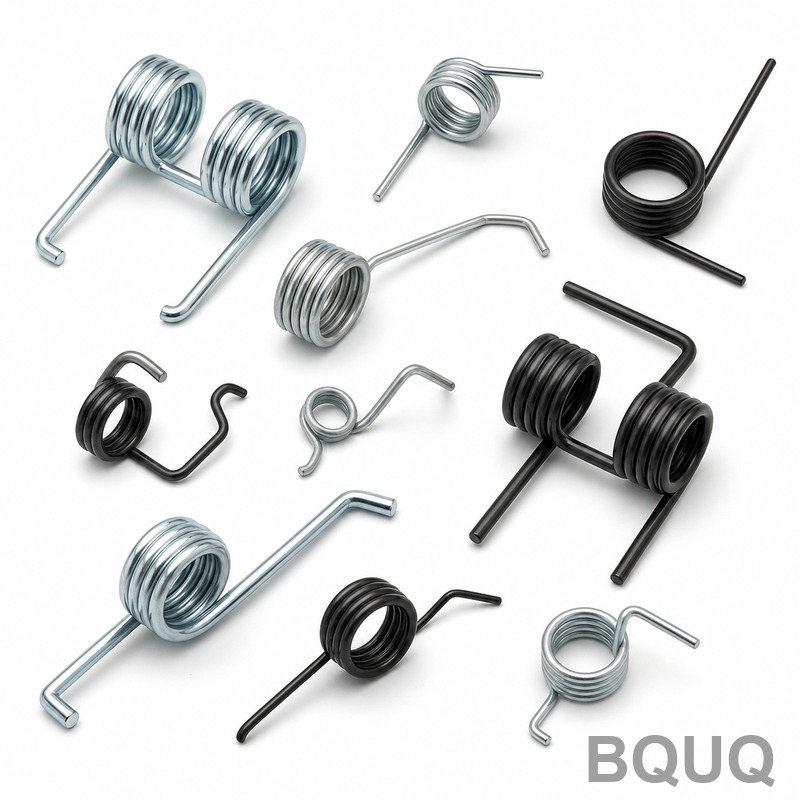
A compression tester is used for compression springs, applying a downward force to a platen, while a tensile tester is for extension springs, pulling the spring ends apart. For torsion springs, a torsion tester applies a rotational moment and measures the torque in N·mm. Many modern universal testers can handle both compression and tension with interchangeable grips, but dedicated load testers are faster for production lines. At BQUQ, we use motorized testers with a capacity range of 10 N to 50 kN, covering everything from micro springs in electronics to heavy-duty springs in industrial machinery.
What Is the Expected Cost and Lead Time for Load Testing Services?
The cost of load testing is typically included in the spring unit price, adding approximately 1% to 3% for sampling-based inspection and 5% to 10% for 100% automated testing. Tooling for custom test fixtures, such as specific mandrels or platens, costs between $200 and $800 per design, with a lead time of 3 to 5 days. The testing itself adds 1 to 2 days to the production lead time for a standard order of 5,000 to 50,000 springs. We provide a full load test report with each shipment, and the raw data is archived for 10 years for traceability.
How Do You Validate Load Test Equipment Calibration?
Calibration of load cells is performed every 6 months or after 500,000 cycles, whichever comes first, using certified dead-weight calibration machines traceable to national standards. The load cell accuracy is verified at 10%, 50%, and 100% of its full scale, with a maximum deviation of +/- 0.5%. A daily check is also performed using a master spring with a known load, and the tester is rejected if the reading deviates by more than 1% from the master value. This rigorous calibration schedule ensures that our load testing data remains reliable and defensible in any quality audit.
Conclusion
Spring load testing is not a simple go/no-go check; it is a comprehensive quality assurance process that verifies material properties, geometric accuracy, and manufacturing consistency. By combining scragging, precise load measurement, statistical process control, and environmental control, BQUQ ensures that every spring delivers the exact force performance your application requires. Whether you need 100% inspection for automotive safety parts or sampling for consumer electronics, our 20 years of precision manufacturing experience guarantees reliable, repeatable results.
What Is the Difference Between Load Testing and Rate Testing?
Load testing measures the force at a specific height, while rate testing measures the slope of the force-deflection curve over a range of heights. A spring can have the correct load at one height but a wrong rate, which would cause premature failure in a variable-load application. Both tests are usually performed together in one cycle to fully characterize the spring’s performance.
Can Load Testing Be Performed on Springs With Non-Linear Characteristics?
Yes, non-linear springs, such as variable-pitch or conical springs, can be load tested, but the procedure requires multiple test points along the deflection range. The rate is not constant, so the report will show a curve or a table of load values at multiple heights. The tolerance for each point is applied individually, and the test machine must be capable of continuous data acquisition.
How Many Springs Should Be Tested in a Batch for Statistical Confidence?
For a batch of 1,000 springs, a standard sampling plan (AQL 0.65) requires 125 samples with an acceptance number of 2 defects. For high-reliability applications, we recommend 100% inspection, especially if the spring failure could cause injury or significant downtime. Our automated sorters make 100% testing cost-effective for batches up to 100,000 pieces.
What Is the Minimum Load Tolerance That Can Be Achieved?
With high-precision coiling equipment and tight wire diameter control, a load tolerance of +/- 1% can be achieved for simple compression springs. This requires a very stable material and a controlled manufacturing environment, and it increases the unit cost by approximately 20%. For most commercial applications, a tolerance of +/- 5% is standard and more economical.
When Should a Spring Be Tested for Fatigue Life?
Fatigue testing is required when a spring will undergo more than 10,000 cycles in service, or when the design stress exceeds 50% of the material’s tensile strength. We perform fatigue testing on sample lots, typically 5 to 10 pieces, running them to 1 million cycles at the specified frequency. The test takes 2 to 5 days, and the results determine the spring’s safe operating range.
Which Spring Materials Are Easiest to Load Test Consistently?
Oil-tempered chrome-silicon steel and stainless steel 302 offer the most consistent load results due to their uniform modulus of elasticity and stable microstructure. Music wire (SAE 1080) is also consistent but requires careful scragging to remove initial set. Inconel and other high-temperature alloys have a higher modulus variation, so they require more stringent temperature control during testing.
How Fast Can a Load Test Be Performed on a Fully Automated Line?
A fully automated cam-driven load tester can test up to 3,000 springs per hour for simple compression springs with one test height. For springs requiring multiple test heights or rate calculations, the speed drops to 800 to 1,200 parts per hour. The limiting factor is the stabilization time needed for the load cell reading to settle, which is typically 100 to 300 milliseconds.
For a detailed load test plan or a quote on precision springs, contact BQUQ today and receive a response within 12 hours. Our engineering team will review your drawings and specifications to recommend the optimal testing strategy. Reach us at sc@bquq.com, on WhatsApp at +86 13713157787, or visit www.bquq.com.
Related Articles
- Where to Buy Custom Metal Springs Online: Top 7 Suppliers
- Size control and online intelligent detection technology of precision spring
- In-depth analysis of technology and process in the hardware spring industry in 2026: a full-dimensional interpretation of high stress, functional integration and engineering certification