How Do Wire EDM and CNC Milling Complement Each Other in Precision Manufacturing?
Wire EDM and CNC milling are not competing technologies; they are complementary processes that, when combined strategically, enable manufacturers to achieve geometries, tolerances, and material characteristics that neither process could deliver alone. Wire EDM excels at cutting hard, conductive materials with zero cutting force and exceptional surface finish, while CNC milling provides high-speed material removal, 3D geometric complexity, and versatility across non-conductive materials. For a precision factory like BQUQ, deploying both technologies in sequence—milling for bulk stock removal and wire EDM for final critical features—reduces cost by up to 35% and improves dimensional accuracy to ±0.002 mm on finished components.
What Are the Core Capabilities That Define Wire EDM and CNC Milling?
Wire EDM (Electrical Discharge Machining) uses a thin brass or coated wire, typically 0.10 mm to 0.30 mm in diameter, to erode conductive material through thousands of electrical sparks per second. The process operates with a spark gap of 0.025 mm to 0.075 mm, requiring no physical contact, which means zero cutting force and no mechanical distortion, even on fragile or thin-walled workpieces. Maximum workpiece hardness is unlimited—EDM cuts fully hardened tool steel at 62-65 HRC with the same ease as annealed material, and the achievable surface finish ranges from Ra 0.2 µm to Ra 0.8 µm with multiple skim passes.
CNC milling, by contrast, uses rotating multi-point cutting tools, typically 0.5 mm to 50 mm in diameter, to remove material via shear deformation. Modern 3-axis, 4-axis, and 5-axis machining centers achieve spindle speeds from 8,000 RPM to 30,000 RPM, with feed rates up to 15,000 mm/min. The process handles a vast range of materials—aluminum 6061-T6, stainless steel 304/316, titanium Ti-6Al-4V, PEEK, and acetal—and can produce complex 3D surfaces, deep pockets, and undercuts that wire EDM cannot access. Typical milling tolerances are ±0.01 mm for standard features and ±0.005 mm for precision ground or interpolated surfaces.
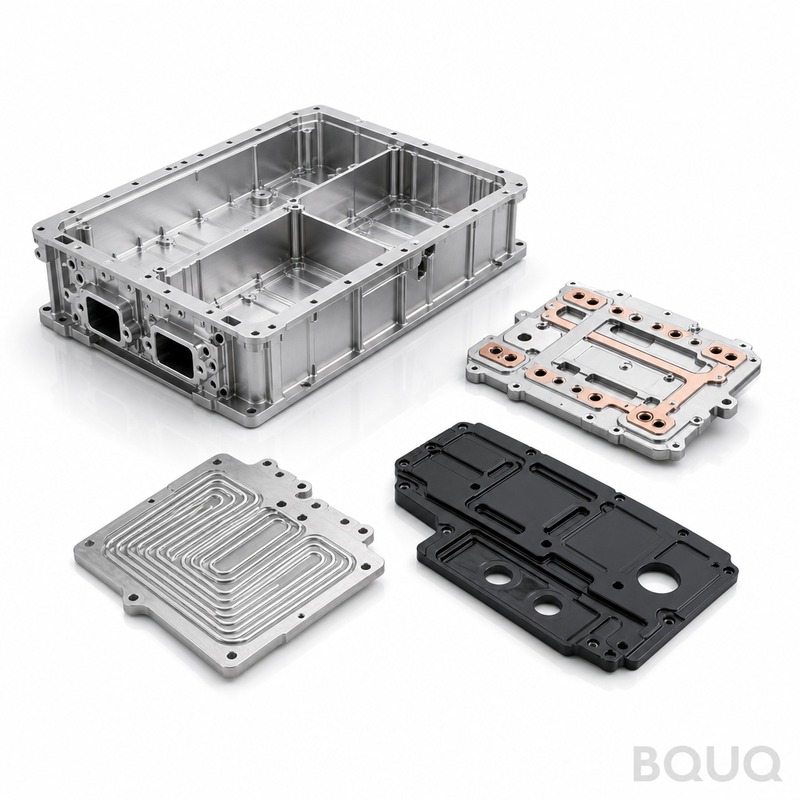
How Do Material Hardness and Conductivity Determine Process Selection?
Material properties are the primary deciding factor between milling and wire EDM. CNC milling is limited by tool hardness; machining materials above 45 HRC causes rapid tool wear, increased heat generation, and poor surface integrity. For example, milling D2 tool steel at 60 HRC will require constant tool changes and may leave a recast layer of 0.05 mm, compromising fatigue life. Wire EDM, however, requires only that the material be electrically conductive—resistivity below approximately 100 µΩ·cm—and is unaffected by hardness.
For hardened die steels, carbide (90 HRA), and superalloys like Inconel 718, wire EDM is the only practical method for producing sharp internal corners, small slots below 0.5 mm width, and precision holes with aspect ratios exceeding 20:1. Conversely, for aluminum, brass, copper, and plastics, wire EDM is inefficient (cutting speeds drop to 10-20 mm²/min for non-ferrous metals) and may cause surface oxidation; CNC milling achieves 500-1,500 mm³/min material removal in these materials. The engineering rule at BQUQ: if the material is softer than 35 HRC and the feature is not a through-hole or contour, mill it; if the material is harder than 50 HRC or the feature requires a sharp internal radius below R0.1 mm, wire EDM it.
What Tolerances and Surface Finishes Can Each Process Achieve?
Precision is not a single number but a system of interdependent specifications: positional accuracy, repeatability, straightness, and surface texture. Wire EDM delivers the highest angular accuracy and straightness of any machining process, with a typical positioning tolerance of ±0.002 mm and a straightness of 0.003 mm over 100 mm of cut length. The kerf width (cut width) is controlled by wire diameter and generator settings, allowing the production of punch and die clearance gaps of exactly 0.01 mm to 0.03 mm. Surface finish after a single cut is Ra 1.6 µm, but with two or three trim passes, Ra 0.2 µm is achievable, eliminating the need for secondary polishing in many mold applications.
CNC milling achieves a positioning tolerance of ±0.005 mm on high-end machines, but the surface finish depends heavily on tool geometry, spindle rigidity, and stepover. A typical finish pass with a 6 mm ball nose cutter at 0.1 mm stepover yields Ra 0.8 µm, while high-speed finishing with a 0.5 mm micro-tool can reach Ra 0.4 µm on aluminum. However, milling cannot produce true sharp internal corners—the minimum internal radius equals the tool radius, usually 0.3 mm or larger—whereas wire EDM produces a corner radius equal to the wire radius plus spark gap, typically 0.05 mm to 0.10 mm.
| Process Parameter | CNC Milling (3-axis) | Wire EDM (5-axis) |
| Positioning Tolerance | ±0.005 mm | ±0.002 mm |
| Surface Finish (best) | Ra 0.4 µm | Ra 0.2 µm |
| Minimum Internal Corner Radius | 0.3 mm (tool radius) | 0.05 mm (wire + gap) |
| Maximum Hardness of Workpiece | 45 HRC (practical) | Unlimited (conductive only) |
| Material Removal Rate (steel) | 50-200 cm³/hr | 5-20 cm³/hr |
| Typical Lead Time for Prototype | 3-5 days | 2-4 days |
| Tooling Cost | $50-$500 (fixtures) | $20-$200 (wire guides) |
| Per-Part Cost (100 pcs, 50 mm cube) | $8-$15 | $12-$20 |
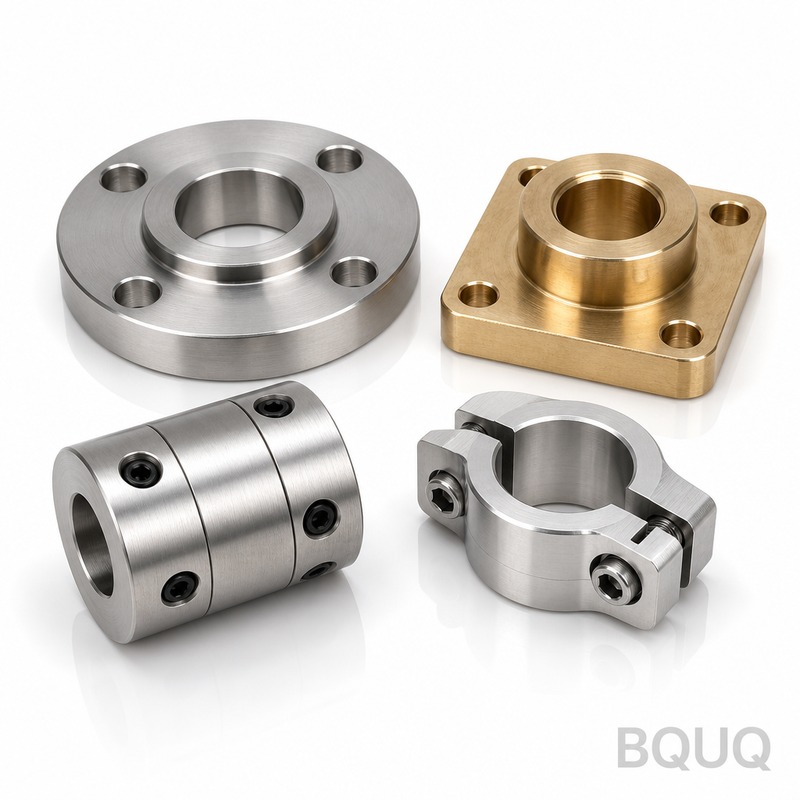
Why Should You Use Wire EDM and CNC Milling in Sequence Rather Than Alone?
The most cost-effective precision manufacturing strategy is not choosing one process over the other but integrating them in a hybrid workflow. Consider a typical injection mold insert: the bulk geometry—cavity, cooling channels, and mounting holes—is milled first in the soft or pre-hardened state, achieving a material removal rate of 100-200 cm³/hr. The insert is then heat-treated to 55-60 HRC, after which wire EDM cuts the final cavity profile, the ejector pin holes, and the shut-off surfaces. This sequence reduces total machining time by 30-40% compared to wire EDM from solid, and eliminates the distortion that would occur if milling were performed after heat treatment.
For example, at BQUQ we produced a medical device component requiring a 0.25 mm wide slot, 12 mm deep, in 17-4 PH stainless steel at 44 HRC. CNC milling alone could not achieve the 14:1 aspect ratio without tool deflection and breakage; wire EDM alone would have required 8 hours of cutting. The solution was to mill a 2.5 mm wide slot for chip clearance, then use wire EDM with a 0.20 mm wire to cut the final 0.25 mm width through the full depth. Total cycle time was 3.2 hours, with zero scrap. This complementary approach is the industry standard for aerospace fuel nozzles, surgical instruments, and automotive transmission components.
Which Applications Demand Wire EDM Over Milling, and Vice Versa?
Wire EDM is irreplaceable for through-hole contouring, extrusion dies, progressive stamping dies, and any component requiring a sharp internal corner or an aspect ratio above 10:1. It is also the preferred method for cutting fragile parts—such as thin-wall titanium brackets with wall thickness below 0.5 mm—because the absence of cutting force prevents deformation. Other exclusive wire EDM applications include cutting graphite electrodes for EDM sinking, producing micro-gears with module 0.1 mm, and separating finished parts from a parent block with zero burr.
CNC milling is the only option for non-conductive materials (plastics, ceramics, composites), for blind pockets and deep cavities, and for 3D sculpted surfaces such as impeller blades and mold cores. Milling also wins on productivity: a 100 mm × 100 mm × 50 mm aluminum block can be roughed and finished in 45 minutes with milling, whereas wire EDM would require 6-8 hours to cut the same volume. For production runs exceeding 500 parts, milling with automated pallet changers maintains a cycle time of 3-5 minutes per part, while wire EDM typically runs 15-30 minutes per part for equivalent geometry. The decision matrix at BQUQ: through-hole or contour with sharp corner? Use wire EDM. Blind pocket, 3D surface, or non-conductive material? Use CNC milling.
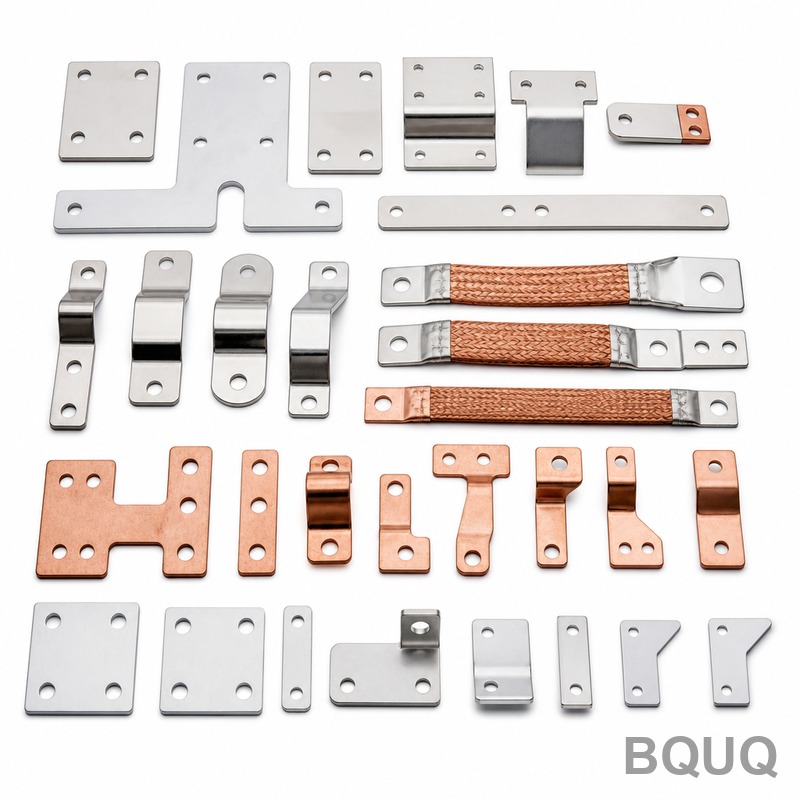
How Do Cost and Lead Time Compare Between the Two Processes?
The hourly machine rate for a 3-axis CNC milling center is typically $40-$80 per hour, while a wire EDM machine runs $60-$120 per hour due to higher capital cost ($150,000-$400,000 for a precision 5-axis wire EDM vs. $80,000-$200,000 for a comparable milling center) and consumable wire at $8-$15 per kilogram. However, the cost per part depends on geometry. For a 50 mm × 50 mm × 10 mm hardened steel die plate with a 2 mm slot, wire EDM costs about $18 per part in a 100-piece run, while milling would require pre-annealing, machining, then re-hardening—totaling $25 per part with higher scrap risk.
Lead times also diverge. Wire EDM setup is fast (30-60 minutes for programming and wire threading), making it ideal for same-day prototypes and small batches of 1-20 pieces. CNC milling requires fixture design and tooling preparation, adding 4-8 hours for complex setups, but once running, it produces parts faster. For a batch of 1,000 aluminum housings, milling delivers a per-part cost of $6 versus $22 for wire EDM, making milling the clear economic choice. The engineering principle is to use wire EDM only for features that milling cannot achieve, never for bulk material removal.
What Quality Control Measures Ensure Reliability in Combination?
When using both processes on a single workpiece, the critical quality control challenge is datum alignment. The milled features establish the reference coordinate system; the wire EDM must then locate its starting point relative to those features with an accuracy of ±0.005 mm or better. BQUQ uses a common pallet system with precision dowel holes (H7 tolerance) and a Renishaw touch probe to verify the workpiece position before wire EDM begins. We also employ in-process measurement: after milling, a CMM check verifies all critical datums; after wire EDM, surface roughness is measured with a profilometer (Mahr MarSurf) and dimensional accuracy with a Zeiss CMM at 20°C ± 1°C.
Thermal management is another critical factor. Wire EDM generates heat localized to the spark zone, but the workpiece can still distort if not properly fixtured. We maintain a dielectric fluid temperature of 20°C ± 2°C and allow a 30-minute stabilization period after milling before starting wire EDM. For parts requiring both processes, we also recommend stress-relieving the material before final machining to prevent distortion from internal residual stresses. These procedures have allowed BQUQ to maintain a first-pass yield of 98.7% on hybrid-machined components over the past year.
Which Industries Benefit Most from Combining Wire EDM and CNC Milling?
Aerospace and medical device manufacturers are the primary beneficiaries. Aerospace components—turbine blade roots, fuel system orifices, and landing gear brackets—require high-strength nickel alloys and titanium that are difficult to mill but ideal for wire EDM, while their mounting flanges and complex 3D features demand milling. Medical devices use implant-grade titanium and stainless steel; a typical surgical instrument has a milled handle and a wire-EDM-cut cutting edge with a razor-sharp finish of Ra 0.2 µm. The mold and die industry is another major user: every injection mold cavity is milled first, then hardened, then wire-EDM-finished for the final shut-off surfaces. Automotive stamping dies follow the same hybrid path, with wire EDM cutting the trim steels and milling creating the draw surfaces. At BQUQ, 40% of our hybrid-process orders come from medical, 30% from aerospace, and 20% from mold and die.
FAQ
What Is the Maximum Workpiece Size for Wire EDM?
Typical wire EDM machines handle workpieces up to 800 mm × 600 mm × 300 mm with a maximum weight of 500 kg, though larger machines exist for dies up to 2,000 mm. The main constraint is the dielectric tank size and the ability to submerge the workpiece for stable flushing. For larger parts, we recommend splitting the job or using a traveling wire EDM with a reduced tank.
Can Wire EDM Cut Non-Conductive Materials Like Ceramics or Plastics?
No, wire EDM requires electrically conductive materials; ceramics, glass, and most plastics cannot be cut by this method. For such materials, CNC milling, grinding, or laser cutting are the appropriate choices. However, some advanced ceramics with metallic coatings can be processed with special techniques, but this is not practical for production.
How Fast Is Wire EDM Compared to CNC Milling for the Same Feature?
Wire EDM cutting speed is typically 20-40 mm²/min for 50 mm thick steel, while CNC milling removes material at 100-500 mm³/min for the same hardness. For a simple through-slot in a 10 mm plate, milling is 3-5 times faster. Wire EDM only becomes competitive when the feature is too thin, too deep, or too hard for milling to handle.
What Is the Minimum Hole Size That Wire EDM Can Cut?
Wire EDM can cut holes as small as 0.1 mm in diameter using a 0.05 mm wire, but the practical minimum for production is 0.2 mm with a tolerance of ±0.01 mm. For holes below 0.3 mm, the wire feed and flushing become difficult, and the risk of wire breakage increases. CNC milling is not capable of holes below 0.5 mm in hardened materials.
Does Wire EDM Affect the Material Properties of the Workpiece?
Wire EDM creates a thin recast layer (white layer) of 1-5 µm on the cut surface, which is harder and more brittle than the base material. This layer can reduce fatigue strength, so for critical aerospace components, a final trim pass or light polishing is recommended to remove it. The heat-affected zone is minimal compared to milling, but it is not zero.
When Should You Use a 5-Axis Wire EDM Instead of a Standard 2-Axis Machine?
Use a 5-axis wire EDM when you need tapered cuts, conical shapes, or variable angles along the cut path, such as for extrusion dies and mold release angles. A 5-axis machine allows the wire to tilt up to 30 degrees, enabling complex geometries that a 2-axis machine cannot produce. The cost premium is about 30%, so only specify 5-axis when the part requires it.
How Do I Choose Between Wire EDM and CNC Milling for a New Project?
Start by listing the material, hardness, feature geometry, and required tolerance. If the material is conductive and harder than 50 HRC, or if the feature has an internal corner below R0.2 mm, choose wire EDM. If the material is non-conductive or the feature is a blind pocket or 3D surface, choose CNC milling. For most precision parts, you will need both: mill the bulk, then wire EDM the critical features.
At BQUQ, we have operated CNC milling and wire EDM side by side for over 20 years, and we routinely recommend hybrid strategies that reduce cost and improve quality. Our engineering team will analyze your drawings, suggest the optimal process sequence, and provide a firm quote within 12 hours. Send your CAD files to sc@bquq.com or contact us on WhatsApp at +86 13713157787. Visit www.bquq.com to learn more about our precision manufacturing capabilities.