How Does CNC Machining Titanium Affect Tolerances and Cost?
CNC machining titanium is challenging but highly achievable, with standard tolerances of +/- 0.005 inches (0.13 mm) and precision tolerances down to +/- 0.002 inches (0.05 mm). The material's low thermal conductivity and high strength require specific tooling, coolant strategies, and feed rates to prevent work hardening and tool failure. This article details the exact parameters, costs, and best practices for successful titanium CNC machining, based on two decades of production experience at our Dongguan facility.
What Makes Titanium So Difficult to Machine Compared to Steel or Aluminum?
Titanium's difficulty stems from its physical properties, not its hardness. Its thermal conductivity is only 7.2 W/m·K, roughly 15 times lower than aluminum (205 W/m·K) and 6 times lower than steel (50 W/m·K). This means heat generated during cutting stays in the cutting zone, concentrating on the tool edge. Additionally, titanium has a high chemical reactivity at temperatures above 500°C, causing it to weld onto the cutting tool, leading to premature tool failure.
The material also exhibits a low modulus of elasticity (around 114 GPa for Grade 5 Ti-6Al-4V), which causes workpiece deflection, especially in thin-walled sections. The combination of high strength (yield strength of 880 MPa for Grade 5) and low thermal conductivity creates a "spring-back" effect, making dimensional accuracy harder to maintain. Unlike steel, titanium does not form a segmented chip easily; it forms long, stringy chips that can wrap around the tool, increasing the risk of breakage and poor surface finish.
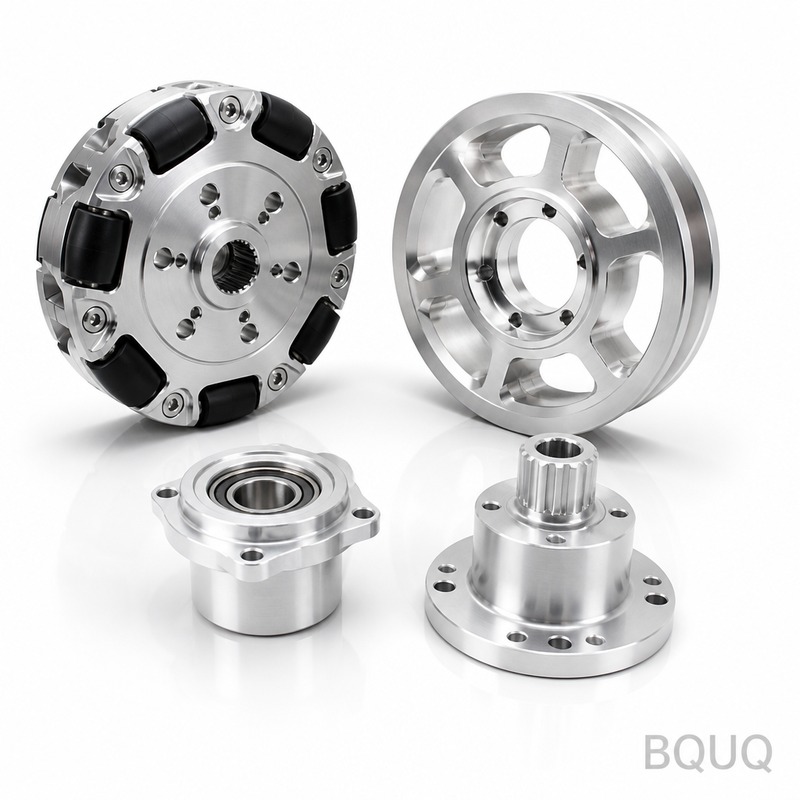
What Tolerances Can CNC Machining Achieve on Titanium Parts?
For most production titanium components, standard machining tolerances are +/- 0.005 inches (0.13 mm) on linear dimensions and +/- 0.001 inches (0.025 mm) on hole diameters. However, with rigid fixturing and optimized tool paths, precision tolerances of +/- 0.002 inches (0.05 mm) on critical features are consistently achievable. Our BQUQ facility routinely holds +/- 0.0005 inches (0.013 mm) on ground surfaces and bore diameters for aerospace-grade components.
The achievable tolerance is heavily dependent on part geometry and wall thickness. For parts with wall thicknesses below 0.040 inches (1 mm), thermal expansion becomes a significant factor, and tolerances must be relaxed to +/- 0.005 inches. Surface finishes on titanium typically range from 32 to 63 microinches Ra for standard milling, with 16 microinches Ra achievable using high-speed finishing passes with ceramic inserts. For reference, the table below shows our production data across different titanium grades.
| Titanium Grade | Typical Yield Strength (MPa) | Standard Tolerance (mm) | Precision Tolerance (mm) | Typical Surface Finish (Ra) | Machinability Rating |
| Grade 2 (Commercially Pure) | 275 | +/- 0.13 | +/- 0.05 | 1.6 | Moderate |
| Grade 5 (Ti-6Al-4V) | 880 | +/- 0.13 | +/- 0.05 | 0.8 | Difficult |
| Grade 23 (Ti-6Al-4V ELI) | 795 | +/- 0.13 | +/- 0.05 | 0.8 | Difficult |
| Grade 9 (Ti-3Al-2.5V) | 620 | +/- 0.13 | +/- 0.05 | 1.6 | Moderate |
How Should Cutting Parameters Be Set for Titanium Machining?
Cutting speeds for titanium must be significantly lower than for steel or aluminum to manage heat. For roughing operations with carbide tools, the recommended cutting speed is 30 to 60 surface feet per minute (SFM) (9 to 18 m/min) with a depth of cut of 0.040 to 0.100 inches (1.0 to 2.5 mm). For finishing operations, speeds can increase to 80 to 120 SFM (24 to 36 m/min) with a reduced depth of cut of 0.010 to 0.020 inches (0.25 to 0.50 mm).
Feed rates should be maintained at 0.004 to 0.008 inches per tooth (0.10 to 0.20 mm/tooth) to avoid work hardening. A critical rule is to never let the tool dwell without cutting; this causes immediate work hardening on the surface. We recommend using a constant chip load through variable helix end mills to reduce harmonic vibrations. For high-speed machining (HSM), using a radial engagement of 10-20% of tool diameter with axial depths of 1.5x the tool diameter can increase metal removal rates by 30% while keeping heat in the chip rather than the workpiece.
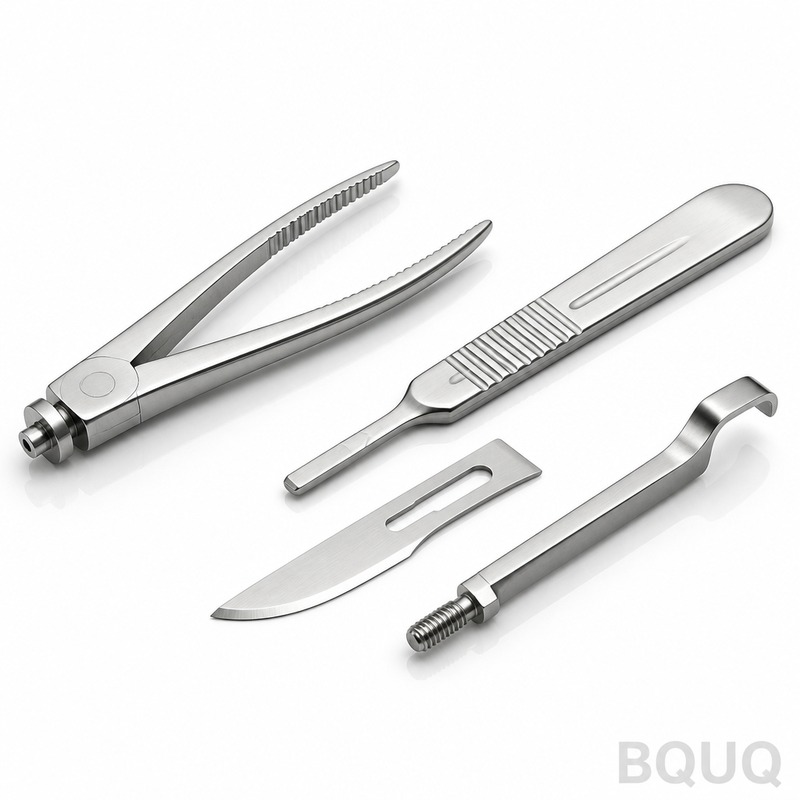
Which Coolant and Tooling Are Best for Titanium CNC Machining?
High-pressure coolant delivery, at 70 to 100 bar (1000 to 1450 psi), is essential for titanium machining. The coolant must be directed precisely at the cutting edge to flush chips and remove heat. Flood coolant alone is insufficient; without high pressure, the tool edge temperature can exceed 1000°C, leading to rapid failure. We use a water-soluble coolant at a 5-8% concentration, which provides the necessary lubrication and cooling.
For tooling, micro-grain carbide with a titanium aluminum nitride (TiAlN) or aluminum titanium nitride (AlTiN) coating is the standard choice. These coatings provide a hardness of 3,000 HV and oxidation resistance up to 800°C. In our experience, using uncoated carbide tools for finishing operations can extend tool life by 15% when speeds are reduced to 40 SFM. For high-volume production, cubic boron nitride (CBN) inserts are viable for turning operations, though their cost is 3-4 times higher than carbide, they offer a 200% increase in tool life at speeds above 150 SFM.
How Much Does CNC Machining Titanium Cost per Part?
The cost of CNC machining titanium is typically 3 to 5 times higher than machining aluminum 6061 and 1.5 to 2 times higher than machining stainless steel 304. For a simple bracket of 50mm x 50mm x 10mm, the machining cost in titanium is approximately USD 15 to 25 per part for quantities of 100 units. This cost rises to USD 8 to 12 per part for quantities of 1,000 units, reflecting lower setup amortization.
Material cost is the dominant factor. Titanium Grade 5 bar stock costs approximately USD 45 to 60 per kilogram, compared to USD 3 to 5 per kilogram for aluminum. For a part with a 3:1 buy-to-fly ratio (i.e., 3 kg of raw material for every 1 kg of finished part), the material cost alone for a 0.5 kg finished part is USD 67 to 90. Tooling costs also add 20-30% to the total. A standard tooling package for a titanium part (fixture, 3 end mills, 2 drills) runs USD 800 to 1,500, amortized over the order quantity.
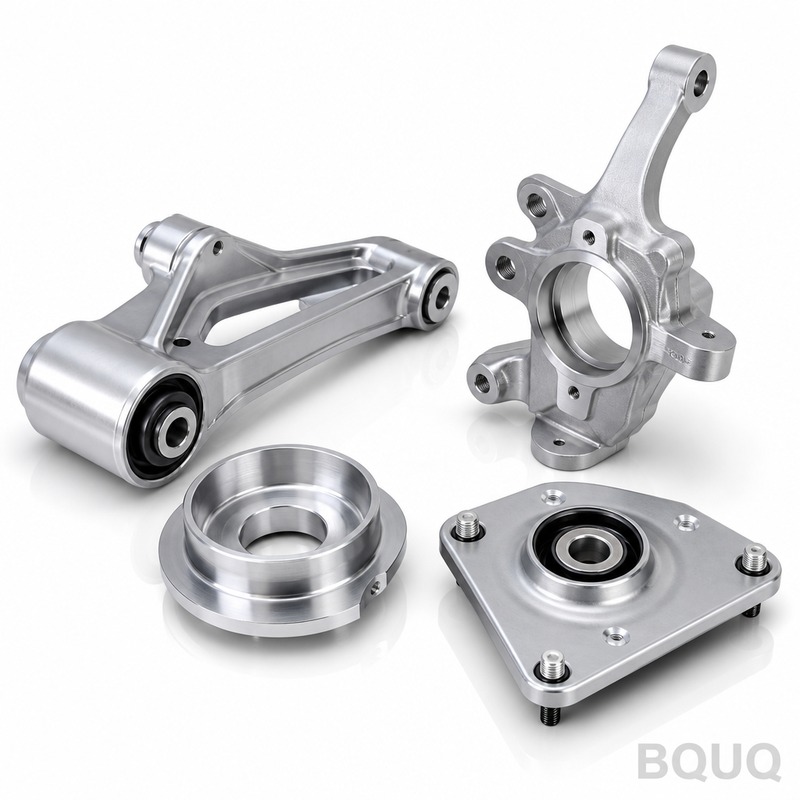
Why Is Surface Integrity Critical for Titanium Aerospace Components?
Surface integrity is critical because titanium components in aerospace are subject to high cyclic loads and fatigue failure. A damaged surface layer, caused by excessive heat or work hardening, can reduce fatigue strength by up to 40%. The alpha case, a brittle oxygen-enriched layer, forms on titanium surfaces exposed to temperatures above 500°C during machining. This layer must be completely removed, typically by chemical milling or mechanical polishing, to a depth of 0.002 to 0.004 inches (0.05 to 0.10 mm).
We mitigate this by ensuring cutting parameters prevent the workpiece surface from exceeding 300°C. This is achieved by maintaining sharp cutting edges and using climb milling to reduce heat generation. Post-machining, we perform a surface integrity check using a micro-hardness test and a microstructure examination on the first article. Residual stresses in titanium parts are compressive if machined correctly, which is beneficial for fatigue life. Tensile residual stresses, which are detrimental, only occur with improper tool wear or excessive heat.
When Should You Choose CNC Machining Over Other Manufacturing Methods for Titanium?
CNC machining is the optimal choice for titanium parts when quantities are between 1 and 5,000 units, when the design has complex 3D geometries with tight tolerances, or when the part requires specific material properties that pre-formed shapes do not offer. For quantities above 5,000 units, investment casting or metal injection molding (MIM) become more economical, though they offer lower dimensional accuracy (typically +/- 0.010 inches) and require significant upfront tooling costs of USD 10,000 to 50,000.
CNC machining is also preferred when prototype iteration is required; changes to a CNC program are instantaneous, whereas casting dies take 4 to 8 weeks to modify. For very large parts (over 1 meter in length) with thin walls, CNC machining from a forged billet is the only viable method to maintain structural integrity. Conversely, if the design is a simple flat shape with uniform thickness, stamping or water jet cutting followed by grinding is more cost-effective.
FAQ
Can Titanium Be Welded After CNC Machining?
Yes, titanium can be welded, but it requires a strict inert gas shielding environment (argon) to prevent oxygen and nitrogen contamination. The heat-affected zone must be protected until the temperature drops below 300°C, and the weld area must be free of all oils and contaminants to prevent porosity.
What Is the Maximum Part Size for Titanium CNC Machining?
Our maximum machining envelope is 2000mm x 1000mm x 500mm for titanium parts. Above this size, the risk of vibration and thermal expansion increases significantly, making it difficult to hold tolerances tighter than +/- 0.010 inches without specialized stress-relief processes.
How Long Does It Take to Machine a Typical Titanium Part?
A simple titanium block (50mm cube) takes approximately 45 minutes to machine. A complex aerospace component with deep cavities can take 6 to 10 hours. Compared to aluminum, titanium machining time is typically 2.5 to 3 times longer due to slower speeds and feed rates.
Do Titanium Parts Require Heat Treatment After Machining?
No, titanium parts generally do not require post-machining heat treatment unless they have been welded or the material was supplied in the annealed condition and needs to reach a higher strength grade. Most aerospace titanium is supplied in the solution-treated and aged condition, which maintains its properties after machining.
What Is the Minimum Wall Thickness for Machined Titanium?
The minimum reliable wall thickness for CNC machined titanium is 0.020 inches (0.5 mm) for sections under 10mm in height. For taller walls, we recommend a minimum of 0.040 inches (1.0 mm) to prevent deflection and chatter during machining.
Can Tapping Threads Be Done Directly in Titanium?
Yes, but thread milling is strongly preferred over tapping. Thread milling produces less torque and allows for better chip evacuation. For M6 threads, we recommend using a single-point thread mill at 30 SFM with a feed of 0.0015 inches per tooth to achieve a 2B thread class fit.
Which Industries Use the Most CNC Machined Titanium?
The aerospace industry dominates, using over 70% of all machined titanium for structural components, engine parts, and landing gear. The medical industry is second, using Grade 23 ELI for surgical implants and bone screws, due to its biocompatibility.
In conclusion, successful CNC machining of titanium requires a disciplined approach to cutting parameters, tooling selection, and coolant pressure. While the material presents significant challenges, holding tolerances of +/- 0.005 inches is routine with the correct processes. The key is to control heat at the cutting edge and maintain a rigid setup to counteract the material's spring-back tendencies. For engineers seeking a reliable production partner, our facility is equipped with 4-axis and 5-axis CNC machines and high-pressure coolant systems specifically configured for titanium.
At BQUQ, we provide free DFM feedback and a 12-hour quoting service for your titanium parts. Our team of 20 engineers will review your drawings and recommend the most cost-effective machining strategy. Contact us at sc@bquq.com or via WhatsApp at +86 13713157787 to discuss your project, or visit our website at www.bquq.com to submit your files for an immediate quote.
Related Articles
- Custom CNC Machining Services: A Complete Guide for Engineers
- CNC Turn-Mill Composite Machining, Turn-Mill Machine Tools, One-Time Forming, B-Axis Turn-Mill Center, Multi-Process Integration, Complex Rotary Part Machining, Medical Device Precision Machining
- Adaptive Control and AI Real-Time Optimization in CNC Machining: From Experience to Algorithm