How Does Heat Sink Surface Treatment Affect Thermal Performance?
Surface treatment directly determines a heat sink's ability to transfer heat to the surrounding air by increasing effective surface area and emissivity. Anodizing, for example, can improve radiative heat dissipation by up to 20% at elevated temperatures, while powder coating or nickel plating can add 0.1 to 0.3 mm of insulating thermal resistance if applied too thickly. Choosing the correct treatment is not a cosmetic decision; it is a thermal engineering specification that can lower junction temperatures by 5 to 15°C in natural convection applications.
How Does Anodizing Improve Radiative Heat Transfer?
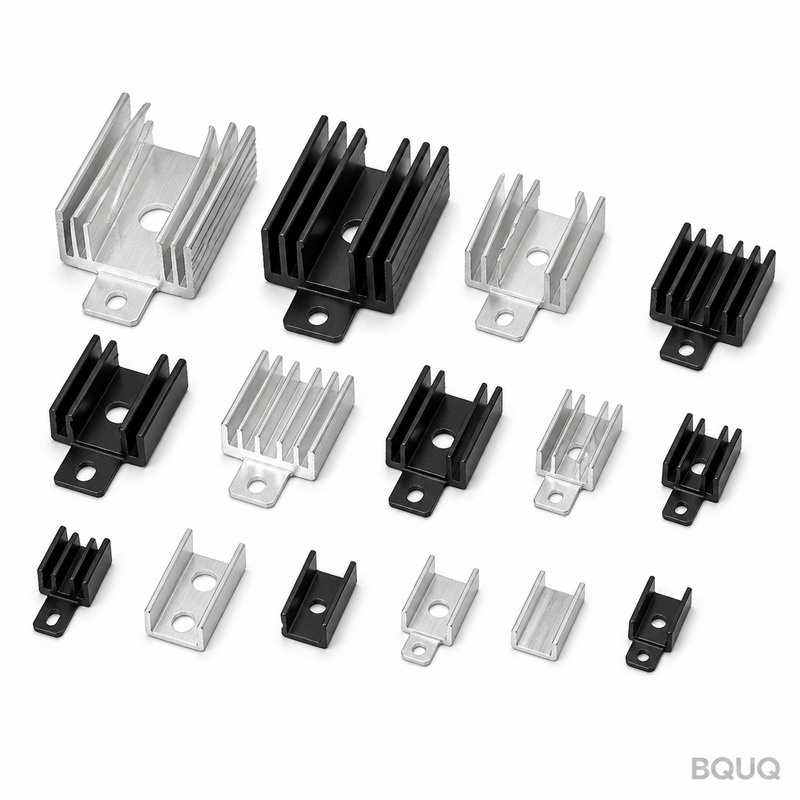
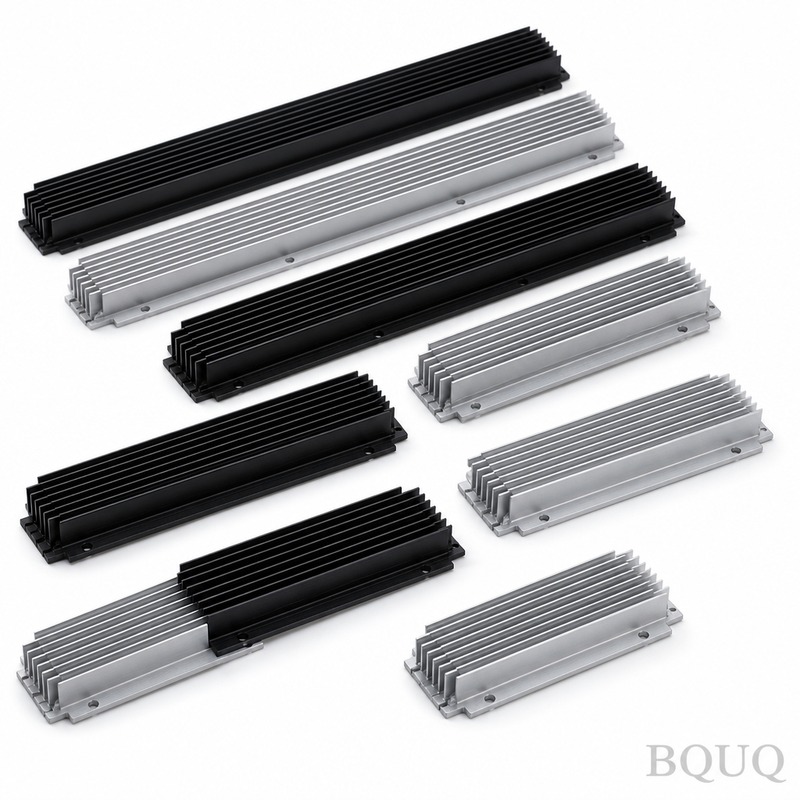
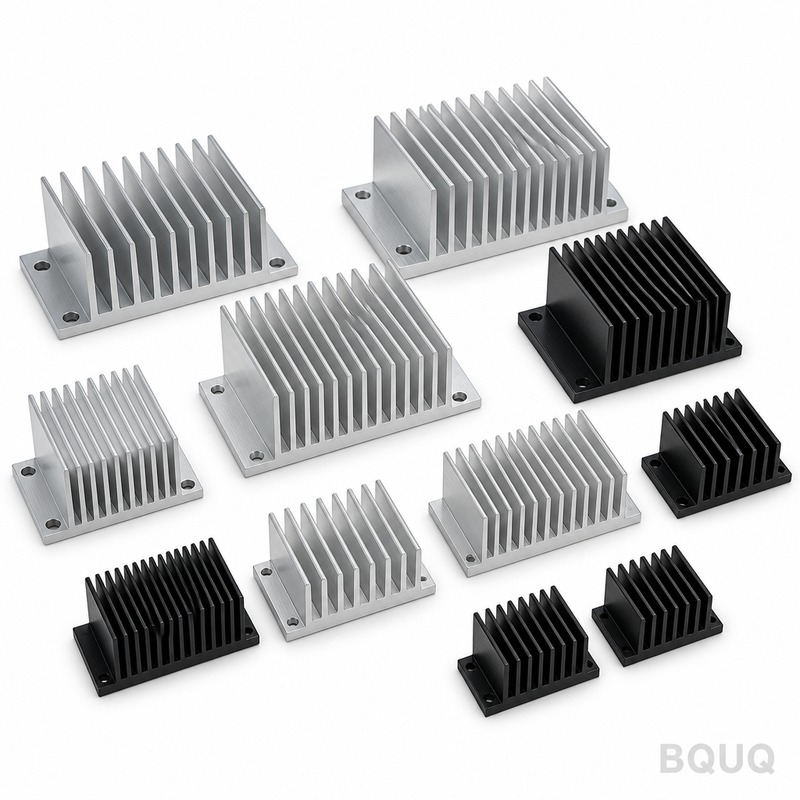
Anodizing creates a porous aluminum oxide layer that is typically 5 to 25 microns thick. This layer increases the surface emissivity from roughly 0.05 for polished bare aluminum to 0.80 to 0.90, which dramatically enhances the heat sink's ability to reject heat via radiation. In natural convection scenarios, where airflow is below 1 m/s, radiation can account for 25% to 35% of total heat dissipation, making a black anodized finish a critical performance upgrade rather than an aesthetic one. The thermal conductivity of the anodic layer itself is low (around 1.0 W/m·K), but at thicknesses under 25 microns, the added conductive resistance is negligible, typically less than 0.1 °C/W for a standard extruded profile.
What Is the Difference Between Type II and Type III (Hard) Anodizing?
Type II anodizing produces a thinner, more porous layer (5 to 15 microns) that is optimal for thermal emissivity and is the industry standard for most CPU and LED heat sinks. Type III hard anodizing creates a thicker layer (25 to 50 microns) with higher wear resistance, but it adds measurable thermal resistance; a 50-micron layer can increase thermal impedance by 0.15 to 0.3 °C-in²/W compared to bare aluminum. For high-power density applications exceeding 100 W/cm², engineers should specify Type II with a limited thickness of 10 to 15 microns to balance emissivity gains against conductive losses. Our factory in Dongguan typically applies Type II anodizing at a cost addition of $0.50 to $2.00 per heat sink depending on surface area and color.
Which Surface Treatments Are Best for Forced Convection vs. Natural Convection?
For forced convection (airflow above 2 m/s), radiation contributes less than 10% of total heat transfer, so a bare aluminum or nickel-plated surface is often sufficient and preferred due to lower cost. In natural convection (no fan), a black anodized or black powder-coated surface is essential because radiation becomes the dominant secondary heat transfer mechanism after buoyancy-driven airflow. For example, a 100 mm by 100 mm heat sink dissipating 50 W in a sealed enclosure can see a 6 to 8 °C reduction in base temperature simply by switching from bare aluminum to black anodized. However, powder coating is generally not recommended for heat sinks above 50 W due to its thicker layer (50 to 100 microns) and higher thermal resistance of 0.5 to 1.0 °C-in²/W.
Why Does Nickel Plating or Chrome Plating Reduce Thermal Performance?
Nickel plating, typically applied at 5 to 15 microns, introduces a metallic surface with low emissivity (0.1 to 0.3), which severely limits radiative heat loss. Additionally, the plating process can create a nickel-phosphorus alloy layer with thermal conductivity around 50 W/m·K, which is seven times lower than pure aluminum (205 W/m·K). While nickel plating improves solderability and corrosion resistance, it can increase overall thermal resistance by 3% to 5% compared to bare aluminum in the same convective environment. We advise against nickel or chrome plating for high-performance CPU coolers, but it remains acceptable for low-power LED housings where corrosion protection is the primary requirement.
How Does Surface Roughness or Blasting Affect Heat Transfer?
Mechanical blasting (aluminum oxide or glass bead) increases surface roughness to Ra 1.5 to 3.5 microns, which enhances the effective surface area by 10% to 20% and also slightly increases emissivity to 0.3 to 0.4. However, blasting alone is not sufficient for optimal radiative performance; it must be combined with anodizing to achieve emissivity above 0.8. The combination of blasting and anodizing is our standard recommendation for natural convection heat sinks because it provides a mechanical keying effect for the anodic layer and creates micro-cavities that trap air, further improving heat transfer. A standard blast profile of Ra 2.0 to 2.5 microns adds no measurable conductive resistance and costs only $0.10 to $0.30 per unit.
What Are the Thermal Performance and Cost Comparisons Across Treatments?
The table below provides real-world data from our production line for a standard 120 mm by 120 mm by 40 mm aluminum extrusion heat sink (surface area 0.12 m²) tested at 60 W with an ambient temperature of 25 °C. These figures represent typical natural convection performance without a fan, measured in a closed acrylic enclosure.
| Surface Treatment | Emissivity (0-1) | Thermal Resistance (°C/W) | Base Temperature Rise (°C) | Added Cost per Unit (USD) | Recommended Max Power (W) |
| Bare Aluminum (as-extruded) | 0.05-0.10 | 0.85 | 51 | $0.00 | 30 |
| Glass Bead Blasted | 0.30-0.40 | 0.78 | 47 | $0.15 | 40 |
| Type II Black Anodized (10 µm) | 0.85-0.90 | 0.70 | 42 | $0.80 | 55 |
| Type II Black Anodized (20 µm) | 0.88-0.92 | 0.72 | 43 | $1.20 | 50 |
| Type III Hard Anodized (40 µm) | 0.85-0.90 | 0.78 | 47 | $2.50 | 40 |
| Nickel Plating (10 µm) | 0.15-0.25 | 0.88 | 53 | $1.50 | 25 |
| Black Powder Coating (80 µm) | 0.90-0.95 | 0.95 | 57 | $1.80 | 20 |
How Do Different Coatings Affect Thermal Cycling and Long-Term Stability?
Anodized layers are inherently stable up to 200 °C and do not delaminate under thermal cycling between -40 °C and 150 °C, making them ideal for automotive and outdoor LED applications. Powder coating, while offering high emissivity, can crack or chip when subjected to rapid thermal shock due to the coefficient of thermal expansion mismatch between the polymer and aluminum. Nickel plating can develop micro-cracks after 1000 thermal cycles, which increases oxidation and degrades emissivity over time. For long-term reliability, we recommend Type II anodizing with a sealant (hot water or nickel acetate sealing) to prevent dye bleed and maintain emissivity for 10+ years in indoor and outdoor environments.
What Is the Recommended Surface Treatment for Specific Applications?
For natural convection CPU coolers and passive LED heat sinks, use Type II black anodizing at 10 to 15 microns with a prior glass bead blast. For liquid-cooled cold plates where the base is in direct contact with coolant, leave the mating surface bare or lightly sanded (Ra 0.8) and only anodize the fin area to avoid galvanic corrosion. For automotive power modules exposed to vibration and salt spray, apply Type II anodizing with a thickness of 20 microns plus a clear organic sealant, which achieves 1000 hours of salt spray resistance per ASTM B117. For high-frequency RF heat sinks, avoid any conductive plating like nickel or copper, and use bare aluminum or anodizing to prevent eddy current losses.
What Are the Testing Standards to Verify Thermal Performance After Treatment?
Thermal resistance should be measured using a standard heat source (e.g., a 25.4 mm by 25.4 mm test die) with thermocouples embedded in the heat sink base center, following JEDEC JESD51-14 guidelines. Emissivity can be verified using an infrared camera with a calibrated blackbody reference at 80 °C, ensuring the emissivity setting matches the treated surface value. Coating thickness should be checked with an eddy-current gauge per ASTM B244, with measurements taken at five points across the fin surfaces. Our factory provides a thermal test report with every custom heat sink order, documenting base temperature rise at 30 W, 60 W, and 90 W to verify the treatment's effectiveness.
Can Surface Treatment Be Applied Locally or Selectively?
Yes, selective anodizing or masking is possible using peelable latex or PTFE tapes, allowing only certain fin areas to be anodized while leaving the base bare for soldering or thermal interface material application. This approach adds 10% to 20% to the treatment cost due to additional labor, typically $0.50 to $1.50 per heat sink. However, for most applications, full anodizing is preferred because the thermal resistance of the anodic layer on the base is negligible when using a high-quality thermal paste with a bond line thickness under 50 microns.
Conclusion
Surface treatment is a fundamental parameter in heat sink design, with anodizing offering the best balance of thermal performance (emissivity 0.85+), cost (under $1.20 per unit), and durability. For forced convection systems, bare aluminum is acceptable, but for any passive or low-airflow application, black anodizing is mandatory to achieve rated thermal performance. Engineering teams should always specify treatment thickness and emissivity targets on their drawings, not just color, to ensure consistent thermal results from prototype to production.
FAQ
Does black anodizing always perform better than bare aluminum?
Yes, in natural convection, black anodizing reduces thermal resistance by 10% to 18% due to higher emissivity (0.85 vs. 0.05). In forced convection above 3 m/s, the difference drops to less than 5%, so the cost of anodizing may not be justified.
What is the maximum anodizing thickness for thermal applications?
For heat sinks, the maximum recommended anodizing thickness is 25 microns (Type II). Above this thickness, the thermal resistance of the oxide layer increases significantly, and the benefit of higher emissivity is negated by added conductive resistance.
Can I paint a heat sink with black spray paint instead of anodizing?
No, standard spray paint is 50 to 150 microns thick with thermal conductivity of only 0.2 to 0.5 W/m·K, which increases thermal resistance by 0.5 to 1.5 °C/W. Only special high-emissivity thermal paints are acceptable, but they are more expensive than anodizing.
How long does the anodizing process take for a production run?
Standard Type II anodizing takes 45 to 90 minutes for a batch of 200 to 500 parts, including cleaning, etching, anodizing, dyeing, and sealing. For a typical order of 5,000 heat sinks, our total production lead time is 7 to 10 days including treatment.
Does surface treatment affect the thermal interface material (TIM) performance?
Yes, anodized surfaces have higher roughness (Ra 1.5 to 3.5) which requires a thicker TIM bond line (50 to 100 microns) to fill the pores. For best TIM performance, we recommend a contact area that is masked during anodizing to stay at Ra 0.8 or below.
Is nickel plating ever recommended for heat sinks?
Nickel plating is only recommended for heat sinks exposed to harsh chemicals or seawater, where corrosion protection is more critical than thermal performance. In such cases, expect a 5% to 10% reduction in heat dissipation capacity.
What is the cost difference between anodizing and powder coating for large volumes?
Anodizing costs $0.50 to $2.00 per heat sink, while powder coating costs $1.00 to $3.00 per heat sink for similar sizes. Anodizing is also cheaper for high volumes because it is an electrochemical process that handles multiple parts simultaneously without curing ovens.
For immediate engineering support and a thermal performance verification report, our team at BQUQ provides 12-hour quoting on custom heat sink surface treatment. Contact us directly at sc@bquq.com or via WhatsApp at +86 13713157787, or visit www.bquq.com to upload your design files and receive a free thermal simulation summary.