How to Choose Heat Sink Material: Aluminum vs Copper vs Composites?
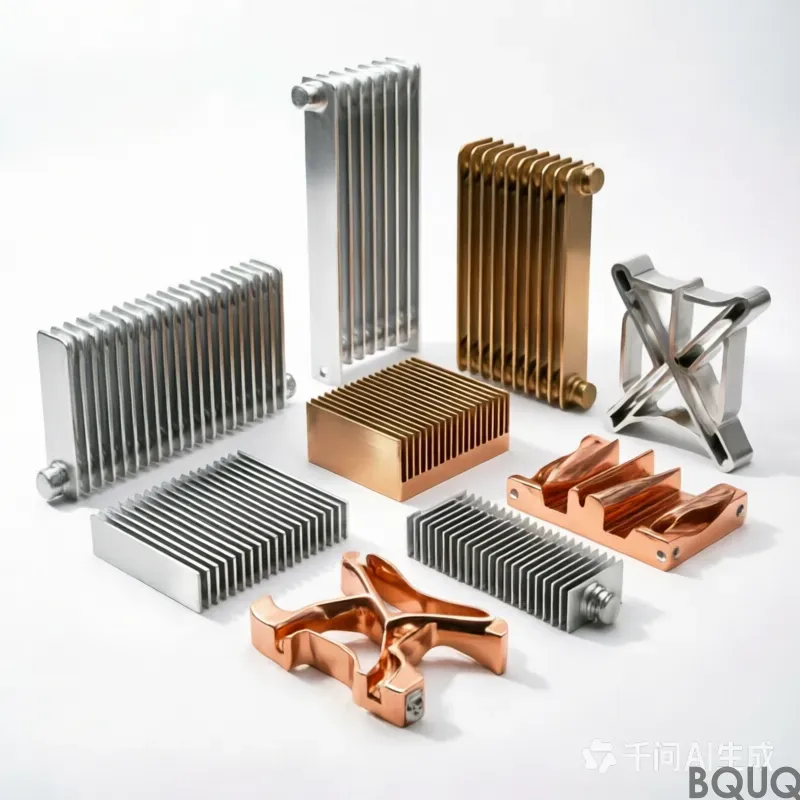
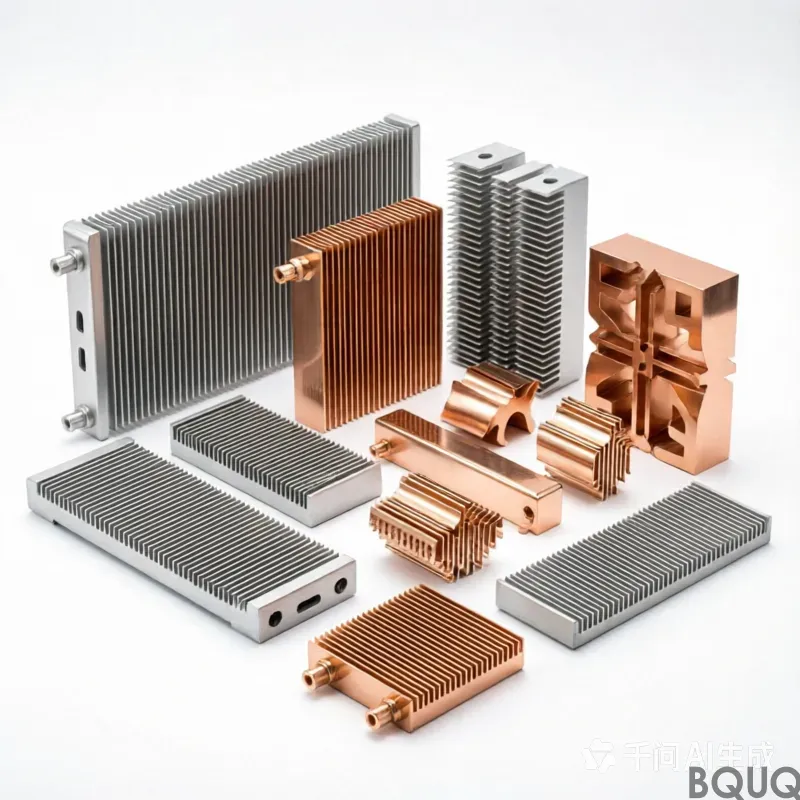
Choosing the correct heat sink material is a balancing act between thermal conductivity, weight, cost, and manufacturing feasibility. For 90% of standard electronics cooling applications, 6063-T5 aluminum alloy is the optimal choice due to its 200 W/m·K thermal conductivity, low density (2.7 g/cm³), and low tooling costs, while copper is reserved for high-heat-density applications under 150 W/cm², and composites are a niche solution for weight-critical aerospace systems. The right selection depends on your specific thermal budget (junction temperature), operating environment, and production volume.
What Are the Thermal Conductivity Differences Between Aluminum, Copper, and Composites?
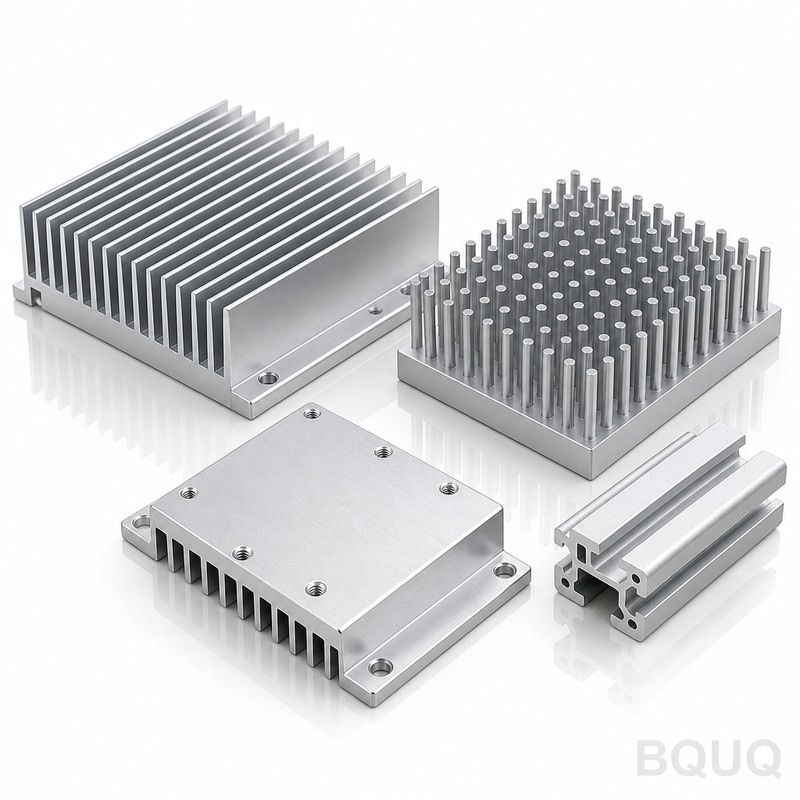
Thermal conductivity is the primary metric, but raw numbers do not tell the whole story. Pure copper offers 385 W/m·K, which is 92% higher than aluminum’s 200 W/m·k, but this advantage shrinks when you account for the fin efficiency and geometry. In a typical extruded heat sink with 8 mm fin height and 2 mm fin thickness, aluminum’s lower density allows for thinner fins, increasing surface area by up to 35% for the same weight, partially offsetting the conductivity gap.
Carbon fiber composites (with a 60% filler load) can reach 300 W/m·K in the fiber direction but only 5-10 W/m·K perpendicular to the fibers, creating anisotropic performance that is difficult to manage in design. Graphite-based composites offer 400 W/m·K in-plane but require protective coatings, adding cost. For most convective cooling scenarios, the practical thermal resistance difference between a well-designed aluminum and a copper heat sink of the same volume is only 15-25%, not the 92% the conductivity numbers suggest.
How Does Weight and Density Affect Material Selection?
Weight is a hard constraint in automotive, aerospace, and portable electronics. Aluminum’s density of 2.7 g/cm³ gives it a distinct advantage: a 100 mm x 100 mm x 40 mm aluminum heat sink weighs approximately 1.08 kg, while the same geometry in copper weighs 3.56 kg. This 3.3x weight penalty for copper often forces design changes, such as reducing fin height or using a copper base with aluminum fins.
For composite materials, density ranges from 1.6 g/cm³ (carbon fiber) to 2.2 g/cm³ (graphite-filled polymers), making them 20-40% lighter than aluminum. However, the weight savings come at a cost: composites are 5-10 times more expensive per kilogram than aluminum. In a drone motor controller application, switching from aluminum to a graphite composite reduced the heat sink weight from 85 g to 45 g, but increased the unit cost from CNY 8.50 to CNY 45.00.
What Are the Cost Differences per Unit and per Watt Dissipated?
Cost must be evaluated per watt of dissipated heat, not just per kilogram of material. As of Q2 2025, raw aluminum (6063 alloy) costs approximately CNY 19-22 per kg, while C1100 copper costs CNY 68-75 per kg. A standard 6063 aluminum extrusion heat sink (100 mm x 60 mm x 30 mm, 200 g) costs CNY 12-18 per unit at 1,000-piece volume, including cutting and black anodizing.
The same heat sink machined from copper bar stock costs CNY 85-120 per unit, a 5-7x increase. However, for a 300 W IGBT module requiring a junction-to-ambient resistance below 0.25 °C/W, a copper heat sink with a 10 mm base plate can achieve this with 40% less surface area than aluminum, reducing the fan size and enclosure volume, which may justify the premium in high-reliability industrial drives.
| Material | Thermal Conductivity (W/m·K) | Density (g/cm³) | Cost per kg (CNY) | Relative Cost per Unit | Max Operating Temp (°C) | Typical Process |
| 6063 Aluminum | 200 | 2.7 | 19-22 | 1.0x (baseline) | 250 (anodized) | Extrusion, CNC, stamping |
| C1100 Copper | 385 | 8.9 | 68-75 | 5-7x | 400 | CNC, stamping, forging |
| C17200 Beryllium Copper | 130 | 8.3 | 350-400 | 15-20x | 300 | CNC, stamping |
| Carbon Fiber Composite | 300 (in-plane) | 1.6 | 150-250 | 5-10x | 200 | Compression molding |
| Graphite Composite | 400 (in-plane) | 2.0 | 120-180 | 4-8x | 250 | Die casting, molding |
Which Manufacturing Processes Are Compatible with Each Material?
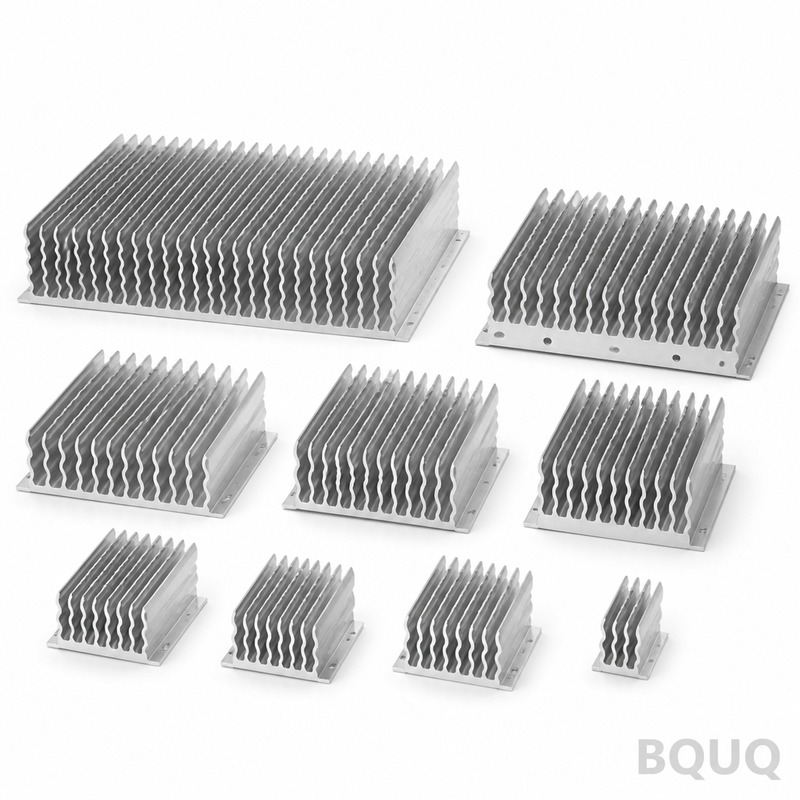
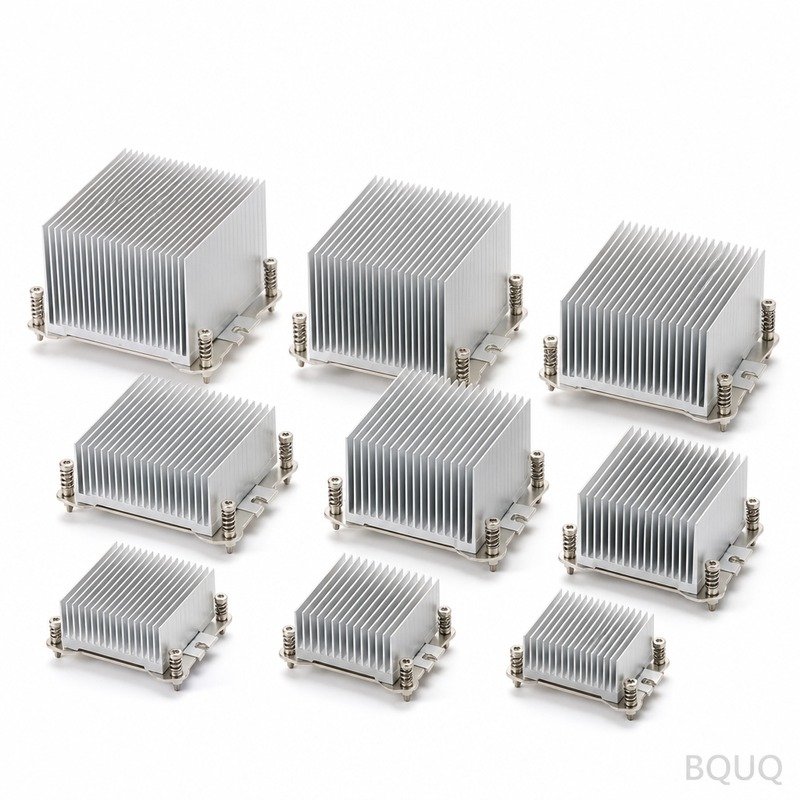
Extrusion is the default process for aluminum heat sinks, with 6063-T5 alloy profiling capable of maintaining a tolerance of ±0.1 mm on fin thickness and ±0.3 mm on overall dimensions for profiles up to 300 mm wide. For copper, extrusion is difficult due to high flow stress, so CNC machining from bar stock or stamping thin copper fins (0.5-1.0 mm thick) is more practical. Stamped copper fins achieve a tolerance of ±0.05 mm but require expensive progressive dies costing CNY 80,000-200,000.
Composite materials are typically compression molded or die cast, offering excellent shape complexity but limited to 2.5 mm minimum wall thickness. Skiving is a hybrid process available for both aluminum and copper, producing fins as thin as 0.4 mm with a fin height-to-thickness ratio of 30:1, which is impossible with extrusion. For aluminum, skiving adds CNY 0.3-0.5 per fin, while for copper, it adds CNY 1.5-2.5 per fin due to higher tool wear.
When Does Copper Heat Sink Justify Its Higher Cost?
Copper becomes the rational choice when the heat flux exceeds 50 W/cm² or when the junction-to-ambient thermal resistance requirement is below 0.15 °C/W with natural convection. For example, a 500 W laser diode array mounted on a 50 mm x 50 mm base plate produces 200 W/cm², where aluminum would require a 2x larger base area to spread the heat, increasing the overall system volume by 60%.
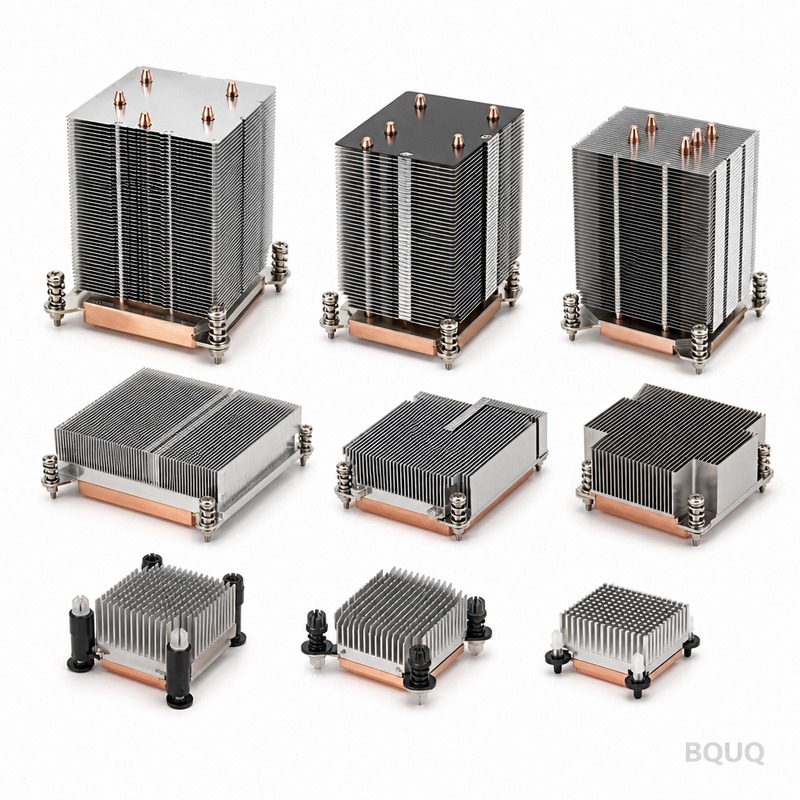
Copper is also required when the heat sink operates above 250 °C, as aluminum’s mechanical strength degrades significantly above this point. For high-power RF amplifiers in base stations, a copper base plate (10 mm thick) with aluminum fins (bonded via brazing) is a common hybrid design, achieving 85% of pure copper performance at 60% of the cost. Brazing aluminum to copper requires a nickel barrier layer to prevent intermetallic formation, adding CNY 5-8 per joint.
Why Do Composites Fail in Many Standard Cooling Applications?
Composites fail in convective cooling applications because of their low through-thickness thermal conductivity (5-10 W/m·K). In a finned heat sink, heat must travel from the base through the fin height; if the fin is 20 mm tall, the thermal resistance of a composite fin is 20-40 times higher than aluminum, making the fin effectively useless for heat dissipation. Composites only perform well in flat-plate heat spreaders or in applications with direct liquid cooling where the heat path is short.
The thermal expansion mismatch is another critical failure point. Copper has a CTE of 17 ppm/°C, aluminum 23 ppm/°C, while carbon fiber composites can be tailored from -1 to +5 ppm/°C. When bonded to a ceramic IGBT substrate (6 ppm/°C), a composite heat sink can reduce thermal cycling stress by 60% compared to aluminum, preventing solder joint fatigue. However, this benefit is only relevant in applications exceeding 10,000 thermal cycles, such as electric vehicle traction inverters.
How Do Corrosion and Surface Treatment Affect Material Choice?
Aluminum requires surface protection in humid or salt-laden environments; a 10-15 µm black anodized coating (MIL-A-8625 Type II) increases corrosion resistance and emissivity from 0.05 to 0.85, improving radiative heat transfer by 15%. The anodizing cost is CNY 2-4 per square decimeter, and it is mandatory for outdoor or marine applications. Copper must be plated with nickel (5-10 µm) or tin to prevent oxidation, which otherwise increases thermal resistance by 10-20% within 6 months.
Composites are inherently corrosion-resistant but suffer from galvanic corrosion when in contact with aluminum or steel in a wet environment. In such cases, a fiberglass isolation layer (0.5 mm) is required, adding complexity. For most industrial indoor environments, bare aluminum with a chromate conversion coating (MIL-C-5541) is sufficient and costs only CNY 1.5-3.0 per piece.
FAQ
Can Aluminum Be Used in High-Temperature Applications Above 200 °C?
Yes, but with significant derating. The yield strength of 6063-T5 aluminum drops from 145 MPa at room temperature to 45 MPa at 200 °C, so the heat sink must be designed with 3x thicker base plates to prevent warping. Above 250 °C, aluminum alloys undergo over-aging, permanently reducing thermal conductivity by 5-8%.
What Is the Cheapest Heat Sink Material for High-Volume Production?
Stamped aluminum (5052 alloy) is the lowest cost solution, with a progressive die cost of CNY 50,000-120,000 amortized over 500,000+ parts, yielding a per-unit cost of CNY 2-5 for a 30 g part. However, this is only viable for flat or simple fin geometries. Extruded aluminum is cheaper for small volumes (1,000-10,000 units) because tooling costs only CNY 8,000-15,000.
How Do I Test the Thermal Performance of a Prototype Heat Sink?
Use a thermocouple attached to the heat sink base and a power resistor as the heat source, measuring the junction-to-ambient thermal resistance at steady state (after 30 minutes). For accuracy, conduct the test in a sealed enclosure with controlled ambient temperature of 25 °C ± 1 °C, and ensure the heat sink is mounted in the same orientation as the final application.
Are Copper Heat Sinks Worth It for LED Lighting?
For LED lighting with a heat flux below 10 W/cm², aluminum is always sufficient and more cost-effective. Copper is only justified for chip-on-board (COB) LED arrays exceeding 100 W input power, where the spreading resistance in aluminum would require a 40 mm thick base plate, increasing weight and cost beyond the copper alternative.
Which Material Has the Best Thermal Performance per Unit Weight?
Graphite composites offer the best thermal conductivity-to-weight ratio, at 200 W/m·K per (g/cm³) compared to aluminum’s 74 and copper’s 43. However, this advantage is only usable in in-plane spreading, not in finned convection surfaces. For standard finned heat sinks, aluminum is the best balance, and for liquid-cooled cold plates, copper provides the best weight-adjusted performance.
Can I Braze or Weld Copper Fins to an Aluminum Base?
Direct brazing of copper to aluminum creates brittle intermetallic compounds (CuAl2) that fail under thermal cycling. The standard solution is a nickel-plated copper base bonded to aluminum fins using a silicone-based thermal adhesive (1-2 W/m·K) or a mechanical crimp with thermal grease. For permanent joints, friction stir welding can join copper and aluminum with a joint efficiency of 85%, but this process costs CNY 15-25 per linear meter.
How Fast Can I Get a Prototype Heat Sink?
At BQUQ, aluminum prototypes from standard extrusions are delivered in 3-5 days with CNC machining, while copper prototypes require 5-7 days due to longer machining cycles. Composite prototypes with compression molding tooling require 10-14 days. For urgent needs, we can machine a copper heat sink from bar stock in 48 hours at a 30% expedite surcharge.
Conclusion
Select aluminum 6063-T5 as your default heat sink material for 90% of applications, especially when weight and cost are primary constraints and heat flux is below 50 W/cm². Choose copper only when the thermal resistance target cannot be met with aluminum within the available volume, or when operating temperatures exceed 250 °C. Avoid composites unless you have a specific weight or CTE-matching requirement that outweighs their 5-10x cost premium and anisotropic thermal behavior. Always validate your final design with a thermal simulation and physical prototype before committing to production tooling.
For a detailed thermal analysis of your specific heat sink application, contact our engineering team for a free design review. We provide 12-hour quoting for all heat sink prototypes and production runs. Email: sc@bquq.com, WhatsApp: +86 13713157787, or visit our website at www.bquq.com.
Related Articles
- Thermal Management for High Brightness LEDs with Heat Sinks
- New energy vehicle IGBT heat dissipation, heat sink reliability engineering, heat pipe and temperature plate integrated heat sink, surface treatment and heat radiation enhancement: anodic oxidation, black coating and micro-nano structure, graphene/3D printing/intelligent thermal management: 2030 heat sink technology roadmap
- 5G Base Station Outdoor AAU Cooling: The Climate Adaptation Challenge of Fanless Passive Design