How to Design Parts for Metal Stamping: 10 Rules
Designing for metal stamping requires a shift from subtractive or additive thinking to a process where material is displaced and formed at high speed. The direct answer is that you must follow 10 specific geometric rules to ensure your part is manufacturable, cost-effective, and durable: maintain uniform wall thickness, avoid tight radii, use proper hole sizing for piercing, design with bend relief, respect minimum feature spacing, avoid deep draws without drafts, use standard tolerances, keep features on one side, design for nesting, and specify a secondary operation early. Below, I break down these rules with exact numbers and engineering rationale to help you avoid common die failures and high piece-part prices.
What Are the 10 Golden Rules for Stamping Part Geometry?
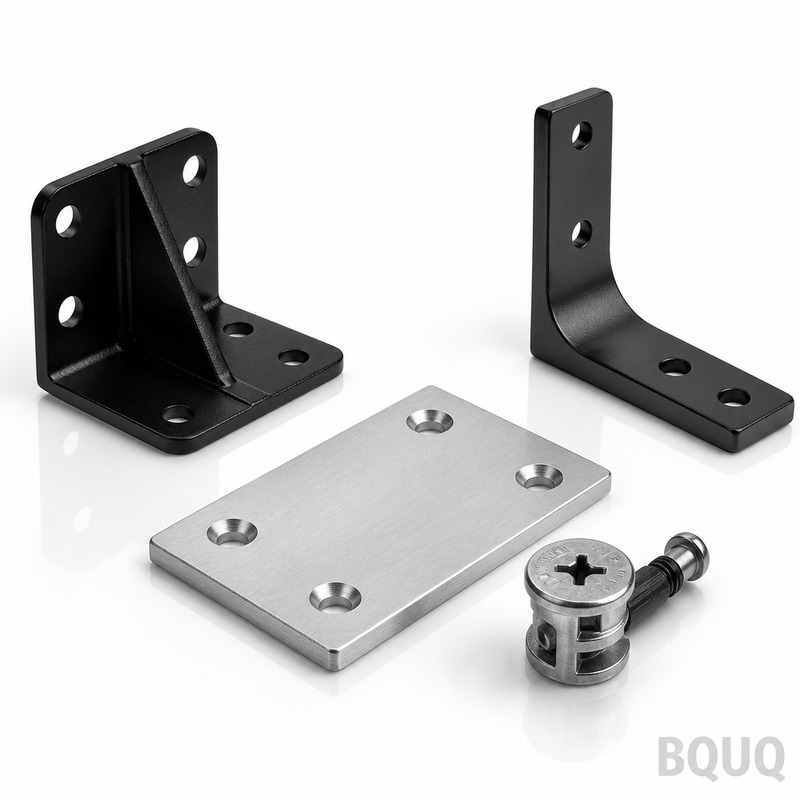
The foundation of a good stamped part lies in geometry that accommodates the physics of shearing and plastic deformation. Rule 1 is to maintain uniform wall thickness, ideally between 0.5 mm and 6.0 mm for carbon steel, because thinning causes fractures. Rule 2 is to specify inside bend radii at least 1x the material thickness (1T) for mild steel, and 2T for aluminum 5052. Rule 3 is that hole diameters must be greater than the material thickness (minimum 1.0 mm), otherwise the punch will break. Rule 4 is to include bend relief notches when bends intersect a wall or flange. Rule 5 is that the distance from a hole edge to a bend line must be at least 2.5 times the material thickness plus the bend radius. Rule 6 is to avoid deep draws with a depth-to-diameter ratio exceeding 0.75 in a single operation. Rule 7 is to design with standard tolerances of +/- 0.1 mm for blanked features and +/- 0.2 mm for formed angles. Rule 8 is to keep all critical features on the same die face or side to reduce re-positioning errors. Rule 9 is to design for tight nesting, with a minimum web distance of 1.5x material thickness between parts. Rule 10 is to explicitly state which edges require a secondary operation like deburring or thread tapping, as this affects the die construction.
How Does Material Thickness and Type Affect Bend Radii and Tolerances?
Material selection is the primary driver of your minimum bend radius and achievable tolerance. For low-carbon steel (SPCC, DC01), the minimum inside radius is 1.0 times the material thickness; for stainless steel 304, it is 1.5T; for aluminum 6061-T6, it is 2.0T to prevent cracking. Tolerance is also material-dependent: a 1.0 mm thick steel part holds a hole-to-hole positional tolerance of +/- 0.1 mm, while a 3.0 mm thick part holds +/- 0.15 mm due to punch deflection. Springback is a major issue; you must over-bend by 2 to 5 degrees for steel and 5 to 10 degrees for high-strength steel (DP780) to achieve the final angle. Our factory uses air bending for prototypes but hard tooling for production to control these variations.
Which Features Should Be Avoided to Prevent Die Breakage and High Tooling Costs?
Several features are notorious for causing premature die failure and escalating tooling budgets. Avoid narrow slots or tabs with a width less than 1.5 times the material thickness, as the punch section becomes too fragile. Do not design sharp inside corners (0.1 mm radius) in blanked outlines; replace them with a radius of at least 0.3 mm, or better, 0.5 mm, to prevent stress fractures in the die. Deep narrow channels that require a draw ratio above 0.5 must be avoided because they require multi-stage dies, increasing tooling cost by 40% to 60%. Also, avoid half-etched or coined lettering smaller than 0.5 mm height, as these features are impossible to replicate consistently in a production die. For precision, we recommend using a minimum feature size of 1.0 mm for lettering and 1.5 mm for slots.
How Much Does Stamping Tooling Cost and Why Does Part Design Affect It?
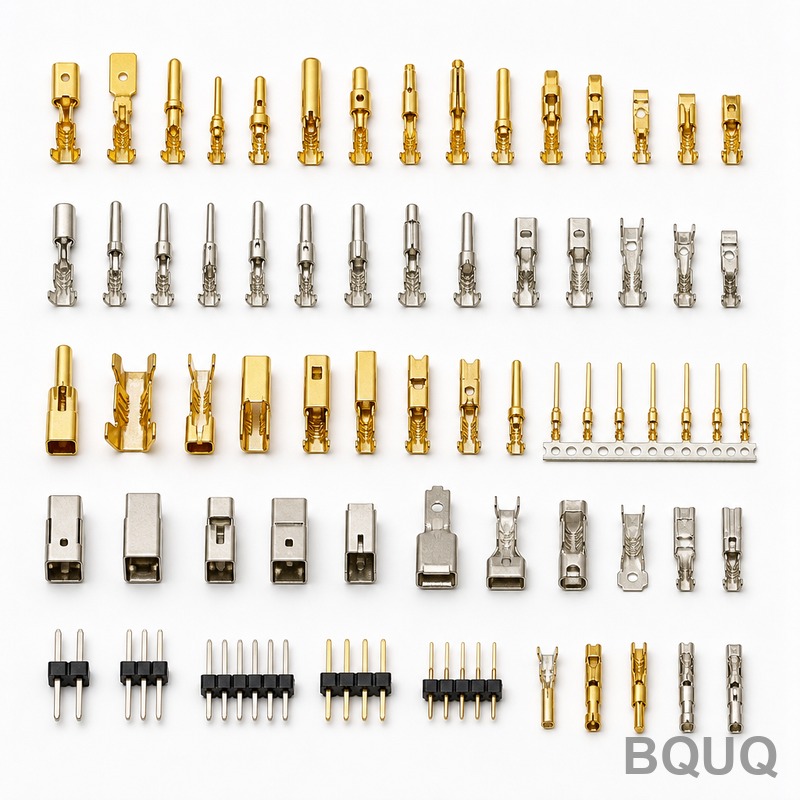
Tooling cost is directly proportional to the number of stations and complexity of the geometry. A simple blanking die for a flat washer costs between $1,500 and $3,000. A progressive die for a bracket with 4 bends, 3 holes, and a tapped hole costs between $15,000 and $35,000. A complex transfer die for a deep-drawn housing costs between $40,000 and $80,000. The cost increases because each bend requires a separate station, and each hole requires a dedicated punch. If you violate the rules above, such as requiring tighter tolerances than +/- 0.05 mm, the die maker must use precision ground inserts, adding $2,000 to $5,000 to the tooling budget. Lead time also varies: simple dies are ready in 3 weeks, while progressive dies take 8 to 12 weeks.
What Tolerances Can You Realistically Hold for Holes, Bends, and Flatness?
Realistic tolerances are the key to avoiding scrap and rework. For blanked holes, the diameter tolerance is +/- 0.05 mm for holes under 10 mm, and +/- 0.08 mm for larger holes. For hole-to-hole center distances, we hold +/- 0.10 mm in a progressive die. For bend angles, the standard tolerance is +/- 1 degree, but we can hold +/- 0.5 degrees with coining operations. Flatness is the hardest to control: a stamped part that is 100 mm long will have a flatness deviation of 0.15 mm to 0.25 mm due to residual stresses. If you need tighter flatness, you must specify a secondary coining or flattening operation. The table below summarizes our standard capability limits.
| Feature Type | Standard Tolerance | Precision Tolerance | Typical Material (SPCC 1.0mm) |
| Hole Diameter (Pierced) | +/- 0.05 mm | +/- 0.02 mm | 1.0 mm min. size |
| Hole to Hole Spacing | +/- 0.10 mm | +/- 0.05 mm | 2.5 mm min. distance |
| Bend Angle (90 deg) | +/- 1 degree | +/- 0.5 degree | 1.0 mm inside radius |
| Blanked Outline | +/- 0.08 mm | +/- 0.03 mm | 0.3 mm edge radius |
| Flatness (per 100 mm) | +/- 0.20 mm | +/- 0.10 mm | Requires coining |
| Formed Height | +/- 0.10 mm | +/- 0.05 mm | Depth limit 0.75 x diameter |
Why Is Bend Relief Critical for Preventing Tearing and How to Dimension It?
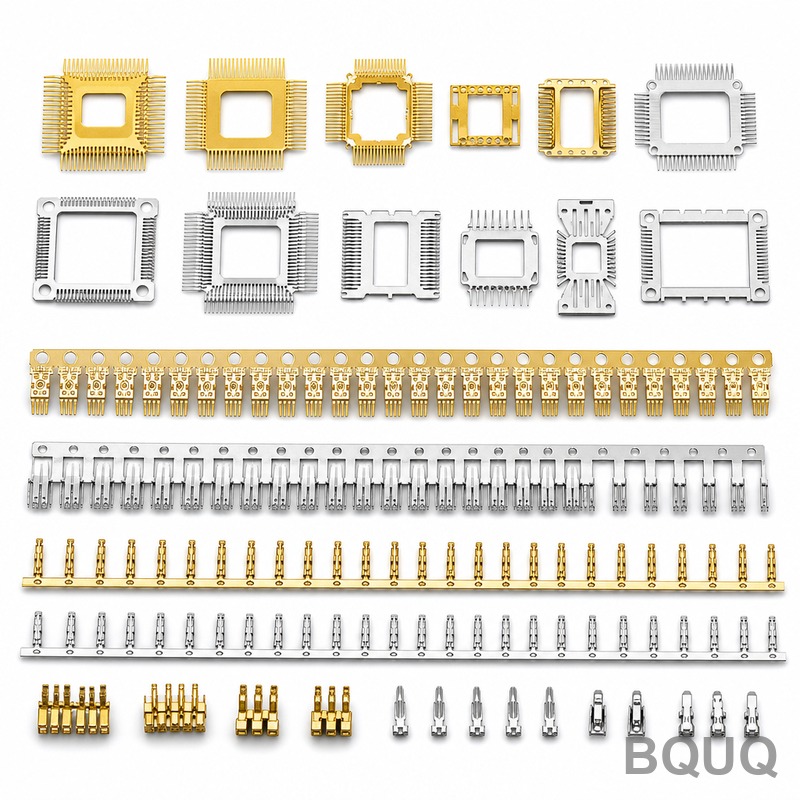
Bend relief is not optional; it is a structural requirement. When a bend line runs across a flat section and ends at an edge, the material wants to stretch, causing tearing at the corner. You must add a relief notch at the end of the bend line. The standard relief width is 1.5 times the material thickness (minimum 1.5 mm), and the depth must extend beyond the bend tangent line by at least 1.0 times the material thickness. For example, if you have a 2.0 mm thick bracket with a 90-degree bend, the relief should be 3.0 mm wide and 2.0 mm deep. Without this, the part will show stress cracks, and the die will have a shorter lifespan due to increased wear. Always dimension the relief on the engineering drawing to avoid ambiguity.
How Does Design for Nesting Reduce Material Cost and Unit Price?
Material utilization is the single biggest factor in piece-part price, often accounting for 50% to 70% of the total cost. If you design features that allow tight nesting, you can reduce scrap from 40% down to 20%. For example, a rectangular part can be rotated 180 degrees to share a common blank edge, reducing the web distance to the minimum 1.5x material thickness. In a high-volume run of 100,000 parts, a 10% reduction in material usage saves approximately $1,500 on SPCC steel at $1.20 per kilogram. To facilitate nesting, avoid irregular protruding tabs that cannot be nested efficiently, and try to keep all holes inside the part boundary rather than on the edge, which would require stronger webs. Our engineering team uses CAD nesting software to optimize strip layout before quoting.
Can You Combine Stamping with Other Processes Like Tapping or Riveting?
Yes, you can and should design for secondary operations to be performed in the die, but this requires design foresight. Tapping can be done in a progressive die at a rate of 50 parts per minute, but the hole must be pierced in a prior station with a diameter tolerance of +/- 0.03 mm to ensure thread engagement. Riveting or clinching can be integrated, but you must leave a flat, unobstructed area of at least 5.0 mm around the rivet location for the die anvil. Heat sink designs often require stamping fins and then brazing or soldering, which requires you to design mounting tabs that are 0.5 mm thicker to act as a heat sink base. If you anticipate these operations, you will save 15% to 25% in handling costs compared to sending parts to a secondary supplier.
FAQ
What is the minimum hole size for a 1.5 mm thick steel sheet?
The minimum pierced hole diameter is equal to the material thickness, so 1.5 mm is the absolute minimum for standard tooling. For production reliability, we recommend a hole diameter of at least 2.0 mm to prevent punch breakage and allow for die sharpening over its lifespan.
How do I specify a bend radius that does not crack aluminum?
For aluminum 5052-H32, use an inside bend radius of at least 1.5 times the material thickness. For 6061-T6, use at least 2.0 times the thickness. If your design requires a tighter radius, you must switch to a softer temper like 5052-O, or accept that the part will be formed with a hot-forming process, which is slower and more expensive.
When should I choose a progressive die over a single-stage die?
Choose a progressive die when your production volume exceeds 50,000 parts per year, or when the part requires more than three operations (blanking, piercing, bending, tapping). For quantities under 5,000 pieces, a single-stage die or a prototype laser-cut and press-brake process is more economical, with tooling costs under $2,000.
Which material is best for high-temperature heat sink applications?
Use aluminum 6061-T6 for operating temperatures up to 150 degrees Celsius, or copper C11000 for up to 300 degrees Celsius. For temperatures above 300 degrees Celsius, you must switch to a cold-rolled steel with a nickel plating, but this will reduce thermal conductivity by roughly 40% compared to copper.
How can I reduce the cost of a stamped part with complex bends?
Simplify the geometry by reducing the number of bend lines. Each bend adds a station to the die, increasing tooling cost by roughly $3,000 to $5,000. Instead of two separate 45-degree bends, design a single 90-degree bend, or use a coining operation to create a sharp corner without a secondary bend.
Can I get a mirror finish on a stamped part?
A standard stamping surface finish is Ra 1.6 micrometers on the die side and Ra 3.2 micrometers on the punch side. To achieve a mirror finish of Ra 0.4 micrometers, you must specify a secondary surface grinding or a bright-annealed material, which adds about $0.50 per part for high volumes.
What is the minimum distance between a bend and a hole?
The distance from the edge of a hole to the start of a bend radius must be at least 2.5 times the material thickness plus the inside bend radius. For a 1.0 mm thick sheet with a 1.0 mm radius, this distance is 3.5 mm. This prevents the hole from distorting into an oval shape during the bending process.
In conclusion, these 10 rules are not just suggestions; they are the boundary conditions that define a manufacturable, cost-effective stamped part. By adhering to these numbers and design principles, you will reduce tooling costs by up to 30% and lead times by several weeks. If you are uncertain about a specific geometry, our engineering team can provide a free design review within 24 hours. We offer 12-hour quoting for new projects. Contact us at sc@bquq.com or WhatsApp at +86 13713157787, or visit www.bquq.com to upload your CAD files for an immediate evaluation.