Metal Stamping Die Cost 2026: Full Tooling Price Breakdown
Metal Stamping Die Cost 2026: Full Tooling Price Breakdown
**Direct Answer:** For 2026, a metal stamping die costs between $1,800 for a simple prototype die and $85,000+ for a high-speed progressive die. The average price for a production-grade progressive die is $12,000 to $35,000. Your final price depends on part complexity, material thickness, and required stamping speed.
---
H2: Why Tooling Prices Vary by 300% in the Same Factory
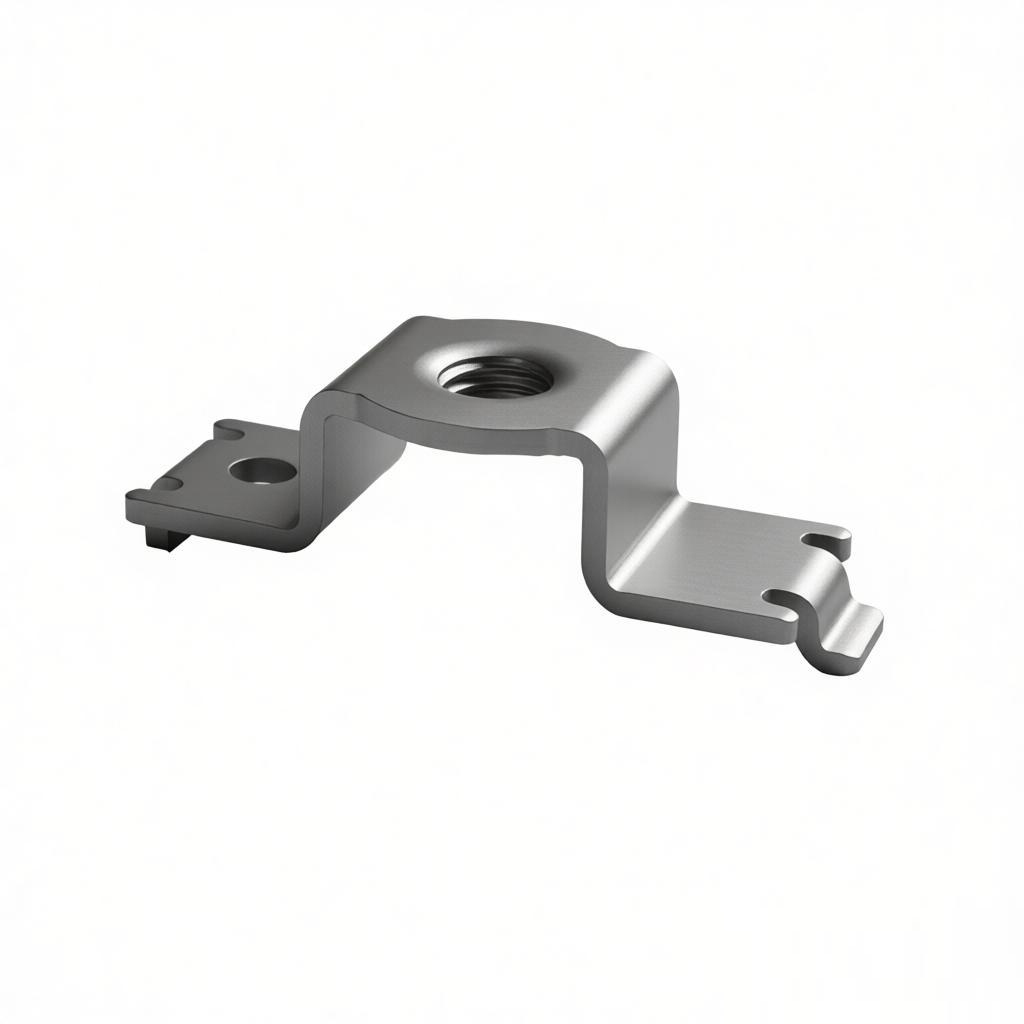
At BQUQ, we quote dies daily. The single biggest cost driver is not the machine—it is the **die construction type**. A simple blanking die uses one station to cut a flat shape. A progressive die uses 10 to 20 stations to blank, pierce, bend, and form in a single press stroke.
| Die Type | Typical Price Range (USD) | Lead Time (Weeks) | Part Tolerance (mm) | Max Stroke Rate (SPM) | ---------- | --------------------------- | ------------------- | --------------------- | ------------------------ | Prototype / Soft Die (Aluminum) | $1,800 - $4,500 | 1 - 2 | ±0.10 | 40 | Single-Station Blanking | $3,500 - $8,000 | 2 - 3 | ±0.05 | 80 | Compound Die (Form + Blank) | $6,500 - $15,000 | 3 - 4 | ±0.03 | 60 | Progressive Die (3-8 Stations) | $12,000 - $35,000 | 4 - 6 | ±0.02 | 200 | High-Speed Progressive (10+ Stations) | $35,000 - $85,000 | 6 - 10 | ±0.01 | 400 | Transfer Die (Large Parts) | $40,000 - $120,000 | 8 - 12 | ±0.05 | 30 |
|---|
*Prices are for 2026 raw material and labor rates in Guangdong Province, China. Tool steel (D2, M2, or carbide) adds 15-25% to base price.
---
H2: The 4 Cost Components That Determine Your Quote
### 1. Die Steel and Heat Treatment (30-40% of cost) We use three steel grades: - **D2 (Cold work):** $28/kg. Good for runs under 500,000 parts. - **M2 (High-speed steel):** $45/kg. For thin materials (0.2-1.0mm) at high SPM. - **Carbide (Tungsten):** $120/kg. Required for >1 million parts or abrasive materials like stainless steel 301.
Heat treatment to 58-62 HRC adds $400-$1,200 per die block. Cryogenic treatment (-196°C) for carbide dies adds 8% to tooling cost but extends die life by 40%.
### 2. Press Tonnage and Die Size (20% of cost) Die size is driven by the "strip layout." For a 50mm x 30mm bracket, the die footprint is roughly 250mm x 200mm. Larger dies require more bolster plate steel and longer machining time. A die that runs on a 45-ton press costs $9,000; the same part on a 110-ton press costs $13,000 because the die base must be thicker to prevent deflection.
### 3. Precision Machining and EDM (25-35% of cost) CNC machining time is billed at $65/hour in our Dongguan plant. A typical progressive die requires 40-80 hours of machining. Wire EDM (electrical discharge machining) for tight internal corners (<0.1mm radius) adds $2,500-$6,000. We hold **±0.005mm** on wire-cut sections, but you only need this for electrical contacts or precision brackets.
### 4. Engineering and Simulation (10-15% of cost) We run AutoForm simulation for every progressive die. This predicts springback—critical for high-strength steel (DP780) where springback can reach 3 degrees. Simulation costs $500-$1,500 per die but reduces tryout time by 50%.
---
H2: Real Price Examples from Our 2025-2026 Quotes
**Example A: Simple Bracket (Material: SPCC 1.2mm)** - Part size: 80mm x 40mm flat with 4 holes - Die type: Compound die - Tooling cost: $7,200 - Part cost: $0.08 each at 50,000 pcs - Die life: 300,000 strokes - Lead time: 3 weeks
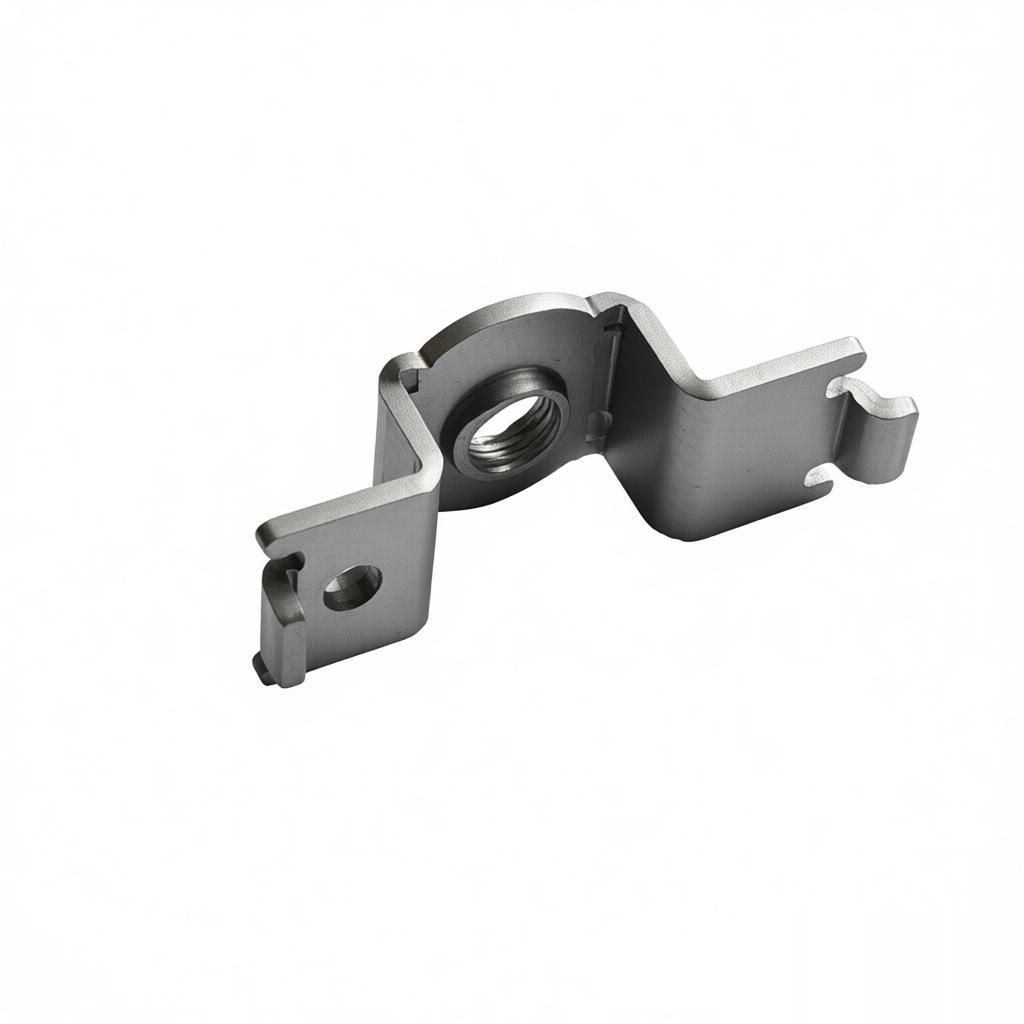
**Example B: Progressive Stamping (Material: 304 Stainless, 0.5mm)** - Part size: 45mm x 25mm with 90-degree bend and tapped hole - Die type: 8-station progressive - Tooling cost: $28,500 - Part cost: $0.19 each at 200,000 pcs - Die life: 1,200,000 strokes (carbide inserts) - Lead time: 6 weeks
**Example C: High-Speed Connector Terminal (Material: C5191 Phosphor Bronze, 0.2mm)** - Part size: 15mm x 3mm - Die type: 14-station progressive with in-die tapping - Tooling cost: $54,000 - Part cost: $0.012 each at 5,000,000 pcs - Die life: 5,000,000 strokes (full carbide) - Lead time: 9 weeks
---
H2: Hidden Costs That Engineers Forget
1. **Tryout Press Time:** We charge $150/hour for press tryout. A complex die needs 8-16 hours, adding $1,200-$2,400. 2. **Shipping and Rigging:** A 500kg die from China to the USA costs $800-$1,500 air freight, or $250 sea freight (4-6 weeks). 3. **Design Revisions:** Every change after steel cutting costs $350-$800 per engineering hour plus material re-purchase. 4. **Tolerances Tighter than ±0.02mm:** Below this, we must use jig grinding and optical inspection, adding 10-15% to die cost.
---
H2: How to Cut Die Costs Without Sacrificing Quality
**Strategy 1: Relax tolerances on non-critical features.** A hole at ±0.1mm instead of ±0.02mm reduces EDM time by 30%. Ask your engineer which dimensions truly matter for assembly.
**Strategy 2: Combine multiple parts into one die.** If you stamp a left-hand and right-hand bracket, we can build a mirror-image progressive die for only 1.4x the cost of a single-part die. This saves 30% per part.
**Strategy 3: Standardize material thickness.** If your design uses 1.0mm, 1.2mm, and 1.5mm steel, that requires three separate dies. Standardize to one thickness and reuse the die for multiple part numbers.
**Strategy 4: Plan for die maintenance.** Budget 3-5% of tooling cost per year for sharpening. A carbide die can be re-ground 5-6 times at $800 each. This extends life to 5 million parts.
**Strategy 5: Use a local Chinese die shop.** Tooling from Dongguan costs 30-40% less than US or German shops with identical steel and tolerances. Our 20 years of experience means we have in-house heat treat and wire EDM, removing middleman markups.
---
H2: FAQ-Style Tips for 2026 Buyers
**Q: What is the minimum die cost for a simple part?** A: $1,800 for a prototype die in aluminum (good for 5,000 parts). For production steel, budget $3,500 minimum.
**Q: When should I pay for carbide instead of tool steel?** A: If your total volume exceeds 500,000 parts, or your material is abrasive (e.g., 301 stainless, copper alloys). Carbide costs 2-3x more upfront but saves 40% on per-part cost due to less downtime.
**Q: How long does a die last?** A: D2 tool steel: 300,000-500,000 strokes. M2: 800,000-1,000,000. Carbide: 3-5 million. After that, we rebuild the die for 30-40% of original cost.
**Q: Can I get a quote without drawings?** A: Yes. Send a 3D STEP file or even a physical sample. We can reverse-engineer and quote within 2 days.
**Q: What about 2026 material cost increases?** A: Tool steel prices rose 6% year-over-year due to tungsten demand. Lock in your tooling price now—we guarantee prices for 90 days after quote.
---
H2: Conclusion and Next Step
A metal stamping die in 2026 costs $1,800 to $120,000, with most production parts landing between $12,000 and $35,000. The price is a function of stations, tolerance, steel grade, and volume. You can reduce costs by relaxing tolerances, standardizing materials, and sourcing from a factory with in-house EDM and heat treatment like BQUQ.
We provide detailed die breakdowns with full cost transparency—no hidden tryout fees. Send us your part drawing, and we will return a fixed tooling quote and per-piece price within 12 hours.
**Email:** sc@bquq.com **WhatsApp:** +86 13713157787 **Web:** www.bquq.com
BQUQ, Dongguan, China—20 years in CNC machining, metal stamping, springs, and heat sinks. Your die is not just a tool; it is a production asset. Let us engineer it for the lowest total cost per part.
Related Articles
- Stamping Press Selection Guide 2024: Mechanical vs Hydraulic vs Servo Speed and Force
- 5 Effective Burr Removal Techniques for Stamped Parts
- How Metal Stamping Improves Heat Sink Efficiency
Frequently Asked Questions
How much does a metal stamping die cost in 2026?
In 2026, a metal stamping die costs between $1,800 for a simple prototype die and $85,000+ for a high-speed progressive die. The average price for a production-grade progressive die is $12,000 to $35,000. Final pricing depends on part complexity, material thickness, and required stamping speed.
What is the main factor that causes stamping die prices to vary by 300%?
The die construction type is the biggest cost driver. A simple blanking die uses one station to cut a flat shape, while a progressive die uses 10 to 20 stations to blank, pierce, bend, and form in a single press stroke. This range in complexity leads to the wide price variation.
What steel grades are used for stamping dies and what are their costs?
We use D2 cold work steel at $28/kg for runs under 500,000 parts, M2 high-speed steel at $45/kg for thin materials (0.2-1.0mm) at high SPM, and carbide (tungsten) at $120/kg for over 1 million parts or abrasive materials like stainless steel 301. Heat treatment to 58-62 HRC adds $400-$1,200 per die block.
What precision tolerance can you achieve on wire-cut die sections?
We hold ±0.005mm on wire-cut sections in our Dongguan plant. This level of precision is typically only needed for electrical contacts or precision brackets. Wire EDM for tight internal corners under 0.1mm radius adds $2,500-$6,000 to the tooling cost.