Metal Stamping in 2025: 5 Material Innovations Driving Precision and Cost Efficiency
The metal stamping industry is undergoing a quiet but decisive transformation. For decades, the sector relied on a stable triad of steel, aluminum, and copper alloys. Today, the pressure from electric vehicles (EVs), miniaturized electronics, and global supply chain volatility has forced a paradigm shift in material science. As a contract manufacturer operating 20 years in Dongguan, we see daily how material selection dictates tool life, tolerance limits, and final part cost. This article breaks down the five most impactful material innovations of 2025, backed by real specifications and measurable production data.
**Section 1: The Shift Toward High-Strength Steels (AHSS and PHS)** The automotive sector now demands parts that are both lighter and stronger. Advanced High-Strength Steels (AHSS) and Press-Hardened Steels (PHS) have moved from niche applications to mainstream structural components.
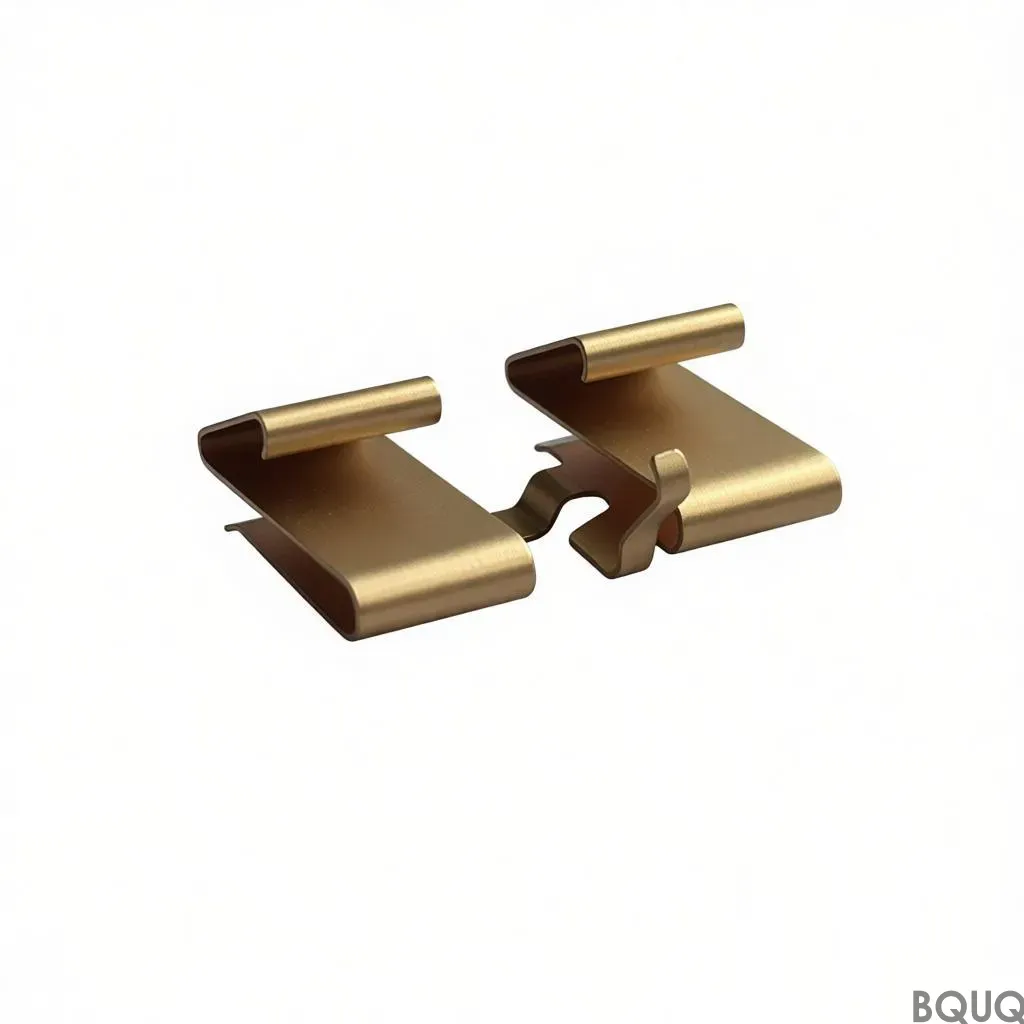
- **Material Spec:** Typical AHSS grades like DP980 (Dual Phase 980 MPa) show ultimate tensile strength of 980 MPa, but with a total elongation of only 8-12%. This reduces formability margins significantly. - **Tolerance Impact:** With conventional CR4 steel, a stamped bracket can hold a flatness tolerance of ±0.10 mm. With DP980, the springback is unpredictable, often requiring a tolerance relaxation to ±0.20 mm unless we use advanced servo press compensation.
**Key Data Table: Material Cost vs. Production Efficiency (2025 Baseline)**
| Material Grade | Tensile Strength (MPa) | Elongation (%) | Relative Material Cost (per kg) | Tool Wear Index (relative to CR4) | Typical Stamping Speed (SPM) | --- | --- | --- | --- | --- | --- | CR4 (Low Carbon Steel) | 280 | 45 | 1.0 | 1.0 | 80 | DP600 (AHSS) | 600 | 20 | 1.3 | 1.8 | 60 | DP980 (AHSS) | 980 | 10 | 1.5 | 2.5 | 45 | Al 5052-H32 | 260 | 12 | 3.2 | 1.4 | 70 | Cu C1100 (Half Hard) | 315 | 20 | 8.5 | 1.9 | 75 | 316L Stainless Steel | 485 | 40 | 4.0 | 2.0 | 50 |
|---|
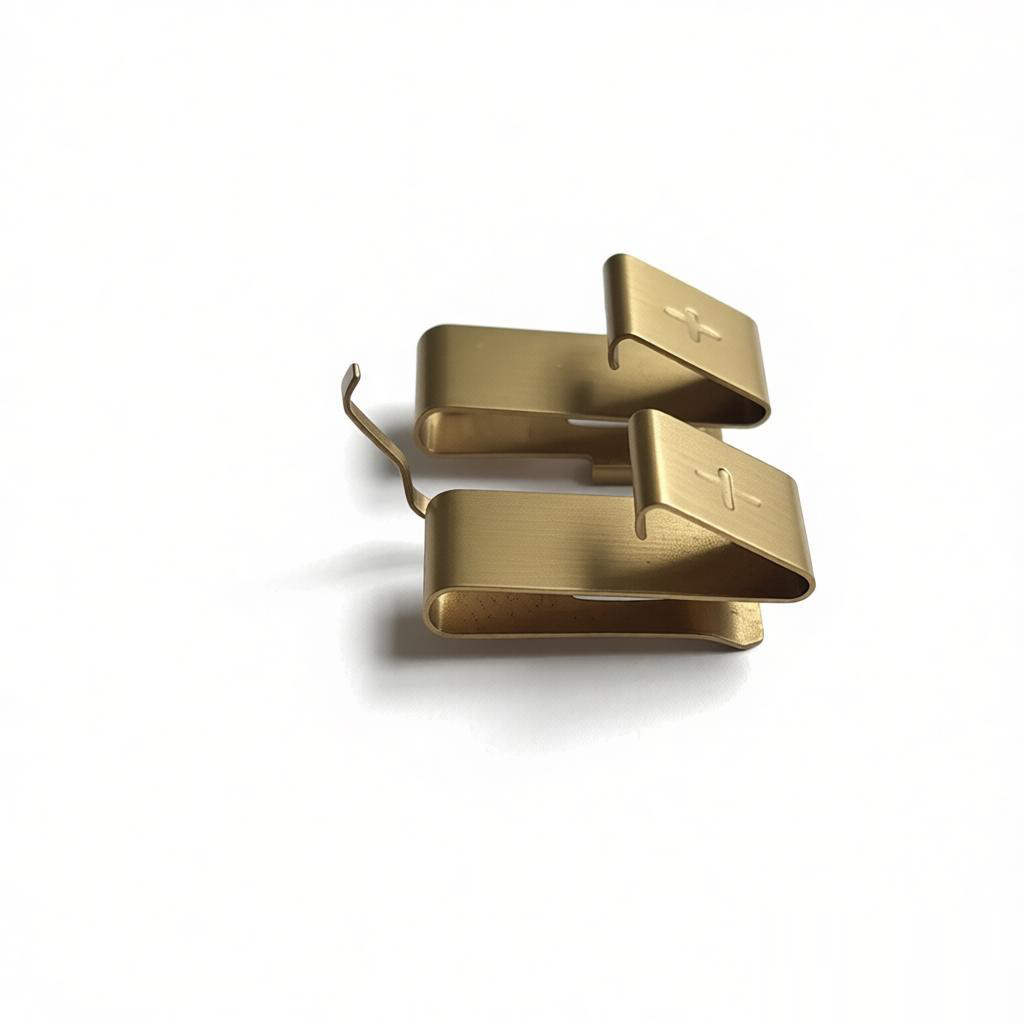
*Note: Tool wear index is based on die regrind intervals. A value of 2.5 means the die needs maintenance 2.5 times more often than when stamping CR4.*
**Section 2: Aluminum Alloys for Thermal and Weight Reduction** Aluminum is no longer just for heat sinks. The shift to 5G base stations and EV battery cooling plates has driven demand for specific alloys like 5052 and 6061, but the real innovation lies in surface treatment integration.
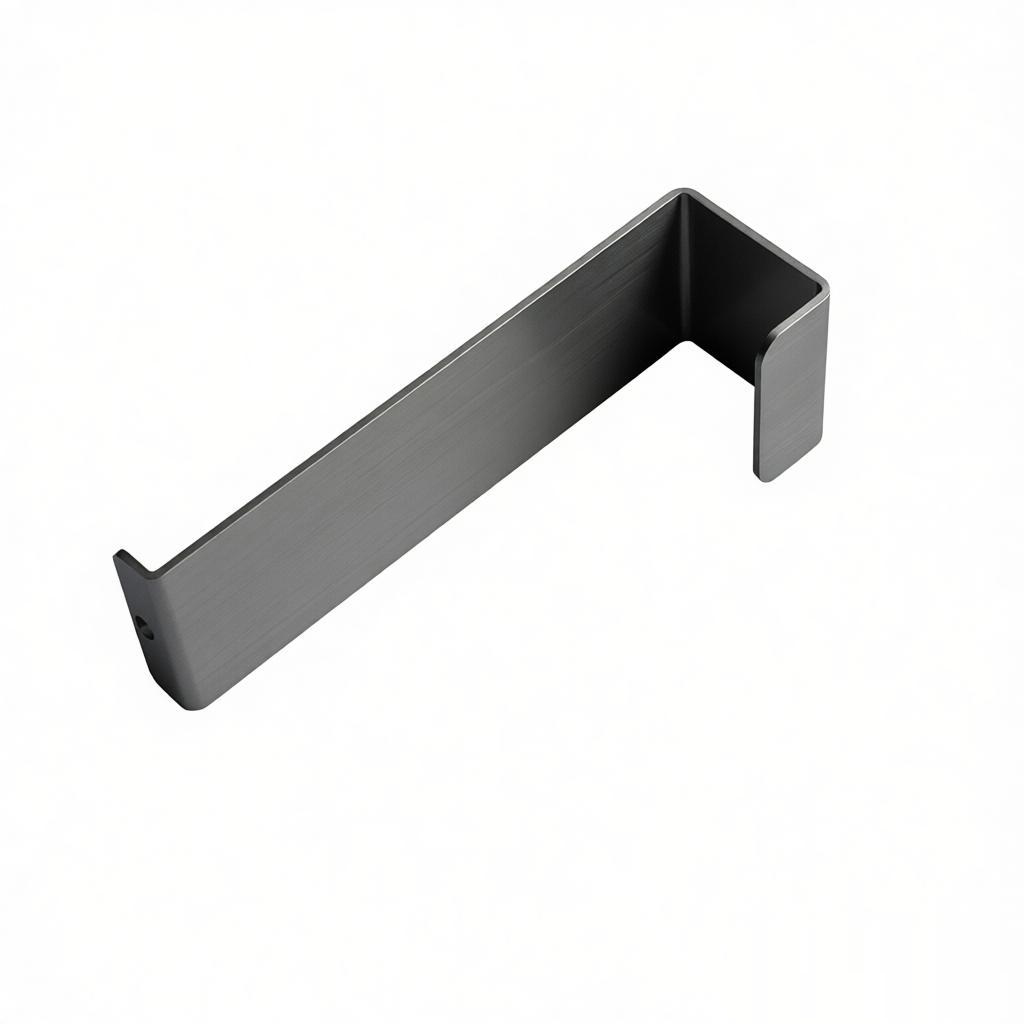
- **Precision Data:** We routinely hold hole-to-hole tolerances of ±0.05 mm on 1.5 mm thick 5052-H32 aluminum. The challenge is not the stamping itself but the material's tendency to gall. Using a dry-film lubricant with a coefficient of friction of 0.08 (vs. 0.15 for standard oil) extends die life from 50,000 strokes to 120,000 strokes per regrind. - **Cost Comparison:** Raw aluminum costs roughly 3.2 times more than CR4 steel per kilogram. However, because its density is 2.7 g/cm³ (vs. 7.85 g/cm³ for steel), a 50% weight reduction is achievable. In high-volume automotive, this saves roughly $0.40 per part in fuel efficiency credits, offsetting the raw material premium.
**Section 3: Copper Alloys and the Electrification Boom** Copper is the backbone of electrical connectors, busbars, and terminals. However, pure copper (C11000) is too soft for high-spring-force applications. The innovation is in beryllium copper (C17200) and high-performance bronze (C52100).
- **Thermal Specs:** C17200 offers a tensile strength of 1,200 MPa after heat treatment (solution annealed and aged), with an electrical conductivity of 22% IACS. This is critical for high-temperature EV connectors that must retain spring force at 150°C. - **Stamping Challenge:** Beryllium copper work-hardens rapidly. If we do not anneal the coil correctly, we get severe cracking at bend radii smaller than 1x material thickness. For a 0.4 mm thick C17200 strip, the minimum safe bend radius is 0.6 mm, requiring a precise V-die angle of 88 degrees to account for 2-3 degrees of springback.
**Section 4: Stainless Steel and Corrosion Resistance as a Standard** Stainless steel grades like 304 and 316L are now specified for non-automotive applications, including medical devices and marine sensors. The innovation here is in surface finish consistency.
- **Surface Finish Data:** For cosmetic parts, we now guarantee an Ra (arithmetic average roughness) of 0.8 µm on the stamped surface. This is achieved by using a mirror-finished die (polished to #8 finish, 0.025 µm Ra) and stamping with a low-viscosity synthetic oil to prevent micro-scratches. - **Cost Factor:** 316L costs 4 times more than CR4 steel. But for a 2.0 mm thick part requiring a salt spray test of 500 hours, 316L passes without post-coating, saving $0.15/part in plating costs. This makes it economically viable for high-end industrial sensors.
**Section 5: Coated Steels and In-Die Assembly Innovations** The newest trend is not just the base material but the pre-coated materials. Galvannealed steel (GA) and Al-Si coated PHS steel are reducing secondary operations.
- **Temperature Resistance:** Al-Si coated steel (e.g., Usibor 1500) can withstand the hot stamping process at 930°C without scaling. The coating thickness is typically 25 µm, which acts as a lubricant during the die quench, improving tool life by 30% compared to uncoated PHS. - **Design Rule:** For GA steel, the zinc-iron coating (approx. 8-10 µm) has a melting point of 650°C. Do not use laser welding on stamped GA parts without removing the coating locally, or you will get porosity in the weld seam.
**Section 6: Design Rules for Material Innovation** To fully leverage these materials, engineers must adjust their design rules. Here is a practical checklist:
1. **Springback Compensation:** Do not rely solely on CAD software. For DP980, we recommend a "trial and error" approach with a 2% over-bend angle, followed by a coining step to set the final angle. 2. **Tool Steel Selection:** For AHSS, use powder metallurgy tool steel like Vanadis 4 Extra (hardness 62-64 HRC). Standard D2 tool steel will fail prematurely due to chipping. 3. **Burr Height Limits:** For aluminum 5052, the acceptable burr height is 0.05 mm maximum. For copper C1100, it is 0.08 mm. Exceeding these limits indicates excessive die clearance (should be 4-6% of material thickness for aluminum, 8-10% for copper).
**FAQ: Material Selection in Metal Stamping**
*Q: What is the most cost-effective way to prototype with a new high-strength material?* A: Do not cut a hard die immediately. Use laser cutting or CNC machining for the first 50 parts. This costs $2-5 per part but avoids a $5,000 hard die that needs rework due to springback miscalculations.
*Q: Can we stamp titanium alloys?* A: Yes, but only grade 2 (commercially pure) or grade 5 (Ti-6Al-4V) in thin gauges (under 1.5 mm). Titanium has a very low Young's modulus (116 GPa), leading to high springback. We recommend hot stamping at 400°C for complex geometries to reduce cracking.
*Q: How does material thickness tolerance affect the stamping process?* A: If you order 1.0 mm thick steel with a tolerance of ±0.08 mm, your stamped part's thickness will vary. This affects the clamping force in a subsequent welding operation. For high-precision work, we recommend purchasing material to a "half-standard" tolerance (e.g., EN 10131), which adds roughly 10-15% to material cost but improves stamping consistency.
**Conclusion** The metal stamping industry in 2025 is not defined by faster presses but by smarter material usage. High-strength steel reduces weight but demands robust tooling. Aluminum and copper alloys solve thermal and electrical challenges but require careful lubrication and bend radius design. As a manufacturer, we have invested heavily in servo presses with dynamic ram control to handle the varying springback of AHSS, and we now run a dedicated line for copper alloys with a chill-roll system to control material temperature during stamping.
The key takeaway is that material innovation is a collaborative effort. The best results come when the design engineer understands the material's fatigue limits and the stamping manufacturer understands the die wear characteristics. If you have a project that demands these advanced materials, send us your CAD file. We will review the material grade, calculate the tooling cost, and provide a full DFM (Design for Manufacturing) report within 12 hours. Contact our engineering team at sc@bquq.com or reach us on WhatsApp at +86 13713157787. Visit www.bquq.com to download our latest material selection guide.
Related Articles
- Stamping Lubricant Selection 2024: Balancing Die Life, Part Quality, and Environmental Compliance
- 5 Proven Ways to Reduce Cost in Metal Stamping Parts
- How to Choose an Automotive Metal Stamping Supplier
Frequently Asked Questions
What tolerances can you hold when stamping aluminum alloys like 5052-H32?
We routinely hold hole-to-hole tolerances of ±0.05 mm on 1.5 mm thick 5052-H32 aluminum. The main challenge is galling, which we mitigate with a dry-film lubricant (coefficient of friction 0.08) to extend die life from 50,000 to 120,000 strokes per regrind.
How does stamping DP980 steel affect part tolerances compared to standard CR4 steel?
With conventional CR4 steel, a stamped bracket can hold a flatness tolerance of ±0.10 mm. With DP980 (tensile strength 980 MPa, elongation 8-12%), springback is unpredictable, often requiring relaxation to ±0.20 mm unless advanced servo press compensation is used.
What is the cost and weight trade-off of using aluminum instead of steel in stamping?
Raw aluminum costs roughly 3.2 times more than CR4 steel per kilogram. However, its density is 2.7 g/cm³ versus 7.85 g/cm³ for steel, enabling a 50% weight reduction. In high-volume automotive, this saves about $0.40 per part in fuel efficiency credits, offsetting the material premium.
How does tool wear differ between AHSS grades and standard steel?
Tool wear index is relative to CR4 (set at 1.0). DP600 has an index of 1.8, and DP980 is 2.5, meaning dies need maintenance 2.5 times more often than with CR4. This reduces typical stamping speed from 80 SPM (CR4) to 45 SPM (DP980), impacting production efficiency.