Metal Stamping vs CNC Machining: 7 Factors to Choose the Right Process in 2025
Metal Stamping vs CNC Machining: 7 Factors to Choose the Right Process in 2025
Choosing between metal stamping and CNC machining is a critical decision that impacts your part cost, lead time, and mechanical properties. In short: choose metal stamping for high-volume production (over 10,000 units) of thin-gauge parts (0.1–6.0 mm) with tight tolerances down to ±0.05 mm, and choose CNC machining for low-to-mid volumes (1–5,000 units) requiring complex geometries, thick sections, or tolerances tighter than ±0.02 mm. The break-even point typically falls between 1,500 and 3,000 units depending on part size and material, but your specific design will shift that number.
1. Cost Analysis: Tooling vs Per-Part Price
The fundamental economic difference is upfront tooling investment versus recurring machining cost. A progressive stamping die for a simple bracket costs $3,000–$8,000; for a complex automotive component with 10+ stations, expect $15,000–$50,000. In contrast, CNC machining requires zero tooling but charges $45–$120 per hour for 3-axis and $80–$200 for 5-axis work.
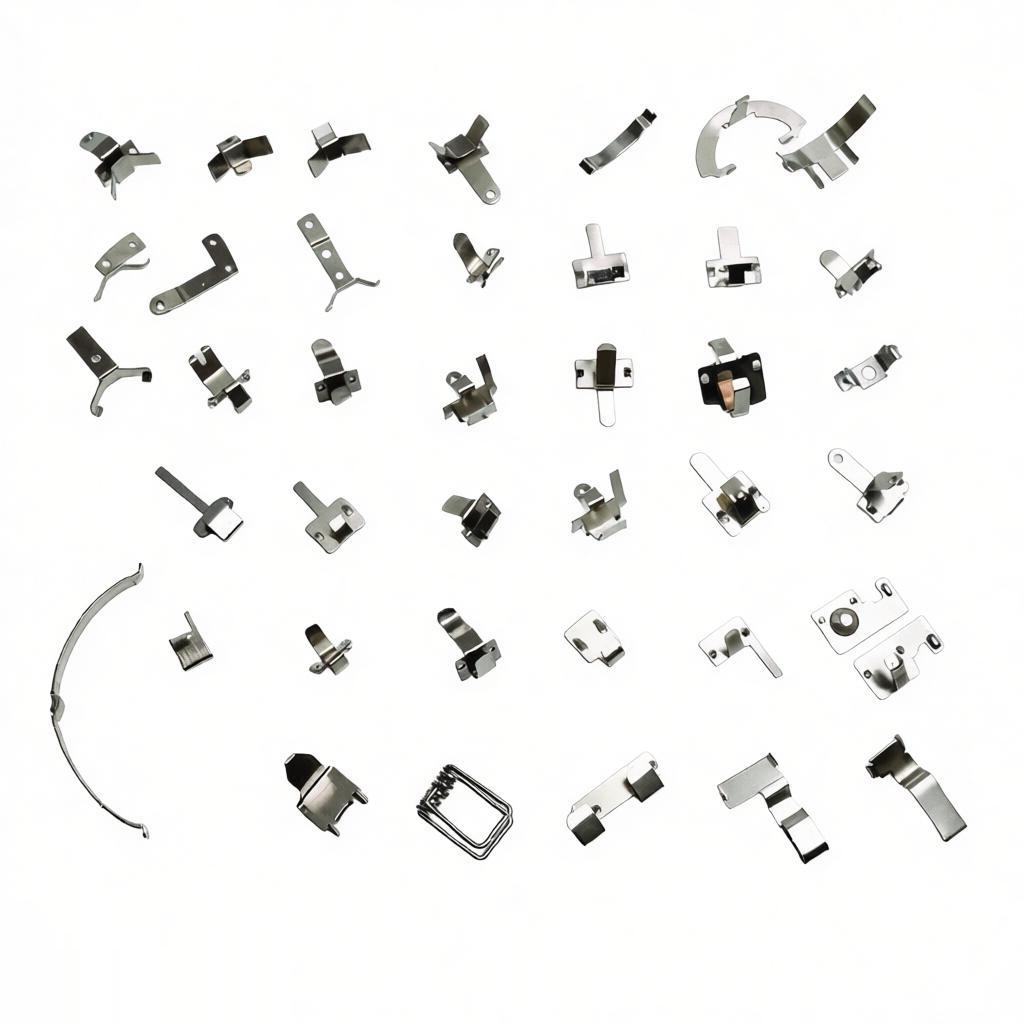
**Break-even example:** A 50×30×2 mm aluminum bracket:
| Process | Tooling Cost | Per-Part Cost | Total at 1,000 pcs | Total at 10,000 pcs | --------- | ------------- | --------------- | -------------------- | --------------------- | Stamping | $12,000 | $0.85 | $12,850 | $20,500 | CNC Machining | $0 | $6.50 | $6,500 | $65,000 |
|---|
At 1,000 pieces, CNC is 49% cheaper. At 10,000 pieces, stamping is 68% cheaper. The crossover is approximately **2,100 units** for this geometry. For steel parts, the crossover shifts higher (3,500–4,500 units) due to lower raw material cost per stamping hit.
2. Tolerances and Surface Finish Capabilities
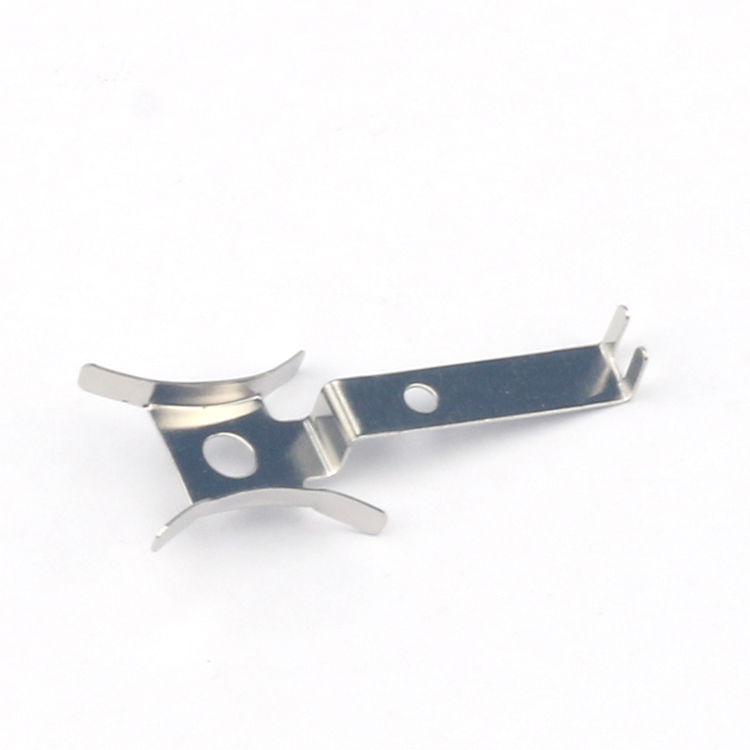
CNC machining achieves tighter tolerances for critical features. Standard milling holds ±0.05 mm, while precision machining reaches ±0.005 mm on machined surfaces. Stamping holds ±0.05 mm for hole positions and ±0.10 mm for bend lines, with precision dies reaching ±0.025 mm.
Surface finish also differs significantly. CNC-machined surfaces typically achieve Ra 0.8–3.2 μm as standard, with Ra 0.4 μm possible with finishing passes. Stamped parts have sheared edges (Ra 3.2–6.3 μm on cut faces) and bend radii that are 0.5–1.5× material thickness. If your design requires a mirror finish on functional surfaces, CNC is the only option without secondary operations.
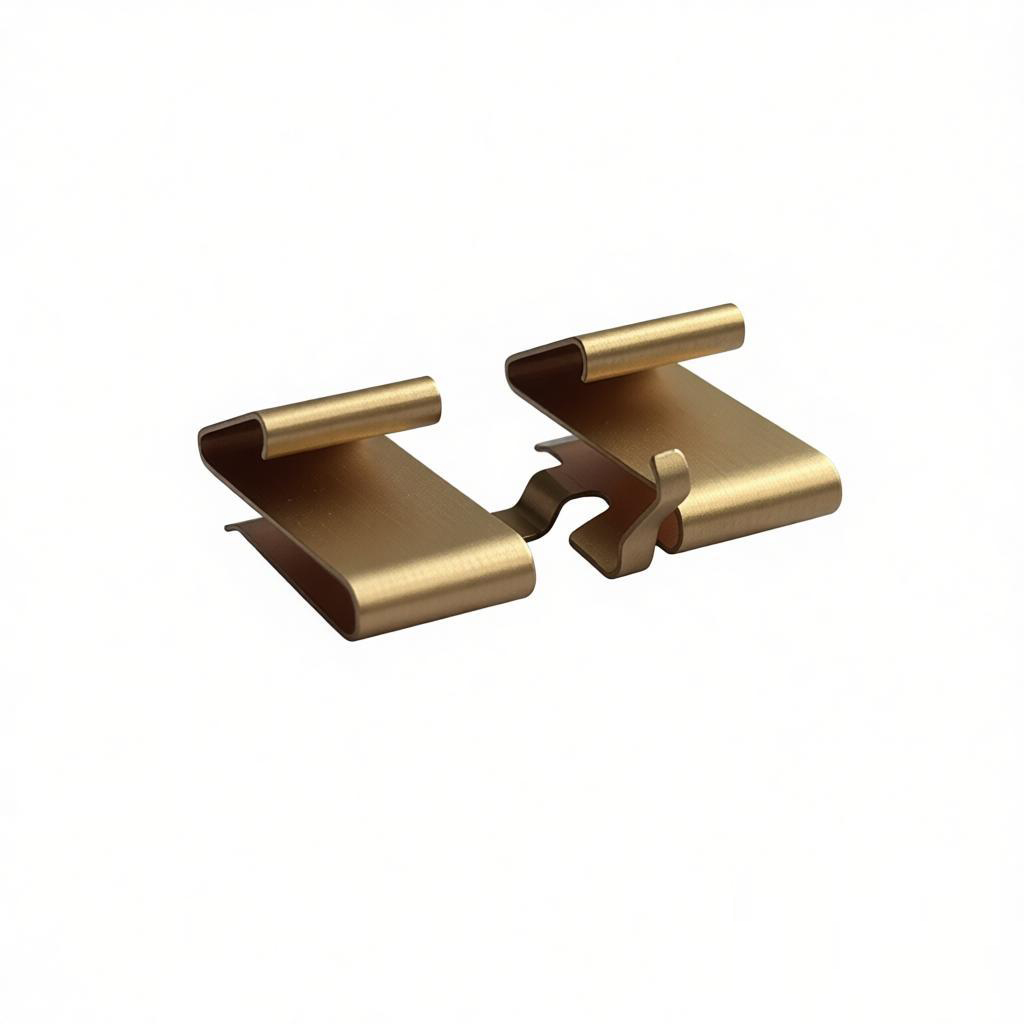
**Critical tolerance comparison:**
| Feature | Stamping (Precision Die) | CNC Machining (Standard) | --------- | -------------------------- | -------------------------- | Hole diameter | ±0.05 mm | ±0.013 mm | Bend angle | ±0.5° | N/A (no bending) | Flatness (100 mm length) | ±0.15 mm | ±0.025 mm | Surface finish (Ra) | 1.6 μm (rolled) | 0.8 μm (milled) |
|---|
3. Material and Thickness Limitations
Stamping is limited to ductile materials that can withstand plastic deformation. Common choices include low-carbon steel (SPCC, DC01), stainless steel 304/316 (up to 3.0 mm), aluminum 5052/6061 (up to 4.0 mm), and copper/brass alloys. Material hardness above 35 HRC generally requires hot stamping or is impractical.
CNC machining has no such ductility constraint. You can machine hardened tool steels (up to 60 HRC), titanium alloys (Ti-6Al-4V), Inconel 718, and even ceramics with diamond tooling. However, machining these materials creates significant heat: cutting temperatures at the tool-workpiece interface reach 400–600°C for aluminum and 800–1,000°C for titanium. This requires proper coolant flow (minimum 20 bar through-spindle coolant for titanium) to prevent work-hardening and tool failure.
4. Geometric Complexity and Design Freedom
CNC machining wins decisively on geometric complexity. A 5-axis CNC machine can produce undercuts, internal threads, deep pockets (depth-to-width ratio up to 5:1), and freeform surfaces in a single setup. Stamping produces parts with uniform wall thickness, and each additional bend or form requires an additional die station, increasing tooling cost and complexity.
For stamped parts, minimum bend radius is typically 0.5× material thickness for aluminum and 1.0× for stainless steel. Hole diameter must be at least 1.0× material thickness to prevent punch breakage. These constraints limit design flexibility significantly compared to machining.
**When the geometry forces CNC:** If your part has a wall thickness variation (e.g., 1.5 mm on one side, 4.0 mm on another), stamping is impossible—it produces constant thickness parts. Similarly, any feature requiring a cutting tool (threads, keyways, slots) beyond simple punches points toward CNC.
5. Production Speed and Lead Time
Stamping is dramatically faster per part. A progressive die running at 60–120 strokes per minute produces one part per stroke, yielding 3,600–7,200 parts per hour. CNC machining produces one part every 5–30 minutes depending on complexity. For a 1,000-part order, stamping completes in 2–4 hours of machine time; CNC requires 3–8 days.
However, total lead time includes tooling fabrication. A stamping die takes 4–8 weeks to design, machine, and trial. CNC programming takes 1–3 days, with first articles available in 3–5 days. For urgent prototyping or short-run production, CNC is always faster to first part.
6. Secondary Operations and Assembly
Stamping often integrates multiple operations in one die: punching, bending, embossing, and coining happen simultaneously. This eliminates secondary handling. However, stamped parts frequently require deburring (vibratory finishing, 15–30 minutes per batch) and sometimes heat treatment for spring applications (tempering at 300–450°C for 1–2 hours).
CNC-machined parts come off the machine with burrs already removed by the cutting process, though edge breaks (0.1–0.3 mm chamfers) are standard practice. Threads are cut directly, eliminating tapped hole alignment issues common in stamped parts. For assemblies requiring tight mating surfaces, CNC provides superior consistency.
7. Practical Decision Framework for Engineers
Use this checklist to select your process:
- **Volume > 10,000/year, thickness < 4 mm, constant wall, no deep holes?** Choose stamping. - **Volume < 1,000, complex geometry, tight tolerances, thick sections?** Choose CNC. - **Volume 1,000–5,000?** Run a cost analysis. If tooling amortization is acceptable, stamping; otherwise CNC. - **Prototype first, then high volume?** Machine 10–50 prototypes, then transition to stamping. Use the same CAD model; stamping dies are designed from the machined part geometry. - **Material is titanium or hardened steel?** CNC is mandatory; stamping is impractical.
**FAQ-Style Tips**
1. **Can stamping achieve the same tolerance as CNC?** No. Stamping typically holds ±0.05 mm; CNC holds ±0.013 mm easily. If your critical dimension is tighter than ±0.05 mm, CNC is required. 2. **What about cost for 500 pieces?** CNC is 60–80% cheaper for 500 pieces. Stamping tools are not amortized at this volume. 3. **Can I switch from CNC to stamping later?** Yes, but redesign is needed. Add bend radii, adjust hole sizes to ≥1.0× thickness, and accept looser tolerances.
Conclusion
The choice between metal stamping and CNC machining is not about which is "better" but which fits your volume, geometry, tolerance, and material constraints. Stamping excels at high-volume, thin-gauge, cost-sensitive production. CNC machining dominates low-volume, complex, tight-tolerance applications. For most engineering teams, a hybrid approach—CNC for prototyping and low-volume production, stamping for mass production—yields the best economics and quality.
If you are uncertain about your part's break-even point, send your 2D drawing or 3D model for a free cost comparison. Our engineers at BQUQ will provide both stamped and machined quotes within 12 hours, including tooling costs, per-part pricing, and lead times. Contact us at sc@bquq.com or WhatsApp +86 13713157787. Visit www.bquq.com to see our 20 years of precision manufacturing case studies.
Related Articles
- Why Low Volume Metal Stamping is Ideal for Prototyping
- 5 Effective Burr Removal Techniques for Stamped Parts
- CNC Lathe vs Stamping: Which Precision Part Method Wins?
Frequently Asked Questions
At what production volume does metal stamping become more cost-effective than CNC machining?
The break-even point typically falls between 1,500 and 3,000 units depending on part size and material. For a 50×30×2 mm aluminum bracket, the crossover is approximately 2,100 units. For steel parts, it shifts higher to 3,500–4,500 units due to lower raw material cost per stamping hit.
What tolerances can I expect from CNC machining versus metal stamping?
CNC machining holds ±0.05 mm standard, with precision machining reaching ±0.005 mm on machined surfaces. Stamping holds ±0.05 mm for hole positions and ±0.10 mm for bend lines, with precision dies reaching ±0.025 mm. For critical features like hole diameter, CNC achieves ±0.013 mm versus ±0.05 mm for precision stamping dies.
Which materials are suitable for metal stamping?
Stamping is limited to ductile materials that can withstand plastic deformation. Common choices include low-carbon steel (SPCC, DC01), stainless steel 304/316 up to 3.0 mm, aluminum 5052/6061 up to 4.0 mm, and copper/brass alloys. Material hardness above 35 HRC generally requires hot stamping or alternative processes.
How do surface finishes compare between stamped and CNC-machined parts?
CNC-machined surfaces typically achieve Ra 0.8–3.2 μm as standard, with Ra 0.4 μm possible with finishing passes. Stamped parts have sheared edges at Ra 3.2–6.3 μm on cut faces and bend radii of 0.5–1.5× material thickness. For mirror finishes on functional surfaces, CNC is the only option without secondary operations.