Metal Stamping vs CNC Machining: Cost and Quality for Small Parts
Metal Stamping vs CNC Machining: Cost and Quality for Small Parts
**Direct Answer:** For small parts (under 50 mm) in production volumes above 5,000 units, metal stamping delivers a 60-80% lower per-unit cost than CNC machining, but with a higher initial tooling investment. CNC machining offers tighter tolerances (±0.005 mm vs ±0.05 mm) and zero tooling cost, making it superior for prototypes and low-volume runs. Your choice hinges on volume, tolerance requirements, and part geometry complexity.
1. Process Fundamentals: What Defines Each Method
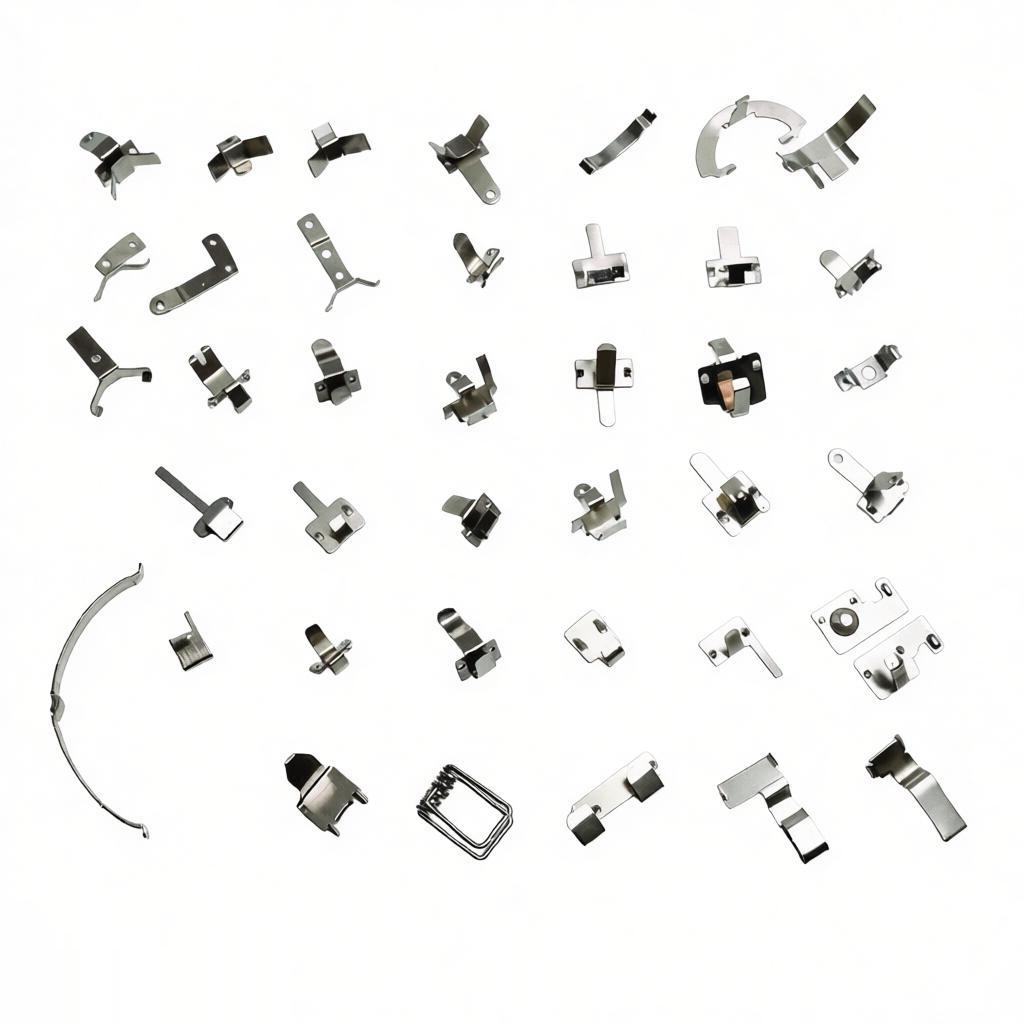
Metal stamping uses progressive dies to cut, bend, and form sheet metal in a single press stroke. At BQUQ, our stamping presses range from 25 to 250 tons, handling materials from 0.1 mm to 6.0 mm thick. The process is inherently high-speed: a 60-ton press can produce 300-600 parts per minute for simple geometries.
CNC machining removes material from a solid billet using rotating cutting tools. Our 3-axis and 5-axis machining centers achieve spindle speeds up to 15,000 RPM, with positioning accuracy of ±0.003 mm. Material removal rates vary from 20 to 120 cm³/min depending on alloy and tooling.
The fundamental difference: stamping replicates a shape through deformation (material moves), while machining subtracts material (chip removal). This distinction drives every cost and quality metric that follows.
2. Cost Breakdown: Tooling, Piece Price, and Break-Even Analysis
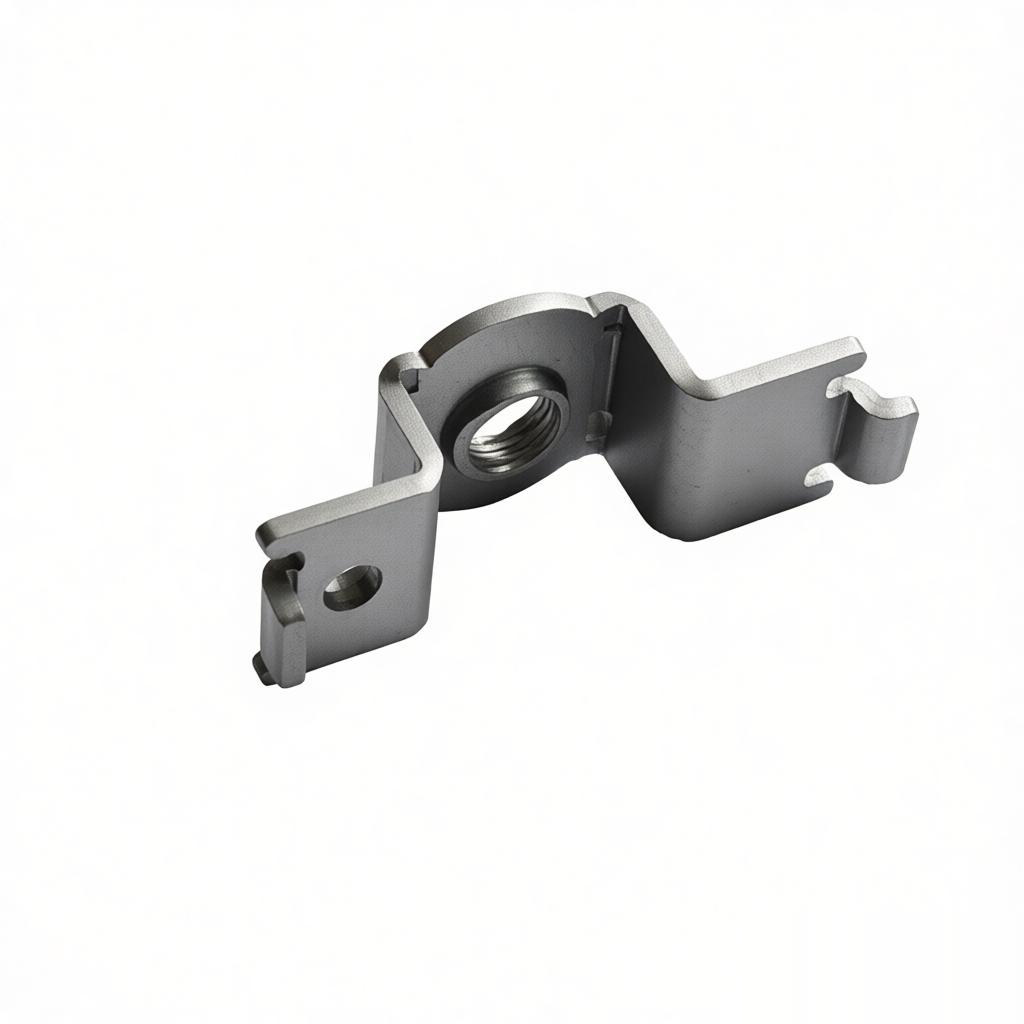
The cost curve is non-linear and heavily favors stamping at scale. Below is a realistic comparison for a typical small part: a 20 mm x 15 mm stainless steel bracket, 1.5 mm thick, with two holes and a 90-degree bend.
| Cost Component | Metal Stamping | CNC Machining | ---------------- | ---------------- | --------------- | Tooling/Setup Cost (one-time) | $3,000 - $8,000 (progressive die) | $50 - $200 (CAM programming + fixtures) | Per-Unit Material Cost | $0.08 (sheet utilization 85%) | $0.35 (billet waste, 40% yield) | Per-Unit Machining/Forming Cost | $0.02 - $0.04 | $1.50 - $4.00 (cycle time 3-8 min) | Per-Unit Finishing Cost | $0.01 (vibratory deburr) | $0.05 (manual deburr + inspection) | Total Per-Unit Cost (10,000 pcs) | $0.11 - $0.13 | $1.90 - $4.40 | Total Per-Unit Cost (100,000 pcs) | $0.03 - $0.05 | $1.85 - $4.35 | Lead Time for First Article | 2-4 weeks (die fabrication) | 3-5 days | Production Lead Time (10k pcs) | 3-5 days | 15-25 days |
|---|
**Break-even point:** At 1,500-2,500 units, the amortized tooling cost of stamping equals the higher per-unit machining cost. Below this threshold, CNC machining is cheaper. Above it, stamping wins decisively. For 100,000 pieces, stamping is **40-90x cheaper** per unit.
3. Quality Metrics: Tolerance, Surface Finish, and Repeatability
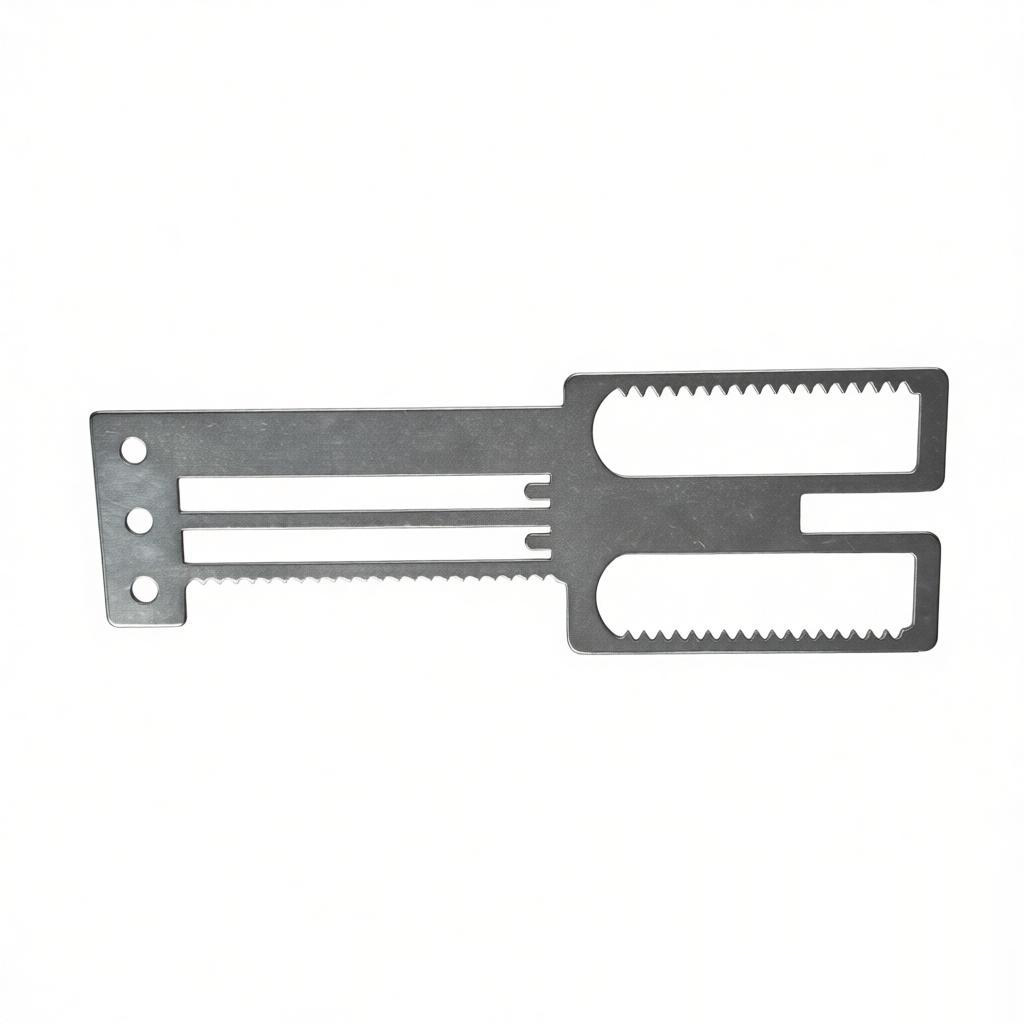
Tolerance capability is where machining clearly outperforms stamping. CNC machining holds ±0.005 mm on critical dimensions, with surface finishes down to Ra 0.4 µm (mirror finish with polishing). Stamping is limited by springback (elastic recovery of metal after bending) and die wear.
| Quality Parameter | Metal Stamping | CNC Machining | ------------------- | ---------------- | --------------- | Standard Tolerance | ±0.05 mm (holes), ±0.10 mm (bends) | ±0.005 mm (all features) | Precision Tolerance (with secondary ops) | ±0.02 mm | ±0.002 mm (jig grinding) | Surface Finish (Ra) | 0.8 - 3.2 µm (as-stamped) | 0.4 - 1.6 µm (machined) | Edge Quality | Burr 0.05-0.15 mm (requires deburring) | Burr-free (controlled toolpath) | Repeatability (Cpk) | 1.33 - 1.67 (good) | 1.67 - 2.0 (excellent) | Hardness Variation | Work-hardening at bend zones | Uniform, consistent with billet | Heat-Affected Zone | None (cold forming) | Minimal (50-200 µm if not cooled) |
|---|
**Critical note on material properties:** Stamping work-hardens the material at bend radii (e.g., 304 stainless goes from 180 HV to 320 HV at the bend). This can be beneficial for strength but detrimental for downstream welding. Machining preserves the original grain structure, offering predictable mechanical properties.
4. Geometry Limitations: What Each Process Cannot Do
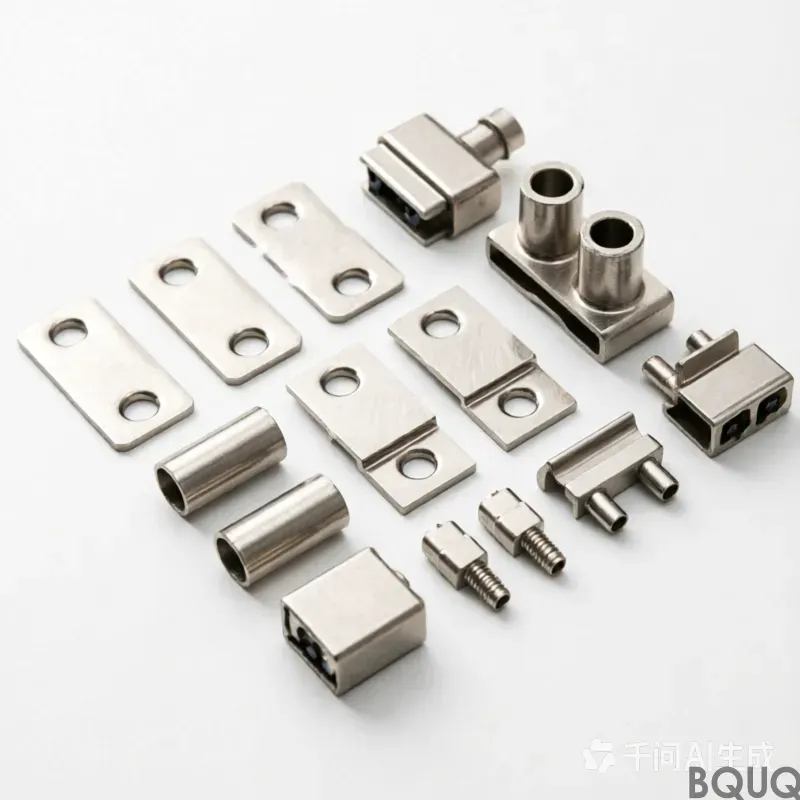
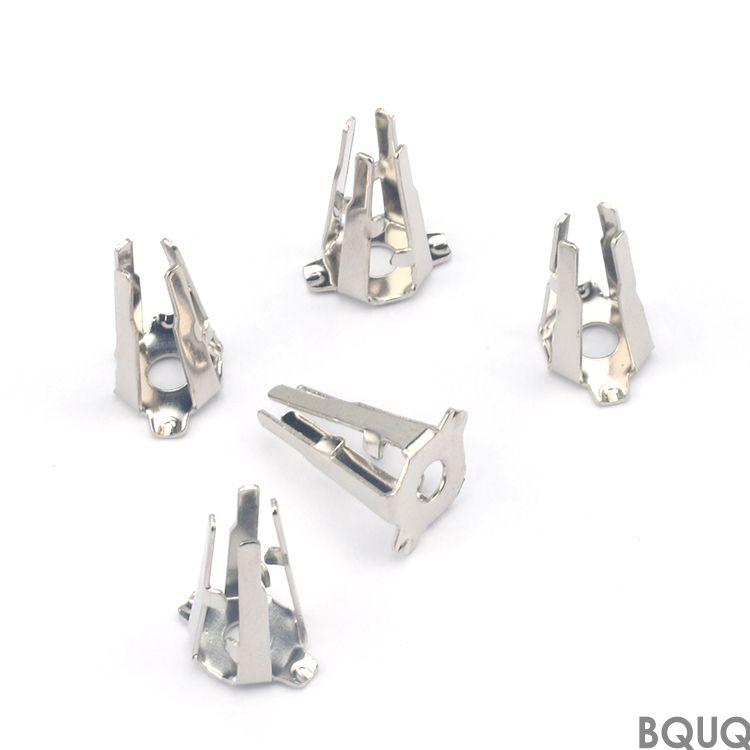
Stamping excels at 2D-to-3D forms: brackets, clips, springs (via forming), heat sink fins, and EMI shields. However, it cannot produce: - Undercuts or internal threads (requires tapping as a secondary operation) - Features deeper than 2-3x material thickness (except via progressive draw) - Sharp internal corners (minimum bend radius is 0.5x material thickness, otherwise cracking occurs) - Thick cross-sections above 6 mm (practical limit for small parts; thicker requires hot stamping)
CNC machining is unrestricted by geometry. It can produce: - Deep blind holes (depth-to-diameter ratio up to 10:1 with peck drilling) - Internal threads (M1.6 and larger, tapped in-cycle) - Complex 3D contours (5-axis simultaneous) - Features on all six faces (with a rotary indexer)
**Real-world example:** A heat sink for a power MOSFET (25 mm x 25 mm, 8 fins, 1.5 mm base) is ideal for stamping at 50,000 units — the fins are formed in one stroke. But the same part with a threaded M3 mounting hole and a 0.5 mm deep counterbore requires CNC machining for the thread, making a hybrid approach (stamped body + CNC tapped) the most cost-effective.
5. Material Selection and Thermal Considerations
Stamping works best with ductile materials: low-carbon steel (SPCC, DC01), aluminum 5052/6061, brass (H62), and stainless 301/304 (half-hard). Harder materials (e.g., 17-4PH stainless, titanium) wear dies rapidly — a progressive die on titanium may need re-grinding every 20,000 strokes, adding $500-$1,000 per sharpening.
CNC machining handles all materials equally well, including hardened steels (HRC 58-62), Inconel, and tungsten. Cutting temperatures at the tool-workpiece interface reach 500-800°C for steel, but flood coolant maintains part temperature below 40°C, preventing metallurgical changes.
**For stamping, die temperature matters:** At high speeds (300 strokes/min), die surface temperature can reach 80-120°C. Lubrication (oil or dry-film) is mandatory to prevent galling on aluminum and stainless. For CNC, heat management is about chip removal — insufficient coolant causes thermal expansion, leading to tolerance drift of ±0.01 mm over a 100-part run.
6. Practical Decision Matrix: 5 Questions to Ask Before You Choose
**Question 1: What is the annual quantity?** - Under 1,000: Always CNC. Tooling cost of stamping is unjustifiable. - 1,000-5,000: CNC, unless the part is extremely simple (flat washer, simple clip) where a low-cost blanking die ($800-$1,500) pays off.
**Question 2: What is the tightest tolerance?** - If any dimension is below ±0.03 mm, choose CNC. Stamping cannot hold this without costly secondary operations (coining, reaming). - If all tolerances are above ±0.10 mm, stamping is safe.
**Question 3: Does the part have threads, undercuts, or deep pockets?** - Yes: CNC, or stamping + CNC secondary. Note that secondary CNC operations add $0.50-$2.00 per part, eroding stamping's cost advantage.
**Question 4: What material and thickness?** - Sheet metal under 3 mm thick: Stamping is faster and cheaper per part. - Solid bar or plate over 6 mm: CNC is the only option (stamping would require progressive forging, which is 2-3x more expensive).
**Question 5: What is the required lead time?** - Prototype in 3 days: CNC. - Production in 10 days: Stamping, if the die can be expedited (we offer soft tooling in 10-14 days using 3D-printed die inserts for short runs of 1,000-5,000 parts).
Conclusion: Hybrid Approach for Maximum Value
The best engineers do not treat this as an either-or decision. At BQUQ, we frequently recommend a hybrid strategy: CNC machining for the first 500 units (to validate design and field testing), then transition to hard tooling stamping for the next 50,000 units. The CNC phase allows design iterations without die modification costs; the stamping phase captures the exponential cost savings.
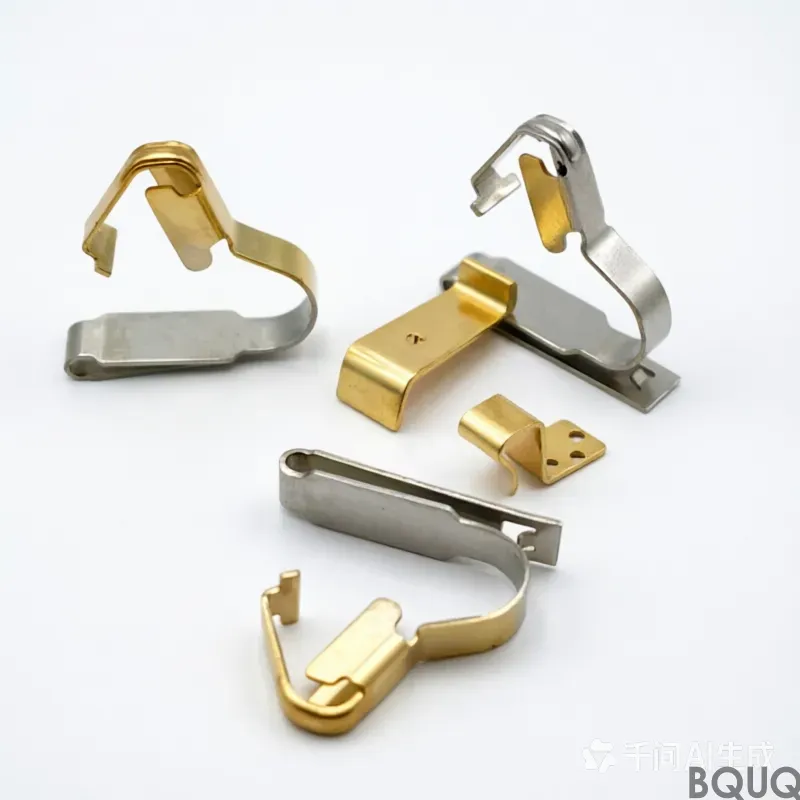
A final cost example from our production floor: a stainless steel clip (12 mm x 8 mm, 0.8 mm thick) — CNC machining costs $2.10 per unit at 10,000 pieces. The same clip stamped costs $0.08 per unit after a $4,500 progressive die. The stamping die pays for itself at 2,300 units, and the client saves $19,500 on the full order.
For your specific part, send us the 2D drawing or 3D STEP file. Our engineering team will run a cost model for both processes within 24 hours. We routinely quote within 12 hours for standard materials and geometries.
**Contact BQUQ Precision Manufacturing:** - Email: sc@bquq.com - WhatsApp: +86 13713157787 - Website: www.bquq.com
Located in Dongguan, China, with 20 years of experience in CNC machining, metal stamping, springs, and heat sinks. We serve automotive, medical, and consumer electronics industries with ISO 9001 and IATF 16949 certifications. Request your free cost comparison today.
Related Articles
- Stamping Press Selection Guide 2024: Mechanical vs Hydraulic vs Servo Speed and Force
- Stamping Lubricant Selection 2024: Balancing Die Life, Part Quality, and Environmental Compliance
- 5 Proven Ways to Reduce Cost in Metal Stamping Parts
Frequently Asked Questions
What is the break-even point where metal stamping becomes cheaper than CNC machining?
The break-even point is at 1,500-2,500 units. Below this threshold, CNC machining is cheaper due to zero tooling cost. Above it, stamping wins decisively because the amortized tooling cost is offset by much lower per-unit costs. For 100,000 pieces, stamping is 40-90x cheaper per unit.
What tolerances can I expect from CNC machining versus metal stamping for small parts?
CNC machining holds tighter tolerances of ±0.005 mm on critical dimensions, with surface finishes down to Ra 0.4 µm. Metal stamping is limited to ±0.05 mm due to springback and die wear. Our CNC centers also achieve positioning accuracy of ±0.003 mm.
How do the per-unit costs compare for a typical small stainless steel bracket at 10,000 pieces?
For a 20 mm x 15 mm stainless steel bracket, 1.5 mm thick, metal stamping costs $0.11-$0.13 per unit at 10,000 pieces, while CNC machining costs $1.90-$4.40 per unit. Stamping includes a one-time tooling cost of $3,000-$8,000, whereas CNC has only $50-$200 in setup.
What are the production lead times for first articles and volume runs for each method?
CNC machining offers a first article lead time of 3-5 days and production of 10,000 pieces in 15-25 days. Metal stamping requires 2-4 weeks for die fabrication, but production of 10,000 pieces takes only 3-5 days once the die is ready.