Metal Stamping vs CNC Machining: How to Choose the Right Process for Precision Parts
**Direct Answer:** Choose metal stamping for high-volume production (10,000+ parts) where dimensional consistency and low per-unit cost are critical, especially for thin-gauge materials (0.1–6.0 mm). Choose CNC machining for low-to-mid volumes (1–5,000 parts), complex 3D geometries, tight tolerances (±0.005 mm), and a wide range of material thicknesses (up to 200 mm). The decision hinges on annual volume, required tolerances, material thickness, and upfront tooling budget.
1. The Core Differences: Process Physics and Economic Breakpoints
Metal stamping is a cold-forming process that uses a die to shear, bend, or draw sheet metal. It is a high-speed, repeatable operation—progressive die stamping presses can run at 200–1,200 strokes per minute (SPM). In contrast, CNC machining is a subtractive process where a rotating cutting tool removes material from a solid block (billet) or near-net shape. CNC mills and lathes achieve material removal rates (MRR) of 50–300 cm³/min for aluminum, but each part is individually programmed and cut.
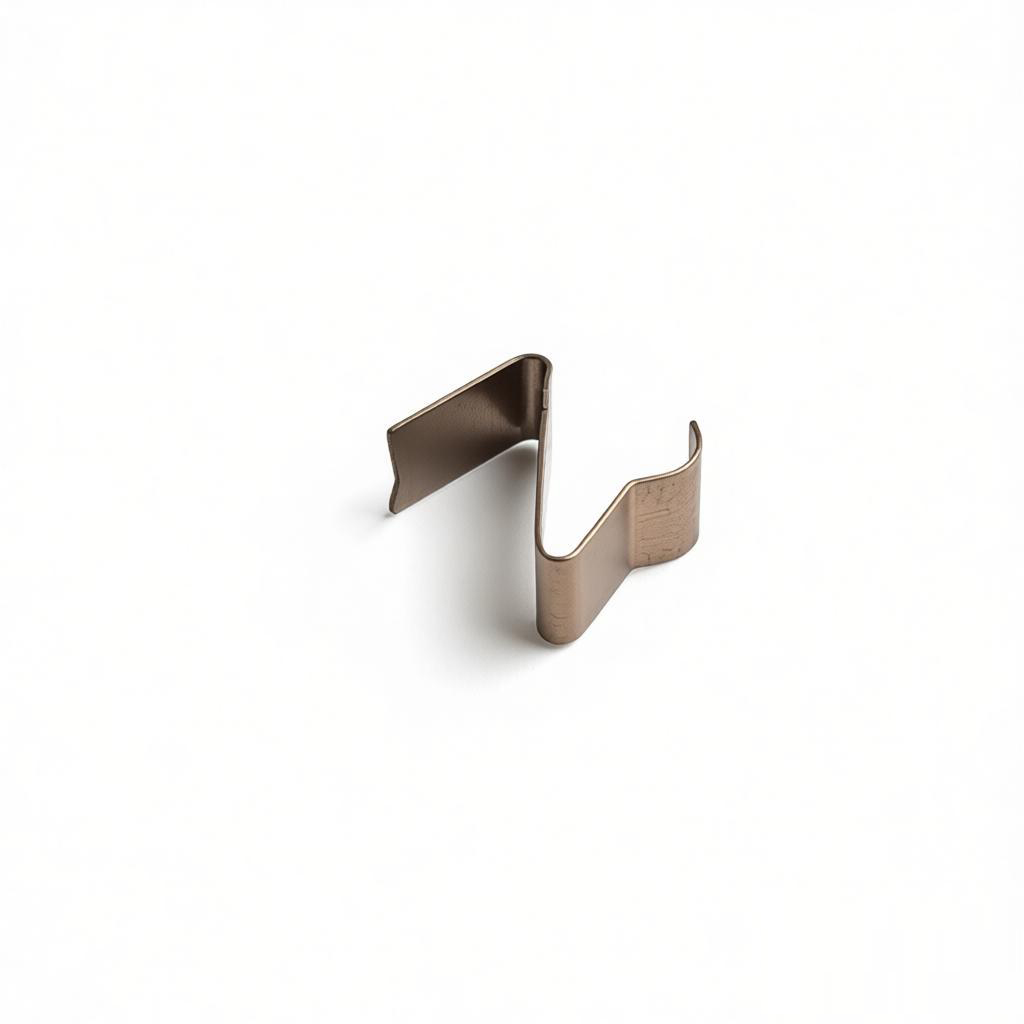
The economic crossover point is well-documented. For a typical bracket part (50 mm x 30 mm x 2 mm, 6061 aluminum), the per-unit cost curves intersect at approximately 8,000–12,000 units. Below this volume, CNC machining wins because the tooling cost (CNC fixture, ~$200–$800) is negligible compared to stamping dies ($3,000–$30,000 for a progressive die). Above this volume, stamping’s cycle time (0.5–2 seconds per part) versus CNC’s (3–8 minutes per part) becomes decisive.
2. Tolerance Capability: Absolute Limits and Practical Realities
Engineers often over-specify tolerances, driving up cost unnecessarily. Here is the practical capability data from our 20 years of production at BQUQ:
| Process | Standard Tolerance | Precision Tolerance (with secondary ops) | Surface Finish (Ra) | Material Thickness Range | --- | --- | --- | --- | --- | **Metal Stamping (Progressive Die)** | ±0.10 mm | ±0.05 mm | 0.8–3.2 µm | 0.1–6.0 mm (sheet) | **CNC Machining (3-axis/5-axis)** | ±0.025 mm | ±0.005 mm (with CMM verification) | 0.4–1.6 µm | 1.0–200 mm (block) | **CNC Turning (lathe)** | ±0.013 mm | ±0.005 mm | 0.2–0.8 µm | Ø1.0–Ø300 mm |
|---|
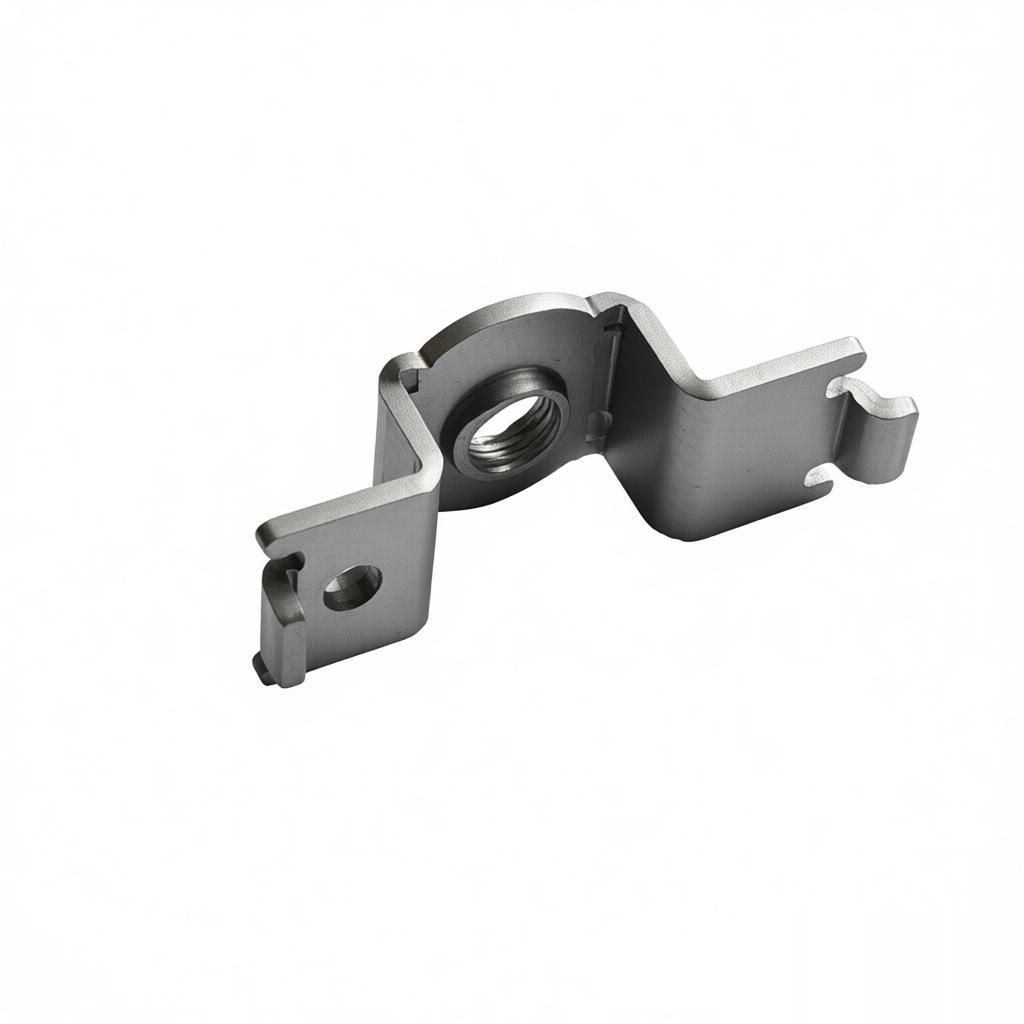
Critical insight: Stamping tolerances are consistent across the entire run because the die is fixed. However, the tolerance is limited by springback—for high-strength steel (e.g., DP780), springback can cause angular deviations of 1–3 degrees, requiring compensation in the die design. CNC machining has no springback issue but is subject to tool wear (typically 0.002–0.005 mm per 100 parts) and thermal expansion (aluminum grows 23.6 µm/m per °C). For parts requiring ±0.01 mm or better, CNC machining is the only practical choice unless you are making millions of identical components.
3. Cost Analysis: Tooling, Unit Price, and Total Cost of Ownership
We analyzed 1,000 units of a stainless steel (304) sensor housing (40 mm x 40 mm x 25 mm, 1.5 mm wall). The total cost (tooling + production + inspection) is shown below:
| Cost Component | Metal Stamping | CNC Machining (Billet) | --- | --- | --- | **Tooling/Programming** | $12,500 (progressive die) | $450 (CAM programming + fixtures) | **Material Cost** | $0.85/part (coil stock, 85% utilization) | $2.10/part (block, 35% utilization) | **Machining/Forming Cost** | $0.32/part (0.8 sec cycle) | $4.75/part (12 min cycle) | **Secondary Operations** | $0.15/part (deburring) | $0.10/part (edge break) | **Total Cost for 1,000 Units** | $13,820 | $7,400 | **Total Cost for 50,000 Units** | $16,000 | $367,000 | **Break-even Volume** | **≈ 3,500 units** | **Below 3,500 units** |
|---|
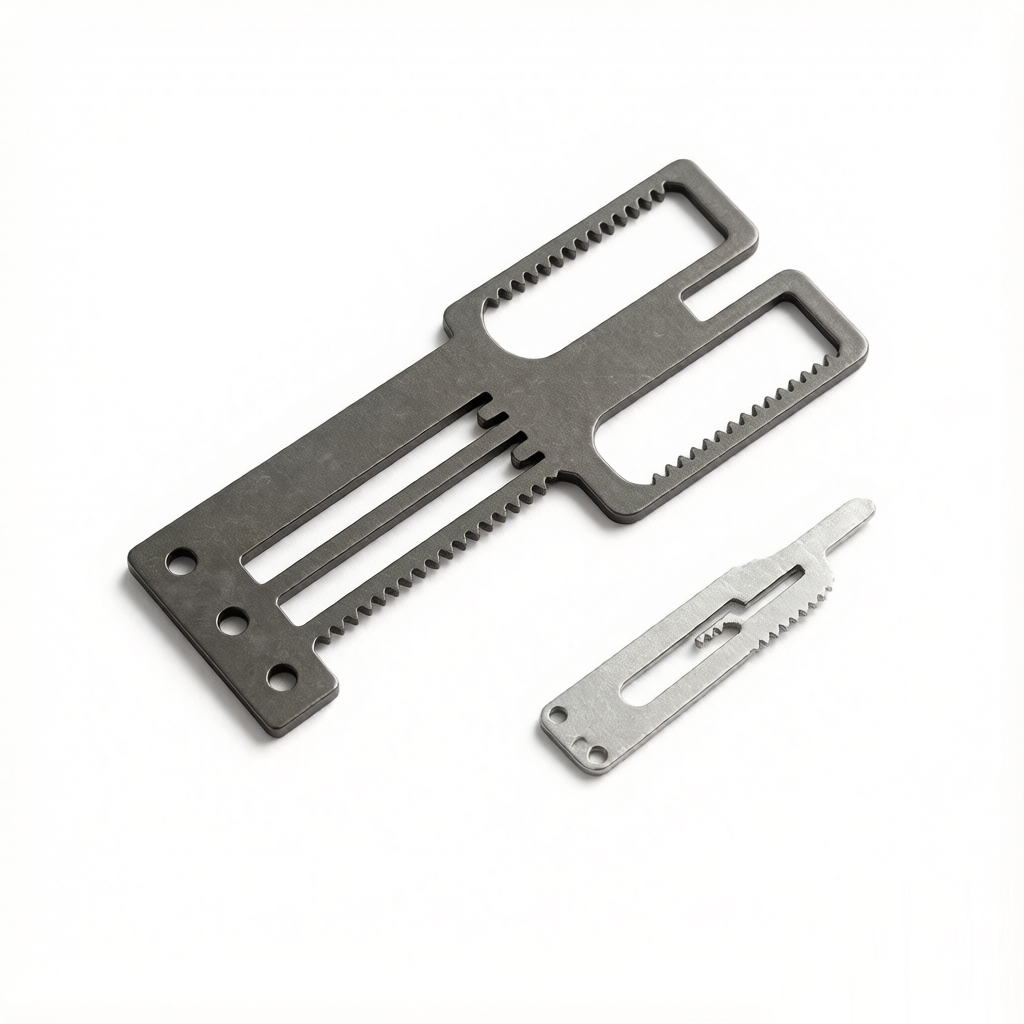
**Note:** The break-even shifts to 15,000+ units for simpler flat parts with no bending. For deep-drawn parts (e.g., battery enclosures), stamping is often the only economically viable option due to the material’s grain flow properties.
4. Material and Thermal Considerations: What Your Design Requires
Stamping works best with ductile materials that can deform without cracking. Aluminum alloys (5052, 6061-T6 in annealed state), low-carbon steel (SPCC, DC01), brass, and copper are ideal. Hardened steels (HRC > 40) and titanium are extremely difficult to stamp due to die wear and cracking—a carbide die stamping titanium will wear out after 5,000–10,000 hits, whereas the same die on SPCC steel lasts 500,000+ hits.
CNC machining is agnostic to material hardness. It can cut hardened tool steel (HRC 58–62) with cubic boron nitride (CBN) inserts, Inconel 718 (at reduced speeds of 30–60 m/min), and even ceramics. For heat sinks, CNC machining is mandatory when you need high-aspect-ratio fins (height/width > 8:1, e.g., fins 20 mm tall, 1.5 mm thick) because stamping cannot achieve these without tearing. Thermal performance: a CNC-machined aluminum heat sink (6063-T5) with a flat base (Ra 0.8 µm) achieves a thermal resistance of 0.15 °C/W for a 100 mm x 100 mm x 30 mm footprint, versus 0.22 °C/W for a stamped version with thinner fins.
5. Lead Times and Production Flexibility
Stamping lead time is dominated by die fabrication: a simple blanking die takes 2–3 weeks; a complex progressive die with 12+ stations takes 6–8 weeks. Once approved, production runs are extremely fast—you can have 10,000 parts in 2 days. However, any design change (e.g., adding a hole) requires a die modification costing $500–$2,000 and 3–5 days of lead time.
CNC machining has no tooling lead time. A quote-to-part cycle for a simple bracket is 2–3 days for prototypes; complex 5-axis parts take 5–7 days. Design iterations are free—you simply update the CAD file and re-run the program. For new product development (NPD), CNC machining is the recommended path for validation builds (EVT, DVT, PVT) before committing to stamping tooling for mass production.
**Hybrid recommendation:** Use CNC machining for the first 200–1,000 units to validate fit, function, and assembly. Then transition to a hard-tooled stamping die once the design is frozen. This reduces the risk of a $15,000 die being scrapped due to a late design change.
6. Practical Recommendations for Engineers
1. **Volume > 50,000/year and thickness < 4.0 mm:** Mandatory stamping. Invest in a progressive die with in-die tapping and countersinking to eliminate secondary operations.
2. **Volume < 3,000/year or complex 3D geometry (undercuts, deep pockets, threaded holes):** CNC machining. Include 5-axis machining if you have compound angles—this eliminates multiple setups and holds ±0.02 mm consistency.
3. **For thin walls (< 0.5 mm) in high volume:** Stamping is the only process that can hold this without distortion. CNC machining of 0.5 mm walls in aluminum is possible but prone to vibration and burrs.
4. **For parts requiring heat treatment after forming:** Stamping is preferred because CNC machining of hardened steel (HRC 50+) is slow and costly. Stamp annealed material, then heat treat to final hardness.
5. **Always request a DFM review.** At BQUQ, our engineers will flag issues like excessive springback (for stamping) or deep pockets with poor tool access (for CNC). A good DFM can reduce part cost by 20–40%.
**FAQ-Style Tips:**
- **Q: Can I get a stamped part with ±0.01 mm tolerance?** A: Only in specific features like hole-to-hole center distances, and only with a precision die and regular maintenance. In general, plan for ±0.05 mm for stamped dimensions. - **Q: What about surface finish for sealing surfaces?** A: CNC machining achieves Ra 0.4 µm easily. Stamping gives Ra 1.6–3.2 µm; if you need a sealing surface, add a secondary face-milling operation. - **Q: Which process is better for RF shields?** A: Stamping—thin (0.2–0.3 mm) brass or nickel-silver shields are stamped at 400 SPM, far cheaper than machining the same geometry.
**Conclusion:** The choice is not binary—it is a function of your product lifecycle. Begin with CNC machining for agility and precision during development. Migrate to metal stamping for cost efficiency and repeatability at scale. Use your supplier’s engineering team to run a cost-benefit analysis at your specific volume and tolerance requirements. A poor process choice can add 30–50% to your landed cost, while a correct one gives you a durable competitive edge.
**Need an objective recommendation today?** Send us your 2D/3D drawings and annual volume forecasts. Our engineering team will provide a side-by-side quotation with stamping and CNC options within 12 hours. We offer DFM feedback, material selection advice, and free sampling for qualified projects.
**Contact BQUQ:** - Email: sc@bquq.com - WhatsApp: +86 13713157787 - Website: www.bquq.com
With 20 years of precision manufacturing in Dongguan, we have built over 2,000 progressive dies and machined millions of components for automotive, medical, and electronics clients. Let us help you choose the right process—the first time.
Related Articles
- Stamping Press Selection Guide 2024: Mechanical vs Hydraulic vs Servo Speed and Force
- 5 Effective Burr Removal Techniques for Stamped Parts
- CNC Lathe vs Stamping: Which Precision Part Method Wins?
Frequently Asked Questions
At what production volume should I switch from CNC machining to metal stamping?
For a typical bracket part like a 50 mm x 30 mm x 2 mm 6061 aluminum piece, the cost crossover is approximately 8,000–12,000 units. Below this volume, CNC machining wins due to lower tooling costs ($200–$800 for fixtures vs. $3,000–$30,000 for progressive dies). Above it, stamping's cycle time of 0.5–2 seconds per part becomes decisive.
What tolerances can I expect from metal stamping versus CNC machining?
Metal stamping with a progressive die holds standard tolerances of ±0.10 mm, or ±0.05 mm with secondary operations. CNC machining achieves ±0.025 mm standard, and ±0.005 mm with CMM verification. For parts requiring ±0.01 mm or better, CNC machining is the only practical choice unless producing millions of identical components.
What material thickness ranges are suitable for each process?
Metal stamping handles thin sheet materials from 0.1 to 6.0 mm thick. CNC machining works with blocks from 1.0 to 200 mm thick, and CNC turning handles diameters from Ø1.0 to Ø300 mm. This makes stamping ideal for thin-gauge parts, while machining suits thicker or more varied geometries.
How does springback affect stamped parts, and does CNC machining have similar issues?
Stamping tolerances are consistent across a run, but springback can cause angular deviations of 1–3 degrees in high-strength steel like DP780, requiring die design compensation. CNC machining has no springback issue, but is subject to tool wear of 0.002–0.005 mm per 100 parts and thermal expansion—aluminum grows 23.6 µm/m per °C.