Metal Stamping vs Forging: Key Differences, Costs, and Selection Guide
Metal Stamping vs Forging: Key Differences, Costs, and Selection Guide
**Direct Answer:** Metal stamping and forging are fundamentally different manufacturing processes: stamping reshapes sheet metal via progressive dies at room temperature, while forging deforms heated billets under compressive force. Choose stamping for high-volume, thin-walled, complex 2D geometries (tolerances ±0.05 mm) and choose forging for high-strength, impact-resistant, thick-section parts (tolerances ±0.2 mm) where grain flow integrity is critical. Your decision hinges on part thickness, annual volume, mechanical load, and total cost per piece—not just raw material price.
---
H2: Process Fundamentals: Cold Deformation vs Hot Compressive Force
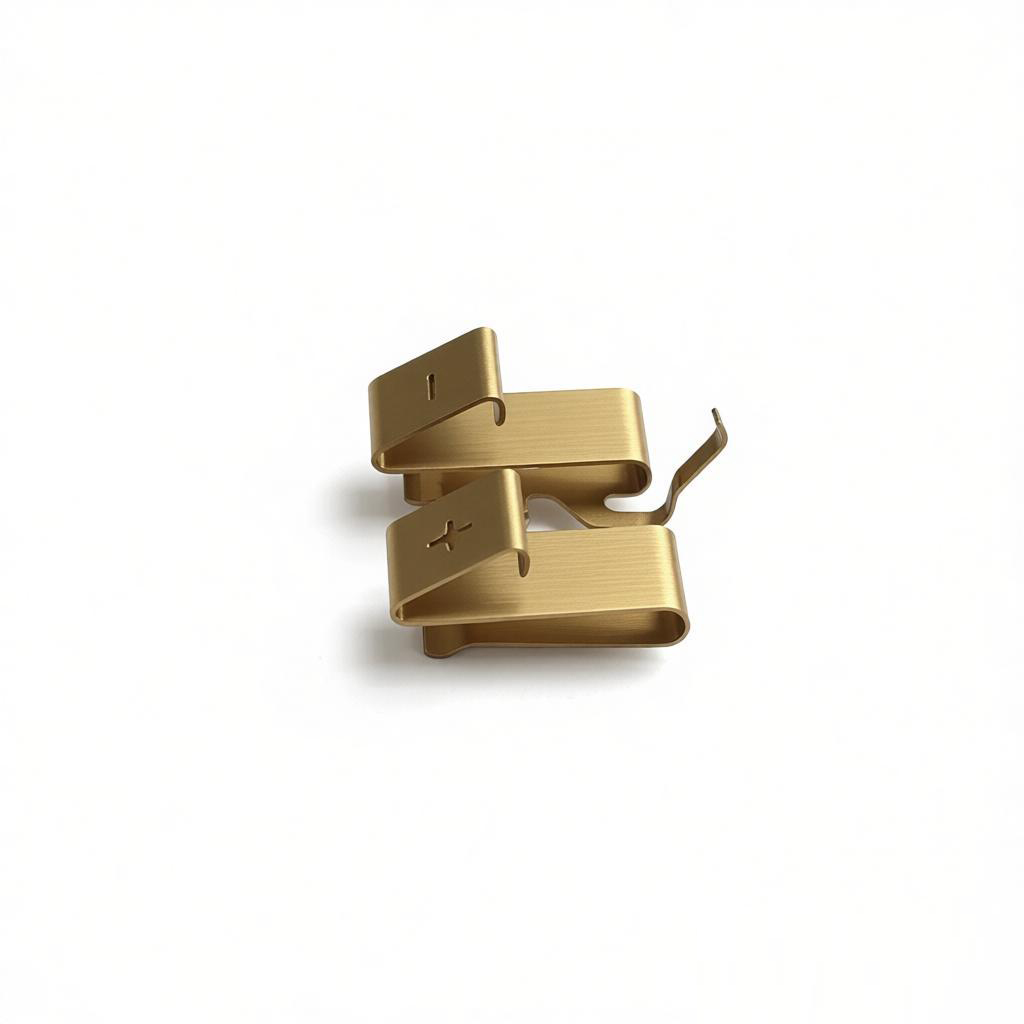
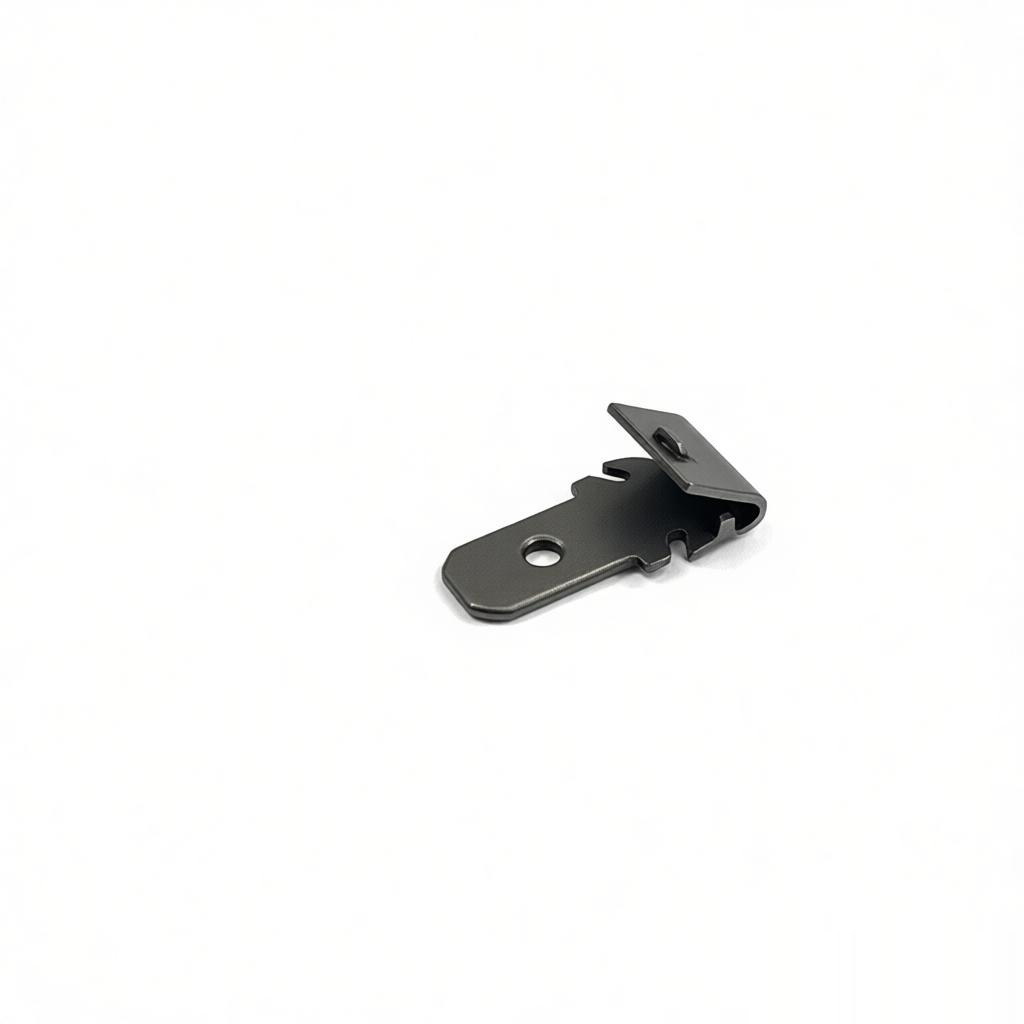
**Metal stamping** (including progressive die stamping and deep drawing) uses a punch and die set to cut, bend, or draw sheet metal—typically 0.1 mm to 6.0 mm thick. The material (SPCC, SUS304, C2680 brass, or 6061 aluminum) is fed as coil or strip, and each stroke of the press (from 25 tons to 800 tons) produces a complete part. Because the work is done below the recrystallization temperature, the material experiences strain hardening, which increases yield strength but reduces ductility.
**Forging** (open-die, closed-die, or impression-die) starts with a solid billet or bar—typically 20 mm to 300 mm diameter—heated to 1100°C to 1250°C for steel (or 350°C to 450°C for aluminum). A hydraulic or mechanical press (1,000 to 25,000 tons) applies slow, controlled compression, forcing the material to flow into the die cavity. This hot working eliminates internal porosity and aligns the grain structure to follow the part contour, giving forged parts superior fatigue resistance.
| Parameter | Metal Stamping | Forging | ----------- | --------------- | --------- | Starting material | Sheet/coil (0.1–6.0 mm) | Billet/bar (20–300 mm) | Typical process temperature | Ambient (20–25°C) | 1100–1250°C (steel) | Grain structure | Sheared/elongated at bends | Continuous, flow-aligned | Achievable tolerance (ISO 2768) | ±0.05 mm (fine) | ±0.2 mm (medium) | Minimum wall thickness | 0.1 mm | 3 mm (practical) | Maximum part size | 600 mm x 600 mm (common) | 1,500 mm length (common) | Tooling cost (medium complexity) | $8,000 – $45,000 | $15,000 – $120,000 | Tooling lead time | 3–6 weeks | 6–12 weeks | Production speed | 15–60 strokes/min | 1–5 parts/min | Material utilization | 60–85% (with nesting) | 75–95% (near-net shape) | Unit cost at 100,000 pcs | $0.40 – $2.50 | $1.50 – $8.00 |
|---|
---
H2: Mechanical Properties: Why Grain Flow Matters in Forging
The most critical engineering distinction is microstructure. In stamping, the sheet's original rolling grain is preserved but interrupted by sheared edges and thinned at bend radii. A stamped bracket made from 2.0 mm SPCC will have a yield strength of 280 MPa, but after bending, the outer fiber may micro-crack if the bend radius is less than 1.0x material thickness.
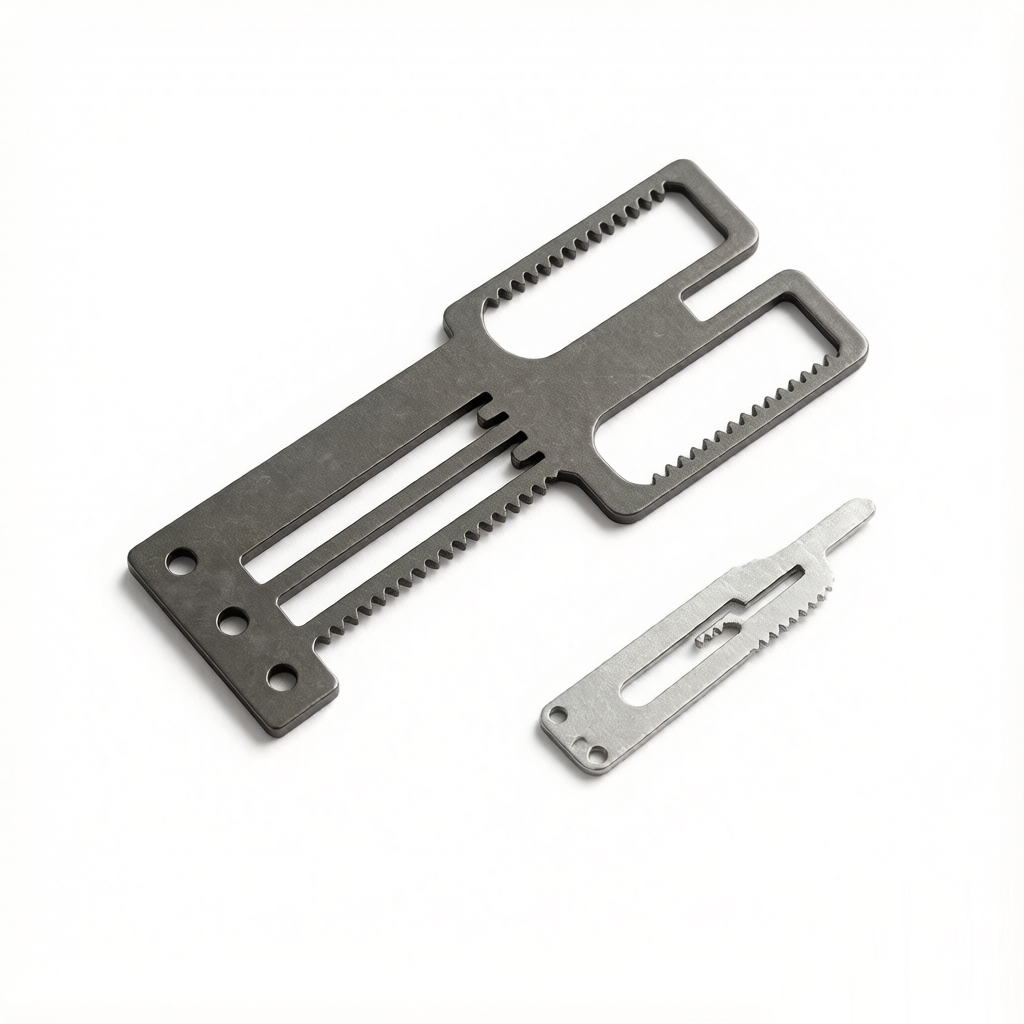
In forging, the grain flows around the part geometry, ensuring that the principal stress direction aligns with the grain direction. For example, a forged steel connecting rod (AISI 4140) achieves a fatigue endurance limit of 480 MPa, whereas a stamped equivalent (if feasible) would show only 340 MPa due to sheared-edge stress concentrations. For safety-critical components—automotive suspension arms, aerospace fittings, hydraulic couplings—forging is not optional; it is mandated by standards such as SAE J429 or ASTM A519.
However, stamping excels in stiffness-to-weight ratio for thin panels. A 1.5 mm stamped aluminum heat sink fin (6061-T6) provides excellent thermal conduction and can be produced with 0.05 mm flatness, which forging cannot achieve below 3 mm thickness.
---
H2: Cost Analysis: Tooling Amortization and Break-Even Volume
The decision is often reduced to a break-even volume calculation. Stamping requires expensive progressive dies but has extremely low variable cost (fast cycle time, minimal labor). Forging has lower tooling cost for simple shapes but higher per-part cost due to slower cycles, heating energy (approximately 4–7 kWh per ton of steel), and post-forge trimming/coining.
**Real cost example (25 mm x 25 mm x 5 mm steel bracket, 200,000 pcs/year):**
- **Stamping:** Tooling $28,000. Per-piece cost: material $0.18 + stamping $0.06 + finishing $0.04 = $0.28. Total year one: $28,000 + $56,000 = $84,000. - **Forging:** Tooling $18,000. Per-piece cost: material $0.32 (heavier billet) + forging $0.22 + machining $0.15 = $0.69. Total year one: $18,000 + $138,000 = $156,000.
**Break-even volume:** Forging becomes competitive only if it eliminates a secondary machining step. For instance, if the stamped part requires a threaded hole (tapping at $0.12/pc), and the forged part comes with a cored hole, the gap narrows. As a rule of thumb:
- **Above 100,000 pcs/year with thickness < 3 mm:** Stamping is 40–60% cheaper. - **Below 20,000 pcs/year with thickness > 8 mm:** Forging is 30–50% cheaper. - **High-strength steel (e.g., 42CrMo4) with hardness > 35 HRC:** Forging is mandatory; stamping cannot work this material at room temperature.
---
H2: Design Constraints and Tolerances: What You Can and Cannot Achieve
**Stamping capabilities (BQUQ typical data):** - Progressive die: hole diameter ≥ 0.8 mm, hole-to-edge distance ≥ 1.5x thickness. - Bend radius: internal ≥ 0.5x thickness (we use 0.3x for ductile copper). - Flatness: ±0.10 mm over 100 mm length. - Burr height: ≤ 5% of material thickness (we control to 0.05 mm on 1.0 mm SPCC). - Surface finish: Ra 1.6 µm (as-stamped), Ra 0.8 µm (with secondary burnishing).
**Forging capabilities:** - Draft angle: 3° to 5° required for die release (adds material). - Minimum rib thickness: 5 mm for steel, 8 mm for aluminum. - Corner radii: 1.5 mm to 3 mm (never sharp). - Surface finish: Ra 3.2 µm (as-forged), Ra 1.6 µm (after shot blasting). - Dimensional tolerance: ±0.3 mm for dimensions up to 50 mm; ±0.5 mm above 50 mm.
If your drawing calls for a 1.5 mm thin wall with a sharp 90-degree bend and a tapped M3 hole, stamping is your only choice. If your drawing calls for a 25 mm solid lug with an M16 thread and a load rating of 50 kN, forging is the only reliable method.
---
H2: Lead Time, Prototyping, and Secondary Operations
**Stamping lead times:** Tooling design and fabrication takes 3–6 weeks. We recommend a soft tool (aluminum or epoxy die) for 50–200 prototype parts, available in 5–7 days. Production speed is 20–40 parts per minute on a 110-ton press. Secondary operations: deburring (tumbling), tapping, heat treatment (for high-carbon steel), and surface plating (zinc, nickel, powder coating).
**Forging lead times:** Die sinking (CNC machining of H13 tool steel) takes 6–10 weeks. For prototypes, machining from solid bar (CNC milling) is the pragmatic route—delivery in 3–5 days, but with 30–50% higher cost per part. Production speed: 1–3 parts per minute on a 1,600-ton press, including die lubrication and trimming. Secondary operations: heat treatment (quench and temper), shot peening (for fatigue), and precision machining of critical surfaces.
**Hybrid approach:** At BQUQ, we often see clients start with stamped prototypes (to validate fit) and transition to forging for production if the load test fails. Conversely, for high-volume parts that require a forged boss on a stamped plate, we use a two-step process: stamp the base, then upset-forge the boss locally. This reduces tooling cost by 60% compared to a full forging.
---
H2: Practical Selection Guide (FAQ-Style Tips)
**Q1: I have a 2 mm thick steel part, 50 mm x 30 mm, with two holes and a 90-degree flange. Annual volume 500,000 pcs. What do you recommend?** Stamping, unambiguously. Progressive die at 40 strokes/min yields 480,000 pcs/month with one operator. Forging this part would require 5 mm minimum thickness, adding 40% material weight and 3x cost.
**Q2: My part is 20 mm thick, 100 mm diameter, and must withstand 200 kN cyclic load. Stamping is impossible. Forging or machining from bar?** Closed-die forging. Machining from bar (S45C) leaves grain lines parallel to the bar axis, but your load is radial. Forging creates radial grain flow, improving fatigue life by 30–50%. At 10,000 pcs/year, forging tooling ($20,000) amortizes to $2/pc; machining from bar costs $8/pc in material waste alone.
**Q3: What about aluminum? Is forging always better than stamping for heat sinks?** No. For heat sinks, thermal conductivity is the priority, not strength. Stamped 6061-T6 aluminum fins (0.5 mm thickness) give 200 W/m·K conductivity with a 0.1 mm thermal interface surface. Forged aluminum (2024-T3) has higher strength but lower thermal performance. Use stamping for fins, forging only for the base plate that carries threaded mounting holes.
**Q4: Can I switch from forging to stamping for cost reduction?** Only if you can increase the part's design to allow sheet metal thickness (≤6 mm), add stiffening ribs instead of solid sections, and accept a 40% reduction in load capacity. We have done this for non-critical brackets, achieving 70% cost savings. But for any part under a safety-rated assembly, do not compromise.
**Q5: What are the hidden costs I should budget for?** For stamping: die maintenance (5% of tooling cost per year), coil scrap (15–25%), and deburring. For forging: die wear (replacement every 10,000–50,000 hits), heating energy ($0.10/kg), and flash trimming. Always request a total landed cost (TLC) quote, not just piece price.
---
Conclusion: Decision Matrix for Your Next RFQ
**Choose metal stamping when:** Part thickness ≤ 6 mm, annual volume > 50,000, tolerance ±0.1 mm required, complex 2D features (holes, louvers, embossing), and weight reduction is a priority.
**Choose forging when:** Part thickness > 8 mm, load-bearing application, annual volume < 30,000 (or high volume with high strength steel), no draft angles acceptable (machined after forging), and fatigue life is the governing design factor.
**Do not over-engineer the process.** At BQUQ, we have 20 years of experience in both CNC machining and metal forming. We recommend a DFM (Design for Manufacturing) review in the first week. Send us your 2D drawing and 3D model, and we will return a cost comparison table—stamped vs. forged—within 12 hours. Our engineers will flag any design feature that increases cost (sharp corners, tight tolerances, excessive draft) and offer alternatives.
For a rapid quote or technical consultation, contact us today: - Email: sc@bquq.com - WhatsApp: +86 13713157787 - Website: www.bquq.com
We respond to all RFQs within 12 hours, including Sundays. Send your file, and we will tell you which process wins—with real numbers, not guesswork.
Related Articles
- Stamping Press Selection Guide 2024: Mechanical vs Hydraulic vs Servo Speed and Force
- 5 Effective Burr Removal Techniques for Stamped Parts
- CNC Lathe vs Stamping: Which Precision Part Method Wins?
Frequently Asked Questions
What are the main differences between metal stamping and forging?
Metal stamping reshapes sheet metal (0.1–6.0 mm thick) at room temperature using progressive dies, while forging deforms heated billets (20–300 mm diameter) under compressive force at 1100–1250°C for steel. Stamping suits thin-walled, complex 2D geometries with tolerances of ±0.05 mm, whereas forging provides stronger, impact-resistant parts with tolerances of ±0.2 mm and continuous grain flow.
How do costs compare between stamping and forging for high-volume production?
At 100,000 pieces, stamping unit costs range from $0.40 to $2.50, while forging costs $1.50 to $8.00 per piece. Tooling for stamping is $8,000–$45,000 with a 3–6 week lead time, versus $15,000–$120,000 and 6–12 weeks for forging. Stamping also runs faster at 15–60 strokes per minute, reducing per-part costs for large volumes.
Which process should I choose for my part?
Choose stamping for high-volume, thin-walled parts (0.1–6.0 mm thick) with complex 2D geometries and fine tolerances of ±0.05 mm, like brackets or heat sinks. Choose forging for thick-section parts (minimum 3 mm wall) requiring high strength and fatigue resistance, where grain flow integrity is critical. Consider part thickness, annual volume, mechanical load, and total cost per piece.
What materials can be used in metal stamping and forging?
Stamping typically uses sheet metals like SPCC steel, SUS304 stainless steel, C2680 brass, or 6061 aluminum, fed as coil or strip. Forging starts with solid billets or bars of steel or aluminum, heated to 1100–1250°C for steel or 350–450°C for aluminum. Material choice affects mechanical properties, with forging improving fatigue resistance through aligned grain structure.