Modular Fixturing for CNC in 2024: 5 Ways to Cut Setup Time and Boost Accuracy
CNC Workholding Solutions: Maximizing Precision and Efficiency with Modular Fixturing
In modern CNC machining, the workholding system is often the silent bottleneck between a good part and a great part. While spindles and tooling receive the spotlight, the fixture determines the absolute repeatability of every cut. For job shops and high-mix manufacturers, dedicated hard tooling is no longer economically viable. Modular fixturing has emerged as the dominant strategy to reduce setup times by up to 60% while maintaining tolerances in the ±0.005 mm range. This article dissects the engineering principles, cost structures, and practical applications of modular workholding systems for CNC milling, turning, and multi-axis operations.
The Economics of Modular vs. Dedicated Fixturing
The decision between modular and dedicated fixturing is a pure cost-per-part calculation. Dedicated fixtures are justified only when annual volumes exceed 10,000 units with zero design changes. Below that threshold, modular systems offer superior return on investment (ROI). Consider the baseline data for a typical aluminum housing part (200 mm x 150 mm x 40 mm):
| Fixture Type | Initial Tooling Cost (USD) | Setup Time per Batch (min) | Changeover Time (min) | Reusability | Typical Tolerance (mm) | -------------- | ---------------------------- | ---------------------------- | ---------------------- | ------------- | ------------------------ | Dedicated Hard Tooling | 2,800 - 4,500 | 15 - 20 | 30 - 45 | Single part only | ±0.010 | Modular Vise System (e.g., 6-inch) | 800 - 1,200 | 5 - 8 | 10 - 15 | 100% reusable | ±0.005 | Palletized Modular (Zero-Point) | 3,500 - 6,000 | 2 - 4 | 3 - 5 | 100% reusable | ±0.003 |
|---|
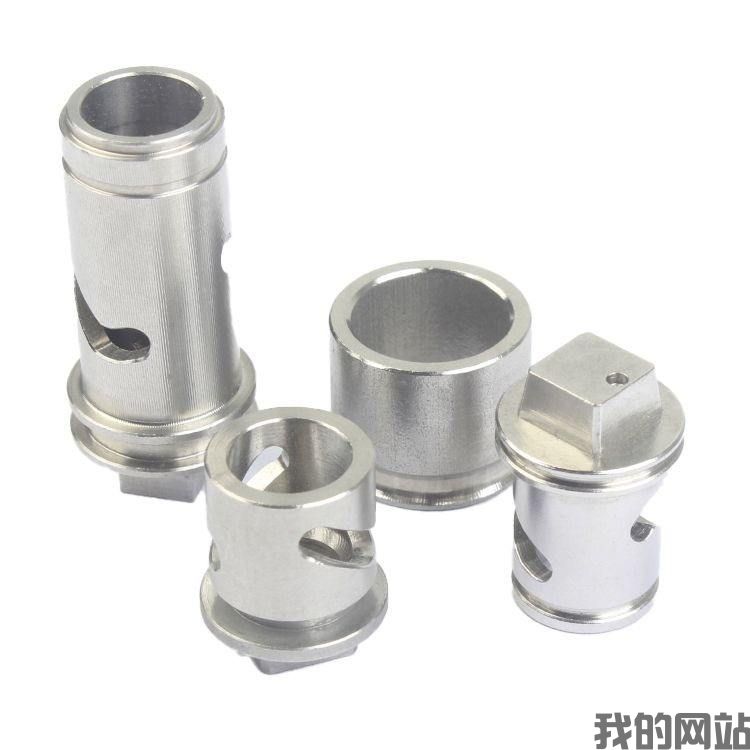
The data shows that while modular systems have a higher upfront cost than a simple vise, they eliminate the recurring expense of custom fixture design. A shop running 500 unique part numbers per year will spend approximately $120,000 annually on dedicated fixtures. The same production volume with a modular system costs $15,000 in initial hardware and $2,000 annually in wear parts (locating pins, bushings, and clamps). The break-even point occurs at roughly 300 fixture uses.
Zero-Point Clamping: The Backbone of 5-Axis Efficiency
Zero-point clamping systems (ZPS) have revolutionized multi-axis machining by reducing setup error to nearly zero. The principle is simple: a standardized receiver plate with high-precision taper pins and a clamping mechanism that pulls the pallet or fixture base to a registered position. The repeatability of a quality zero-point system is ±0.003 mm, which is consistent across thermal cycles from 15°C to 45°C.
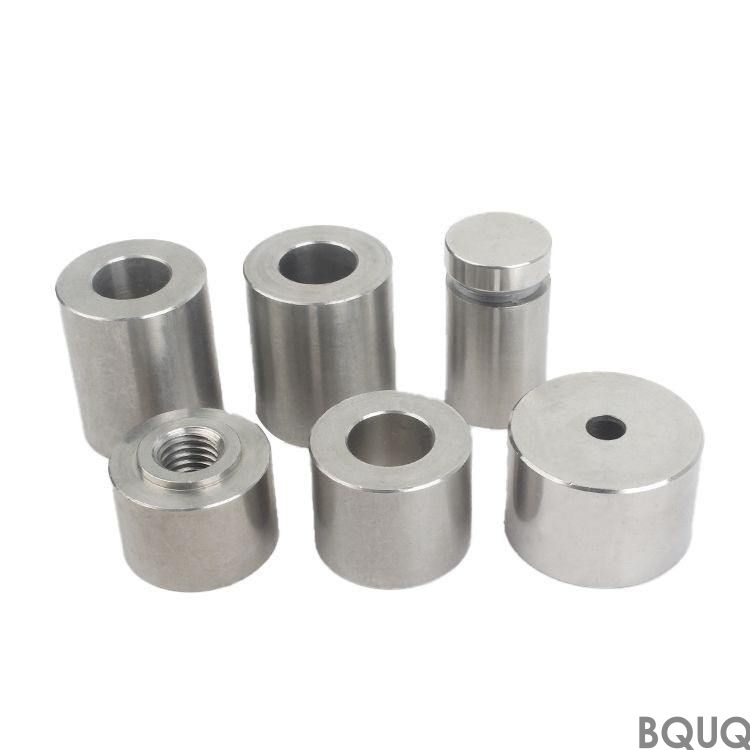
For a 5-axis machining center operating at 12,000 RPM, the ability to swap a fixture in 3 minutes versus 30 minutes translates to a 27-minute gain per setup. If a shop performs 4 setups per day, that is 108 minutes of additional spindle uptime daily. At a machine rate of $95 per hour, this yields an additional $171 per day per machine. Over a 250-day working year, the gain is $42,750 per machine. This calculation assumes a 70% spindle utilization rate, which is typical for aerospace and medical component manufacturers.
Modular Vise Systems: Precision in a Compact Footprint
The 6-inch modular vise remains the workhorse of CNC milling. Modern hydraulic and pneumatic versions provide clamping forces from 5 kN to 30 kN, with mechanical versions offering up to 40 kN. The critical specification is the parallelism between the fixed jaw and the base, which should be within 0.005 mm over 150 mm of length. Standard mechanical vises often exhibit 0.02 mm of deflection under load, while premium modular vises with hardened and ground steel bodies hold 0.008 mm at full clamping force.
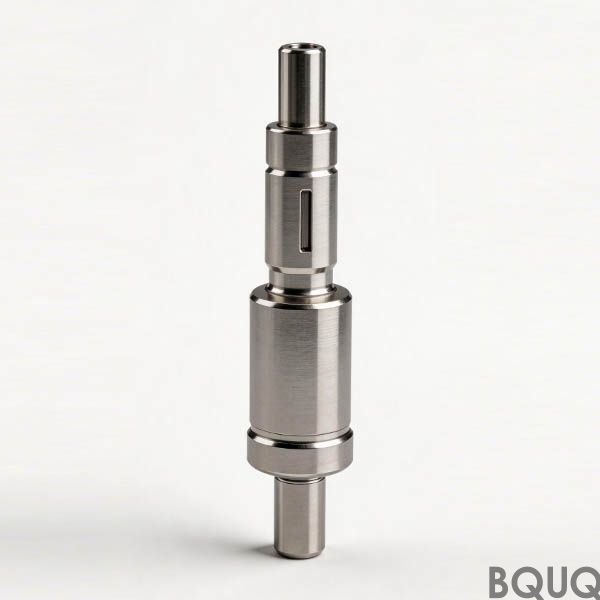
A key design rule for modular vises is the 3-to-1 height rule: the workpiece should not extend more than 3 times its clamping length above the vise jaws. For example, a 50 mm long clamp can safely hold a workpiece up to 150 mm tall. Exceeding this ratio increases vibration amplitude by up to 40%, degrading surface finish from Ra 0.8 µm to Ra 1.6 µm. For high-speed machining of aluminum at 15,000 RPM, this rule is non-negotiable.
Pallet Systems for High-Mix, Low-Volume Production
Palletized modular fixturing is the optimal solution for manufacturers running batches of 5 to 50 parts. A standard pallet system uses a 400 mm x 400 mm pallet with a grid of 20 mm diameter locating holes on a 50 mm pitch. This allows for infinite fixture configurations using standard components: risers, angle plates, and tombstone blocks. The cost of a complete pallet system (including 10 pallets, a loading station, and a clamping unit) ranges from $12,000 to $18,000.
The efficiency gain is substantial. With an offline presetting station, an operator can load 10 pallets while the machine processes the 11th. This "load while cutting" strategy increases spindle utilization from an average of 45% (with manual vise setups) to 85%. In real terms, a job that took 300 minutes per batch (including 2 setups) is reduced to 180 minutes per batch. For a contract manufacturer running 20 batches per week, this saves 40 hours of machine time weekly.
Thermal Stability and Precision in Modular Fixturing
Precision in modular fixturing is not only about mechanical registration; thermal expansion is a hidden variable. Aluminum fixtures expand at a rate of 23.6 x 10⁻⁶ per °C, while steel expands at 11.7 x 10⁻⁶ per °C. For a 200 mm wide fixture, a temperature rise of 10°C causes an aluminum fixture to grow by 0.047 mm, which exceeds typical machining tolerances. Therefore, the base plate of any modular system should be made of cast iron or hardened steel, with aluminum components reserved only for non-critical locating features.
To maintain ±0.005 mm accuracy in a production environment, the fixture and workpiece should be held at a constant temperature of 20°C ±1°C. This requires either a climate-controlled shop or the use of low-thermal-expansion materials like Invar (1.2 x 10⁻⁶ per °C) for critical applications. Invar costs $85 per kilogram versus $2 per kilogram for standard steel, so it is reserved for high-precision aerospace and optical components.
FAQ-Style Tips for Maximizing Modular Fixture Performance
**Q: How often should I calibrate my modular vises?** A: Perform a full calibration every 3 months or after 2,000 clamping cycles. Check the parallelism with a dial indicator; if it exceeds 0.010 mm, regrind the jaws. This costs $40 per vise and extends service life by 2 years.
**Q: Can modular fixturing handle thin-walled parts without deformation?** A: Yes, but use low-pressure hydraulic clamps (3-5 bar) with wide contact pads. For a 1 mm thick aluminum wall, standard mechanical clamping at 20 kN will cause 0.1 mm of bowing. Hydraulic clamping at 5 kN reduces this to 0.02 mm.
**Q: What is the maximum spindle speed for modular fixtures?** A: For balanced modular systems, you can safely run up to 18,000 RPM. Above this, unbalance in the fixture can cause chatter. Always balance the fixture and workpiece assembly to G2.5 quality grade at the intended speed.
**Q: How do I prevent chip accumulation in the fixture grid?** A: Use a coolant flush system with a minimum pressure of 4 bar directed at the grid holes. Alternatively, use sealed locators with rubber wipers, available for $12 each, which reduce cleaning time by 50%.
Conclusion
Modular fixturing is not merely a cost-saving measure; it is a precision enhancement tool. By adopting zero-point clamping, precision vises, and palletized systems, manufacturers can achieve tolerances of ±0.003 mm while reducing setup times by 60-80%. The investment in modular hardware pays for itself within 6 to 12 months for any shop running more than 100 unique part numbers annually. The data is clear: modular fixturing maximizes both precision and efficiency in modern CNC environments.
At BQUQ, we have applied these principles in our 20 years of precision manufacturing in Dongguan, China. Our engineers are ready to review your workholding strategy for free. We provide a 12-hour quotation for custom fixture and machining projects. Contact us at sc@bquq.com or via WhatsApp at +86 13713157787. Visit our website at www.bquq.com to discuss your next precision part.
Related Articles
- CNC Precision Turned Parts for Medical Devices: Guide
- CNC Machining for Marine Metal Components | Expert Guide
- Aluminum Heat Sink CNC Machining: Best Practices Guide
Frequently Asked Questions
How much can modular fixturing reduce setup times compared to dedicated hard tooling?
Modular fixturing can reduce setup times by up to 60% while maintaining tolerances in the ±0.005 mm range. For example, a modular vise system cuts setup time to 5-8 minutes per batch versus 15-20 minutes for dedicated tooling, and changeover drops to 10-15 minutes from 30-45 minutes.
When is it more economical to use dedicated fixtures instead of modular systems?
Dedicated fixtures are justified only when annual volumes exceed 10,000 units with zero design changes. Below that threshold, modular systems offer superior ROI. A shop running 500 unique part numbers per year spends about $120,000 annually on dedicated fixtures, versus $15,000 in initial hardware and $2,000 yearly in wear parts for modular systems.
What repeatability can I expect from zero-point clamping systems?
A quality zero-point clamping system provides repeatability of ±0.003 mm, consistent across thermal cycles from 15°C to 45°C. This is tighter than the ±0.005 mm of modular vise systems and ±0.010 mm of dedicated hard tooling, making it ideal for 5-axis operations.
What is the financial benefit of using zero-point clamping on a 5-axis machine?
Zero-point clamping swaps fixtures in 3 minutes versus 30 minutes, saving 27 minutes per setup. With 4 setups daily, that's 108 minutes of extra spindle uptime per day. At $95 per hour machine rate, this adds $171 daily or $42,750 per machine annually over 250 working days.