Progressive Die Stamping Explained: Process, Tolerances, and Cost Efficiency
Progressive die stamping is a high-speed metal forming process where a continuous coil of sheet metal is fed through a series of stations within a single die, with each station performing a distinct cutting, bending, or drawing operation to produce a finished part in a single pass. It achieves production rates of up to 1,200 strokes per minute with tolerances as tight as ±0.01 mm, making it the most cost-effective method for manufacturing high-volume precision components. The process combines punching, blanking, coining, and forming in one synchronized tool, eliminating secondary handling and reducing per-part cost by up to 70% compared to multi-stage stamping.
Core Mechanics of the Progressive Die Process
The system operates on a simple principle of sequential transformation. A strip of metal, typically 0.1 mm to 6.0 mm thick, is unwound from a coil and fed into a stamping press. The die set contains multiple stations arranged linearly. At each press stroke, the strip advances by a fixed increment called the "pitch" or "feed length," usually between 25 mm and 300 mm. Each station performs an incremental operation: pilot holes are pierced first, then progressive blanking removes excess material, followed by forming, bending, and finally the part is cut free from the carrier strip.
The key to precision is the piloting system. After the first station pierces pilot holes, precision pilots—ground to tolerances of ±0.002 mm—enter these holes at subsequent stations to ensure exact positioning. This mechanical registration prevents cumulative error, holding overall part accuracy within ±0.05 mm across a 500 mm strip length. The press tonnage ranges from 30 tons for light gauge work to 800 tons for heavy stamping, with speeds varying from 50 to 1,200 SPM depending on part complexity and material thickness.
Material Selection and Thickness Parameters
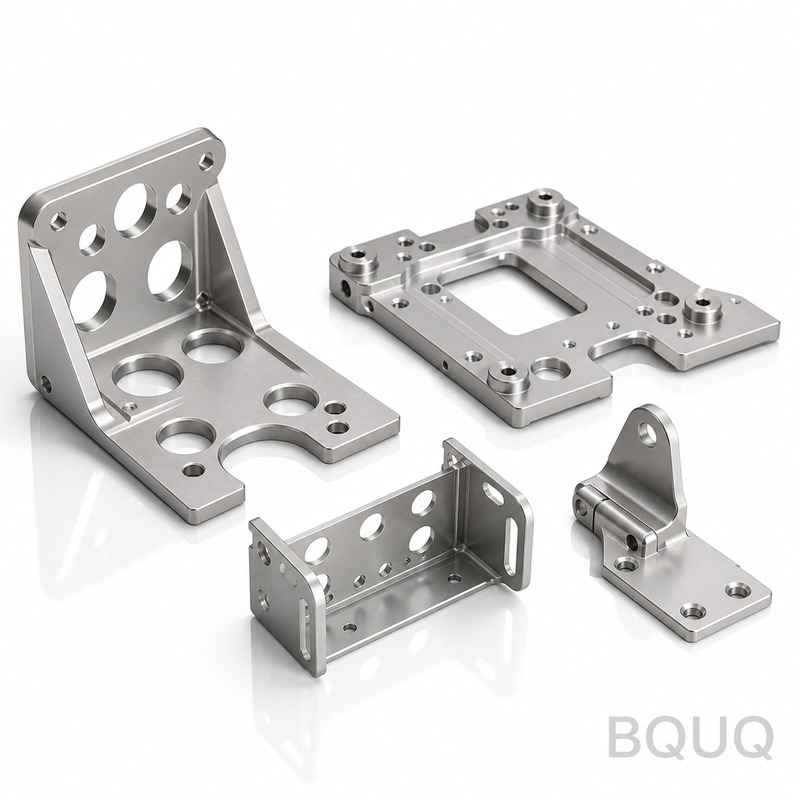
Material choice directly impacts die life, part strength, and cost. The most common materials include low-carbon steel (SPCC, DC01), stainless steel (SUS304, SUS301), aluminum alloys (5052, 6061), copper alloys (C2680, C5210), and pre-plated materials. Each material behaves differently under shear and bending forces. For example, stainless steel requires 30% more press tonnage than mild steel of the same thickness due to its higher tensile strength (520 MPa vs. 320 MPa). Aluminum, with its lower yield strength, is easier to form but generates more aluminum dust, requiring specialized die coatings.
| Material | Thickness Range (mm) | Tensile Strength (MPa) | Max Feed Speed (m/min) | Relative Die Wear | Typical Tolerance (mm) |
| SPCC Steel | 0.3 - 3.2 | 270 - 410 | 45 | Medium | ±0.03 |
| SUS304 Stainless | 0.2 - 2.0 | 520 - 720 | 25 | High | ±0.05 |
| Aluminum 5052 | 0.4 - 3.0 | 190 - 260 | 60 | Low | ±0.08 |
| Brass C2680 | 0.1 - 2.5 | 300 - 420 | 50 | Low | ±0.02 |
| Copper C1100 | 0.1 - 2.0 | 200 - 250 | 55 | Low | ±0.02 |
Material thickness dictates the minimum bend radius, typically 0.5 to 1.0 times the material thickness for steel and 1.0 to 1.5 times for aluminum. Clearance between punch and die, which is critical for clean shearing, is set at 4% to 8% of material thickness per side. For a 1.0 mm steel sheet, the die clearance is 0.04 to 0.08 mm per side; incorrect clearance causes burrs and reduces die life by up to 50%.
Die Construction and Tooling Costs
A progressive die is a precision assembly comprising a die shoe, punch holder, guide posts, stripper plate, pilots, and the working punches and dies. Tool steel grades include D2 for general use, M2 high-speed steel for high-wear applications, and powder metallurgy steels like ASP23 for extended runs above 1 million strokes. Carbide inserts are used for critical cutting edges, offering 10 to 20 times longer life than tool steel but at 5 times the cost.
The manufacturing cost of a progressive die varies dramatically based on part size and station count. A simple 4-station die for a small bracket costs USD 8,000 to 15,000, while a complex 20-station die for an automotive connector costs USD 80,000 to 150,000. The die design phase, including finite element analysis (FEA) simulation, accounts for 15% to 20% of total tooling cost. Lead time for die fabrication ranges from 4 to 8 weeks for standard designs and 10 to 16 weeks for complex multi-stage tools. Die maintenance, including sharpening every 200,000 to 500,000 strokes, adds approximately 5% of the initial tool cost per year to operational expenses.
Tolerance Capabilities and Quality Control
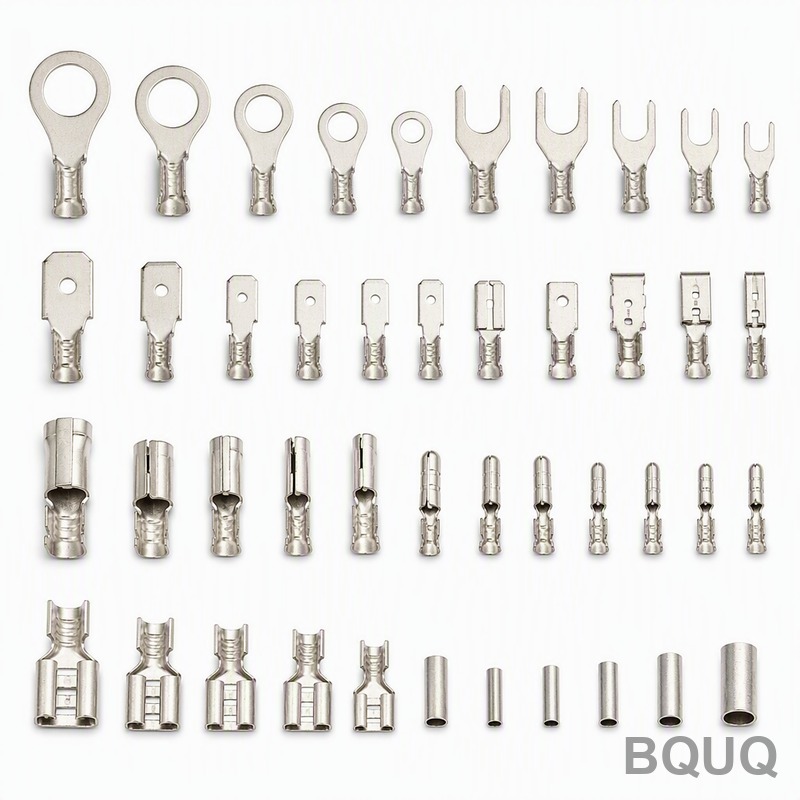
Progressive die stamping achieves exceptional dimensional consistency because all operations are mechanically fixed within a single die. Standard tolerances are ±0.05 mm for linear dimensions, ±0.02 mm for hole positions, and ±0.01 mm for pierced hole diameters. Flatness is maintained within 0.1 mm over a 100 mm length due to the rigid stripper and controlled material tension. Burr height is typically limited to 0.03 mm to 0.05 mm, depending on material and punch sharpness.
In-process quality control uses automatic gauging systems at the exit of the press. Vision systems with 5-megapixel cameras inspect critical features at rates of 600 parts per minute, rejecting non-conforming parts with an accuracy of ±0.005 mm. Statistical process control (SPC) monitors key dimensions every 30 minutes, with data logged for traceability. The process capability index (Cpk) for progressive die stamping routinely exceeds 1.67, meaning fewer than 0.57 defects per million parts, which is six-sigma compliant.
Production Speed and Cost Per Part Analysis
The economics of progressive die stamping are driven by high volume. The process is only viable when annual demand exceeds 50,000 parts; below this threshold, the high tooling cost cannot be amortized effectively. Cost per part follows a power law curve: at 10,000 parts the unit cost is 5 to 8 times higher than at 500,000 parts. Key cost factors include material utilization (typically 60% to 85%), press time, and tooling amortization.
For a typical 30 mm x 20 mm steel bracket with 2 holes and one bend, the cost structure is as follows: material cost USD 0.02, press operating cost USD 0.005, tooling amortization (over 500,000 parts) USD 0.025, and finishing (deburring, passivation) USD 0.01, yielding a total of USD 0.06 per part. In contrast, CNC machining the same part costs USD 0.80 to 1.20 per unit, making progressive stamping 13 to 20 times cheaper. The break-even volume against CNC machining is typically 5,000 to 15,000 parts, depending on geometry complexity.
The press operating cost is calculated from machine depreciation, energy consumption (a 200-ton press draws 45 kW), and labor. A single operator manages one press with automatic coil feed, producing 800 parts per minute, resulting in a labor cost of less than USD 0.001 per part. Setup time between die changes is 30 to 90 minutes, and achieving 85% production efficiency (including scheduled maintenance) is standard.
Comparative Analysis with Other Manufacturing Methods
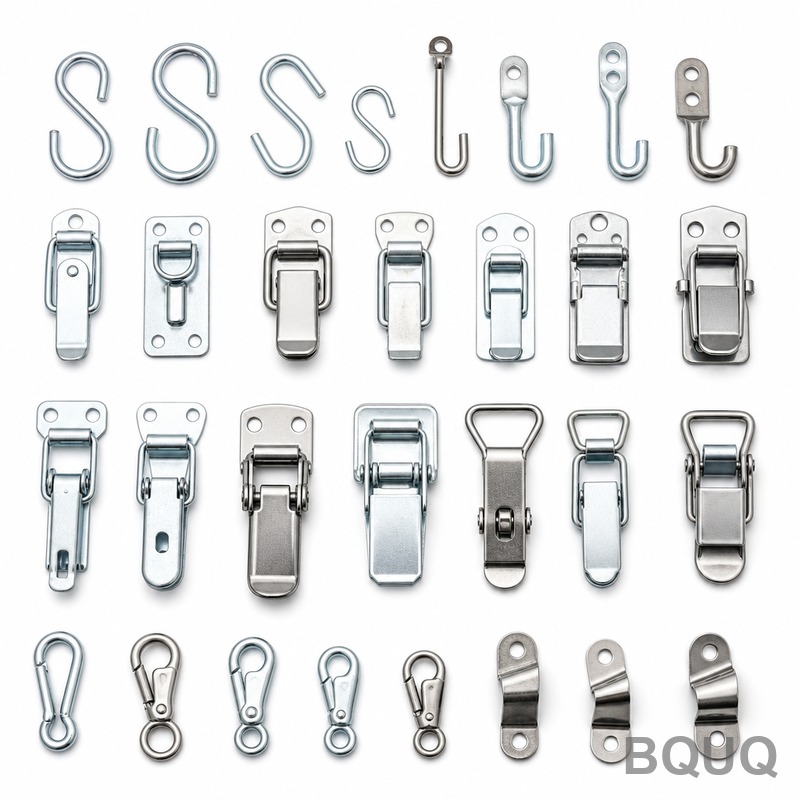
When selecting a manufacturing process, engineers must weigh dimensional accuracy, production rate, and total cost. The following comparison highlights how progressive die stamping stacks against alternative methods for a simple flat bracket part with two holes, dimensions 50 mm x 20 mm x 1.5 mm.
| Process | Production Rate (pcs/min) | Tolerance (mm) | Tooling Cost (USD) | Unit Cost at 100k pcs (USD) | Lead Time (weeks) |
| Progressive Die | 400 - 800 | ±0.03 | 15,000 | 0.08 | 6 |
| CNC Machining | 1 - 3 | ±0.02 | 500 | 1.50 | 1 |
| Metal Injection Molding | 20 - 40 | ±0.05 | 30,000 | 0.25 | 12 |
| Wire EDM | 0.2 - 0.5 | ±0.005 | 1,000 | 4.80 | 2 |
| Laser Cutting | 10 - 30 | ±0.10 | 2,000 | 0.60 | 3 |
For volumes above 100,000 parts, progressive die stamping offers the lowest unit cost while maintaining production rates 100 times higher than CNC machining. The trade-off is higher upfront tooling investment and longer initial lead time. However, once the die is qualified, repeat orders can be delivered in 2 to 3 weeks. The process is unsuitable for very thick materials above 6 mm or parts with deep draws exceeding 3 times the material thickness, where transfer stamping or hydroforming may be more appropriate.
Practical Recommendations for Design for Manufacturing
Engineers should design parts with progressive die stamping in mind from the outset. Maintain a minimum material thickness of 0.3 mm for structural parts to ensure rigidity during the stamping process. Keep bend radii above 0.8 times material thickness to prevent cracking. Space holes at least 2 times the material thickness from any bend line to avoid distortion. Design for nesting by keeping the part outline rectangular or trapezoidal; irregular shapes increase scrap and raise material costs by 15% to 25%.
For high-volume production, consider specifying a carrier strip that stays attached to the part until final forming, which improves positional accuracy. Request that critical dimensions be located from a single datum to simplify in-die gauging. If tight tolerances below ±0.02 mm are required, specify that only the final station performs the critical cut, reducing accumulated wear effects. Always provide the annual volume forecast in your RFQ, as this determines the optimal die material grade and whether carbide inserts are justified.
Conclusion and Next Steps for Your Project
Progressive die stamping is the dominant manufacturing process for high-volume precision metal components, combining speeds up to 1,200 SPM with tolerances of ±0.01 mm and unit costs below USD 0.10 for typical parts. The process excels when annual demand exceeds 50,000 units, offering a 10 to 20 times cost advantage over CNC machining while maintaining superior consistency. Success depends on proper material selection, robust die design, and realistic tolerance specification.
At BQUQ, we have operated progressive die stamping presses for over 20 years in our Dongguan facility, producing heat sinks, springs, and precision brackets for global automotive and electronics clients. Our engineering team reviews your part geometry, material, and volume requirements to recommend the optimal die configuration. We provide a 12-hour quoting service with full DFM feedback, including estimated tooling cost, per-part price, and delivery schedule. Send your CAD files to sc@bquq.com or contact us on WhatsApp at +86 13713157787. Visit www.bquq.com to learn more about our stamping capabilities and quality certifications.