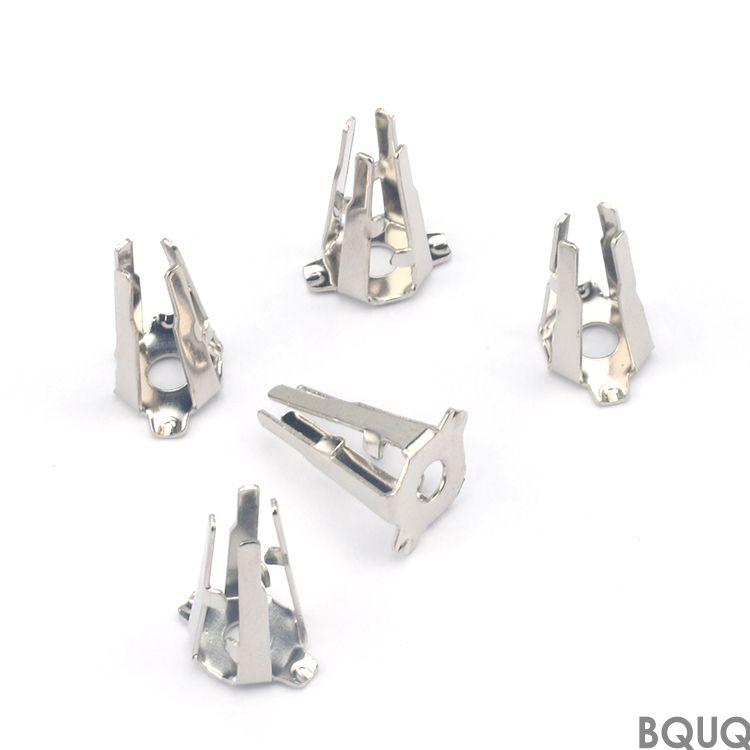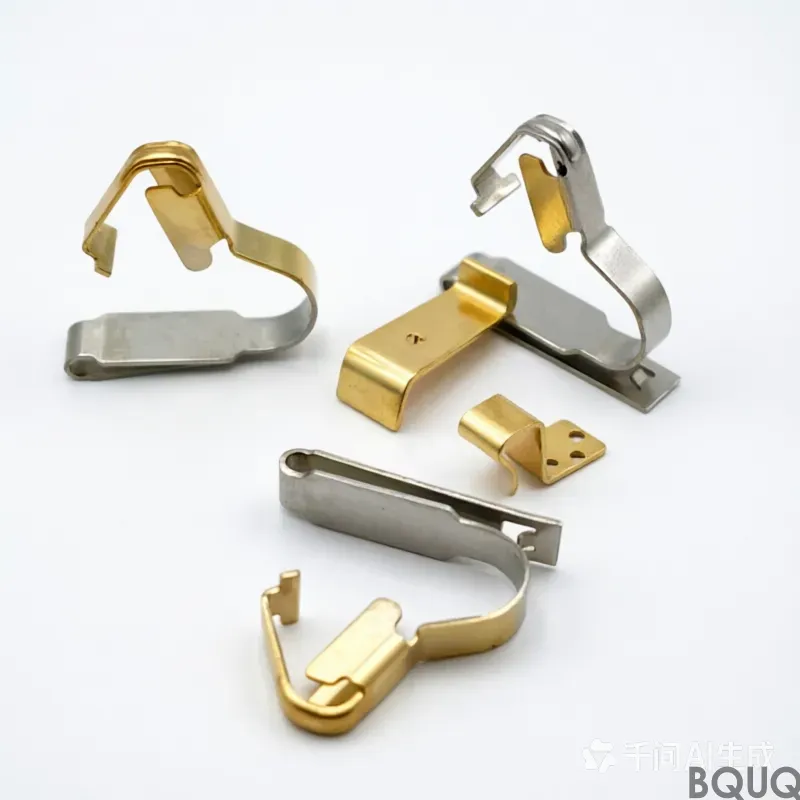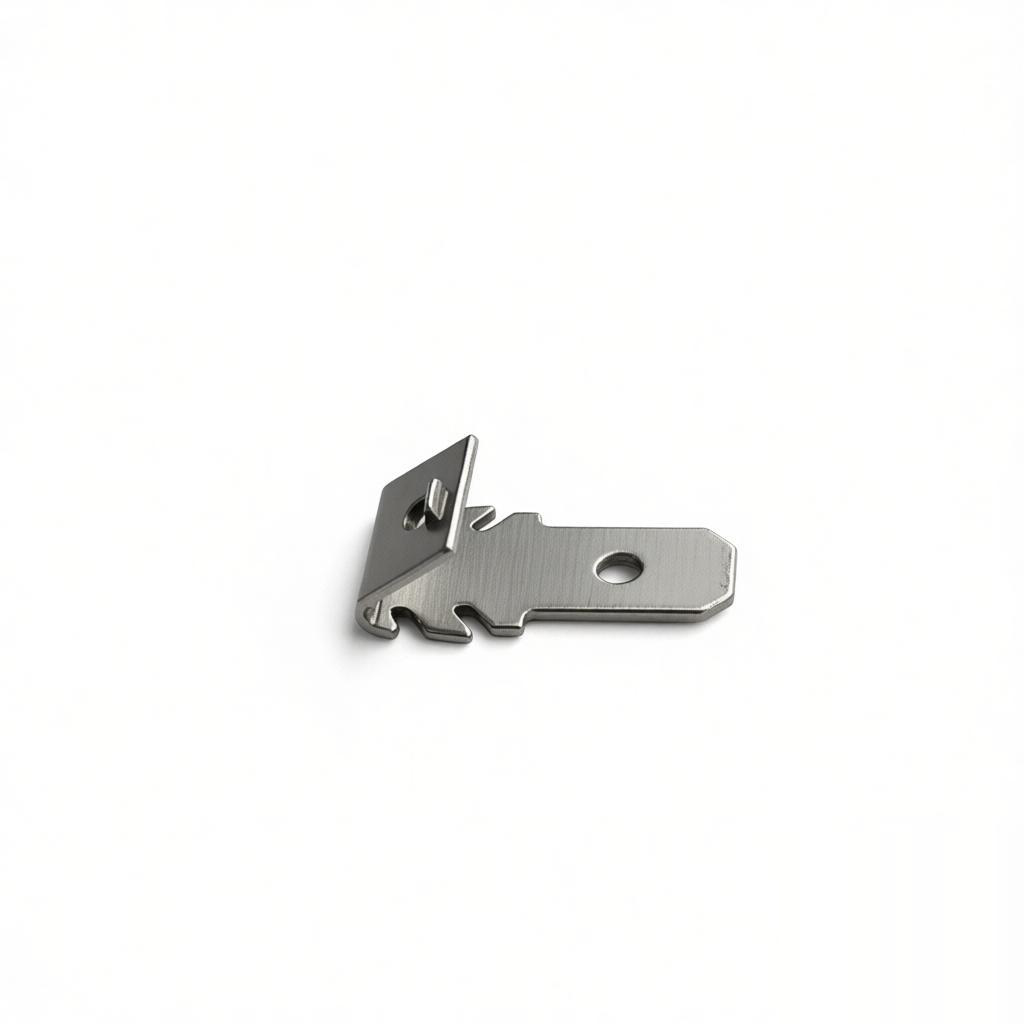
Progressive Die Stamping vs Deep Draw Stamping: Key Differences Explained
Progressive Die Stamping vs Deep Draw Stamping: Key Differences Explained
**Progressive die stamping and deep draw stamping are fundamentally different metal forming processes: progressive die stamping cuts and forms flat sheet metal into finished parts through a sequence of stations in a single press stroke, while deep draw stamping uses a punch to force sheet metal into a die cavity, creating seamless, three-dimensional hollow shapes. The choice between them depends on part geometry, production volume, material thickness, and cost per unit, with progressive stamping excelling at high-volume flat or bent parts and deep draw stamping dominating cylindrical or box-shaped enclosures.**
What Is Progressive Die Stamping? Process and Capabilities
Progressive die stamping is a cold-forming process where a coil of sheet metal is fed through a series of stations in a single die set. Each station performs a distinct operation—piercing, notching, bending, coining, or cutting off—as the strip advances incrementally with each press stroke. The final station separates the completed part from the carrier strip.
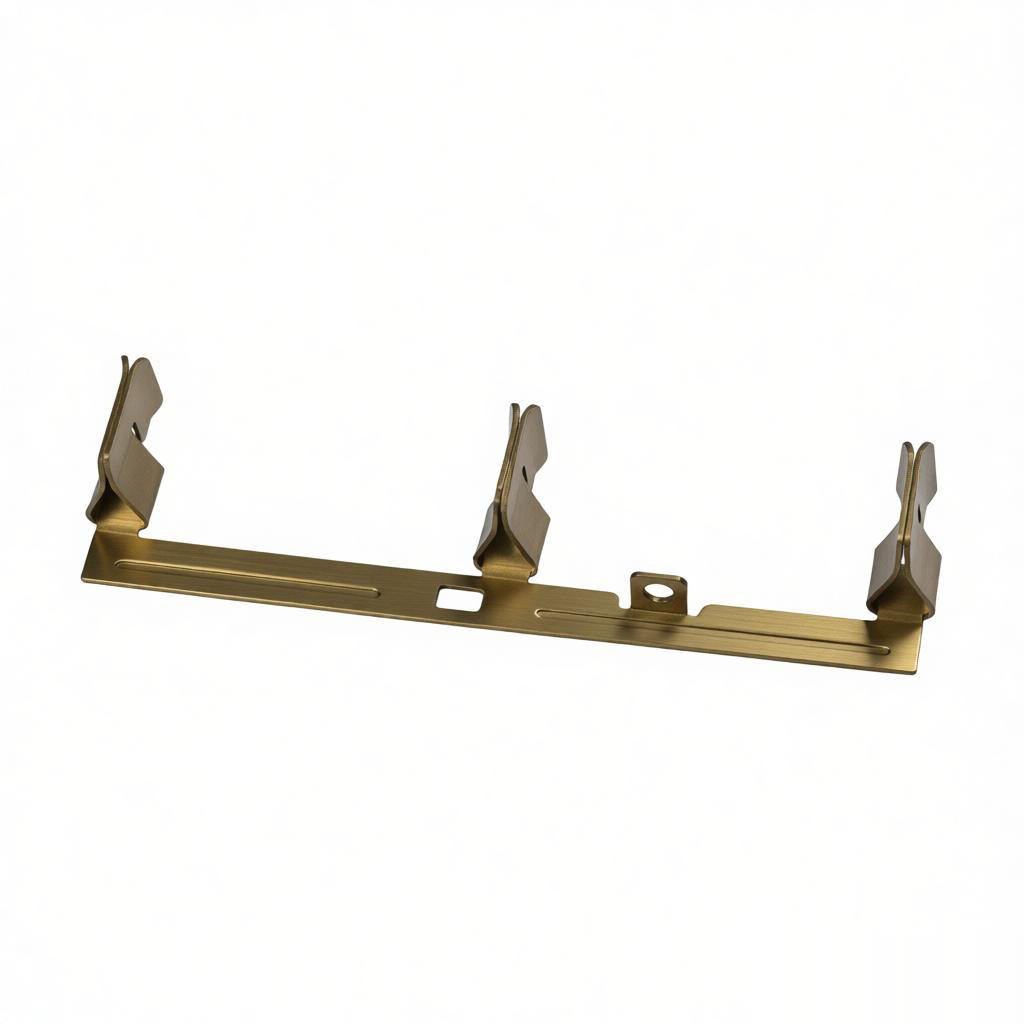
At BQUQ, we run progressive dies on presses from 25 to 600 tons, with feed rates up to 1,200 strokes per minute for thin materials. Typical material thickness ranges from 0.05 mm to 6.0 mm for steel, aluminum, brass, and copper alloys. The process is ideal for parts requiring high dimensional consistency, such as lead frames, connectors, brackets, and heat sink fins.
The key advantage is speed and automation. Once the die is proven, a single operator can manage multiple presses. However, die cost is significant—typically USD 5,000 to USD 80,000 depending on station count and complexity—and lead time for tooling is 4 to 8 weeks.
What Is Deep Draw Stamping? Process and Material Flow
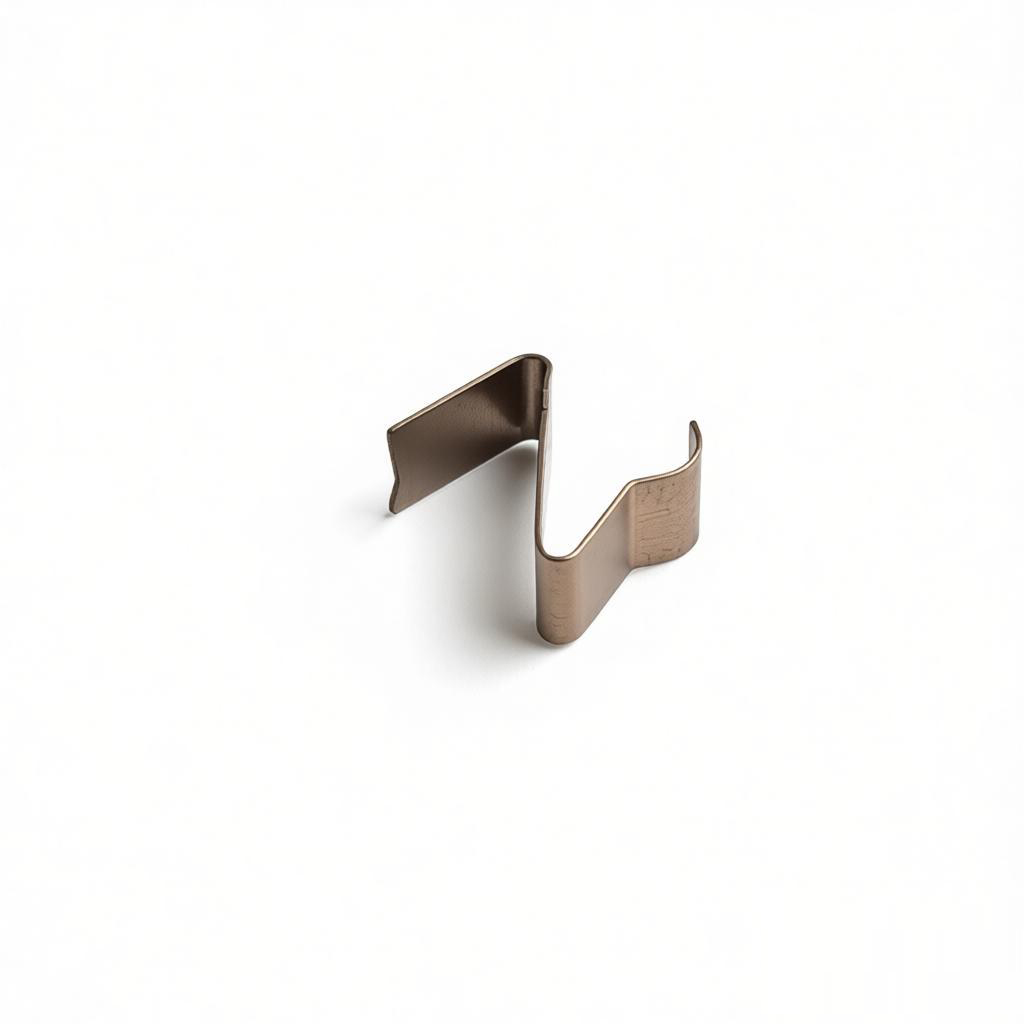
Deep draw stamping is a sheet metal forming process where a flat blank is drawn into a die cavity by a punch, producing a hollow part with a depth greater than its diameter (or width). The material flows plastically under controlled tension, with the blank holder preventing wrinkling and the punch radius controlling thinning.
For example, a stainless steel cylinder with a 50 mm diameter and 120 mm depth requires a draw ratio of 2.4:1, which typically needs multiple draw stages with intermediate annealing for work-hardening materials. Our deep draw presses range from 10 to 800 tons, handling blank diameters up to 600 mm and depths up to 400 mm.
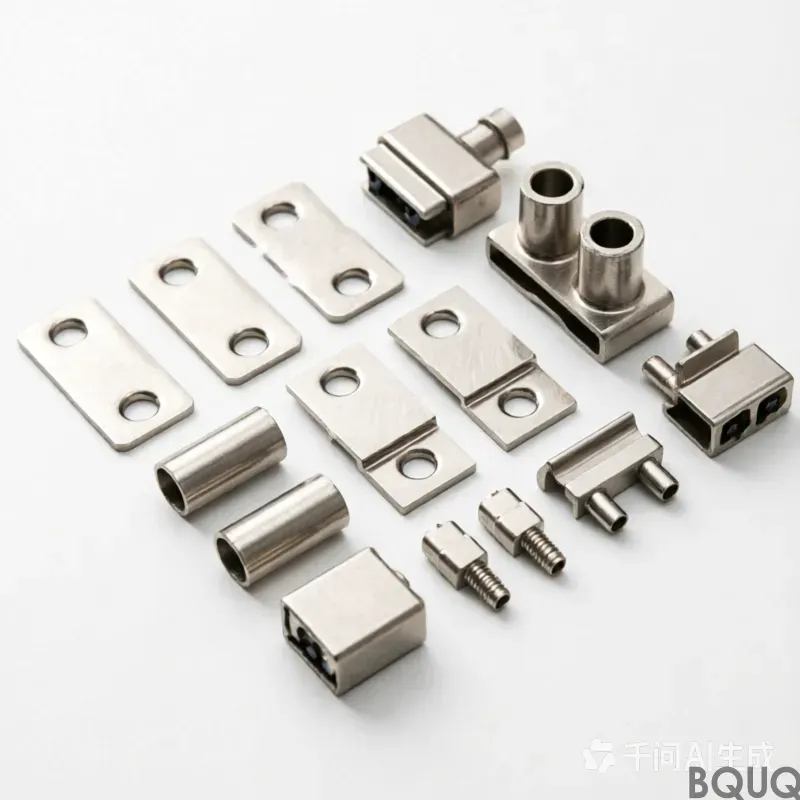
Deep drawing is the preferred method for seamless cups, battery housings, pressure vessels, automotive fuel tanks, and kitchen sinks. Tolerances are tighter in the radial direction (plus/minus 0.05 mm) than in the depth direction (plus/minus 0.15 mm) due to material springback and thickness variation.
Direct Comparison: Tolerances, Cost, and Production Speed
To make an informed selection, engineers must compare key parameters side by side. The table below summarizes our actual production data from a recent automotive connector housing and a deep-drawn sensor enclosure.
| Parameter | Progressive Die Stamping | Deep Draw Stamping | ----------- | -------------------------- | -------------------- | Typical part geometry | Flat, bent, or 2.5D | Seamless 3D hollow, cylindrical, or box | Material thickness range | 0.05 – 6.0 mm | 0.20 – 3.0 mm (up to 6.0 mm with heating) | Achievable tolerance (critical dimension) | plus/minus 0.02 mm | plus/minus 0.05 mm (diameter), plus/minus 0.15 mm (depth) | Surface finish (Ra) | 0.8 – 1.6 µm | 0.4 – 0.8 µm (on inside wall) | Stroke rate | 100 – 1,200 SPM | 5 – 40 SPM (single action) | Tooling cost (typical) | USD 8,000 – 80,000 | USD 6,000 – 60,000 | Tooling lead time | 4 – 8 weeks | 3 – 7 weeks | Unit cost at 100,000 pcs | USD 0.10 – 0.50 | USD 0.20 – 0.80 | Scrap rate (typical) | 15 – 30% | 20 – 40% | Secondary operations | Often none required | Trimming, annealing, ironing often required | Best production volume | 50,000+ pieces/year | 10,000 – 500,000 pieces/year |
|---|
The table shows that progressive stamping produces tighter tolerances and higher speed, while deep drawing yields seamless integrity and better internal surface finish. Cost per unit favors progressive stamping above 100,000 pieces, but deep drawing becomes competitive for low-volume, high-strength enclosures.
Material Behavior and Temperature Effects in Both Processes
Material selection dictates process limits. For progressive die stamping, we use cold-rolled steel (SPCC, SPCD), stainless steel (301, 304, 430), aluminum (5052, 6061), and copper alloys (C1100, C17200). The process is purely mechanical, with no significant temperature rise beyond friction-induced heating at the die surfaces, typically 40–60°C at 1,000 SPM. Lubrication with low-viscosity oils reduces wear and maintains dimensional stability.
Deep draw stamping, however, involves severe plastic deformation. For example, drawing a 1.0 mm thick 304 stainless steel cup to a 2.0 draw ratio increases local strain to 60%, causing work hardening that raises the material temperature by 80–120°C. For high-strength alloys or thick materials, we use warm deep drawing at 200–400°C to reduce yield strength and improve formability. This process requires heated dies and blank holders, adding energy costs but enabling deeper draws without cracking.
A critical difference: progressive stamping can handle high-strength steels up to 1,200 MPa tensile strength with minimal die wear if carbide tooling is used. Deep drawing of the same material requires intermediate annealing (at 700–900°C for steel) between draws, which adds cycle time and cost. For aluminum alloys, annealing at 350–420°C is common.
Production Volume and Cost Modeling: Which Process Wins?
Let us model a real case: a rectangular battery housing, 80 mm x 40 mm x 30 mm deep, 0.5 mm thick cold-rolled steel, annual demand 200,000 pieces.
Option A: Progressive die. The part can be made by bending a flat blank into a box, but the corners will have seams and require welding or mechanical locking. Tooling cost: USD 35,000. Unit cost at 200,000 pieces: USD 0.28 (material USD 0.12, stamping USD 0.08, secondary welding USD 0.08).
Option B: Deep draw. A single-piece seamless housing with no welding. Tooling cost: USD 28,000 for the first draw plus USD 12,000 for a restrike die. Unit cost: USD 0.35 (material USD 0.15, drawing USD 0.12, trimming USD 0.08).
At 200,000 pieces, Option A saves USD 0.07 per unit, totaling USD 14,000 savings. However, the welded seams reduce pressure integrity and corrosion resistance. If the housing must hold a liquid or gas, Option B is mandatory despite the higher unit cost.
For volumes below 50,000 pieces, deep draw stamping often wins because die costs are lower and setup time is shorter. Above 500,000 pieces, progressive stamping becomes overwhelmingly cost-effective due to automation and speed.
Practical Recommendations for Process Selection
Based on 20 years of manufacturing experience at BQUQ, I recommend the following decision framework:
1. **Choose progressive die stamping if:** part has flat or bent features, tolerances below plus/minus 0.05 mm, production volume exceeds 100,000 pieces per year, and the design allows for a carrier strip. Examples: heat sink fins, EMI shields, spring clips, and motor laminations.
2. **Choose deep draw stamping if:** part requires a seamless, watertight or airtight enclosure, depth exceeds 1.5 times the diameter, material thickness is below 1.5 mm, and internal surface finish is critical. Examples: sensor housings, battery cans, hydraulic cylinders, and cosmetic appliance shells.
3. **Hybrid approach:** for complex parts like automotive fuel filters, we use progressive deep drawing—a progressive die with draw stations followed by piercing and trimming. This combines the speed of progressive stamping with the seamless geometry of deep drawing, but tooling costs rise by 40–60%.
4. **Always prototype both processes** for new designs. Send us your 3D model and annual volume; we will run a cost simulation within 24 hours, including tooling amortization and scrap rates.
FAQ-Style Tips for Engineers
**Can deep drawn parts be produced on a progressive die?** Yes, but only for shallow depths (draw ratio under 1.5:1). For deeper parts, separate draw dies or transfer presses are required.
**What is the maximum depth achievable in a single deep draw stroke?** For mild steel, the practical limit is 1.0 to 1.5 times the blank diameter. Deeper parts need multiple draws or warm forming.
**Which process gives better material utilization?** Progressive stamping typically yields 70–85% utilization. Deep draw uses 60–80% due to blank size requirements and trimming flash.
**How do I reduce tooling cost for low-volume deep draw parts?** Use aluminum or kirksite dies for prototypes, then switch to hardened tool steel for production. This cuts tooling cost by 50% while maintaining tolerances of plus/minus 0.1 mm.
Conclusion and Next Steps
Progressive die stamping and deep draw stamping are complementary processes, not competitors. The correct choice depends on part geometry, tolerance requirements, material, and annual volume. Progressive stamping offers higher speed and tighter tolerances for flat and bent parts, while deep drawing provides seamless integrity for hollow enclosures. For most engineers, the decision comes down to whether a seam is acceptable and whether the depth-to-diameter ratio exceeds 1.5.
At BQUQ, we have operated both process lines for over two decades, with in-house die design, CNC machining, and metrology. We provide free DFM feedback and cost estimates within 12 hours of receiving your drawings. Contact us for a no-obligation quote.
**Email: sc@bquq.com** **WhatsApp: +86 13713157787** **Web: www.bquq.com**
Let our team help you select the most cost-effective stamping process for your next project. We reply within one business day, and we ship globally from our Dongguan facility.
Related Articles
- Design for Stamping: 7 Blanking Layout Rules to Cut Scrap Cost by 18% in 2025
- Stamping Lubricant Selection 2024: Balancing Die Life, Part Quality, and Environmental Compliance
- CNC Lathe vs Stamping: Which Precision Part Method Wins?
Frequently Asked Questions
What are the main differences between progressive die stamping and deep draw stamping?
Progressive die stamping cuts and forms flat sheet metal into finished parts through sequential stations in a single press stroke, ideal for high-volume flat or bent parts. Deep draw stamping forces sheet metal into a die cavity to create seamless, three-dimensional hollow shapes, dominating cylindrical or box-shaped enclosures. The choice depends on part geometry, production volume, material thickness, and cost per unit.
What materials and thicknesses can you handle for progressive die stamping?
We handle material thicknesses from 0.05 mm to 6.0 mm for steel, aluminum, brass, and copper alloys. Our progressive dies run on presses from 25 to 600 tons, with feed rates up to 1,200 strokes per minute for thin materials. This process is ideal for parts like lead frames, connectors, brackets, and heat sink fins requiring high dimensional consistency.
What are the typical tolerances achievable with deep draw stamping?
Deep draw stamping achieves tighter tolerances in the radial direction at plus/minus 0.05 mm, while depth direction tolerances are plus/minus 0.15 mm due to material springback and thickness variation. For example, a stainless steel cylinder with 50 mm diameter and 120 mm depth requires a draw ratio of 2.4:1, potentially needing multiple draw stages with intermediate annealing.
How much does tooling cost and how long does it take for progressive die stamping?
Progressive die tooling costs typically range from USD 5,000 to USD 80,000 depending on station count and complexity, with lead time of 4 to 8 weeks. Once the die is proven, a single operator can manage multiple presses, making it cost-effective for high-volume production despite the significant initial investment.