Progressive Die vs Single Hit Stamping: Cost Breakdown by Volume
Progressive Die vs Single Hit Stamping: Which Is Cheaper for Your Volume?
**The short answer:** For volumes above 50,000 parts per year, progressive die stamping is almost always cheaper per unit, despite higher upfront tooling costs. For volumes below 10,000 parts, single hit (line die) stamping typically wins on total cost. The crossover point—where progressive tooling amortization overtakes higher per-piece labor and handling costs—falls between 20,000 and 50,000 parts, depending on part complexity and material thickness.
---
H2: Defining the Two Processes in Real Production Terms
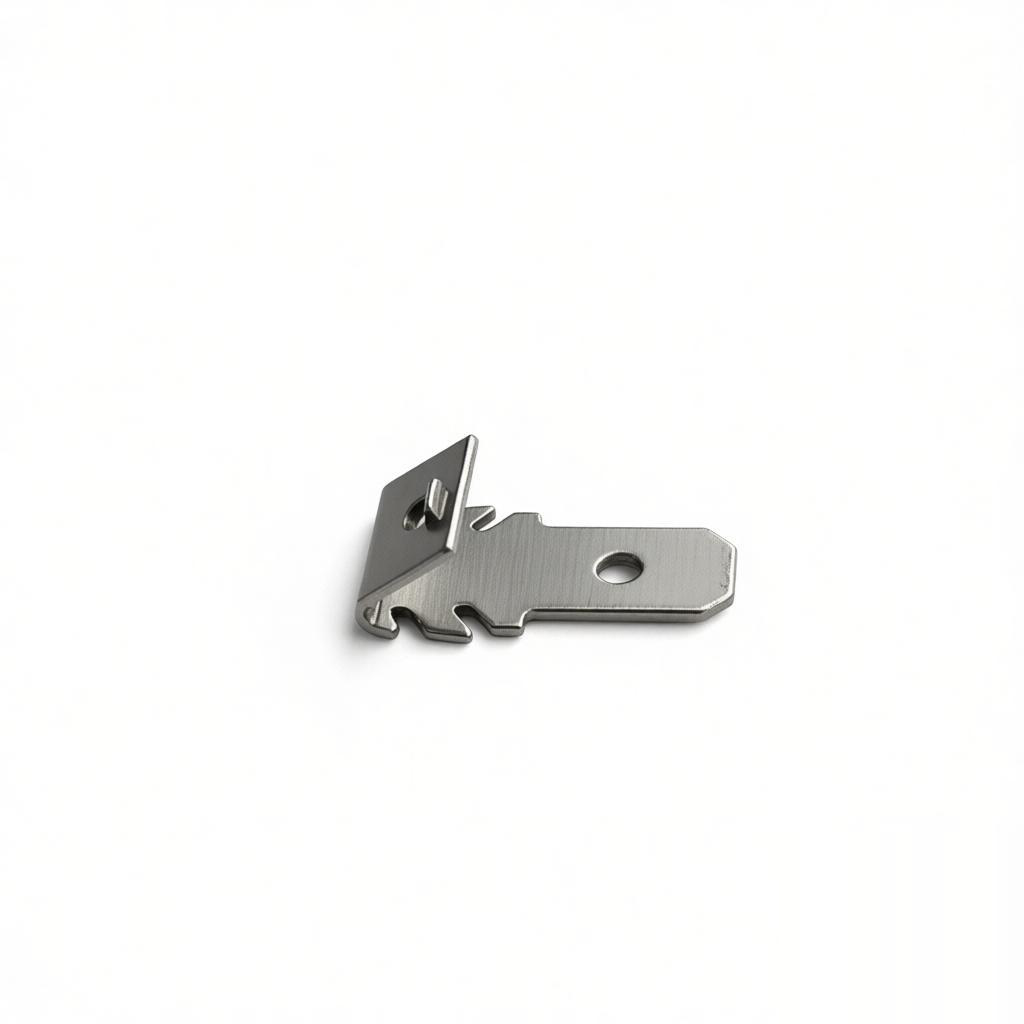
In precision metal stamping, the choice between progressive dies and single hit (compound or line) dies is not about capability—both can hold tolerances of ±0.05 mm in most alloys. The difference is in how the work is sequenced.
**Single Hit Stamping:** One operation per press stroke. The strip is fed, the die performs one action (blank, pierce, form, or trim), and the part moves to the next press or die. For a part requiring four operations, you run four separate presses or re-enter the same press four times. Typical cycle time: 15–40 strokes per minute (SPM) per operation, with manual or semi-automatic part transfer.
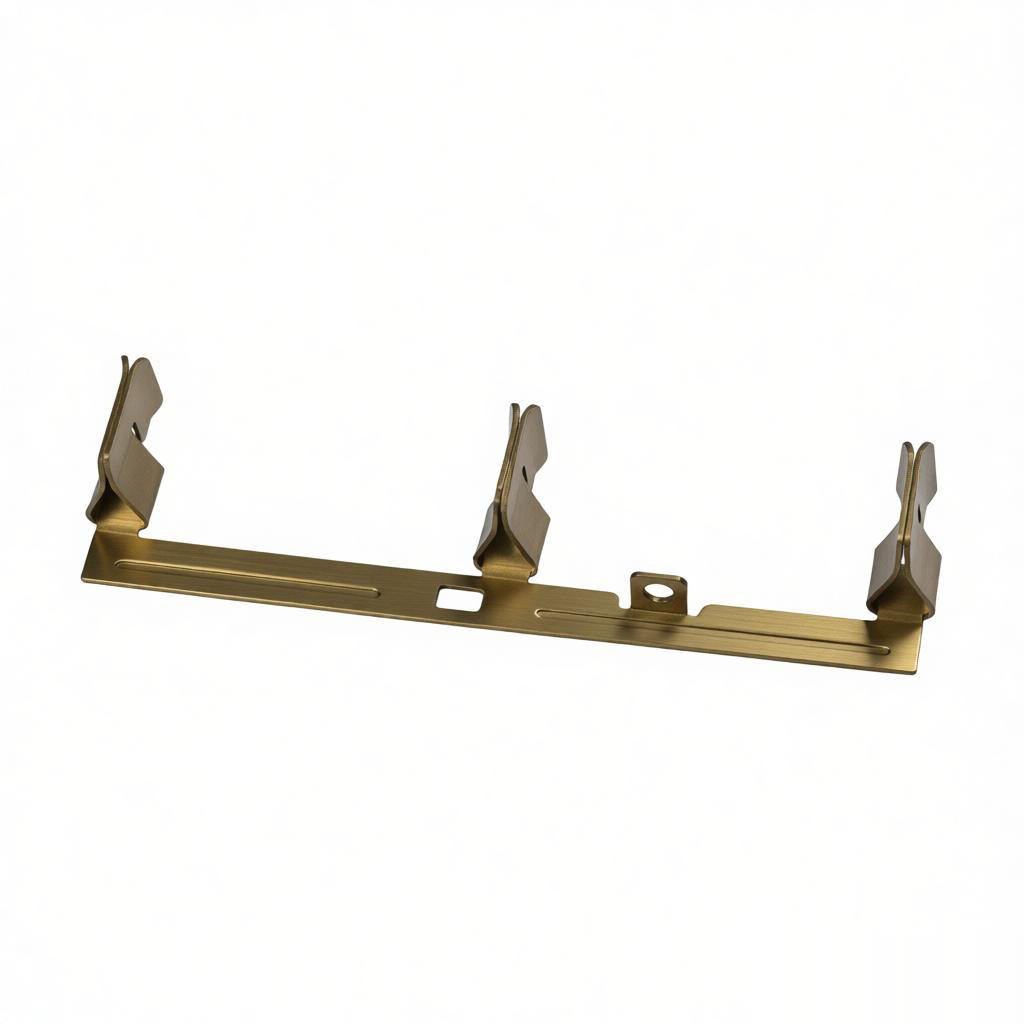
**Progressive Die Stamping:** A single die with multiple stations. The strip advances through the die progressively—each station performs a different operation—and the finished part exits at the final station. Cycle times: 150–600 SPM for thin materials (0.3–1.0 mm), dropping to 60–150 SPM for thicker stock (1.5–3.0 mm). One press, one operator, one die.
Our 20 years of CNC machining and stamping at BQUQ has shown that the real cost drivers are not the die steel price but the hidden costs: labor per part, press utilization, and secondary operations.
---
H2: The Hard Numbers—Tooling Cost, Piece Price, and Lead Time
Below is a representative comparison based on a mid-complexity part: a 2.0 mm thick stainless steel (SUS304) bracket with four holes, one 90-degree bend, and a 0.8 mm edge trim. Dimensions: 45 mm x 30 mm. Annual volume: 100,000 units.
| Parameter | Progressive Die | Single Hit (Line Die) | :--- | :--- | :--- | **Die construction cost** | USD 12,000 – 18,000 | USD 3,500 – 6,500 per operation (x4 = USD 14,000 – 26,000 total) | **Number of presses required** | 1 | 4 (or 1 press with 4 die changes) | **Cycle time per part** | 0.4 seconds (150 SPM) | 3.2 seconds (15 SPM x 4 ops) | **Labor cost per part** | USD 0.004 | USD 0.025 (manual transfer) | **Scrap rate** | 1.5% – 3% | 4% – 7% (handling damage) | **Part-to-part tolerance** | ±0.03 mm (station-to-station) | ±0.08 mm (re-fixturing error) | **Tooling lead time** | 6–8 weeks | 3–4 weeks per op (staggered) | **Per-piece cost at 100k units** | USD 0.18 – 0.24 | USD 0.31 – 0.42 | **Total cost at 100k units** | USD 30,000 – 42,000 | USD 45,000 – 68,000 |
|---|
Note: The progressive die tooling costs **more upfront** for a single die, but the line die approach requires four separate dies. For complex parts, the total tooling investment for single hit often exceeds progressive. The crossover point is not where the die costs equal—it is where the per-piece labor and scrap savings pay back the extra die complexity.
---
H2: Where Single Hit Stamping Is Justified—Low Volume and Prototypes
Do not use progressive dies for:
- **Quantities under 5,000 pieces:** The die design and tryout cost (USD 2,000–4,000 for debugging) cannot be amortized. Single hit tooling at USD 3,500 per simple blanking die is a better fit. - **Frequent design changes:** If your part revision cycle is under 6 months, a progressive die becomes obsolete before payback. Single hit dies are cheaper to modify—a piercing punch replacement costs USD 150–300, versus USD 800–1,200 for a progressive station rework. - **Thick materials (above 4.0 mm):** Progressive dies struggle with material springback and strip lift. At 5.0 mm steel, SPM drops to 30–40, and the die needs heavy guide pillars and nitrogen springs, pushing tooling cost above USD 25,000. Four single hit operations on hydraulic presses are more reliable.
However, beware of hidden costs in single hit: each re-fixturing introduces alignment error. Our measurements show that cumulative tolerance drift in a 4-operation line die reaches ±0.10 mm, while progressive dies maintain ±0.03 mm without re-clamping.
---
H2: The Cost Crossover Curve—Mathematical Proof
Use this simplified formula for your own estimate:
- **Progressive total cost** = Die cost (P) + (Part cost per piece x Volume) - **Single hit total cost** = (Die cost per op x N ops) + (Part cost per piece x Volume) + (Extra handling labor x Volume)
For the example above, with P = USD 15,000, single hit dies total USD 20,000, progressive per-piece = USD 0.21, single hit per-piece = USD 0.36:
Below 33,333 units, single hit is cheaper. Above it, progressive wins. For a simpler part (2 operations, thin aluminum), the crossover drops to 12,000 pieces. For a complex part (8 operations, tight tolerances), the crossover rises to 60,000 pieces because the progressive die becomes very expensive to build and debug.
**Material thickness matters more than die cost.** At 0.5 mm copper, progressive SPM reaches 400, giving a per-piece labor cost of USD 0.001. At 3.0 mm steel, SPM drops to 80, and the cost advantage narrows.
---
H2: Practical Recommendations for Engineers and Procurement
1. **Run the crossover calculation before requesting quotes.** Do not ask a stamper for "the cheapest option" without giving them your annual volume and part lifetime. A good supplier will run both scenarios for free.
2. **For 10,000–50,000 units, consider a compromise: a progressive die with simplified stations.** Reduce the number of stations by performing some operations in a secondary press. This lowers die cost by 20–30% while keeping 80% of the speed advantage.
3. **Demand a scrap rate guarantee.** Single hit stamping with manual handling typically scraps 5% of parts due to dents and scratches. Progressive dies, with coil-fed material, reduce this to under 2%. At 100,000 parts, that is 3,000 parts saved—worth USD 600–1,000 in material alone.
4. **Check the press tonnage curve.** Progressive dies require higher total tonnage (because multiple stations act simultaneously). A 50-ton press for single hit might need a 110-ton press for progressive at the same part size. Press hour rates at Chinese factories: USD 15–25/hour for 45-ton, USD 30–40/hour for 110-ton. This partially offsets the labor savings.
5. **For high-volume, thin-metal parts (heat sinks, EMI shields, connector shells), progressive is non-negotiable.** We run progressive dies for aluminum heat sink fins at 350 SPM, achieving per-piece cost under USD 0.05. No single hit process can approach that.
---
H2: FAQ-Style Tips on Cost Drivers
**Q: Does die steel quality change the crossover point?** A: Yes. Using D2 steel instead of M2 increases die life from 500,000 to 2 million strokes but adds 15% to tooling cost. For volumes above 200,000, the longer life pays back. For 30,000 pieces, use standard tool steel.
**Q: How does lubrication affect cost?** A: Progressive dies require high-performance lubricant (USD 0.02 per part in fluid cost) to prevent galling at high speed. Single hit can use cheaper oil at USD 0.005 per part. At 100,000 parts, this adds USD 1,500 to progressive cost—include it in your calculation.
**Q: What about secondary operations like tapping or deburring?** A: Progressive dies can tap (thread) in-station with a forming tap, adding USD 0.01 per part. Single hit requires a separate tapping machine at USD 0.05 per part. If your part has threaded holes, progressive wins even at lower volumes.
**Q: Is laser cutting cheaper than stamping for low volume?** A: For under 1,000 pieces, yes—laser cutting at USD 0.50–1.00 per part beats any stamping. But above 3,000 pieces, stamping dies amortize better. For 5,000 pieces, single hit stamping at USD 0.45 per part is cheaper than laser at USD 0.70.
---
Conclusion: Match the Process to the Volume, Not the Hype
There is no universal "cheaper" process. For production runs below 15,000 parts, single hit stamping minimizes capital risk and tooling lead time. For volumes above 40,000 parts, progressive die stamping delivers 30–50% lower per-piece costs, tighter tolerances, and faster cycle times. The decision must be data-driven, not preference-driven.
At BQUQ, we have run both processes for 20 years across CNC machining, metal stamping, springs, and heat sinks. We do not push one technology—we calculate your crossover point and recommend the most economical path. If you send us your part drawing and annual volume, we will provide a detailed cost breakdown for both methods within 12 hours.
| **Email: sc@bquq.com** | **WhatsApp: +86 13713157787** | **www.bquq.com** |
Let us help you choose the stamping process that saves money, not the one that sounds impressive.
Related Articles
- Design for Stamping: 7 Blanking Layout Rules to Cut Scrap Cost by 18% in 2025
- Why Low Volume Metal Stamping is Ideal for Prototyping
- 5 Effective Burr Removal Techniques for Stamped Parts
Frequently Asked Questions
At what volume does progressive die stamping become cheaper than single hit stamping?
Progressive die stamping is almost always cheaper per unit above 50,000 parts per year, while single hit stamping wins below 10,000 parts. The crossover point falls between 20,000 and 50,000 parts, depending on part complexity and material thickness.
What are the typical cycle times for progressive die vs single hit stamping?
Progressive die stamping runs at 150–600 SPM for thin materials (0.3–1.0 mm) and 60–150 SPM for thicker stock (1.5–3.0 mm). Single hit stamping operates at 15–40 SPM per operation, requiring multiple press strokes for multi-step parts.
How do tooling costs compare between progressive and single hit dies for a complex part?
For a mid-complexity SUS304 bracket, a progressive die costs USD 12,000–18,000 upfront. Single hit requires four separate dies at USD 3,500–6,500 per operation, totaling USD 14,000–26,000—often exceeding progressive tooling for complex parts.
What tolerances can each stamping process achieve?
Progressive die stamping holds part-to-part tolerances of ±0.03 mm due to station-to-station alignment. Single hit stamping achieves ±0.08 mm, with higher re-fixturing error. Both processes can hold ±0.05 mm in most alloys, but progressive offers tighter consistency.