Progressive Stamping vs Transfer Stamping: How to Choose the Right Process
**Direct Answer:** For high-volume, small-to-medium parts with continuous strip feeding, progressive stamping is faster and more cost-effective, holding tolerances of ±0.01 mm. For large, deep-drawn, or highly complex parts requiring multiple independent dies, transfer stamping offers greater flexibility and reduced material stress, albeit at a higher tooling cost and slower cycle rate. Your choice hinges on part size, geometric depth, production volume, and material utilization.
---
The Core Difference: Strip vs. Individual Blank
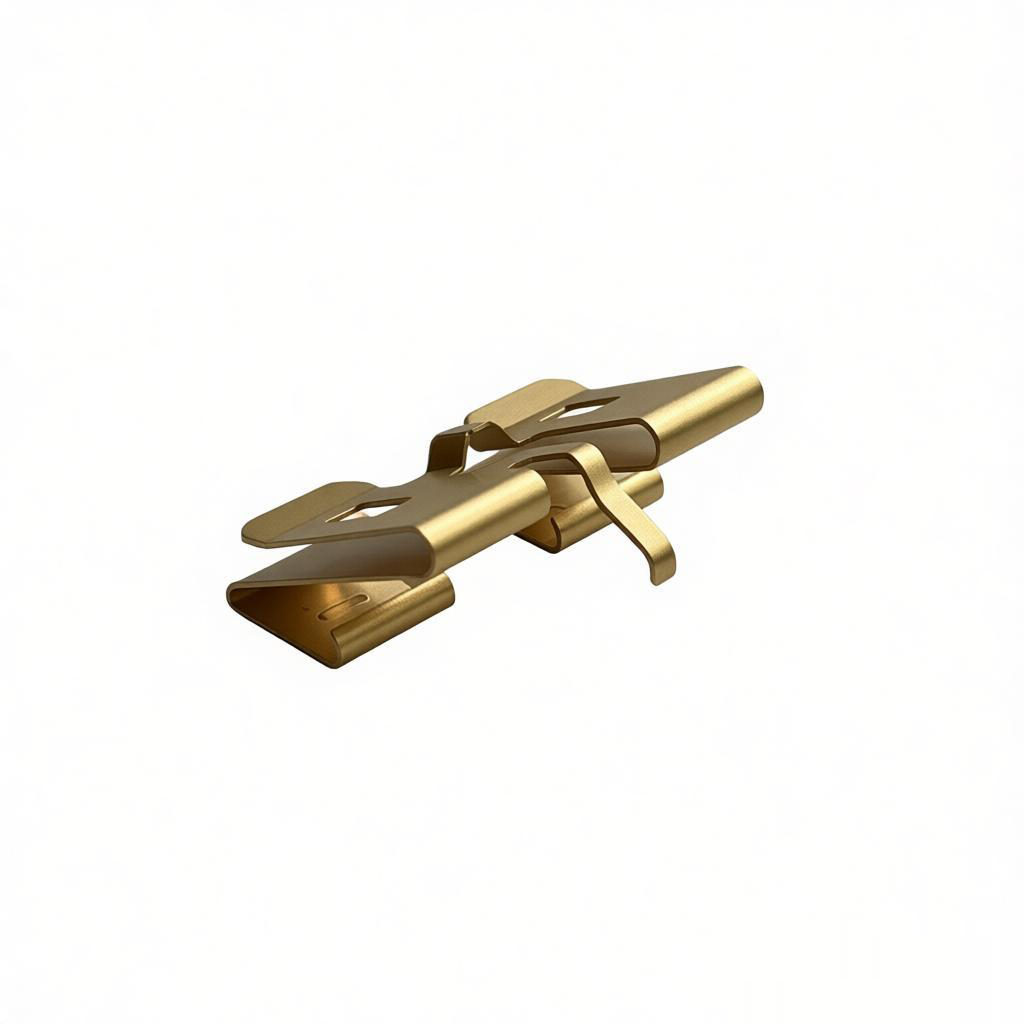
The fundamental distinction between progressive and transfer stamping lies in how the workpiece moves through the die. In **progressive stamping**, a continuous metal coil (strip) advances through a single die station, where successive operations (piercing, notching, bending, drawing) are performed sequentially. The part remains attached to the carrier strip until the final cut-off station.
In **transfer stamping**, a blank is cut from the strip first, then mechanically transferred by fingers, rails, or robots between multiple independent dies. Each die performs one or two specific operations. The blank is never connected to the strip after the initial blanking stage.
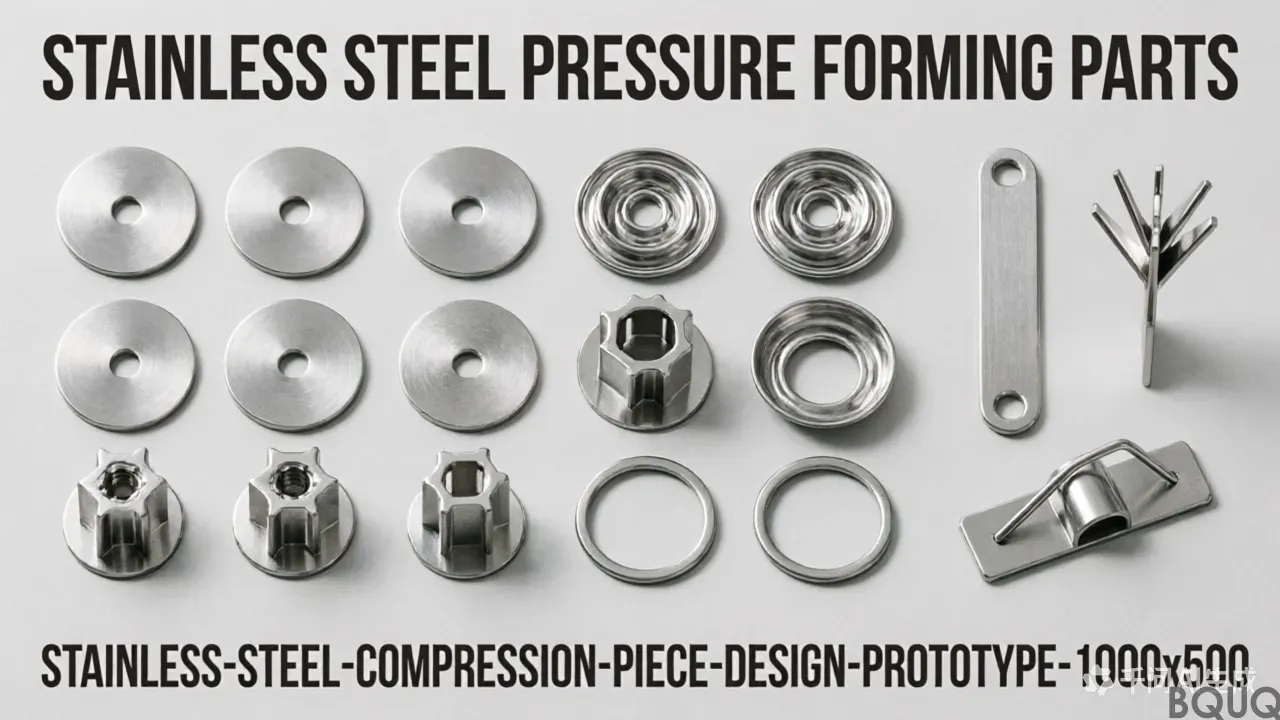
This difference drives everything else: cycle speed, die cost, maintenance complexity, and part geometry limits.
When Progressive Stamping Wins: Speed and Precision
Progressive dies are the undisputed champions of high-volume production. At BQUQ’s Dongguan facility, we run progressive dies at **400 to 1,200 strokes per minute (SPM)** for thin materials (0.1 mm to 2.0 mm). For a simple bracket or connector, that translates to **30 to 80 parts per minute** per die, with zero manual handling.
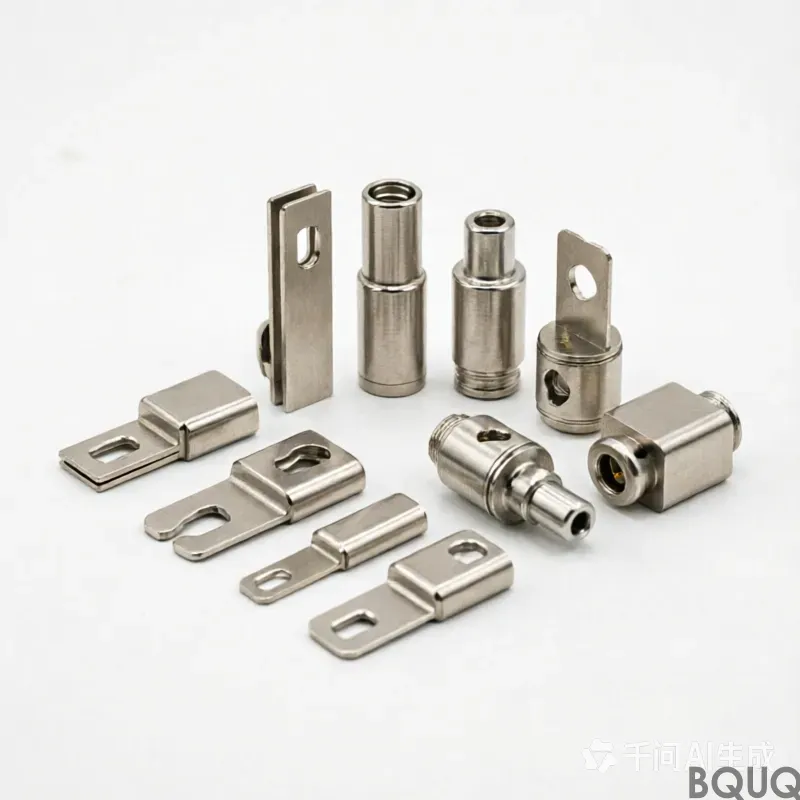
**Real data from our shop floor:** - Material: SPCC, 0.8 mm thick - Part: electronic shield, 25 mm x 15 mm - Progressive die: 16 stations, 650 SPM - Tolerances: ±0.015 mm on critical holes - Tooling cost: USD 18,000 to 25,000 - Part cost: USD 0.012 to 0.018 per piece (at 500k pcs)
Progressive stamping maintains tighter tolerances because the strip is piloted precisely through fixed positions. The registration error between stations is typically **±0.005 mm** with proper pilot pins. However, the strip’s continuous support limits how deep you can draw. Maximum draw depth is usually **less than 2.5 times the part diameter** due to material thinning at the edges of the carrier.
When Transfer Stamping Wins: Depth and Complexity
Transfer stamping excels when the part is too large, too deep, or too irregular for a progressive die. Typical applications include automotive fuel tanks, sink basins, washing machine drums, and structural chassis components.
At BQUQ, we use transfer presses with **250 to 1,600 tons** of capacity. Cycle speeds are slower: **15 to 35 SPM** for medium parts. But the real advantage is draw depth. In a transfer die, the blank is free-floating, so you can achieve **draw depths of 3 to 5 times the part diameter** without tearing. For example, we produce an oil pan housing (depth 120 mm, diameter 60 mm) at 25 SPM with a tolerance of ±0.1 mm on the flange.
**Transfer stamping also reduces work hardening.** Because each station is independent, you can anneal (heat to 650°C to 720°C) between operations if needed—something impossible in a progressive die. This is critical for high-strength steels (HSS) and aluminum alloys like 5052.
| Parameter | Progressive Stamping | Transfer Stamping | --- | --- | --- | Cycle Speed (typical) | 300 – 1,200 SPM | 10 – 40 SPM | Part Size (max footprint) | Up to 300 mm x 300 mm | Up to 2,000 mm x 1,500 mm | Draw Depth Ratio | Max 2.5 : 1 (depth:diameter) | 3 : 1 to 5 : 1 | Tolerance (precision features) | ±0.01 mm to ±0.02 mm | ±0.05 mm to ±0.15 mm | Tooling Cost (medium part) | USD 15,000 – 30,000 | USD 30,000 – 80,000 | Tooling Lead Time | 4 – 6 weeks | 8 – 12 weeks | Material Utilization | 60 – 75% | 55 – 70% (with scrap separation) | Minimum Economic Volume | 100,000 pcs | 10,000 – 50,000 pcs | Temperature (for annealing) | Not possible in-die | Possible between stations (650°C – 720°C) | Best For | Connectors, clips, heat sink fins, motor laminations | Deep drawn housings, automotive panels, pressure vessels |
|---|
Material Utilization and Scrap: The Hidden Cost
Progressive stamping generally offers better material utilization because the carrier strip can be designed with tight nesting. For a simple rectangular part, we achieve **72% utilization**. For complex shapes, this drops to 60%. Transfer stamping requires an initial blanking operation that often leaves more skeleton scrap, especially for round parts. However, for deep drawn components, progressive dies waste significant material due to the necessary web between the part and the strip edge.
At current steel prices (SPCC at approximately USD 680/ton), a 5% difference in utilization on a 2-ton run equals **USD 68 in material savings** for progressive. But if your part requires 4 mm thick aluminum (5052 at USD 3,200/ton), the same 5% difference becomes **USD 320 per ton**. For large parts, transfer’s ability to use near-net-shape blanks can actually reduce scrap despite lower nominal utilization.
Tooling Maintenance and Downtime: Practical Numbers
Progressive dies are complex. A 20-station die has over 300 components. On average, we recommend preventive maintenance every **200,000 strokes**, requiring 4 to 8 hours of downtime. Transfer dies, with fewer stations, run **500,000 strokes** between maintenance intervals. But when a transfer die fails, the fix is costlier due to the larger die size.
**Practical example from BQUQ:** - Progressive die, 18 stations: sharpening required every 180k strokes; regrind cost USD 400; downtime 6 hours. - Transfer die, 6 stations: sharpening every 450k strokes; regrind cost USD 900; downtime 10 hours.
For annual volumes above 5 million parts, progressive’s faster cycle time wins even with more maintenance hours. For volumes below 200,000 parts, transfer’s lower tooling complexity and faster setup (30 minutes vs. 2 hours for progressive) reduces total cost.
Cost Comparison at Different Volumes (Real Quotation Basis)
We quoted a similar electrical connector bracket (50 mm x 30 mm x 1.2 mm SPCC) using both processes:
| Volume (pcs) | Progressive Cost per part (USD) | Transfer Cost per part (USD) | --- | --- | --- | 10,000 | 0.85 | 0.62 | 50,000 | 0.28 | 0.19 | 100,000 | 0.16 | 0.13 | 500,000 | 0.07 | 0.09 | 1,000,000 | 0.045 | 0.075 |
|---|
At 100,000 parts, transfer is 19% cheaper because tooling amortization is lower. At 500,000 parts, progressive is 22% cheaper due to cycle speed. The crossover point typically lies between **150,000 and 300,000 parts** for medium-sized parts.
Engineering Recommendations: Making the Final Decision
**Choose progressive stamping if:** - Your part weighs less than 300 grams - The largest dimension is under 150 mm - Draw depth is less than 20 mm - You need tolerance tighter than ±0.02 mm - Annual volume exceeds 200,000 pieces - Material thickness is between 0.1 mm and 3.0 mm
**Choose transfer stamping if:** - Part length exceeds 200 mm - Draw depth exceeds 25 mm - You need to use high-strength steel (yield > 550 MPa) - Part geometry changes direction significantly (multi-axis bends) - Volume is between 20,000 and 200,000 pieces - You require in-process annealing or cleaning
**Critical note on material:** For copper alloys (C1100, C2600), progressive is almost always preferred because the strip’s support prevents scratching. For stainless steel (SUS304) deep draws, transfer is mandatory to avoid cracking.
FAQ-Style Tips for Engineers
**Q: Can I convert my existing progressive die to transfer?** A: Rarely. The die base, feed system, and press controls are fundamentally different. Conversion costs 70-90% of a new transfer die. Better to design for the correct process from the start.
**Q: Which process is better for heat sinks used in EV battery cooling?** A: For aluminum heat sinks with fins (height < 10 mm), progressive is superior. For liquid-cooled plates with deep channels (>20 mm), transfer avoids tearing. At BQUQ, we produce 6061-T6 heat sink bases via transfer at 20 SPM with ±0.05 mm flatness.
**Q: How do I estimate tooling cost quickly?** A: For progressive, budget USD 1,500 – 2,000 per station. For transfer, budget USD 5,000 – 8,000 per station. A 15-station progressive die: USD 22,500 – 30,000. A 6-station transfer die: USD 30,000 – 48,000.
**Q: What about servo presses?** A: Servo-driven transfer presses (e.g., 800-ton) allow variable speed control, reducing shock on deep draws. They add 15-20% to press cost but reduce scrap by up to 8% on aluminum parts.
Conclusion: Matching Process to Part Geometry
There is no universally superior process. Progressive stamping dominates for high-speed, high-precision, small-to-medium parts. Transfer stamping is mandatory for deep draws, large formats, and materials requiring intermediate heat treatment. Use the crossover volume (typically 200,000 pcs) and draw depth ratio (2.5:1) as your first filters. For parts on the borderline, send us your 2D or 3D file, and our engineers will simulate both processes to give you a cost-per-part comparison within 12 hours.
At BQUQ, we have operated both progressive and transfer lines for over 20 years in Dongguan. We can manufacture your part with either process and provide honest guidance on which saves you money. For a rapid feasibility review and quotation, contact us:
**Email:** sc@bquq.com **WhatsApp:** +86 13713157787 **Web:** www.bquq.com
We respond to all RFQs within 12 hours, with tooling lead times from 4 weeks and PPAP documentation included.
Related Articles
- 5 Effective Burr Removal Techniques for Stamped Parts
- CNC Lathe vs Stamping: Which Precision Part Method Wins?
- 5 Proven Ways to Reduce Cost in Metal Stamping Parts
Frequently Asked Questions
What are the main differences between progressive and transfer stamping?
Progressive stamping uses a continuous metal coil fed through a single die station, keeping the part attached to the carrier strip until final cut-off. Transfer stamping cuts a blank first, then mechanically transfers it between multiple independent dies. Progressive is faster and more precise for small parts, while transfer offers greater flexibility for large or deep-drawn parts.
What tolerances can you achieve with progressive stamping?
Progressive stamping maintains tight tolerances, typically ±0.015 mm on critical holes for parts like electronic shields. With proper pilot pins, registration error between stations is usually ±0.005 mm. This precision is possible because the strip is piloted through fixed positions, ensuring consistent alignment throughout the process.
What are the cycle speeds and production rates for progressive stamping?
At BQUQ's Dongguan facility, progressive dies run at 400 to 1,200 strokes per minute (SPM) for thin materials (0.1 mm to 2.0 mm). For a simple bracket or connector, this translates to 30 to 80 parts per minute per die, with zero manual handling. A 16-station die for an electronic shield runs at 650 SPM.
When should I choose transfer stamping over progressive stamping?
Choose transfer stamping for parts that are too large, too deep, or too irregular for progressive dies. It excels with draw depths of 3 to 5 times the part diameter, versus less than 2.5 times for progressive. Typical applications include automotive fuel tanks, sink basins, and washing machine drums. Transfer presses at BQUQ have 250 to 1,600 tons capacity.