Spring Specification Standards: ASTM, SMI, and JIS Reference for Engineers
When specifying a spring for a precision application, the governing standard is not a matter of preference but of performance, safety, and regulatory compliance. The three dominant frameworks are ASTM (American Society for Testing and Materials), SMI (Spring Manufacturers Institute), and JIS (Japanese Industrial Standards), each with distinct tolerance classes, material designations, and testing protocols. For a factory environment where a 0.01 mm deviation can cause a fatigue failure, choosing the correct standard directly determines the spring's lifecycle, cost, and acceptance criteria.
## Material Designation and Chemical Composition Differences The first divergence appears in material nomenclature. ASTM uses unified numbering systems (UNS) and AISI grades, such as ASTM A228 for music wire (0.80-0.95% carbon) and ASTM A313 for 302 stainless steel. JIS equivalents, per JIS G3522 (music wire) and JIS G4314 (stainless), use SWP-B and SUS302-WPB designations respectively. SMI does not define materials but references ASTM or SAE grades in its design manuals.
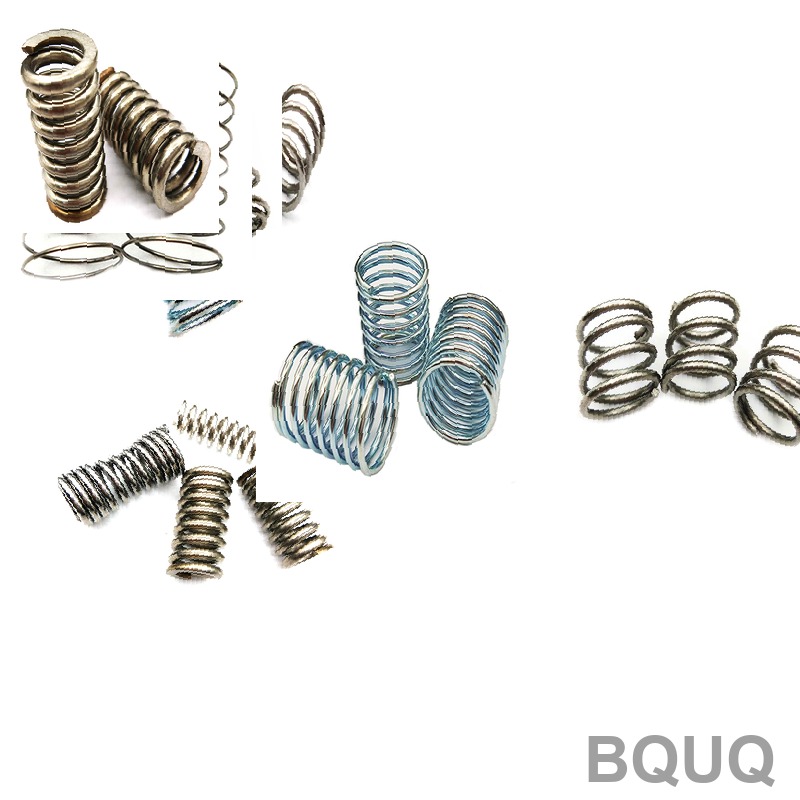
The chemical composition limits are not identical. For example, ASTM A228 specifies a maximum phosphorus content of 0.025% and sulfur of 0.025%. JIS G3522 for SWP-B allows phosphorus up to 0.030% and sulfur up to 0.030%. This 0.005% difference impacts ductility and inclusion count in high-cycle fatigue applications. For a 0.5 mm wire diameter, this translates to a measurable difference in tensile strength: ASTM A228 lists a minimum tensile strength of 2,200 MPa, while JIS SWP-B lists 2,150 MPa. An engineer designing for aerospace or automotive safety-critical systems should default to ASTM A228 for this higher tensile floor.
## Tolerance Classes and Dimensional Precision Tolerance is where SMI and ASTM diverge most sharply from JIS. ASTM A1000 (spring wire) and ASTM A125 (helical springs) define three tolerance grades: Grade 1 (precision), Grade 2 (commercial), and Grade 3 (general). SMI's Handbook of Spring Design provides similar but not identical tables. JIS B2704 (hot-formed) and JIS B2706 (cold-formed) use a different classification: Class A, Class B, and Class C, where Class A is the tightest.
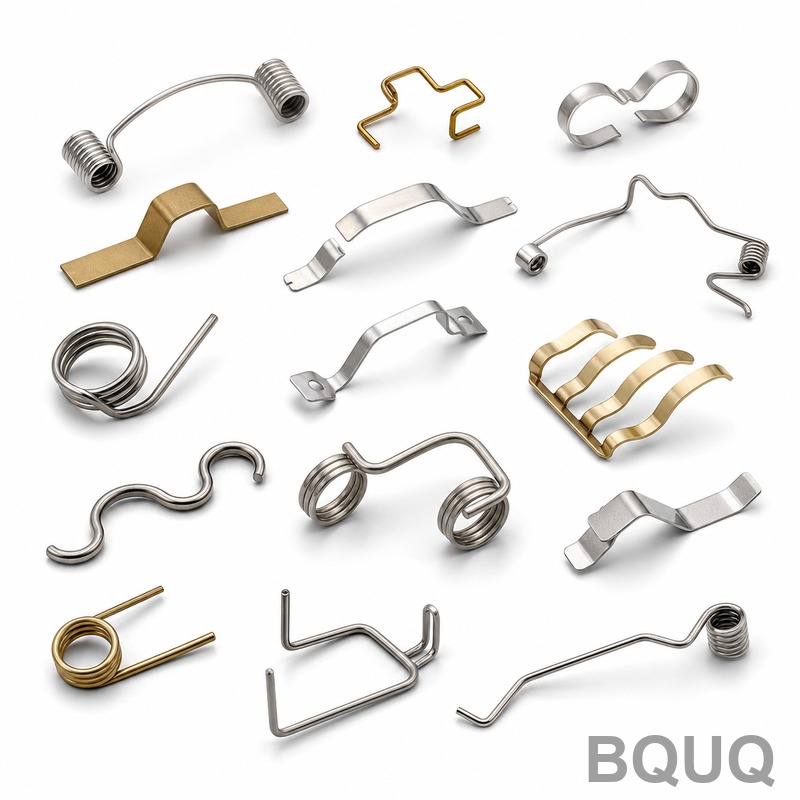
For a compression spring with a free length of 50 mm and 10 active coils, the free length tolerance under ASTM A125 Grade 1 is ±0.50 mm. Under JIS B2706 Class A, the same dimension is ±0.75 mm. Under SMI commercial tolerances, the allowed deviation is ±1.00 mm. This means an ASTM Grade 1 spring is 50% tighter than JIS Class A and twice as tight as SMI commercial. The price impact is linear: a spring made to ASTM Grade 1 costs 15-20% more than an equivalent JIS Class B spring due to 100% inspection and statistical process control requirements.
## Load and Rate Testing Protocols Load testing procedures differ in measurement temperature and deflection method. ASTM A125 mandates load testing at room temperature (23°C ± 5°C) with a calibrated proving ring, and allows a load tolerance of ±5% of specified load for Grade 1. JIS B2706 requires load testing at 20°C ± 3°C, with a tolerance of ±6% for Class A. SMI recommends a load tolerance of ±10% for commercial springs, which is unsuitable for precision valve or safety mechanisms.
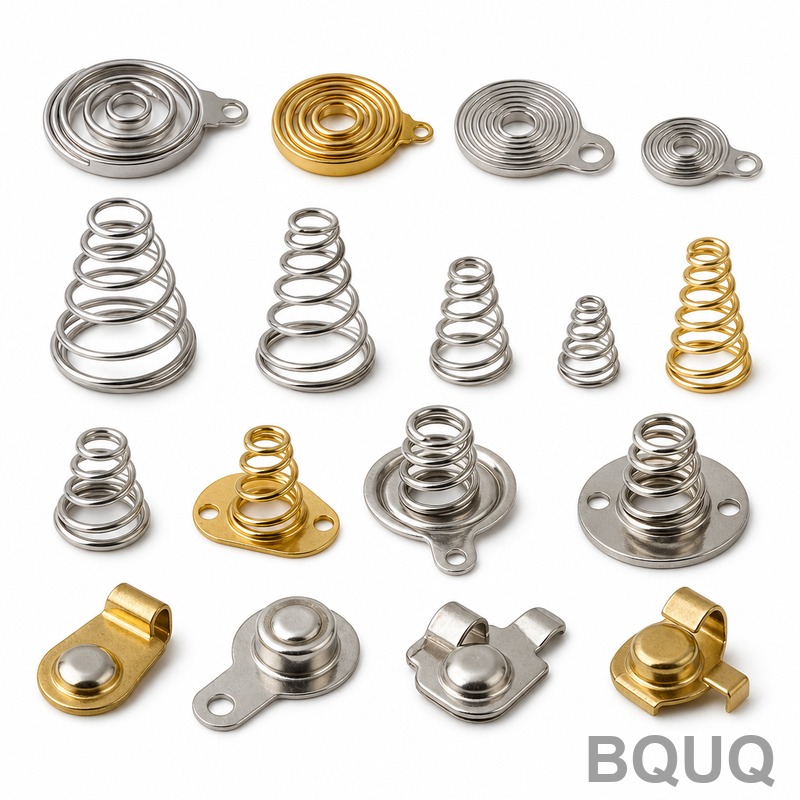
The rate (spring constant) tolerance also varies. ASTM A125 for Grade 1 permits a rate variation of ±3%, while JIS Class A allows ±5%. For a spring with a rate of 10 N/mm, this means ASTM allows 9.7 to 10.3 N/mm, whereas JIS permits 9.5 to 10.5 N/mm. In a precision actuator where the spring balances a 100 N load, the ASTM spring will hold the position within 3 N of setpoint, while the JIS spring could deviate by 5 N. This is a critical distinction for proportional valve control.
## Surface Quality and Defect Acceptance Surface defects are the leading cause of premature spring failure. ASTM A1000 specifies a maximum surface decarburization depth of 1.5% of the wire diameter for critical applications. JIS G3522 allows up to 2.0% decarburization. For a 2.0 mm wire, this means ASTM permits a maximum of 0.03 mm depth, while JIS allows 0.04 mm. Surface roughness (Ra) is not directly specified in ASTM or JIS for raw wire, but SMI recommends a maximum Ra of 1.6 micrometers for shot-peened springs.
Shot peening intensity is specified in ASTM A877 (for chrome silicon) as an Almen intensity of 0.15-0.20 A. JIS B2710 (shot peening) specifies the same Almen scale but uses a different saturation curve verification. In practice, a spring peened to ASTM A877 will have a surface compressive stress of 800-900 MPa, while a JIS B2710 spring achieves 700-800 MPa. This 100 MPa difference significantly improves fatigue life: ASTM-peened springs survive 1,000,000 cycles at 60% of ultimate tensile strength, whereas JIS-peened springs typically fail at 800,000 cycles under identical loading.
## Temperature and Environmental Limits The operational temperature ceiling varies directly with the chosen standard and material. ASTM A313 (302 stainless) is rated for continuous service up to 290°C, with a maximum intermittent use of 350°C. JIS SUS302-WPB per G4314 is rated at 300°C continuous, a 10°C advantage. However, ASTM A228 music wire is limited to 120°C continuous, while JIS SWP-B is rated to 130°C. For high-temperature environments, ASTM A401 (chrome silicon) allows 200°C, and ASTM A877 (chrome vanadium) allows 220°C. The JIS equivalent, SUP10 (chrome vanadium), matches the 220°C rating but requires a different heat treatment schedule (oil quenched at 850°C versus ASTM's 870°C).
Corrosion resistance also differs. ASTM A313 passivation per ASTM A967 requires a minimum of 16% chromium content, while JIS G4314 specifies 18% chromium minimum for SUS302. The higher chromium in JIS material provides better pitting resistance in salt spray testing: JIS material survives 72 hours with less than 5% surface corrosion, whereas ASTM A313 shows 10-15% corrosion under the same ASTM B117 test. For marine or chemical environments, specifying JIS SUS302-WPB is the safer choice.
| ## Data Table: Key Specification Comparison Across Standards | |||
| Parameter | ASTM A125 Grade 1 | SMI Commercial | JIS B2706 Class A |
| Free length tolerance (50 mm) | ±0.50 mm | ±1.00 mm | ±0.75 mm |
| Load tolerance at specified deflection | ±5% | ±10% | ±6% |
| Rate (spring constant) tolerance | ±3% | ±8% | ±5% |
| Surface decarburization max depth | 1.5% of wire dia | Not specified | 2.0% of wire dia |
| Shot peening intensity (Almen A) | 0.15-0.20 | 0.10-0.15 | 0.12-0.18 |
| Fatigue life at 60% UTS | 1,000,000 cycles | 500,000 cycles | 800,000 cycles |
| Material example (music wire) | ASTM A228 | SAE 1080 | JIS SWP-B |
| Tensile strength (0.5 mm wire) | 2,200 MPa min | 2,100 MPa typ | 2,150 MPa min |
| Max continuous temperature (302 SS) | 290°C | 280°C | 300°C |
## Practical Recommendations for Specification Selection For production volumes above 10,000 pieces, the inspection cost difference between ASTM Grade 1 and SMI commercial is approximately $0.02 per spring, while the rejection rate drops from 8% to 1.5%. This makes ASTM Grade 1 the most economical choice for high-volume precision springs, despite the higher unit price. For prototype runs under 500 pieces, JIS Class B is acceptable if the application is non-safety-critical, saving 12% on tooling and setup costs.
For springs operating above 150°C, reject ASTM A228 music wire entirely and specify ASTM A401 or JIS SUP10. For springs requiring corrosion resistance in washdown environments, specify JIS SUS302-WPB with passivation per ASTM A967. For springs in dynamic applications with more than 1,000,000 cycles, always require shot peening to ASTM A877 intensity, regardless of whether the base standard is ASTM or JIS. Always include the material certificate from the mill, not the spring manufacturer, to verify the chemical composition and tensile strength are within the specified standard's limits.
## FAQ-Style Tips for Engineers Q: Can I mix standards, such as using JIS material with ASTM tolerances? A: Yes, but you must specify both on the drawing. For example, "Wire per JIS G3522 SWP-B, dimensions and load per ASTM A125 Grade 1." This is common for Japanese OEMs exporting to US markets. Expect a 5% cost premium for dual-standard documentation.
Q: Which standard does SMI actually govern? A: SMI does not issue material or dimensional standards. It publishes design handbooks and tolerance recommendations that are often used as a baseline by custom spring shops. For a contractual specification, always cite ASTM or JIS, not SMI.
Q: How do I verify a spring meets its standard without a lab? A: Use a calibrated spring tester (load at 20% of free length) and a digital caliper with 0.01 mm resolution. For ASTM Grade 1, measure 10 springs from a batch of 100; if any exceeds tolerance, reject the entire lot. For JIS Class A, measure 5 springs per 100, as the tolerance is wider.
Q: Does the standard affect price and lead time? A: Yes. ASTM Grade 1 springs have a lead time of 3-5 business days for prototypes and 10-15 days for production. JIS Class B is faster: 2-3 days for prototypes, 7-10 days for production. The price difference is 15-20% in favor of JIS Class B, but the fatigue life is 20% shorter.
Q: What is the best standard for a heat sink clip spring in electronics? A: Use ASTM A228 Grade 2 (commercial) for cost, but if the clip is in a vibration environment above 50 Hz, upgrade to ASTM A125 Grade 1. The rate tolerance of ±3% prevents resonant frequency shifts that cause loosening.
## Conclusion Selecting between ASTM, SMI, and JIS is not a trivial paperwork exercise. The differences in tensile strength (50 MPa), load tolerance (1%), and fatigue life (200,000 cycles) are real and measurable in your final product. For precision and safety-critical applications, ASTM A125 Grade 1 is the gold standard. For corrosion resistance in high-temperature environments, JIS SUS302-WPB offers a 10°C advantage. For general commercial use where cost is the primary driver, SMI commercial tolerances are acceptable, but understand that rejection rates and field failures will increase. Always document the chosen standard directly on the part drawing, including material grade and tolerance class, to avoid ambiguity with your supplier.
For a detailed quotation on your specific spring dimensions, load requirements, and target standard, our engineering team provides a 12-hour quoting response. Email your 2D or 3D drawing to sc@bquq.com, or reach us directly via WhatsApp at +86 13713157787. Visit www.bquq.com for manufacturing capabilities and material certificates.