Stamped vs Extruded Heat Sinks for LED Lighting: Which Is Better?
For LED lighting applications requiring production volumes above 5,000 units annually, stamped heat sinks offer a lower cost-per-unit solution (typically $0.80–$2.50 per piece) compared to extruded heat sinks ($1.50–$4.00 per piece), but extruded designs provide superior thermal performance with fin height-to-gap ratios up to 20:1 and lower thermal resistance (0.5–2.0 °C/W vs 1.5–4.0 °C/W). The choice depends on your specific wattage, form factor, and annual volume: stamped sinks excel in low-profile, high-volume consumer LEDs under 15W, while extruded sinks are required for high-lumen fixtures above 30W where surface area and airflow are critical. This article provides a detailed engineering comparison with real cost data, thermal performance metrics, and manufacturing constraints to guide your selection.
What Are the Fundamental Differences Between Stamped and Extruded Heat Sinks?
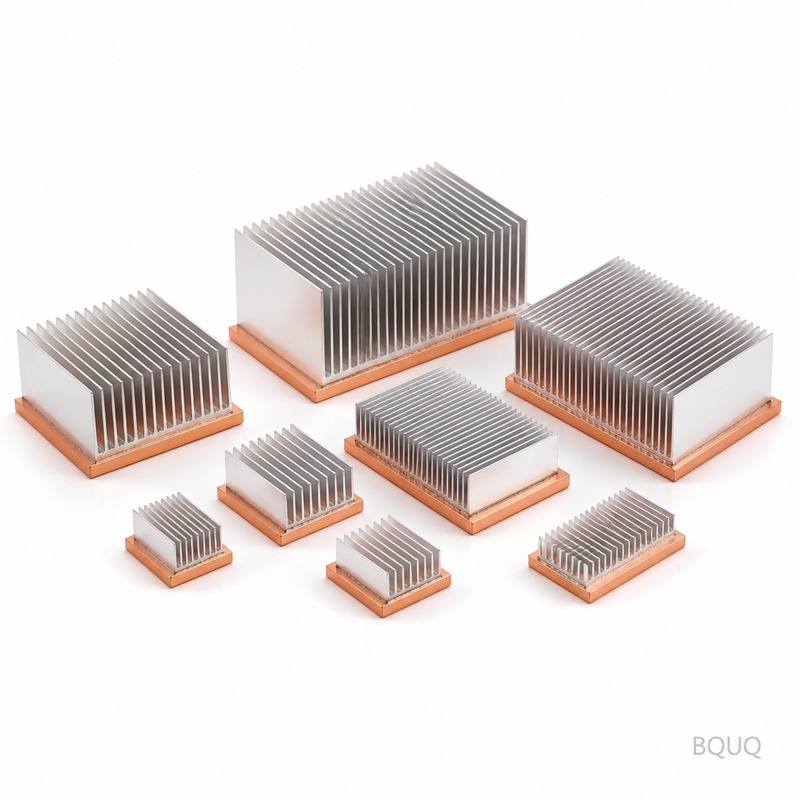
Stamped heat sinks are produced by blanking and forming sheet metal—typically aluminum 1050, 5052, or 6061—using progressive dies in a mechanical press. The process creates fins by bending or lancing the material, achieving fin thicknesses of 0.4–1.5 mm with height-to-thickness ratios limited to about 8:1. Extruded heat sinks, in contrast, force heated aluminum billets (6063-T5 or 6061-T6) through a steel die under 800–1,200 tons of pressure, producing continuous profiles with fin thicknesses of 1.0–3.0 mm and height-to-gap ratios up to 20:1. The key difference is geometry: stamping can only produce fins perpendicular to the base in one direction, while extrusion allows complex multi-directional fin arrays, hollow sections, and mounting channels integrated into the profile. This fundamental geometric limitation drives most downstream cost and performance trade-offs.
How Does Thermal Performance Compare Between Stamped and Extruded Heat Sinks?
Extruded heat sinks typically achieve 30–50% lower thermal resistance than stamped designs of the same footprint because extrusion allows taller, denser fins that increase convective surface area. For a standard 100mm x 100mm LED heat sink, an extruded profile with 20 fins at 2mm thickness and 25mm height provides approximately 0.18 m² of surface area and a thermal resistance of 0.8 °C/W at natural convection. A stamped equivalent with 12 fins at 1.0mm thickness and 10mm height yields only 0.09 m² of surface area and 1.8 °C/W—more than double the resistance. However, stamped heat sinks can be optimized for forced-air applications by forming turbulator features or dimples that enhance local heat transfer coefficients by 20–35%, partially offsetting the surface area deficit. For LED junction temperatures, this means a 10W LED on an extruded sink runs at 75°C junction temperature versus 95°C on a stamped sink in identical 25°C ambient conditions, directly impacting LED lifetime: every 10°C reduction in junction temperature doubles LED lifespan per the Arrhenius equation.
How Do Manufacturing Costs Compare at Different Production Volumes?
Stamped heat sinks require a significant upfront tooling investment but deliver dramatically lower per-piece costs at high volumes. A typical progressive die for a stamped LED heat sink costs $8,000–$25,000 depending on part complexity, number of stations (usually 8–15), and required tolerances. The per-piece cost ranges from $0.80–$2.50 at volumes of 50,000–500,000 units annually, with press speeds of 30–80 strokes per minute enabling cycle times under 2 seconds. Extruded heat sinks require a die costing $1,200–$3,500 (simple solid profile) to $5,000–$8,000 (hollow or complex profile), but per-piece costs remain at $1.50–$4.00 due to slower cycle times (extrusion speed 15–50 m/min), subsequent cutting, and secondary machining operations for mounting holes or surface finishing. The breakeven point is typically 10,000–20,000 units: below this volume, extrusion is more economical; above it, stamping wins on cost. For very high volumes above 200,000 units annually, stamped heat sinks offer 40–60% total cost savings compared to extrusion.
What Are the Real Cost Breakdowns for Each Manufacturing Process?
| Cost Factor | Stamped Heat Sink | Extruded Heat Sink |
| Tooling/die cost | $8,000–$25,000 | $1,200–$8,000 |
| Per-piece material cost | $0.30–$0.90 | $0.60–$1.80 |
| Per-piece processing cost | $0.20–$0.60 | $0.40–$1.20 |
| Secondary operations cost | $0.10–$0.40 (deburring, tapping) | $0.30–$1.00 (cutting, drilling, milling) |
| Minimum economic order quantity | 5,000 pieces | 500 pieces |
| Typical lead time for first articles | 4–6 weeks | 2–3 weeks |
| Production cycle time per piece | 1–2 seconds | 20–60 seconds (including cutting) |
Which Applications Favor Stamped Heat Sinks Over Extruded Ones?
Stamped heat sinks are the preferred choice for low-profile LED lighting products where the total height is constrained to under 15mm, such as LED downlights with a 12mm driver cavity, LED panel lights with edge-lit designs, and thin-profile troffers. In these applications, the stamped process allows integrating the heat sink with the housing—forming mounting bosses, snap-fit features, and LED reflector surfaces in a single stamping operation, eliminating assembly costs. Additionally, stamped heat sinks excel in high-volume consumer products like LED bulbs (A19, PAR30), where annual volumes exceed 500,000 units and the thermal requirement is modest (5–10W). The ability to nest parts efficiently on the sheet metal blank (material utilization 70–85%) and the inherent speed of stamping make this process ideal for cost-sensitive applications where the heat sink must cost under $1.50 per unit. Stamped sinks are also advantageous when the design requires high thermal conductivity through the base thickness (1.0–2.0mm solid material) for efficient heat spreading from multiple LED chips.
Why Do Extruded Heat Sinks Remain the Standard for High-Wattage LED Fixtures?
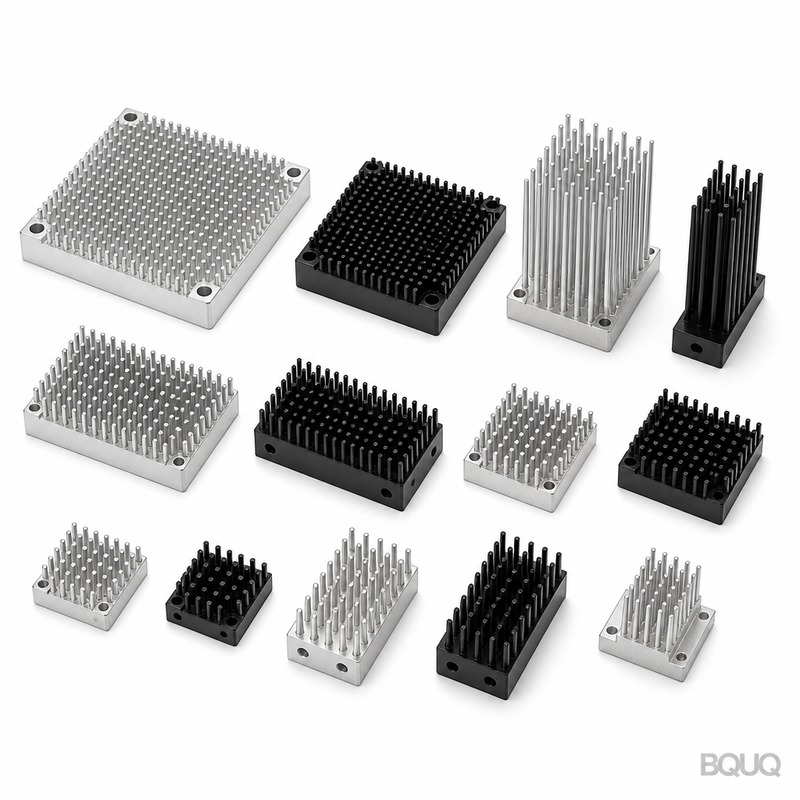
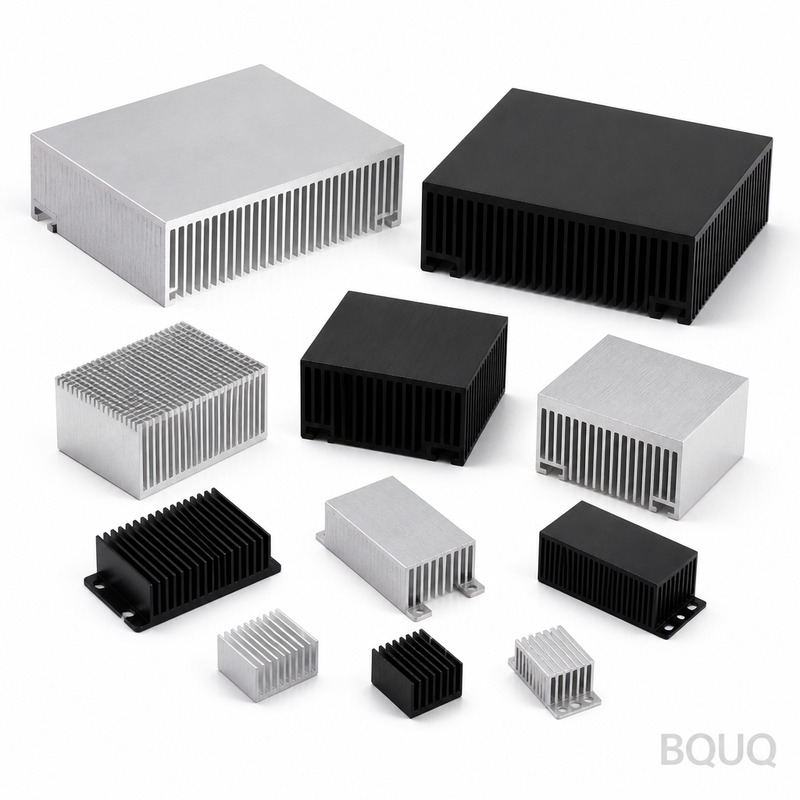
For LED fixtures above 30W—such as high-bay lights (100–200W), street lights (50–150W), and stadium floodlights (500–1,000W)—extruded heat sinks are the industry standard because only extrusion can create the large surface area required for passive cooling. A 100W LED street light needs approximately 0.5–0.8 m² of heat sink surface area to maintain a junction temperature below 85°C; achieving this with stamping would require a footprint of 300mm x 300mm with fins only 10mm tall, which is impractical for pole-mounted fixtures. Extrusion enables fin heights of 40–80mm with optimal spacing of 6–10mm for natural convection, achieving surface area densities of 800–1,200 m²/m³ compared to 300–500 m²/m³ for stamped designs. Furthermore, extruded profiles can incorporate sealed mounting channels for driver enclosures, waterproof gaskets, and multiple fin orientations that are impossible with stamping. The thermal conductivity of extruded 6063-T5 aluminum (209 W/m·K) is also higher than stamped 5052 (138 W/m·K), providing better heat spreading from the LED module across the entire heat sink base.
Which Finishing and Assembly Options Are Available for Each Process?
Stamped heat sinks typically receive a black anodized finish (cost $0.15–$0.35 per piece) to improve emissivity from 0.05 to 0.85, which enhances radiative heat transfer by 30–40%—critical for low-profile designs where convection is limited. The stamping process naturally produces a clean, burr-free edge on one side, but secondary deburring (cost $0.05–$0.15 per piece) may be required on the lanced fin edges. Assembly options for stamped sinks include self-clinching nuts, PEM fasteners, or riveted mounting brackets, all of which can be integrated into the progressive die sequence. Extruded heat sinks offer more robust assembly options: T-slots for slide-in LED modules, dovetail grooves for clip-on lenses, and tapped holes for screw mounting. Finishing options for extrusion include clear or black anodize ($0.30–$0.80 per piece), powder coating ($0.50–$1.00 per piece), or chromate conversion for corrosion protection. The extrusion process also allows for heat-sink and housing integration—for example, a one-piece profile with an LED driver cavity, cable gland ports, and mounting flanges, reducing total system assembly time by 15–25%.
What Are the Key Quality and Tolerance Considerations?
Stamped heat sinks can achieve flatness tolerances of ±0.1mm across a 100mm base, hole positions of ±0.05mm, and fin perpendicularity of ±0.5 degrees—sufficient for most LED mounting applications. However, springback in the sheet metal (1–3 degrees for aluminum) must be compensated in the die design, and dimensional drift over a production run of 100,000 pieces may reach ±0.2mm due to tool wear. Extruded heat sinks offer tighter dimensional control on profile cross-sections: ±0.15mm on fin thickness, ±0.3mm on overall width, and ±0.5mm on fin height. The critical quality parameter for extrusion is the straightness of the profile, which can be held to 0.5mm per meter after stretching and straightening operations. For both processes, the flatness of the LED mounting surface is critical: stamped sinks achieve 0.1mm per 50mm, while extruded sinks achieve 0.05mm per 50mm after machining, which is important for thermal interface material (TIM) performance—a 0.1mm gap can increase thermal resistance by 40%.
What Is the Best Process for Prototyping and Low-Volume Production?
For prototyping and low-volume production (under 1,000 units), extrusion is the clear winner due to lower upfront cost and faster lead times. An extrusion die can be manufactured in 5–10 days at a cost of $1,200–$3,500, and first articles are available within 2–3 weeks. In contrast, a stamped heat sink requires a progressive die with 4–6 weeks lead time and $8,000–$25,000 investment, making it impractical for initial design validation. For prototyping specifically, consider using CNC machining from aluminum bar stock to approximate the stamped or extruded geometry—this costs $5–$15 per piece with 3–5 day lead times but allows rapid design iteration. Once the design is validated, you can transition to extrusion for initial production (500–5,000 units) and only invest in stamping tooling when annual volumes exceed 20,000 units. This staged approach minimizes risk and capital expenditure while ensuring you achieve the lowest cost per unit at scale.
What Is the 12-Hour Quoting Process for Your Heat Sink Project?
At BQUQ, we provide a 12-hour quotation service for both stamped and extruded heat sinks, including DFM (Design for Manufacturing) feedback and cost breakdowns. Our engineering team reviews your 2D drawings or 3D models (STEP or IGES files) and provides: per-piece pricing at your target annual volume, tooling costs with amortization options, thermal simulation results (using Flotherm or Icepak), and lead time commitments. For stamped heat sinks, we offer progressive die design and in-house tooling (20+ toolmakers), while our extrusion partners provide 6063-T5 profiles with in-house anodizing lines. We have manufactured heat sinks for LED lighting since 2004, with current production capacity of 2 million stamped parts and 500 tons of extruded profiles per month. Contact our engineering team for a no-obligation quotation: email sc@bquq.com or WhatsApp +86 13713157787, or visit www.bquq.com to submit your files directly.
FAQ
What is the maximum fin height for a stamped heat sink?
The maximum fin height for a stamped heat sink is typically 15–25mm, limited by the formability of aluminum sheet (elongation limits of 10–15%) and the height-to-thickness ratio of 8:1. Beyond this height, the bending forces required cause cracking at the fin base or excessive springback that cannot be compensated in the die.
Can stamped heat sinks handle 50W LED loads?
Stamped heat sinks can handle 50W LED loads only with forced airflow (e.g., a 40mm fan providing 10 CFM), achieving thermal resistance of 1.0–1.5 °C/W. For passive cooling at 50W, an extruded heat sink is required—typically with 30–40mm fin height and a surface area of 0.2–0.3 m² to maintain a junction temperature below 90°C.
Which aluminum alloy is best for stamped heat sinks?
Aluminum 1050 (99.5% pure) offers the highest thermal conductivity (229 W/m·K) but is soft and prone to galling during stamping; 5052-H32 is the best balance of formability (tensile strength 210 MPa) and thermal conductivity (138 W/m·K). For applications requiring higher strength, 6061-T6 provides 310 MPa tensile strength but at a reduced thermal conductivity of 167 W/m·K.
How long does an extrusion die last for heat sink production?
A typical aluminum extrusion die lasts 50,000–100,000 kg of extrusion output, which translates to 500,000–1,000,000 linear meters of profile. For heat sink profiles, die life is often limited by wear on the fin openings, requiring re-cutting or nitriding after 30,000–50,000 kg to maintain tolerances.
What is the minimum fin gap for an extruded heat sink?
The minimum fin gap for an extruded heat sink is 2.5–3.0mm, limited by the strength of the die fingers that form the gaps. Fin gaps below 3mm require specialized tooling and increase die costs by 30–50%, while also risking die deflection during extrusion that causes non-uniform fin thickness.
Are stamped heat sinks suitable for outdoor LED lighting?
Stamped heat sinks are suitable for outdoor LED lighting if the design uses aluminum 5052 or 6061 with a protective finish (anodize or powder coat) to prevent corrosion. The stamped fins are more susceptible to mechanical damage from wind-borne debris or ice, so a minimum fin thickness of 1.0mm is recommended for outdoor applications.
How much does thermal simulation cost for heat sink design?
Thermal simulation using CFD software (Fluent, Icepak, or Flotherm) typically costs $500–$2,000 per design iteration, depending on model complexity and the number of LED heat sources. At BQUQ, we include one thermal simulation with every quotation for free, which helps optimize fin geometry before tooling investment.