Stamping Die Cost in 2026: Full Tooling Price Breakdown for Engineers
Stamping Die Cost in 2026: Full Tooling Price Breakdown for Engineers
**Direct Answer:** A progressive stamping die for a typical automotive or electronics part (50mm x 50mm footprint) costs between $8,000 and $40,000. For high-volume, complex parts requiring 15+ stations, prices range from $60,000 to $150,000, while simple single-station blanking dies start at $2,500. Your final tooling quote depends on part size, material thickness, tolerance requirements (down to ±0.01mm), and the die material selected (D2, M2, or Carbide).
---
1. The Base Price Framework: What Drives the Die Cost?
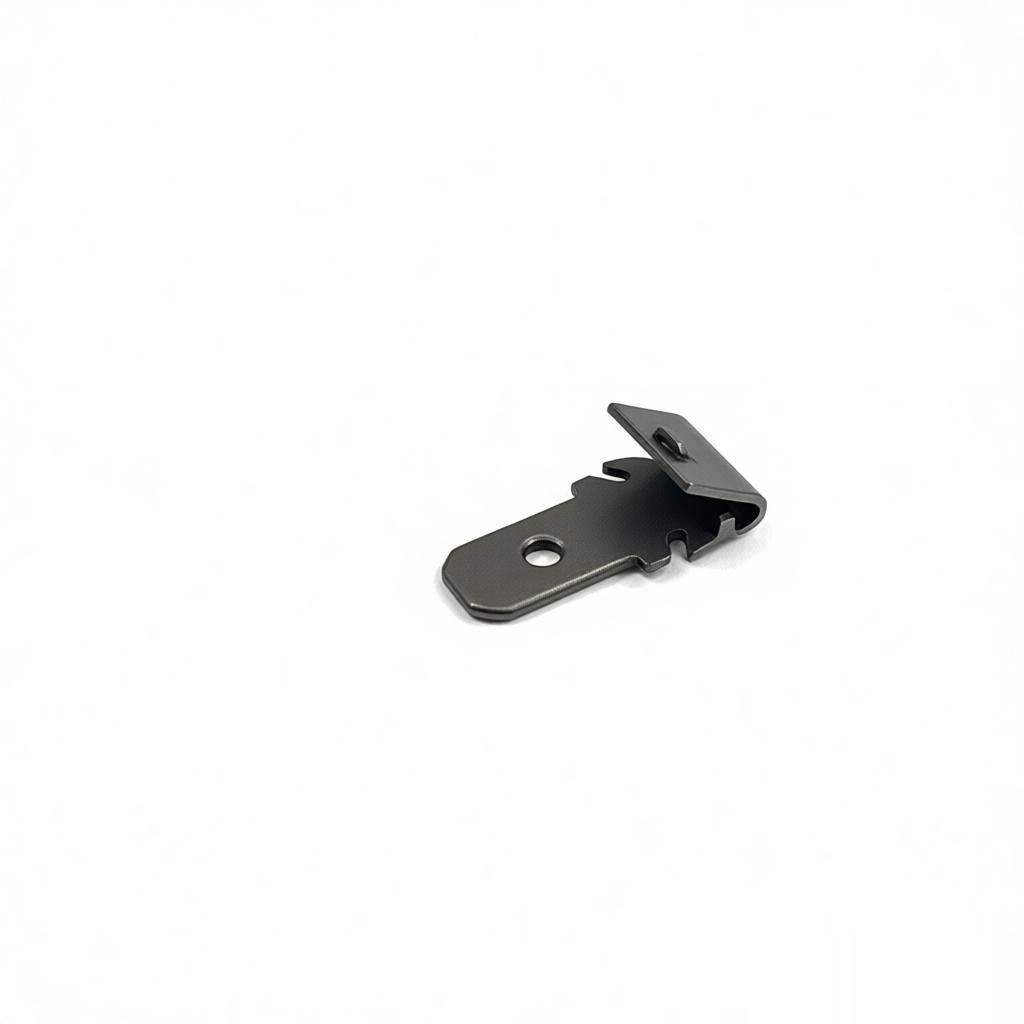
At BQUQ (Dongguan, China), we price stamping dies using a weighted matrix of four primary variables. Understanding these factors prevents sticker shock and helps you negotiate effectively.
- **Part Geometry Complexity:** Every bend, hole, or form adds a station. A simple flat washer (no bends) uses a 2-station die. A bracket with four bends, two tapped holes, and a louver requires 8-12 stations. Each station adds $1,200-$3,500 to the die cost depending on the operation (blank, pierce, form, draw, tap). - **Material Thickness and Type:** Dies for 0.5mm copper sheet are cheaper than dies for 3.0mm stainless steel (SUS304). Thicker materials require heavier die plates (50mm vs. 25mm), stronger guide pins, and more tonnage. Heat-treated D2 tool steel (58-60 HRC) handles up to 2.0mm steel. For thicker, abrasive materials, we switch to M2 HSS or Tungsten Carbide inserts—this increases die cost by 30-50%. - **Tolerance Requirements:** Standard stamping tolerances are ±0.1mm. Precision dies for connectors or lead frames hold ±0.01mm. Achieving this requires wire-cut EDM (Electro-Discharge Machining) with tolerances of ±0.002mm and precision ground die buttons. This precision work adds $4,000-$8,000 to the base die price. - **Expected Production Volume:** A die for 100,000 parts can use standard AISI D2 steel. A die for 5,000,000 parts must use carbide inserts to resist abrasive wear. Carbide dies cost 2-3x more upfront but reduce cost-per-part by 40% in high-volume runs.
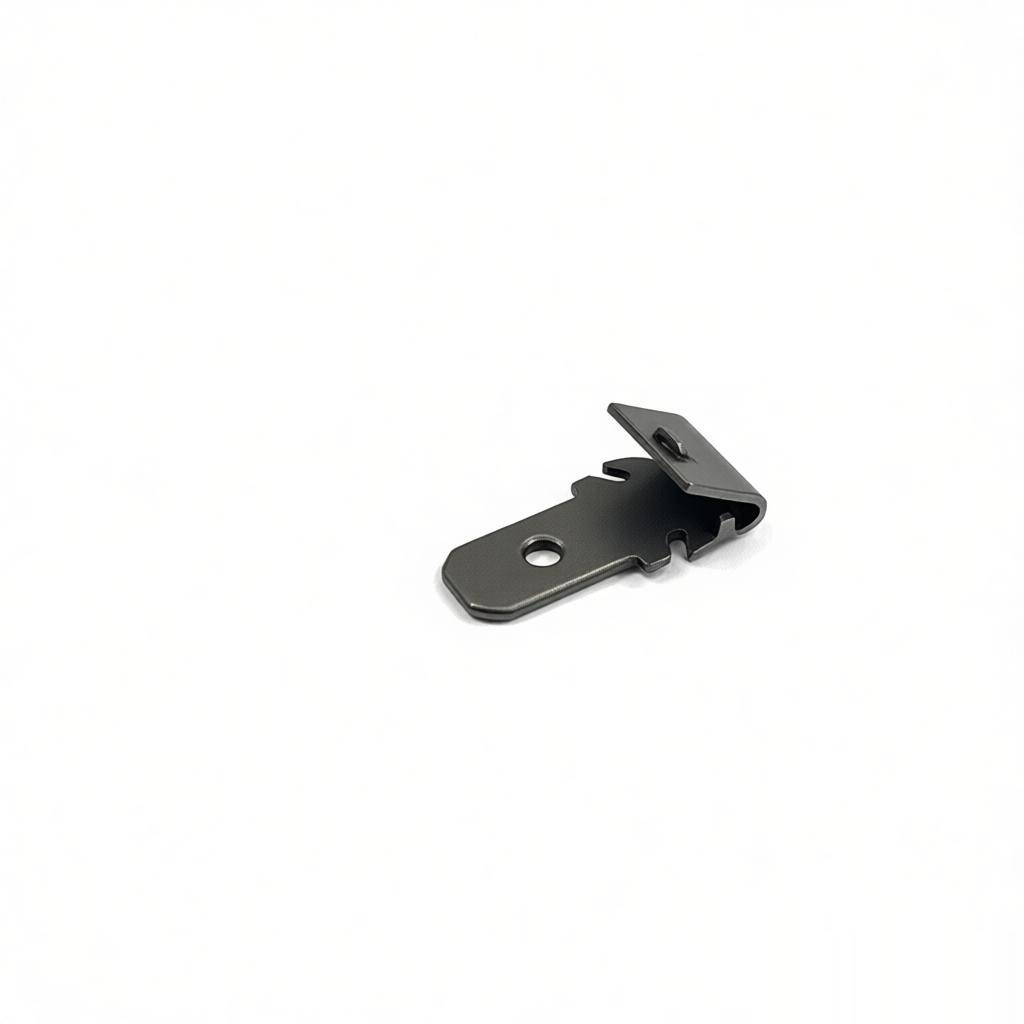
**Typical Starting Prices from BQUQ (2026 rates):** - Simple blanking die (single station): $2,500 - $5,000 - Compound die (blank + pierce in one stroke): $5,000 - $12,000 - Progressive die (5-10 stations): $12,000 - $35,000 - Progressive die (10-20 stations, high precision): $35,000 - $90,000 - Transfer die (for deep draws): $45,000 - $120,000
---
2. Progressive Die vs. Stage Tooling: Cost and Lead Time Comparison
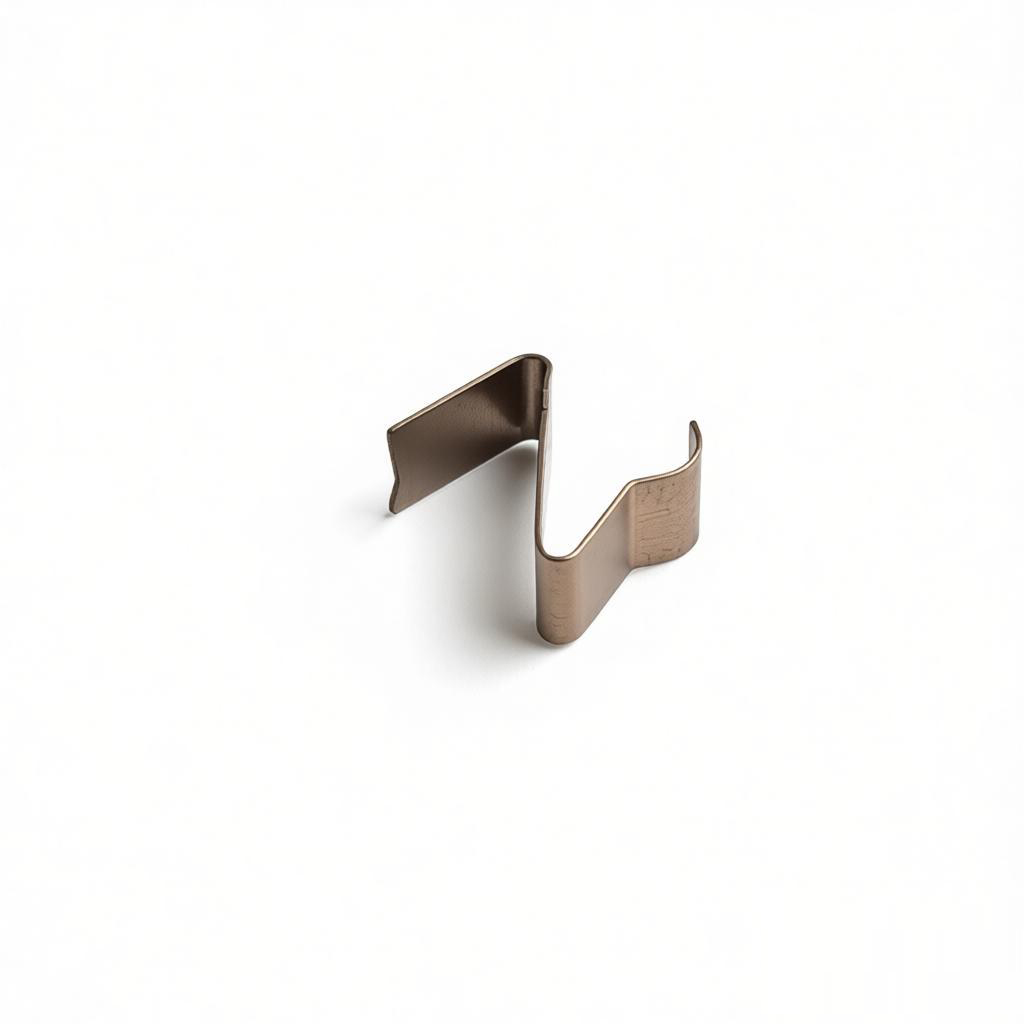
You have two main architectural choices for stamping tooling. The decision affects both the die cost and the per-part price.
| Tooling Type | Die Cost (USD) | Lead Time (Weeks) | Part Tolerance | Max Speed (SPM) | Best For | :--- | :--- | :--- | :--- | :--- | :--- | **Single-Station Die** | $2,500 - $8,000 | 2-4 | ±0.15mm | 60 | Low volume, simple flat parts | **Compound Die** | $5,000 - $12,000 | 4-6 | ±0.10mm | 80 | Medium volume, flat parts with holes | **Progressive Die (Standard)** | $12,000 - $40,000 | 6-10 | ±0.05mm | 200 | Medium-high volume, complex shapes | **Progressive Die (Precision)** | $40,000 - $100,000 | 8-12 | ±0.01mm | 400 | High volume, electronics, lead frames | **Carbide Progressive Die** | $80,000 - $150,000+ | 10-14 | ±0.005mm | 600 | Extreme volume (>5M parts), motor laminations |
|---|
**Engineering Reasoning:** For a part requiring 100,000 units annually, a standard progressive die at $25,000 is optimal. Amortized over the run, that is $0.25 per part for tooling. A cheaper single-station die at $8,000 would require four operators and four presses, increasing labor costs and inconsistency. Conversely, for a 5,000-part prototype run, spending $25,000 on a progressive die is wasteful; a $5,000 compound die is sufficient.
---
3. Hidden Costs in the Tooling Quote: What is Not Included
Many suppliers quote a "bare die" price. At BQUQ, we break down the quote into transparent line items. Be wary of quotes that exclude these critical elements:
- **Die Set (Mold Base):** The standard die set (upper and lower shoes, guide posts, bushings) costs $800-$2,500. For large dies (800mm x 600mm), this can reach $5,000. - **Tryout and Sampling:** First article inspection and 500-piece trial run costs $500-$1,500. This includes setup time on a press (typically 110-250 tons) and material scrap. - **Surface Treatment:** TiN (Titanium Nitride) coating on punches increases die life by 300% but adds $300-$800 per die. For stainless steel stamping, this is mandatory to prevent galling. - **Design and Engineering:** CAD/CAM design, including 3D spring-back compensation analysis (using AutoForm or Dynaform), costs $1,000-$3,000. We do not outsource this; it is included in our base price, but many low-cost suppliers charge extra. - **Shipping and Export Documentation:** A 500kg die crate costs $600-$1,200 to ship via sea freight from Shenzhen to Long Beach. Air freight is 4-5x higher.
**Hidden Tolerance Cost Example:** If your drawing specifies a bend-to-hole distance of 20.00mm ±0.05mm, the die is standard. If you change that to ±0.02mm, we must add a cam piercing unit instead of a standard vertical punch. This addition costs $2,800 and increases the die price by approximately 18%.
---
4. Die Material Selection: Price vs. Lifespan
The die steel is the largest single cost component. Here is the BQUQ standard material guide for 2026:
| Die Component | Standard Material | Hardness (HRC) | Die Life (Strokes) | Relative Cost Factor | :--- | :--- | :--- | :--- | :--- | **Punches & Buttons** | D2 (Tool Steel) | 58-60 | 500,000 | 1.0x (Baseline) | **Punches & Buttons** | M2 (High Speed Steel) | 62-64 | 1,500,000 | 1.4x | **Punches & Buttons** | Carbide (WC-Co) | 88-92 HRA | 5,000,000+ | 2.8x | **Die Plates** | P20 Steel | 28-32 | N/A (Structural) | 0.6x | **Stripper Plate** | A2 Steel | 56-58 | 1,000,000 | 1.1x |
|---|
**Real Data Point:** We recently built a motor lamination die for a customer in Shenzhen. The part was a 0.35mm thick silicon steel stator. The initial D2 die cost $28,000 and lasted 400,000 strokes before requiring sharpening. We rebuilt it with carbide inserts at a cost of $12,000 additional. The carbide die has now exceeded 4,000,000 strokes without failure. The customer's cost-per-part dropped from $0.011 to $0.007.
**Operating Temperature Note:** During high-speed stamping (400 SPM), friction at the punch and die interface generates local temperatures of 150-200°C. Without proper lubrication (we recommend mineral oil with 5% chlorine content for stainless steel), D2 steel will soften and lose its edge. For high-speed runs, carbide is mandatory because it retains hardness at these temperatures.
---
5. Lead Time and Budget Optimization: How to Save 20-30%
Based on 20 years of production data, we recommend these actionable strategies:
1. **Reduce Tight Tolerances to Critical Areas Only.** Instead of specifying ±0.02mm on all holes, mark only the two alignment holes as critical. This allows us to use standard piercing punches instead of precision-ground, guided ejectors. This simple change reduces die cost by 10-15%. 2. **Combine Operations Avoid Secondary Processing.** If you currently stamp a part and then tap a hole in a separate CNC operation, ask us to build a die with a form tapped hole. The die costs 8% more, but eliminates a $0.15 per-part secondary cost. 3. **Order Spare Punches with the Die.** Roughly 20% of our customers reorder punches later. The setup cost for a single reorder is $150. Ordering 3-5 spare punches and buttons with the initial die costs only $200-$400 total, saving you time and money later. 4. **Use a Modular Die Base.** For families of parts with similar dimensions, we can design a master die base with interchangeable inserts. The first die costs 20% more, but each subsequent insert set costs 40-50% less than a full die. 5. **Provide the Coil Width and Feed Material.** If you provide the raw material (or specify the exact coil width), we can optimize the strip layout. A tighter layout can reduce material scrap from 40% to 25%, which over a 1,000,000-part run saves more than the die cost itself.
---
6. Frequently Asked Questions (FAQ) on Stamping Die Pricing
**Q: Why did my quote for a similar part come in 40% cheaper from another factory?** **A:** They are likely quoting a D2 steel die with a 300,000-stroke life and ±0.1mm tolerance. Our quote may be for M2 steel with a 1,500,000-stroke life and ±0.02mm tolerance. Always compare the die material and the guaranteed die life, not just the price. Ask for the HRC rating of the punches.
**Q: Can I get a stamping die for under $1,000?** **A:** Only for a very simple flat washer or a simple bracket less than 20mm in diameter, with no tight tolerances and using a standard die set. For a functional part, budget $3,000 minimum for a basic compound die. Anything cheaper usually indicates a toolroom prototype die that will fail within 10,000 strokes.
**Q: How long does a die last before rebuilding?** **A:** With regular maintenance (cleaning and sharpening every 50,000 strokes), a D2 die lasts 500,000 cycles. A carbide die lasts 5,000,000+ cycles. Sharpening costs $200-$500 per session.
**Q: What is the typical lead time for a die from BQUQ?** **A:** For a standard progressive die under 10 stations, our lead time is 6-8 weeks from approved design. For a complex 20-station carbide die, expect 10-12 weeks. We provide a full 3D design review within 5 business days of receiving your part file.
---
Conclusion: Engineering the Right Investment
The cost of a stamping die is a direct function of the precision and volume you demand. A $10,000 die is not cheap; a $100,000 die is not expensive if it produces 10 million parts at a tolerance of ±0.01mm. The key is matching the tooling investment to your product lifecycle.
At BQUQ, we have manufactured over 15,000 dies since 2005. We do not upsell you to carbide if you only need 50,000 parts. We optimize the design for your specific tonnage press and your required output speed. We provide the die, the tryout samples, and the dimensional report (CMM) so you know exactly what you are paying for.
**Get an Exact Price for Your Part Today.** Send us your 2D drawing or 3D model (STEP or IGES). We will provide a detailed tooling breakdown and stamped part cost within 12 hours.
**Contact BQUQ:** - **Email:** sc@bquq.com - **WhatsApp:** +86 13713157787 - **Web:** www.bquq.com
Our engineering team is available now to review your project and provide a fixed, transparent quote.
Related Articles
- Why Low Volume Metal Stamping is Ideal for Prototyping
- 5 Effective Burr Removal Techniques for Stamped Parts
- 5 Proven Ways to Reduce Cost in Metal Stamping Parts
Frequently Asked Questions
How much does a stamping die cost for a typical automotive or electronics part?
A progressive stamping die for a typical 50mm x 50mm part costs between $8,000 and $40,000. Simple single-station blanking dies start at $2,500, while high-volume complex parts with 15+ stations range from $60,000 to $150,000. Final pricing depends on part size, material thickness, tolerances, and die material.
What factors most significantly affect the final stamping die price?
Four primary variables drive die cost: part geometry complexity (each station adds $1,200-$3,500), material thickness and type (thicker SUS304 requires heavier plates), tolerance requirements (precision ±0.01mm adds $4,000-$8,000), and expected production volume (carbide dies cost 2-3x more but reduce cost-per-part by 40% for high-volume runs).
What is the cost difference between standard and precision stamping dies?
Standard stamping dies hold ±0.1mm tolerances and cost $2,500-$40,000 depending on station count. Precision dies for connectors or lead frames hold ±0.01mm, requiring wire-cut EDM with ±0.002mm accuracy and precision ground die buttons, adding $4,000-$8,000 to the base price. High-precision progressive dies with 10-20 stations range from $35,000 to $90,000.
How does production volume affect stamping die material and cost?
For 100,000 parts, standard AISI D2 tool steel is sufficient. For 5,000,000 parts, carbide inserts are necessary to resist abrasive wear. Carbide dies cost 2-3x more upfront but reduce cost-per-part by 40% in high-volume production. D2 steel (58-60 HRC) handles materials up to 2.0mm thick, while thicker or abrasive materials require M2 HSS or carbide, increasing die cost by 30-50%.