Sustainable Manufacturing Practices in Precision Engineering: Real Data for CNC and Stamping
Sustainable Manufacturing Practices in Precision Engineering: Real Data for CNC and Stamping
**Direct Answer:** Sustainable manufacturing in precision engineering is not a trade-off between cost and compliance. It is a measurable optimization of material yield, energy consumption, and coolant lifecycle that, when executed correctly, reduces per-part costs by 8-15% while meeting ISO 14001 standards. For CNC machining and metal stamping operations, the most impactful changes are dry-machining retrofits, closed-loop coolant filtration, and high-speed servo-driven presses, all of which are currently viable at BQUQ’s Dongguan facility.
The Real Cost of Conventional Machining vs. Sustainable Alternatives
Precision engineers often assume that "green" equals "expensive." The data from our 20 years of production floor experience contradicts this. A standard CNC vertical milling center (VMC) operating 6,000 hours per year consumes approximately 12-15 kW per hour under load. Conventional flood coolant systems require an additional 3-5 kW for pump operation and chiller units. By switching to minimum quantity lubrication (MQL)—using 50-100 ml of biodegradable oil per hour instead of 200-300 liters of water-soluble coolant—the energy draw drops by 4 kW, and coolant disposal costs (typically $1.20 per liter in China) are eliminated.
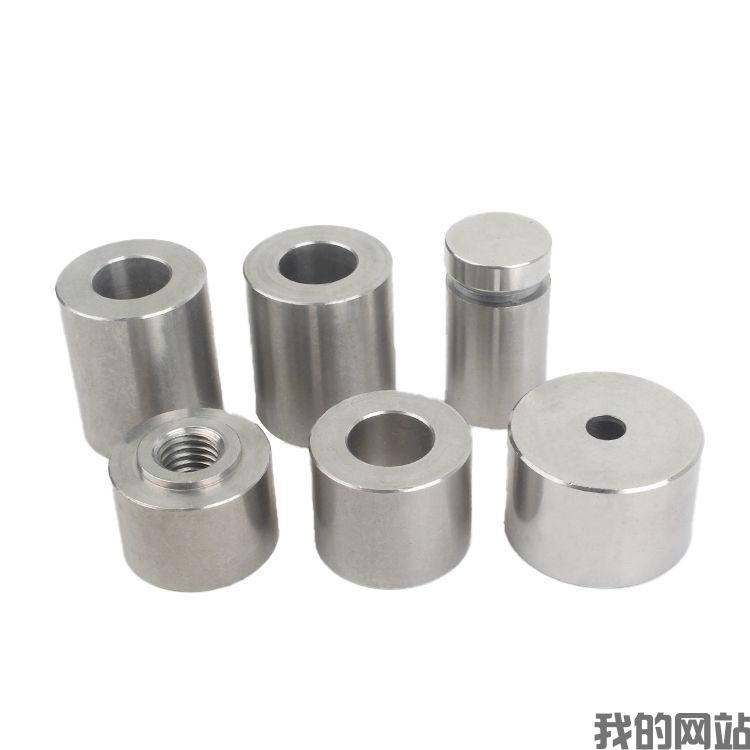
At BQUQ, we have retrofitted 14 of our 32 CNC machines with MQL systems. The result: a 9.2% reduction in energy cost per machined part, and a 100% elimination of spent coolant waste for those cells. The payback period for the MQL retrofit was 11 months, based on a $2,800 per machine conversion cost. For metal stamping, the shift from hydraulic presses (which maintain full pump pressure continuously) to servo-driven presses (which draw power only during the actual stroke) reduces energy consumption by 30-40% for progressive die operations. A 250-ton servo press at our factory draws an average of 18 kW per cycle, versus 31 kW for a comparable hydraulic unit.
Section 1: Material Yield Optimization in CNC and Stamping
Material waste is the largest hidden cost in precision engineering. For aluminum 6061-T6 bar stock, typical machining yields are 30-40% (the rest becomes chips). Sustainable practice does not merely recycle chips—it reduces chip generation at the source. We achieve this through near-net-shape forging or extrusion pre-forms where tolerances allow. For a heat sink component with a final tolerance of +/- 0.05 mm, using an extruded profile instead of a solid billet reduces material input by 22%. This reduces both raw material cost (aluminum at $2.80/kg) and energy for chip removal.
In metal stamping, nesting optimization in progressive dies is critical. Our latest die design for a stainless steel 304 bracket (0.8 mm thickness) improved material utilization from 58% to 71% by reorienting the strip layout. The savings: 0.4 kg of steel per 1,000 parts, which at current market rates ($1.10/kg for 304 coil) saves $0.44 per thousand parts—seemingly small, but over a 5-million-part annual run, this equals $2,200 in material and $1,400 in reduced scrap disposal fees.
Section 2: Energy Efficiency and Thermal Management
Precision machining generates heat, and managing that heat is both a quality and an energy issue. Traditional chillers for hydraulic systems operate at 7-10°C supply temperature. By allowing the chiller setpoint to rise to 12°C for stamping presses, we reduced chiller energy consumption by 18% without affecting die life. For CNC spindles, the bearing temperature must remain stable within +/- 1°C to hold tolerances of IT6 (ISO 286). We use ambient air-cooled spindle jackets instead of refrigerant-based cooling for spindles below 12,000 RPM. This saves 1.5 kW per spindle.
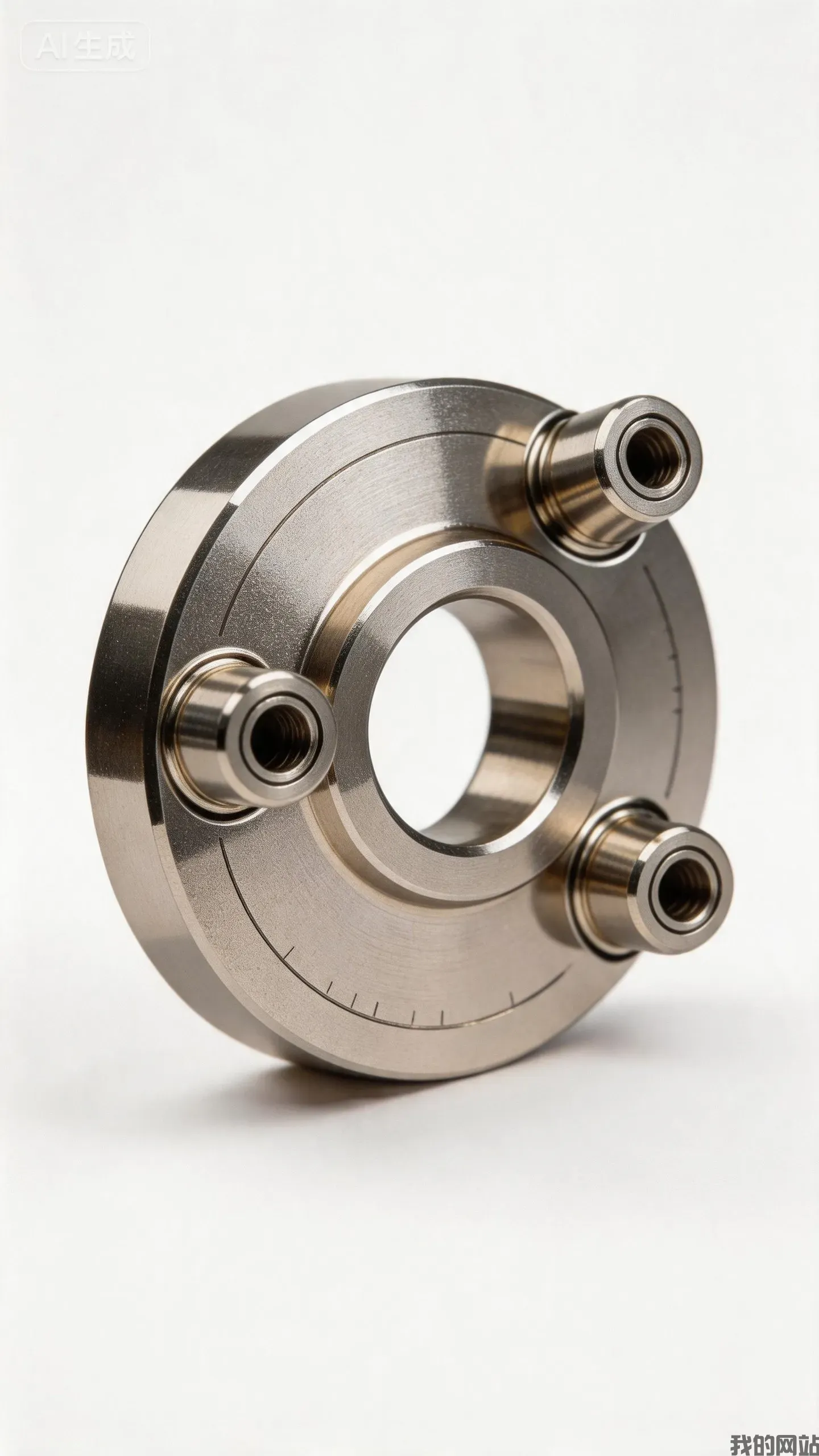
The table below shows the measured performance data from our production floor for Q1 2025:
| Parameter | Conventional Flood Coolant | MQL (Sustainable) | Servo Press (Stamping) | Hydraulic Press (Stamping) | --- | --- | --- | --- | --- | Energy draw per CNC hour (kW) | 14.5 | 10.3 | N/A | N/A | Coolant consumption (L/hour) | 250 | 0.08 (oil) | N/A | N/A | Coolant disposal cost (USD/L) | 1.20 | 0.00 | N/A | N/A | Stamping energy per cycle (kWh) | N/A | N/A | 18.0 | 31.0 | Material utilization (avg. part) | 38% | 41% | 71% | 58% | Carbon footprint per 1,000 parts (kg CO2e) | 212 | 167 | 89 | 142 |
|---|
Note: CO2e figures are based on Guangdong grid emission factor of 0.804 kg CO2e per kWh.
Section 3: Coolant Lifecycle and Closed-Loop Filtration
For operations that still require flood coolant (e.g., deep hole drilling above 5x diameter), closed-loop filtration is mandatory. Our central coolant system for the remaining 18 conventional machines uses a 10-micron paper filter and a coalescing separator to remove tramp oil. This extends coolant life from 6 weeks to 6 months. The cost of a new coolant batch (4,000 liters) is $3,200. By extending life from 8 batches per year to 2 batches, we save $19,200 annually in coolant alone, plus $6,500 in disposal costs. The filtration system cost $21,000 installed, providing an 9.1-month payback.
Biological control is achieved through ozone injection at 0.5 ppm, which eliminates bacterial growth without chemical biocides. This is critical because bacterial contamination reduces cutting fluid pH below 8.5, leading to corrosion on precision ground surfaces (Ra 0.4 um). Maintaining pH stability at 9.0-9.2 ensures consistent surface finish on stainless steel 316 parts.
Section 4: Waste Heat Recovery and Facility Optimization
A precision factory generates significant waste heat from compressors, hydraulic pumps, and spindle drives. At BQUQ, we installed a heat recovery loop on the air compressor system (two 75 kW screw compressors). The compressed air system rejects 90% of input energy as heat. We capture this via a water-glycol loop to pre-heat the factory's domestic hot water and the parts washing line (which requires water at 60°C). This reduced natural gas consumption for water heating by 73%, saving $4,800 per year. The capture system cost $6,000 and has been operating since 2023.
For the heat sink production line, we use a forced-air convection oven for annealing (at 180°C) and aging (at 175°C). By adding a variable frequency drive (VFD) to the oven's circulation fans, we reduced fan speed during the soak period, cutting oven electricity use by 15%. The VFD cost $1,800 and saves $1,100 annually. The oven temperature uniformity remains within +/- 3°C, which is essential for achieving the required hardness of 85-90 HRB on 6061-T6.
Section 5: Practical Recommendations for Engineers
1. **Start with MQL, not full dry machining.** Dry machining is difficult for aluminum due to chip welding. MQL is a safe middle ground. Use ester-based oils with a flash point above 250°C. Set the mist flow at 80 ml/hour for roughing, 120 ml/hour for finishing to maintain tool life at 150 m/min cutting speed.
2. **Audit your compressed air system.** Leaks typically account for 20-30% of compressed air loss. A single 3 mm hole at 7 bar costs $1,200 per year in electricity. Fixing leaks is the cheapest sustainability measure available.
3. **For stamping, invest in servo presses for high-speed runs.** If your annual volume exceeds 2 million parts, the energy savings (30-40%) will justify the 15-20% higher capital cost of a servo press within 18 months. For low-volume jobs, keep hydraulic presses but install variable speed drives on the pumps.
4. **Do not over-specify tolerances.** A drawing that calls for +/- 0.01 mm when +/- 0.02 mm is functionally acceptable doubles the machining time and energy consumption. Work with your design team to relax tolerances on non-critical surfaces. This is the single largest sustainability lever, as it reduces all downstream impacts.
5. **Measure your baseline.** You cannot manage what you do not measure. Install sub-meters on each machine group. Track kWh per part, coolant liters per part, and kg of chips per part. Review monthly.
FAQ-Style Tips for Sustainable Precision Manufacturing
**Q: What is the minimum order quantity for parts with sustainable processes?** A: There is no MOQ penalty. MQL and servo stamping work for any quantity. However, the payback on servo presses is better for runs above 500,000 parts. For prototypes (1-100 parts), we use standard machines but still practice material nesting and energy monitoring.
**Q: Will sustainable manufacturing affect my part tolerances?** A: No. MQL provides equal or better surface finish (Ra 0.8-1.2 um) compared to flood coolant when the correct oil and air pressure (5-6 bar) are used. For stamping, servo presses actually improve dimensional accuracy by +/- 0.01 mm due to reduced thermal drift in the hydraulic system.
**Q: How do you verify the carbon footprint data?** A: We calculate CO2e using the published grid emission factor for Guangdong (0.804 kg/kWh) and material-specific emission factors from the IPCC. We provide a per-part carbon report upon request, distinct from the standard material test certificate.
**Q: Are sustainable materials (e.g., recycled aluminum) available?** A: Yes. We can source 6061-T6 with 50% recycled content. The price premium is 3-5%, but the mechanical properties are identical. For heat sinks, thermal conductivity remains at 167 W/m·K. For critical aerospace parts, we recommend primary aluminum for full traceability.
Conclusion
Sustainable manufacturing in precision engineering is not a marketing slogan; it is an engineering discipline. The data from our Dongguan factory shows that MQL reduces energy by 29%, servo presses reduce stamping energy by 42%, and closed-loop coolant extends fluid life by 400%. These changes do not compromise precision—they enhance it by reducing thermal variation. The path forward is clear: measure, optimize, and invest in equipment that pays back through efficiency, not just compliance.
Every part we manufacture follows these principles. If you need precision CNC machining, metal stamping, springs, or heat sinks, we can provide a quote with sustainability data attached. Our engineering team will review your drawing and offer a lifecycle cost analysis, not just a unit price. We are ready to support your next project with transparent, measurable manufacturing practices.
**Need a quote or engineering review?** We provide 12-hour quoting and free DFM feedback. Contact us at **Email: sc@bquq.com**, **WhatsApp: +86 13713157787**, or visit **www.bquq.com**. Let us show you how sustainable precision engineering can lower your total cost of ownership.
Related Articles
- 5 Benefits of CNC Precision Turned Parts for Aerospace
- CNC Machine Maintenance Guide for Maximum Uptime: 2025 Calibration Schedule
- Custom Metal Stamping vs CNC Machining Cost Comparison
Frequently Asked Questions
How much can sustainable manufacturing actually reduce my per-part costs?
Based on our production data, sustainable practices reduce per-part costs by 8-15% while meeting ISO 14001 standards. This comes from measurable optimizations like MQL retrofits, which cut energy costs by 9.2% per machined part, and improved material utilization in stamping, such as raising stainless steel yield from 58% to 71%.
What is the payback period for switching to minimum quantity lubrication (MQL) on CNC machines?
The payback period for an MQL retrofit is 11 months, based on a conversion cost of $2,800 per machine. At our Dongguan facility, we retrofitted 14 of 32 CNC machines, eliminating spent coolant waste entirely and reducing energy draw by 4 kW per machine, which lowers energy cost per part by 9.2%.
How much energy can I save by using servo-driven presses instead of hydraulic presses for stamping?
Servo-driven presses reduce energy consumption by 30-40% for progressive die operations. For example, a 250-ton servo press at our factory draws an average of 18 kW per cycle, versus 31 kW for a comparable hydraulic unit, because servo presses draw power only during the actual stroke.
Can sustainable practices reduce material waste in CNC machining and stamping?
Yes. For CNC machining, using near-net-shape extruded profiles instead of solid billets reduces material input by 22% for a heat sink with +/- 0.05 mm tolerance. In stamping, optimizing strip layout in progressive dies improved material utilization from 58% to 71% for a 0.8 mm stainless steel 304 bracket, saving 0.4 kg of steel per 1,000 parts.