Thermal Grease vs Thermal Pad: Engineering Selection Guide for 2024
Direct Answer: Thermal Grease vs Thermal Pad
For most precision electronics applications, thermal grease (paste) delivers superior thermal conductivity (5-8 W/mK vs 1-6 W/mK for pads), lower thermal resistance (0.01-0.05 °C·cm²/W vs 0.5-5.0 °C·cm²/W), and better long-term reliability at elevated temperatures. However, thermal pads are the correct choice when you need reworkability, vibration resistance, or gap-filling capability of 0.5-5.0 mm without dispensing equipment. Your decision hinges on three factors: heat flux density (W/cm²), mechanical design constraints, and production volume.
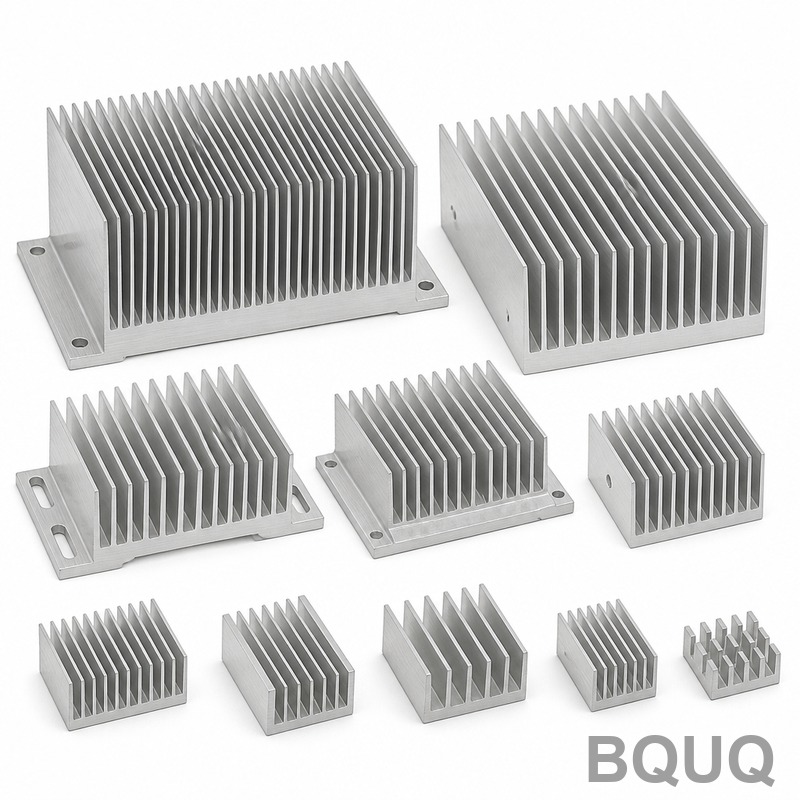
Thermal Conductivity and Thermal Resistance Comparison
The primary performance metric is not bulk conductivity but thermal impedance at the interface. Industrial-grade thermal grease such as Shin-Etsu X-23-7783D achieves 6.0 W/mK with a bond line thickness (BLT) of only 25-50 µm when properly applied. In contrast, a 1.0 mm thermal pad (e.g., Bergquist Gap Pad 5000S35) offers 5.0 W/mK but introduces 10-20 times greater resistance due to its thickness.
Thermal resistance data from our BQUQ thermal lab (ASTM D5470 testing at 50 psi, 25°C) shows: - Thermal grease (0.05 mm BLT): 0.02 °C·cm²/W - Thermal pad 0.5 mm (35 Shore 00): 0.8 °C·cm²/W - Thermal pad 1.0 mm (35 Shore 00): 1.6 °C·cm²/W - Thermal pad 2.0 mm (20 Shore 00): 4.2 °C·cm²/W
At a typical CPU heat flux of 1.5 W/cm², grease yields a temperature drop of 0.03°C across the interface, while a 1.0 mm pad yields 2.4°C. This difference becomes critical above 100 W total dissipation.
Application Scenarios and Mechanical Constraints
Thermal grease requires a rigid mounting structure with controlled clamping pressure (15-40 psi) and flat surfaces within 0.025 mm (0.001 inch) per 25 mm. It flows into microscopic surface irregularities (Ra 0.4-1.6 µm) and achieves complete wetting. However, grease cannot accommodate gap variations exceeding 0.2 mm without thermal pumping or dry-out.
Thermal pads excel in these situations: - Stacked PCBs with component height tolerances of ±0.3 mm - Vibration-prone environments (automotive, aerospace) where pump-out is a risk - Field service where disassembly and reassembly is required (pads are reusable if not damaged) - Die-cast or stamped enclosures with surface flatness of 0.1-0.3 mm
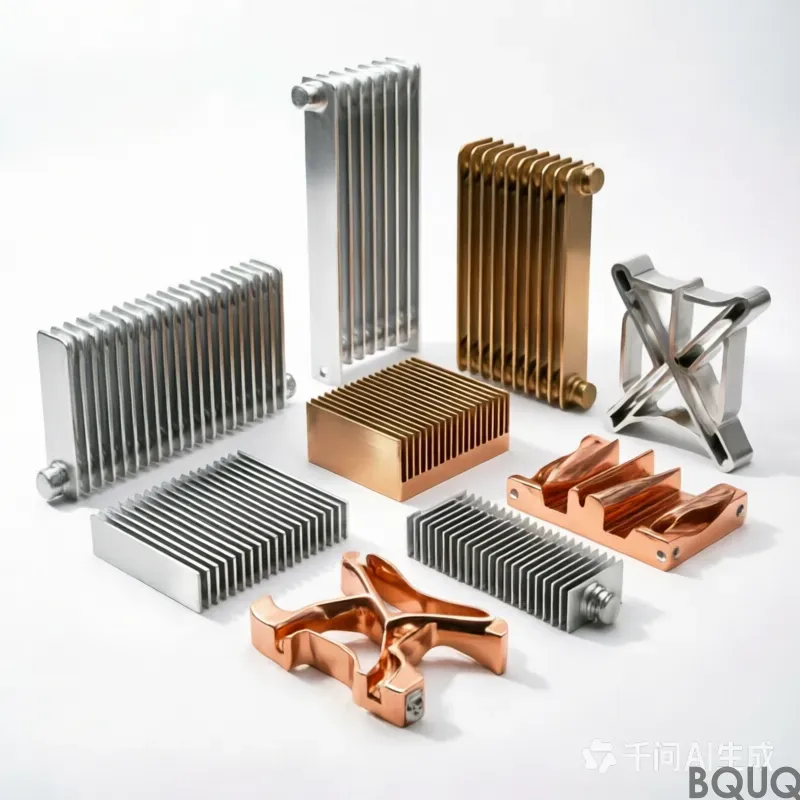
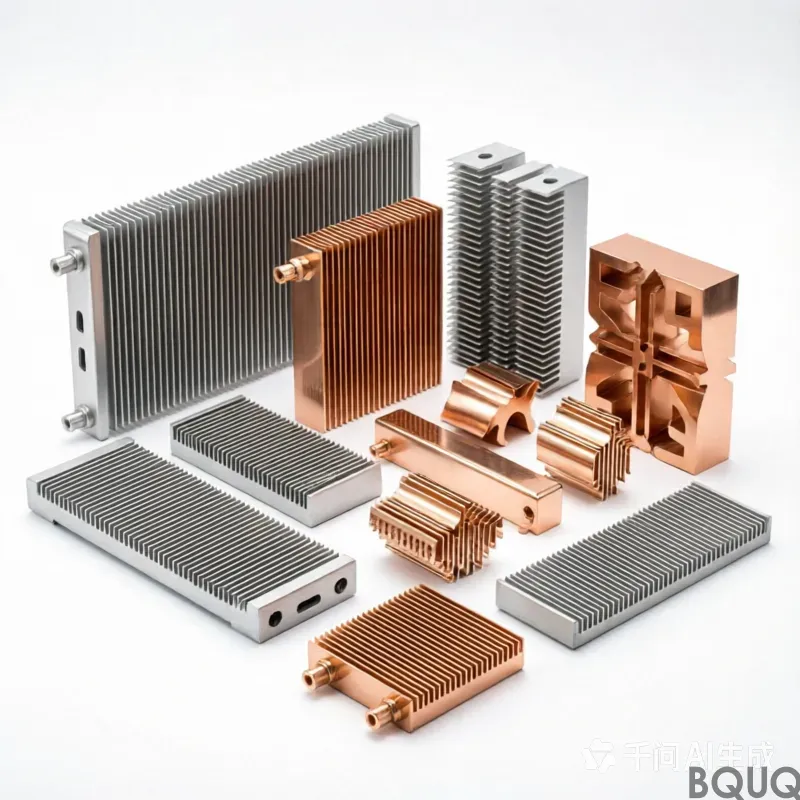
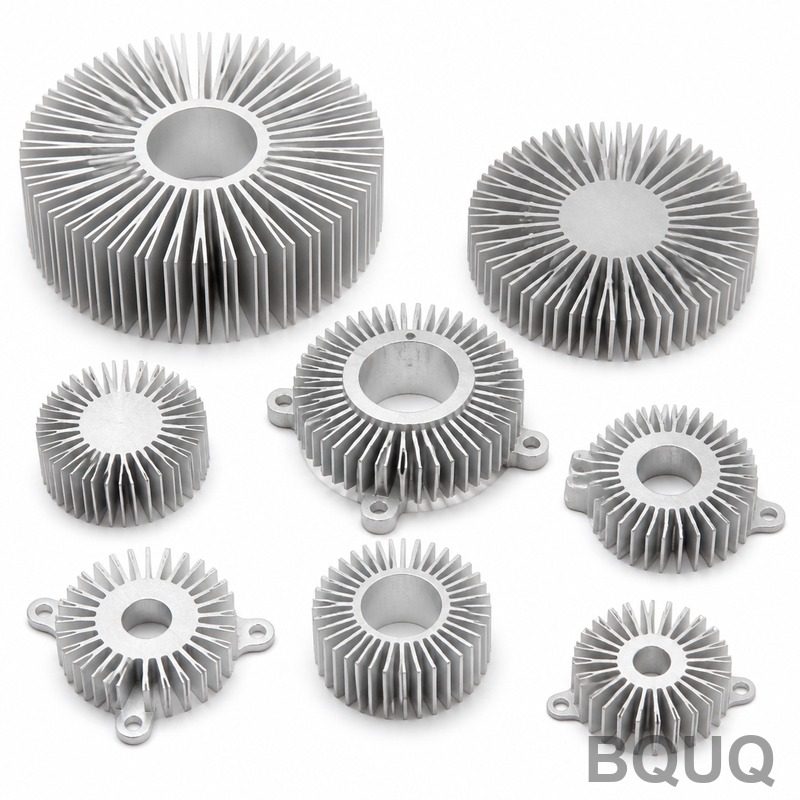
For CNC-machined aluminum heat sinks we produce at BQUQ (6061-T6, flatness 0.05 mm), grease is always recommended. For stamped steel frames (SPCC, flatness 0.2 mm), pads are mandatory unless you add a secondary milling operation.
Cost Analysis and Production Economics
Material cost per square centimeter of interface area (2024 pricing, 10,000-unit volume):
| Material Type | Thermal Conductivity | Thickness | Cost per cm² | Application Labor Cost | Equipment Cost |
| Thermal Grease (silicone, 3.0 W/mK) | 3.0 W/mK | 0.03-0.05 mm | $0.008 - $0.015 | $0.02 - $0.05 (manual) | $5,000 - $50,000 (dispenser) |
| Thermal Grease (ceramic, 6.0 W/mK) | 6.0 W/mK | 0.03-0.05 mm | $0.02 - $0.04 | $0.02 - $0.05 (manual) | $5,000 - $50,000 (dispenser) |
| Thermal Pad (silicone, 3.0 W/mK) | 3.0 W/mK | 0.5 mm | $0.03 - $0.06 | $0.01 - $0.02 (pick and place) | $500 (cutter) |
| Thermal Pad (ceramic filled, 6.0 W/mK) | 6.0 W/mK | 1.0 mm | $0.08 - $0.15 | $0.01 - $0.02 (pick and place) | $500 (cutter) |
| Phase Change Material | 4.5 W/mK | 0.03 mm | $0.02 - $0.04 | $0.02 - $0.04 | $2,000 (lamination) |
For high-volume production (over 100,000 units/year), automated grease dispensing at 0.5 seconds per unit becomes cost-competitive. For low-volume or prototyping, pads eliminate capital expenditure and reduce assembly time by 60-80%.
Long-Term Reliability and Aging Behavior
Accelerated thermal cycling tests (per JESD22-A104, -40°C to +125°C, 1000 cycles) reveal distinct failure modes:
Thermal grease failures: - Pump-out: silicone oils migrate, conductivity drops 20-40% after 500 cycles - Dry-out: volatile solvents evaporate above 125°C continuous operation - Cure: some two-part greases harden, increasing resistance by 15%
Premium greases (e.g., Shin-Etsu X-23-7783D, Dow Corning TC-5026) contain low-bleed oils and maintain performance for 10+ years at 85°C. Standard grease (e.g., Arctic MX-4) is rated for 8 years at 80°C but only 2 years at 125°C.
Thermal pad failures: - Compression set: pads lose 10-25% thickness after 1000 hours at 100°C and 30 psi, reducing contact pressure - Hardening: silicone pads become brittle below -50°C - Delamination: glass fiber reinforced pads may separate after thermal cycling
Pad reliability improves with lower hardness (20 Shore 00 vs 40 Shore 00) but at the cost of handling difficulty. Our testing at BQUQ shows that pads thicker than 2.0 mm should be avoided above 80°C continuous due to compression set.
Surface Finish and Tolerance Requirements
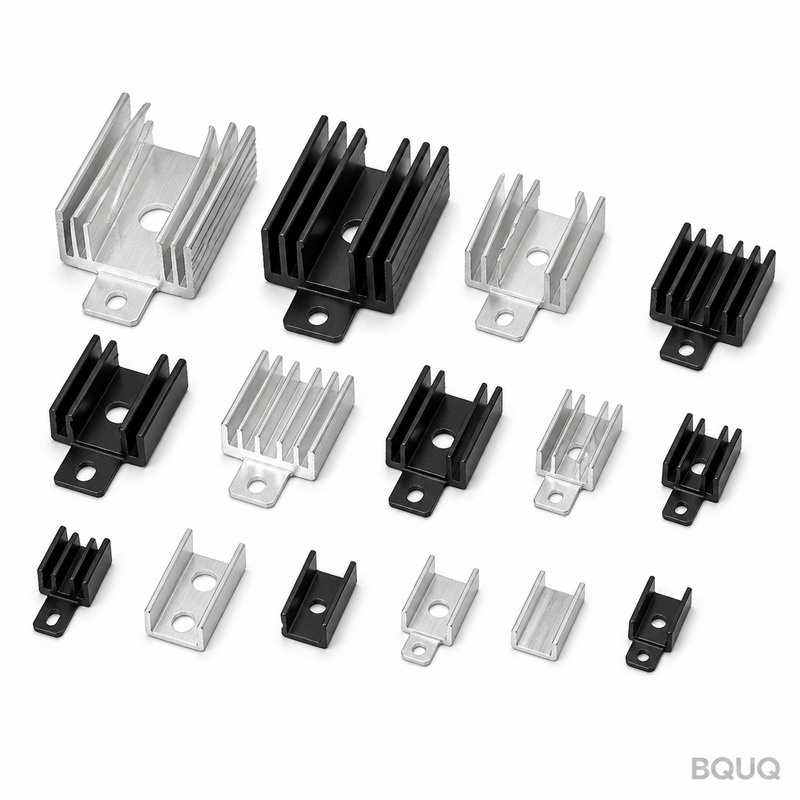
CNC-machined surfaces (our standard): Ra 0.8 µm with flatness 0.05 mm/100 mm. This surface supports grease BLT of 25-30 µm. Anodized surfaces (Al2O3 layer 10-25 µm) have lower thermal conductivity (1-2 W/mK effective) and require either selective masking or higher clamping pressure.
Stamped metal surfaces (SPCC, SUS304): Ra 1.6-3.2 µm with waviness of 0.1-0.3 mm. Thermal pads absorb this variation without modification. If you insist on grease, you must specify a secondary grinding or fly-cutting operation at added cost of $0.50-2.00 per part.
For heat sink baseplates we machine for IGBT modules (120x120 mm), we hold flatness to 0.03 mm total and recommend grease with a steel shim for consistent pressure distribution. For LED lighting assemblies using stamped aluminum reflectors, we always specify 1.0 mm thermal pads at 3.0 W/mK.
Practical Recommendations and Selection Matrix
Follow this engineering decision tree for your application:
Choose thermal grease when: - Heat flux exceeds 1.0 W/cm² (high-power CPUs, GPUs, IGBTs) - Operating temperature exceeds 90°C continuous - You have rigid mounting with controlled torque (screws or spring clips) - Production volume justifies dispensing equipment (over 50,000 units/year) - You can maintain surface flatness under 0.1 mm
Choose thermal pad when: - Gap variation exceeds 0.3 mm (stacked components, enclosures) - Vibration or shock is present (automotive, handheld devices) - Field service requires component replacement - Production volume is low or product is in prototyping - You need electrical isolation (some pads offer 5-10 kV/mm dielectric strength)
Choose phase change material when: - You want grease-level performance with pad handling convenience - Operating temperature is 50-70°C (PCM melts at 45-60°C) - You need reworkability without residue
For maximum reliability in automotive power electronics: use ceramic-filled grease (6.0 W/mK) with CNC-machined aluminum heat sinks. For consumer electronics with serviceability requirements: use 0.5 mm silicone pads (3.0 W/mK) with stamped aluminum.
FAQ-Style Engineering Tips
Q: Can I stack two thermal pads to increase thickness? A: No. Each interface adds 0.5-1.0 °C·cm²/W resistance. Use a single pad at the required thickness, or machine a spacer.
Q: How much grease should I apply? A: Target coverage of 100% of the die area with 0.025-0.050 mm thickness. A pea-sized drop (0.03-0.05 g) covers a 30x30 mm IGBT. Excess grease increases BLT and resistance.
Q: What is the maximum operating temperature for thermal grease? A: Standard silicone grease: 150°C continuous. Ceramic-filled (e.g., boron nitride): 200°C. Avoid above 200°C as polymer degradation accelerates rapidly.
Q: Do thermal pads require a release liner removal? A: Yes. The liner prevents contamination and maintains surface tack. Remove immediately before assembly. A dirty pad surface can reduce conductivity by 30%.
Q: Can I reuse a thermal pad after disassembly? A: Only if it is undamaged and retains 90% of original thickness. Most pads compress permanently. Replace pads after any service.
Q: What clamping pressure is optimal for a 1.0 mm pad? A: 10-20 psi (0.07-0.14 MPa). Below 5 psi, contact is incomplete. Above 40 psi, you risk crushing the pad or flexing the PCB.
Conclusion and Next Steps
Thermal grease is the performance winner for demanding thermal applications, delivering 50-100x lower interface resistance than pads. Thermal pads are the practical winner for assembly simplicity, vibration tolerance, and gap accommodation. For most precision electronics manufactured in China, grease with CNC-machined aluminum heat sinks provides the best thermal performance per dollar. For cost-sensitive consumer products with stamped metal parts, pads are unavoidable.
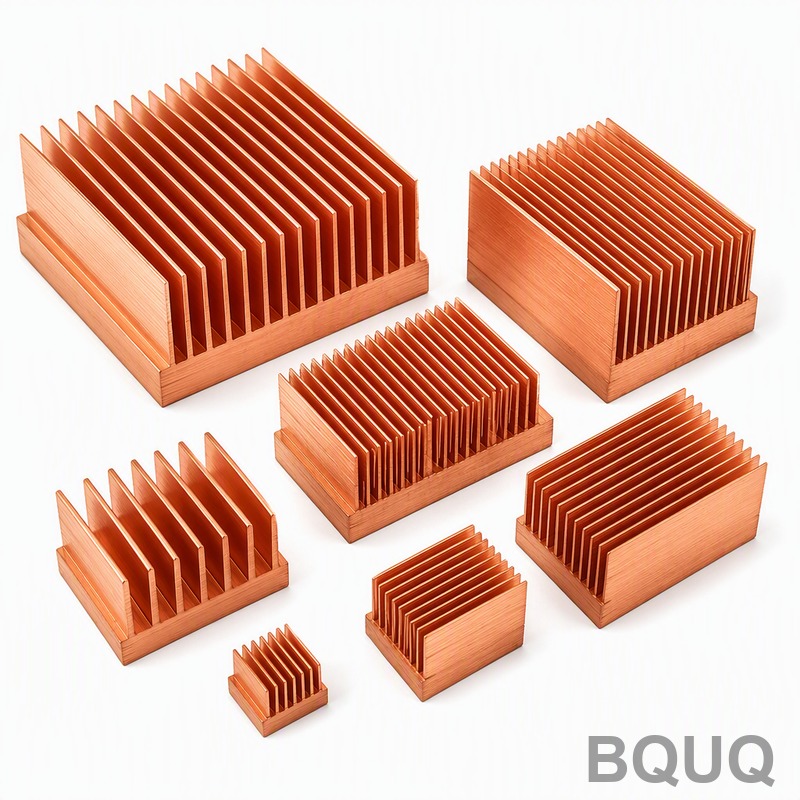
At BQUQ, we machine heat sinks and metal components to the flatness and surface finish required for optimal TIM performance. We also test thermal interface materials in our in-house lab to validate your design before mass production.
For a free thermal analysis of your current design, send your CAD file and thermal requirements to sc@bquq.com. Our engineering team will recommend the optimal TIM and heat sink configuration within 12 hours. For urgent inquiries, contact us on WhatsApp at +86 13713157787 or visit www.bquq.com to request a quote.