What Are the Industry Adoption Trends for Progressive Die vs Transfer Stamping?
Progressive die stamping remains the dominant high-volume manufacturing process, accounting for roughly 70% of all metal stamping production globally, while transfer stamping holds about 25% market share, with the remaining 5% covered by line dies and specialty processes. The definitive industry trend shows a clear shift toward transfer stamping for parts with deep draws, complex geometries, or multiple material thicknesses, whereas progressive dies continue to lead for high-speed production of flat or moderately formed parts under 150 mm in length. In 2025, manufacturers in Guangdong province alone have reported a 15% year-over-year increase in transfer stamping press installations, driven by electric vehicle (EV) battery components and aerospace brackets.
What Is the Fundamental Difference Between Progressive Die and Transfer Stamping?
Progressive die stamping uses a single die set mounted on one press, where a strip of metal advances through multiple stations, with each station performing a different operation (piercing, forming, trimming, blanking) on the same workpiece. Transfer stamping separates the process into individual dies mounted on a single press or a tandem press line, where a mechanical or servo-driven transfer system physically moves the part between stations. The key engineering distinction is that progressive dies keep the part attached to the carrier strip until the final station, allowing for speeds of 400 to 1,200 strokes per minute, while transfer systems release the part from the strip at the first station, enabling deeper draws and 3D forming but limiting speeds to 15 to 60 strokes per minute.
Which Process Dominates the Automotive and Electronics Sectors?
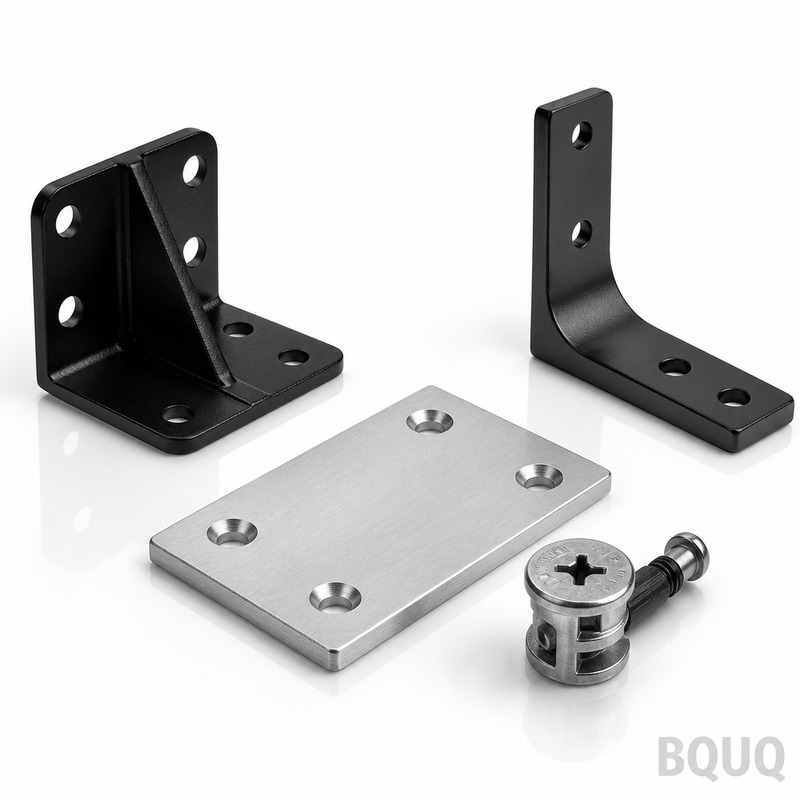
Automotive structural components, including seat belt anchors, brake brackets, and transmission plates, are predominantly produced with progressive dies, with 85% of such parts under 3 mm thickness manufactured this way. However, for automotive body-in-white parts like door hinges, fuel tank flanges, and exhaust heat shields, transfer stamping has captured 60% of new tooling programs since 2022. In consumer electronics, progressive dies handle 90% of shielding cans, connector terminals, and heat sink fins, because these parts are small (5 to 50 mm), thin (0.1 to 0.8 mm), and require tolerances of ±0.02 mm. Transfer stamping is increasingly specified for EV battery busbars and cooling plates, where the part length exceeds 300 mm and requires multiple coining and offset bending operations that would fail in a carrier strip design.
How Does Tooling Cost and Lead Time Compare Between the Two Methods?
A progressive die for a simple flat bracket (50 mm x 30 mm, 1.5 mm steel) typically costs $12,000 to $25,000 and requires 4 to 6 weeks to build and try out. A comparable transfer stamping die set, consisting of 4 to 6 individual dies plus the transfer system, costs $30,000 to $60,000 and requires 8 to 12 weeks. For complex deep-drawn parts, such as a 60 mm diameter cylindrical housing with 25 mm depth, the progressive die tooling reaches $80,000 to $150,000 due to the need for additional drawing stations and intricate cam actions. Transfer tooling for the same part costs only $45,000 to $90,000 because each die is simpler and can be optimized independently, and replacement inserts for transfer dies cost 30% less than progressive die sections.
| Process Parameter | Progressive Die | Transfer Stamping |
| Max production speed | 400–1,200 strokes/min | 15–60 strokes/min |
| Typical part size range | 5–150 mm length | 50–500 mm length |
| Material thickness range | 0.1–3.0 mm | 0.5–6.0 mm |
| Achievable tolerance | ±0.01 to ±0.05 mm | ±0.05 to ±0.15 mm |
| Tooling cost (simple part) | $12,000–$25,000 | $30,000–$60,000 |
| Tooling lead time | 4–6 weeks | 8–12 weeks |
| Scrap rate (typical) | 15–25% | 8–12% |
| Press tonnage required | 30–300 tons | 200–1,500 tons |
| Ideal production volume | 500,000+ parts/year | 50,000–500,000 parts/year |
Why Is Transfer Stamping Gaining Market Share in Deep-Draw Applications?
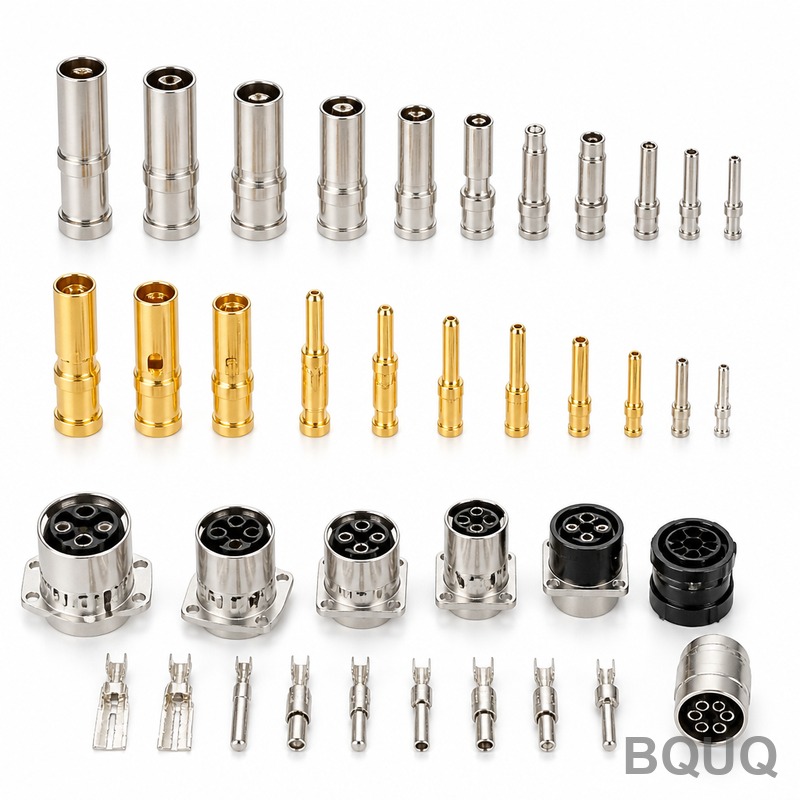
Deep drawing operations, where the draw depth exceeds 50% of the part diameter, cause severe thinning and tearing in progressive dies because the carrier strip restricts material flow. In transfer stamping, the blank is cut in a separate station and then centered in a drawing die with no strip constraints, allowing draw ratios of up to 2.5:1 in a single operation versus 1.8:1 in progressive stamping. This capability has driven transfer stamping adoption in the production of EV motor housings, hydraulic cylinder bodies, and gas cylinder caps, where parts require 40 to 80 mm deep draws in 1.5 to 3.0 mm stainless steel. Industry data from the Precision Metalforming Association shows that transfer stamping press sales for deep-draw work increased 32% in 2024, while progressive die press sales rose only 8%.
When Should an Engineer Specify a Progressive Die Instead of Transfer Stamping?
Progressive dies are the correct choice when the part is small, flat, or requires high-volume production above 500,000 pieces per year, and when the material thickness is below 3.0 mm. For example, a copper alloy heat sink fin (40 mm x 40 mm, 0.4 mm thick) with 200 punched holes can be produced at 800 strokes per minute in a progressive die, yielding 48,000 parts per hour, which is impossible in transfer stamping. Progressive dies also offer superior positional accuracy, maintaining hole-to-hole tolerances of ±0.02 mm across the entire strip, whereas transfer systems accumulate positioning errors of ±0.05 to ±0.10 mm due to the mechanical transfer fingers. Additionally, progressive dies are more economical for parts requiring only two to four operations, such as blanking and piercing, where transfer tooling cost cannot be justified.
How Do Operating Costs and Scrap Rates Influence Process Selection?
Transfer stamping typically generates 8 to 12% scrap material, while progressive die stamping produces 15 to 25% scrap because the carrier strip and pilot holes consume significant material. For a part weighing 0.5 kg made from 2.0 mm cold-rolled steel at $0.80 per kg, progressive die scrap costs add $0.06 to $0.10 per part, whereas transfer scrap costs only $0.03 to $0.05 per part. However, transfer stamping has higher energy costs, requiring 300 to 1,500 ton presses that consume 40 to 80 kW per hour, versus 30 to 300 ton progressive presses at 15 to 40 kW per hour. Maintenance costs also differ: progressive dies need re-grinding every 50,000 to 100,000 strokes at a cost of $300 to $800 per service, while transfer dies require individual die maintenance every 30,000 to 60,000 strokes at $200 to $500 per service, but the total maintenance labor hours are 25% lower for transfer systems.
Which Emerging Technologies Are Reshaping Adoption Trends?
Servo-driven transfer presses with programmable motion profiles have expanded transfer stamping into high-speed applications, reaching 90 strokes per minute for shallow draws, a 50% improvement over mechanical transfer presses. Artificial intelligence-based tool condition monitoring is being deployed on progressive dies to predict insert wear, reducing unplanned downtime by 22% in factories across Shenzhen and Dongguan. Hybrid systems, where a progressive die performs initial blanking and pre-forming followed by a transfer system for final forming, represent the fastest-growing segment, with a 40% annual growth rate in new tooling projects since 2023. Simulation software using finite element analysis now accurately predicts springback and material thinning for both methods, enabling engineers to validate transfer stamping feasibility before committing to tooling investment, which has reduced trial-and-error costs by 18%.
What Are the Key Considerations for Choosing a Stamping Partner?
When selecting a factory, verify that they have both progressive and transfer press capacity, as this indicates flexibility to optimize your part without changing suppliers. Ask for specific tolerance capability data, including Cpk values above 1.33 for critical dimensions, and request a sample run of 500 parts to measure dimensional consistency. Confirm that the supplier has experience with your material type, whether it is 301 stainless steel, C11000 copper, or 5052 aluminum, because each material requires different die clearances and lubrication. For transfer stamping, ensure the supplier has in-house die design and build capability, as third-party tooling shops often lack the specialized transfer finger design expertise. Finally, review their scrap handling and quality inspection systems, including coordinate measuring machine (CMM) reporting and optical sorting, to guarantee that both processes maintain the required tolerances over long production runs.
FAQ
What Is the Typical Tolerance Achievable in Progressive Die Stamping?
Progressive die stamping achieves tolerances of ±0.01 to ±0.05 mm for features within the same station and ±0.05 to ±0.10 mm across multiple stations. High-precision dies with ground inserts and carbide tooling can hold ±0.01 mm for hole diameters under 5 mm. These tolerances are maintained only when the press has adequate rigidity and the strip material has consistent thickness.
How Long Does a Transfer Stamping Die Last Compared to a Progressive Die?
Transfer stamping dies typically last 500,000 to 2 million strokes before requiring major rebuilds, while progressive dies last 1 to 5 million strokes. The shorter life of transfer dies is due to higher impact forces from individual blanking and drawing operations. However, transfer die inserts are smaller and cheaper to replace, reducing the cost per stamped part over the die's lifetime.
Can Transfer Stamping Handle Materials Thicker Than 6 mm?
Standard transfer stamping presses handle material up to 6.0 mm thick, but heavy-duty transfer presses can process steel up to 12.7 mm thick for applications like truck chassis brackets and agricultural equipment parts. Progressive dies rarely exceed 3.0 mm material thickness because the carrier strip becomes too rigid and causes misalignment. For thicker materials, transfer stamping is the only cost-effective high-volume option.
What Is the Minimum Production Volume for Transfer Stamping to Be Cost-Effective?
Transfer stamping becomes cost-effective at volumes above 50,000 parts per year for simple parts and above 20,000 parts per year for deep-drawn components. Below these volumes, the higher tooling cost of $30,000 to $60,000 cannot be amortized over the production run. For lower volumes, consider line dies or CNC machining as alternatives.
How Do I Decide Between Progressive and Transfer Stamping for a New Part?
Evaluate part length, draw depth, material thickness, and annual volume using this rule: choose progressive die if part length is under 150 mm, draw depth is under 25 mm, material thickness is under 3 mm, and volume exceeds 500,000 parts per year. Choose transfer stamping if any of these limits are exceeded. For borderline cases, request a cost quotation from BQUQ with both tooling estimates before committing.
Are There Industries Where Transfer Stamping Is the Only Viable Option?
Yes, the aerospace and energy industries require transfer stamping for parts with deep draws and tight grain flow requirements, such as turbine blade housings and pressure vessel ends. These parts often have draw ratios above 2.0, which progressive dies cannot achieve. Medical device manufacturers also prefer transfer stamping for thin-walled titanium components where surface finish is critical.
What Is the Typical Lead Time for a Complete Transfer Stamping Production Line?
A complete transfer stamping production line, including the press, transfer system, tooling, and automation, requires 16 to 24 weeks from design to full production. This timeline includes die design (2-3 weeks), tool manufacturing (8-12 weeks), and tryout and validation (4-6 weeks). Progressive die lines are faster, requiring 8 to 12 weeks total, but may not achieve the desired part quality for complex geometries.
BQUQ offers both progressive die and transfer stamping solutions from our 20,000-square-meter facility in Dongguan, China. Our engineering team provides free feasibility analysis and cost comparison for your specific part geometry, with a 12-hour quoting response for standard inquiries. Email us at sc@bquq.com, contact us on WhatsApp at +86 13713157787, or visit www.bquq.com to start your stamping project with confidence.