What Are the Key Precision Standards in Connector Stamping?
Connector stamping holds tolerances of +/- 0.01 mm on critical contact geometries and produces billions of terminals annually, with progressive die speeds reaching 1,200 strokes per minute. The process transforms copper alloys, brass, and phosphor bronze strips into the tiny, high-conductivity interfaces that route power and data through every smartphone, vehicle, and server. For engineers, the market demands not just dimensional accuracy, but consistent material hardness, plating integrity, and burr control below 5% of material thickness.
What Materials Are Most Commonly Used in Connector Stamping?
The dominant materials are copper alloys due to their electrical conductivity and formability. C5210 phosphor bronze and C17200 beryllium copper are used for spring contacts because they retain elasticity after bending, with tensile strengths ranging from 690 to 1,240 MPa. Brass (C26000) is chosen for lower-cost terminals where high cycle life is not critical, while tin-plated or gold-plated areas are added post-stamping, with plating thicknesses typically from 0.76 to 2.5 microns for gold.
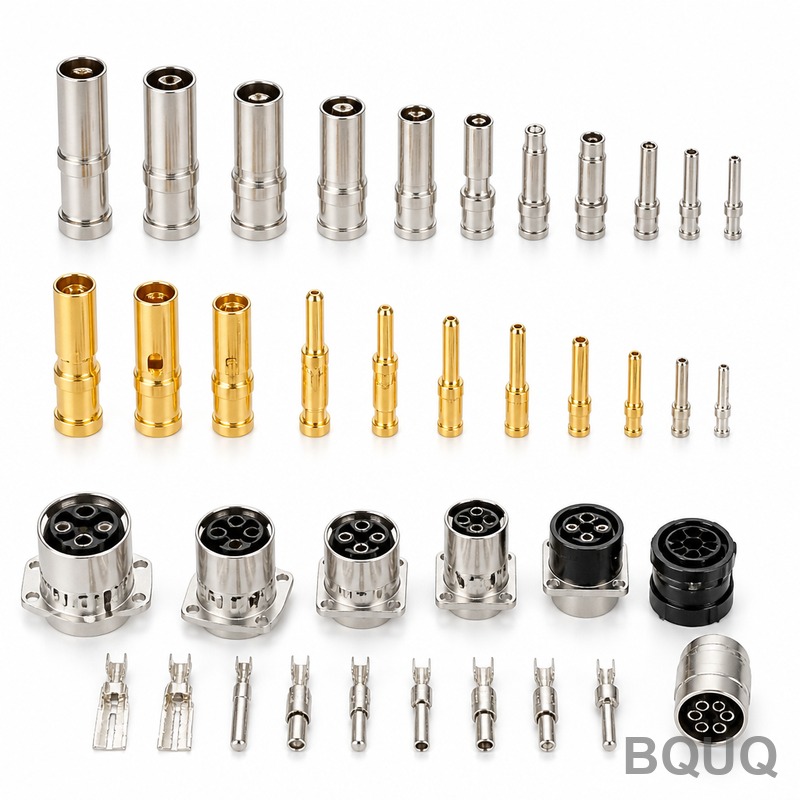
How Tight Are the Dimensional Tolerances in High-Speed Stamping?
Modern progressive dies achieve a pitch accuracy of +/- 0.005 mm between stations, and critical forming dimensions are held to +/- 0.01 mm. For reference, a standard USB-C connector pin has a width tolerance of +/- 0.02 mm, while automotive-grade terminals under USCAR-2 specifications require a terminal lock strength and dimensional control within +/- 0.05 mm. These tolerances are maintained by using carbide dies, which hold an edge longer than tool steel, and by controlling strip temperature within +/- 2 degrees Celsius during high-speed operation.
Why Does Burr Height Control Matter for Electrical Performance?
Burrs, the raised edges left after shearing, directly affect insertion force and can cause short circuits if they break off. Acceptable burr height is typically limited to 5% to 8% of the material thickness; for a 0.2 mm thick phosphor bronze strip, this means a maximum burr of 0.016 mm. Precision stampers achieve this by maintaining a die clearance of 4% to 6% of material thickness per side, which creates a clean shear zone rather than a torn fracture zone.
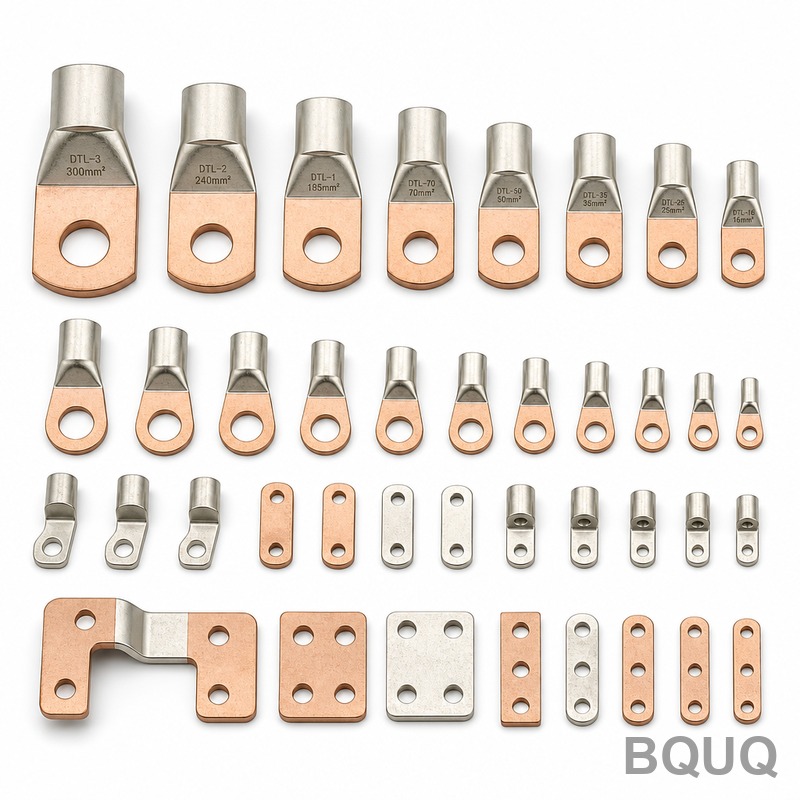
How Does Tooling Cost Break Down for a New Connector Project?
A custom progressive die for a connector with 10 to 20 stations costs between USD 8,000 and USD 35,000, depending on part complexity and the use of carbide inserts. Hardened tool steel dies are lower cost, around USD 6,000, but require sharpening after 200,000 to 500,000 strokes, while carbide dies can run 2 million to 5 million strokes between maintenance cycles. For a typical USB connector terminal, the amortized tooling cost per part at a volume of 10 million pieces is less than USD 0.0035.
What Are the Typical Production Speeds and Volumes for Connector Stamping?
High-speed stamping presses for simple terminals run at 600 to 1,200 strokes per minute, producing over 50,000 parts per hour on a single die. More complex parts, such as multi-finger spring contacts or parts requiring 90-degree coining, run slower at 150 to 400 strokes per minute to maintain tolerance. Annual volumes for automotive connector terminals often exceed 50 million pieces per part number, which justifies the investment in high-end progressive tooling.
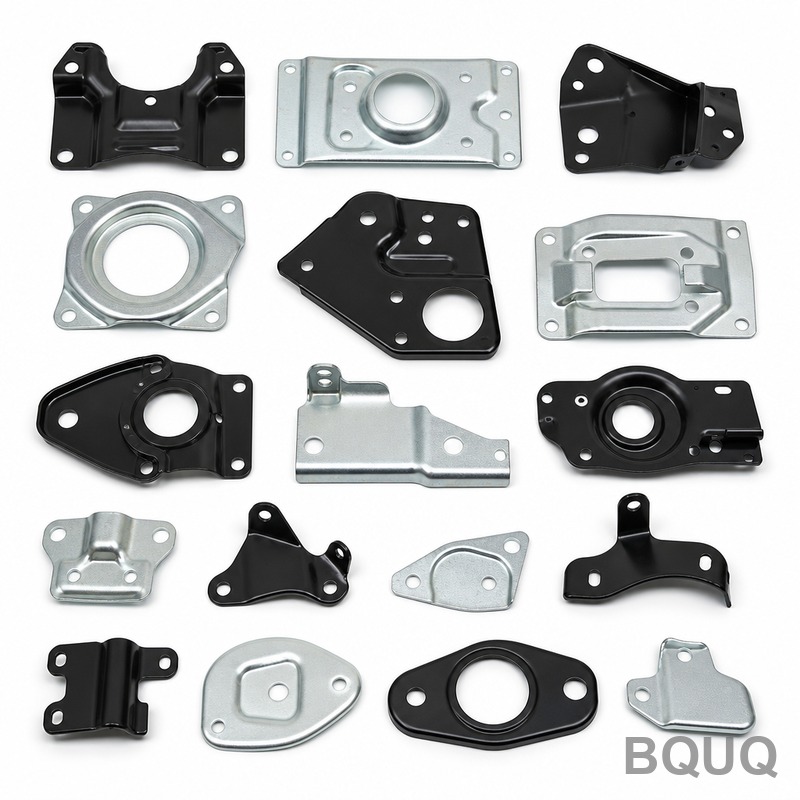
Which Surface Finishes and Platings Are Applied After Stamping?
The most common plating is tin (matte or bright), applied via reel-to-reel electroplating at 1 to 5 microns thickness, offering corrosion resistance and solderability. Selective gold plating is used on contact areas only, at 0.76 microns for low-cycle applications and 1.27 microns for high-durability connectors, while the rest of the strip remains bare copper or tin. Nickel underplating of 1 to 2 microns is often applied beneath gold to prevent copper migration, and the plating process adds 3 to 7 days to typical lead times.
What Testing Ensures a Stamped Connector Meets Industry Standards?
Mechanical and electrical testing are performed on every production lot, including contact resistance checks below 20 milliohms and insertion force tests per EIA-364 standards. Environmental testing includes thermal cycling from -40 to +125 degrees Celsius for 500 cycles, and salt spray exposure of 48 to 96 hours to verify plating integrity. Dimensional checks are performed using optical comparators and coordinate measuring machines at a frequency of one part every 30 minutes, with full data logging for traceability.
How Do You Select a Stamping Partner for High-Volume Connector Production?
| Parameter | Precision Stamping Capability | Standard Tolerance |
| Pitch accuracy | +/- 0.005 mm | +/- 0.02 mm |
| Critical form dimensions | +/- 0.01 mm | +/- 0.05 mm |
| Burr height | 5% of material thickness | 10% of material thickness |
| Maximum strip thickness | 0.05 mm to 3.0 mm | 0.1 mm to 1.5 mm |
| Press speed for simple parts | Up to 1,200 SPM | 300 to 600 SPM |
| Die life (carbide) | 5 million strokes | 500,000 strokes |
| Gold plating thickness | 0.76 to 1.27 microns | 0.1 to 0.5 microns |
Look for a supplier with in-house die design and maintenance, as this reduces changeover time and ensures immediate corrective action on dimensional drift. Verify that the supplier has a statistical process control system that tracks CpK values above 1.67 for critical dimensions, which indicates a highly capable process. Finally, confirm that they can provide material certifications and plating thickness reports from a third-party lab, as many OEMs now require this documentation for compliance with RoHS and REACH.
Can Stamping Be Used for Micro-Connectors Below 0.3 mm Pitch?
Yes, but only with specialized high-precision presses and ultra-hard carbide tooling. For 0.3 mm and 0.4 mm pitch connectors, the strip thickness is typically 0.1 to 0.15 mm, and the die must be built with wire-cut EDM with a tolerance of +/- 0.002 mm. In this regime, press speed is reduced to 200 to 400 SPM, and the process requires a cleanroom or controlled environment to prevent dust particles from causing die damage.
How Long Does a Typical Connector Stamping Lead Time Take?
Prototype stamping with soft tooling takes 2 to 3 weeks from design approval, and production tooling takes 4 to 6 weeks for a standard progressive die. Once tooling is approved, first article inspection reports are issued within 5 business days, and mass production can begin immediately after sign-off. For an urgent order, a factory with existing tooling can ship stamped parts within 48 hours, as the stamping process itself is measured in minutes per reel.
What Is the Cost per Part for a Standard Connector Terminal?
The cost per stamped terminal ranges from USD 0.005 to USD 0.05, depending on material, plating, and complexity. A simple brass terminal with tin plating in volumes above 10 million pieces costs around USD 0.008 each, while a beryllium copper spring contact with selective gold plating costs USD 0.03 to USD 0.05 each. These prices are driven primarily by raw material cost, which accounts for 50% to 60% of the total piece price in high-volume stamping.
What Are the Common Defects in Connector Stamping and How Are They Prevented?
Common defects include excessive burr, springback, and plating flaking at the bend radius. Springback is compensated by over-bending the tool by 2 to 5 degrees, while burrs are controlled with regular die sharpening and proper lubrication. Plating flaking is prevented by using a minimum bend radius of 1.5 times the material thickness and specifying a ductile plating like bright tin over hard tin.
Conclusion
Connector stamping is a high-precision, high-volume manufacturing process that demands strict control over materials, tooling, and process parameters to achieve reliable electrical performance. The key to success lies in selecting a partner with proven experience in carbide die design, statistical process control, and in-house plating capabilities. At BQUQ, we have manufactured precision stamped connectors for 20 years in our Dongguan factory, serving the automotive, consumer electronics, and industrial sectors.
What Is the Minimum Order Quantity for Custom Stamped Connectors?
For custom stamped parts, the minimum order quantity is typically 500,000 pieces per year, which justifies the tooling investment. For standard catalog terminals, we can supply from 10,000 pieces for sample approval. Smaller quantities can be produced on prototype tooling at a higher per-piece cost.
How Fast Can You Provide a Quote for a Connector Stamping Project?
We provide a detailed quotation within 12 hours of receiving your 2D drawing or 3D model, including tooling cost, piece price, and lead time. If you need an estimate faster, send a rough sketch and target volume, and we will respond within 4 hours. Our engineering team reviews each project for material, tolerance, and plating feasibility before sending the quote.
Do You Supply Stamped Parts with Pre-Plated or Post-Plated Strip?
We offer both options depending on your application. Pre-plated strip is more cost-effective for simple bends, while post-plating is required for selective gold in contact areas. We recommend post-plating for any part with a tight bend radius to avoid cracking the plating.
Which Industries Use the Most Stamped Connectors?
The automotive industry is the largest consumer, using over 30 stamped terminals per vehicle, followed by consumer electronics and data communications. In electric vehicles, the number of high-current stamped connectors has increased by 40% compared to internal combustion vehicles. Medical device connectors require the highest precision and are often made from gold-plated beryllium copper.
How Do You Ensure Traceability for Stamped Connector Lots?
Each production lot is marked with a unique batch number, and we maintain records of material heat number, die maintenance history, and inspection results for 10 years. Every reel is labeled with the part number, quantity, and plating thickness. Full traceability reports are available upon request for quality audits.
What Is Your On-Time Delivery Rate for High-Volume Orders?
Our on-time delivery rate is 98.5% for scheduled orders over the past three years, based on our internal ERP data. We maintain buffer stock of common copper alloys to reduce raw material lead time. For urgent orders, we can expedite production within 48 hours at no extra cost, subject to machine availability.
For a no-obligation quote on your connector stamping project, send your drawings to our engineering team today. We respond to all inquiries within 12 hours, and our technical staff can assist with DFM feedback to reduce your tooling cost. Email us at sc@bquq.com, reach us on WhatsApp at +86 13713157787, or visit www.bquq.com to learn more about our precision stamping capabilities.