What Are the Main Differences Between CNC Coiling and Traditional Spring Making?
CNC coiling is the superior method for high-precision, high-volume spring production, offering tolerances of ±0.01 mm and cycle times under 5 seconds per part, whereas traditional spring making remains viable for low-volume prototypes and simple geometries at tolerances of ±0.05 mm. The primary difference lies in control: CNC machines use servo-driven wire feeders and digital pitch control, while traditional methods rely on mechanical cams and manual operator skill. For most modern engineering applications, CNC coiling delivers a 30% tighter tolerance band and a 50% faster setup changeover compared to conventional lathe-type spring winders.
What Constitutes Traditional Spring Making and When Is It Still Used?
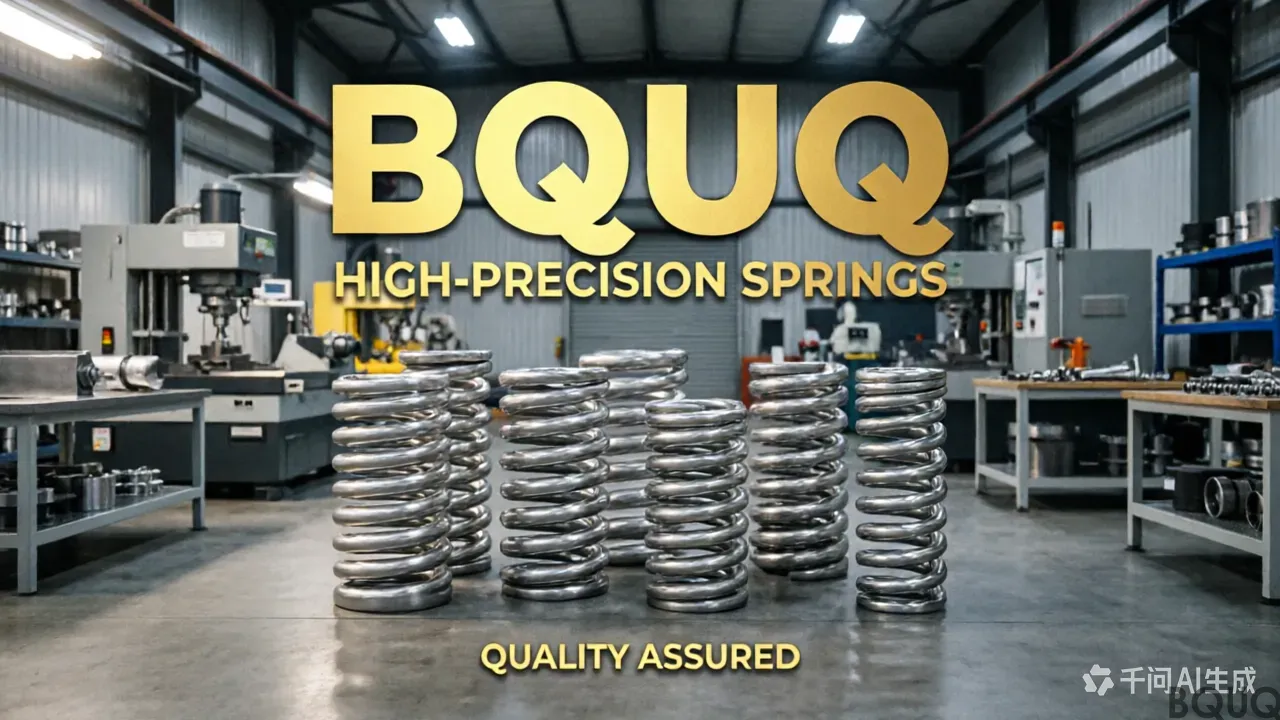
Traditional spring making refers to mechanical spring coilers that use cams, gears, and friction feed rollers to form wire into helical shapes. These machines, often decades old, operate at speeds of 20 to 60 parts per minute and are limited to wire diameters from 0.3 mm to 12 mm. They are still used for simple compression springs with wire diameters above 2.0 mm where the spring index (ratio of mean coil diameter to wire diameter) is between 4 and 12. In our Dongguan factory, traditional machines remain in service for rush repair orders and legacy automotive parts where the original drawings specify a non-critical tolerance of ±0.10 mm. The main limitation is the inability to adjust coil pitch dynamically during a run; any change requires physically swapping a cam, which takes 45 to 90 minutes.
How Does CNC Coiling Achieve Higher Precision and Repeatability?
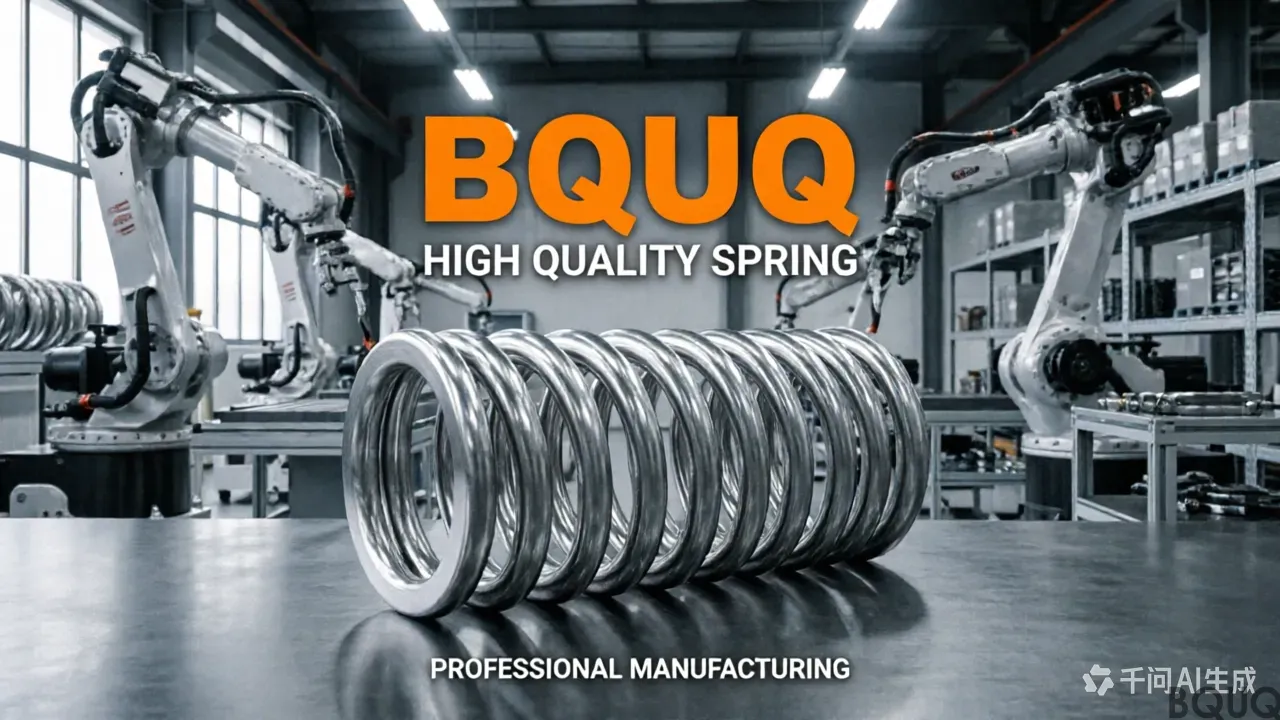
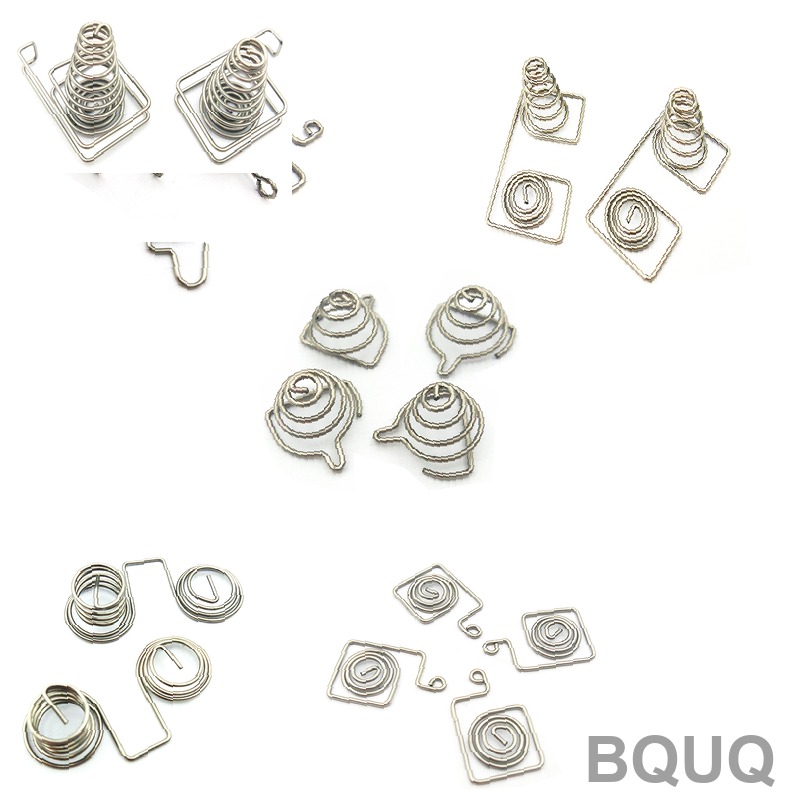
CNC coiling machines use two or three servo-driven feed rollers that pull wire at precisely controlled speeds, synchronized with a servo-controlled pitch tool and cut-off blade. The control system reads a digital program, allowing adjustments in 0.01 mm increments without stopping the machine. For example, a typical BQUQ CNC coiler can produce a 10 mm diameter compression spring with a wire diameter of 1.5 mm at a tolerance of ±0.02 mm on the free length and ±0.05 mm on the outer diameter. Repeatability, measured over 10,000 parts, holds at a CpK of 1.67 or higher. The machine also monitors wire tension in real time, compensating for variations in coil material hardness, which is impossible with mechanical systems. This results in a scrap rate below 0.5% for CNC versus 3% to 5% for traditional methods.
Which Spring Types Are Best Suited for CNC Coiling Versus Traditional Methods?
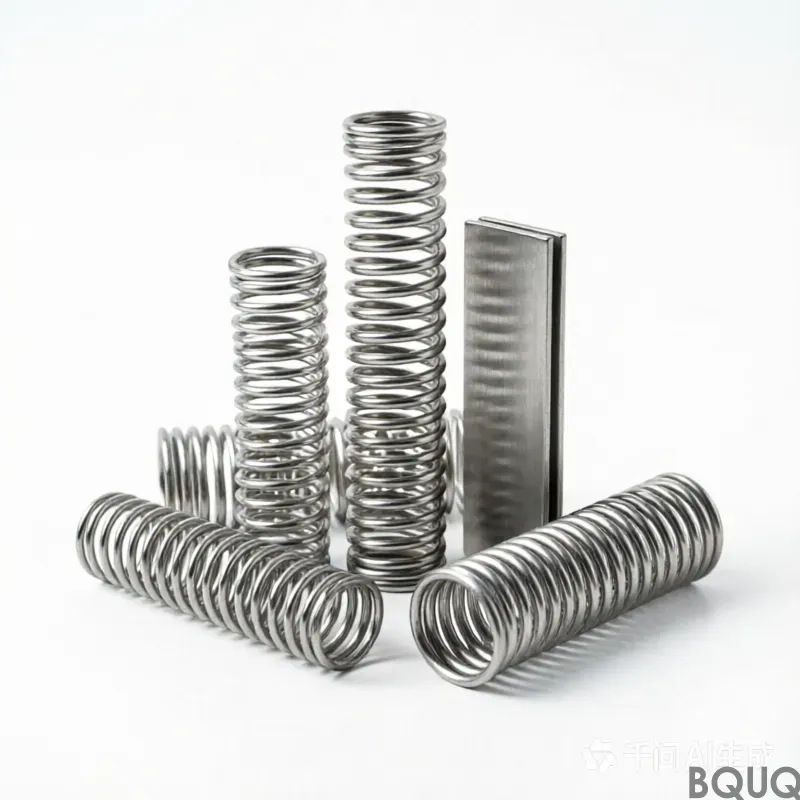
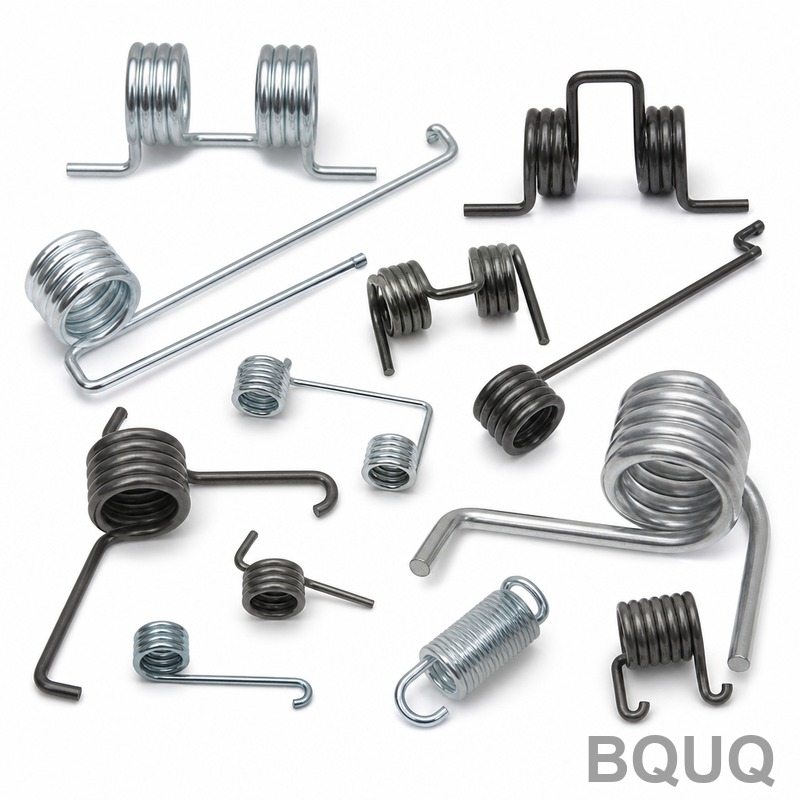
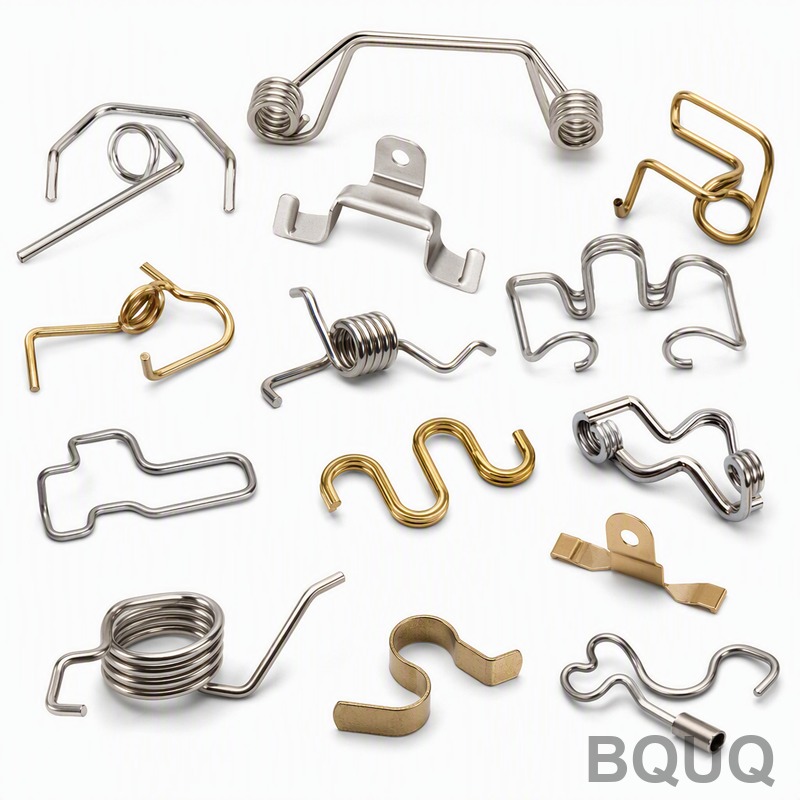
CNC coiling excels at producing complex geometries such as variable-pitch springs, conical springs, torsion springs with multiple bends, and springs with tight hook orientations. It also handles wire diameters from 0.1 mm to 20 mm, though the upper range requires specialized heavy-duty coilers. Traditional methods are best for single-pitch compression springs and simple extension springs with diameters above 3 mm, where the cost of a CNC program cannot be justified. For instance, a simple die spring for a stamping die, 50 mm OD with 5 mm wire, is 15% cheaper to produce on a traditional cam machine if the quantity is under 500 pieces. However, for quantities above 5,000 pieces, CNC becomes more economical due to lower labor intervention and fewer rejected parts.
How Do Production Speeds and Lead Times Compare Between the Two Methods?
CNC coiling machines run at 30 to 120 parts per minute depending on wire diameter and spring complexity, while traditional machines run at 20 to 60 parts per minute. For a typical compression spring of 2 mm wire, CNC achieves 80 parts per minute versus 45 for traditional. Setup time is the biggest differentiator: CNC changeover takes 10 to 20 minutes using stored programs and quick-release tooling, whereas traditional setup takes 60 to 120 minutes due to cam and guide adjustments. Consequently, lead time for a CNC spring prototype is 1 to 3 days, including tooling design, while a traditional prototype takes 3 to 5 days. For production orders of 50,000 pieces, CNC delivers in 2 weeks versus 3 weeks for traditional, assuming both machines are available.
What Are the Cost Differences in Tooling and Per-Part Pricing?
Tooling for traditional spring making is cheaper upfront: a cam set costs 200 to 500 USD, while a CNC tool pack (wire guides, pitch tool, cut-off die) costs 400 to 800 USD. However, CNC tooling lasts for 2 to 5 million cycles, while cam surfaces wear after 500,000 cycles and require regrinding. Per-part pricing reflects this: for a 10,000-piece order of a 1.2 mm wire compression spring, CNC costs 0.08 USD per piece, and traditional costs 0.12 USD per piece because of higher scrap and manual inspection time. For a 100-piece prototype run, traditional costs 0.50 USD per piece versus 0.90 USD for CNC due to the programming and tooling amortization. The table below summarizes the key technical and economic parameters.
| Parameter | CNC Coiling | Traditional Spring Making |
| Wire diameter range | 0.1 mm to 20 mm | 0.3 mm to 12 mm |
| Tolerance on free length | ±0.01 mm to ±0.03 mm | ±0.05 mm to ±0.10 mm |
| Production speed | 30 to 120 parts/min | 20 to 60 parts/min |
| Setup changeover time | 10 to 20 minutes | 60 to 120 minutes |
| Scrap rate | Less than 0.5% | 3% to 5% |
| Tooling cost (initial) | 400 to 800 USD | 200 to 500 USD |
| Tooling lifespan | 2 to 5 million cycles | 500,000 cycles before regrind |
| Minimum economical quantity | 1,000 pieces | 100 pieces |
| Per-part cost (10,000 pcs, 1.2 mm wire) | 0.08 USD | 0.12 USD |
| Lead time for prototype | 1 to 3 days | 3 to 5 days |
Why Does Wire Material Selection Affect the Choice of Coiling Method?
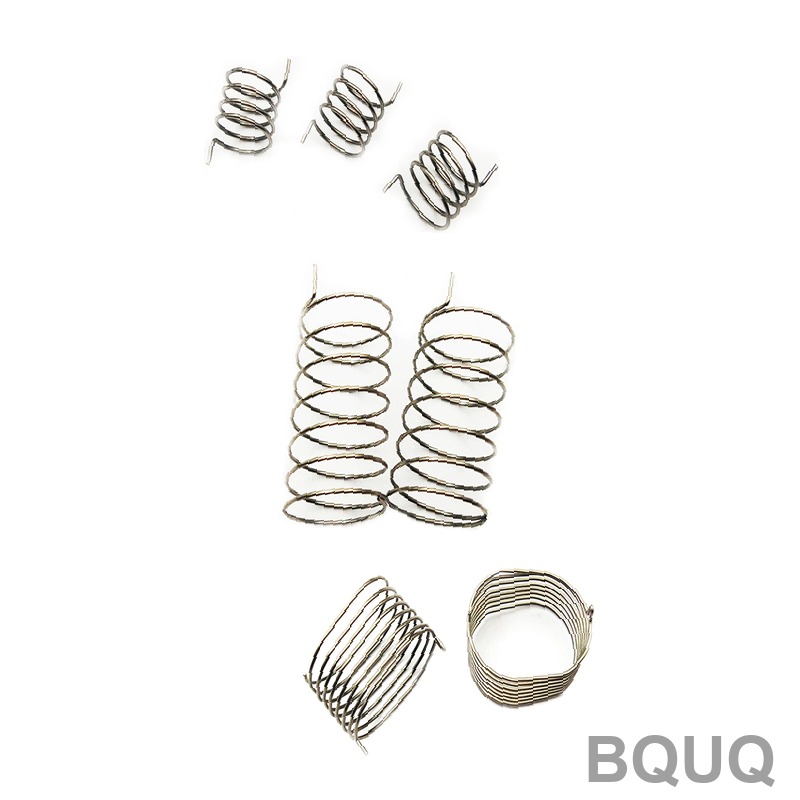
Wire material directly influences whether CNC or traditional coiling can be used without defects. High-carbon spring steel (SAE 1070, 1080) and oil-tempered chrome silicon (ASTM A401) require consistent feed tension, which CNC provides through closed-loop servo control. Traditional machines often cause surface scoring on these materials because of friction-driven feed rollers slipping at high speeds. Stainless steel (302, 316) work-hardens rapidly; CNC machines can adjust pitch and feed speed in real time to prevent cracking, whereas traditional machines lack this feedback. Inconel and titanium springs, common in aerospace, demand CNC due to their high springback (up to 15% angular deflection), which requires iterative program adjustments that are impractical mechanically. For music wire below 0.5 mm diameter, only CNC can maintain the required ±0.01 mm tolerance without breaking the wire.
Can CNC Coiling Replace Traditional Methods for All Applications?
No, CNC coiling cannot fully replace traditional methods for very large wire diameters above 20 mm or for springs with a spring index below 3, where the mandrel bending force exceeds the capacity of servo feed systems. Traditional horizontal coilers with hydraulic feed are still used for railway buffer springs and heavy machinery springs with wire up to 40 mm. Additionally, for one-off repair springs made from existing stock wire without a drawing, a skilled operator on a traditional machine can produce a usable part faster than programming a CNC. However, for 95% of industrial applications in automotive, electronics, and medical devices, CNC is the recommended choice because of its superior consistency, traceability, and ability to integrate with automated inspection systems such as laser micrometers.
What Quality Control Measures Are Necessary for Both Coiling Methods?
For CNC coiling, quality control includes in-process laser measurement of coil OD and free length every 100 parts, with automatic rejection of out-of-spec parts. Final inspection uses a 3D optical comparator to verify pitch uniformity and end grinding angle, typically at 100% for medical springs and AQL 1.0 for general industrial springs. Traditional methods require manual sampling every 50 parts with a micrometer and a load tester to check spring rate; this introduces human error and limits data collection. Heat treatment, typically stress relieving at 230°C to 260°C for 20 to 30 minutes, is mandatory for both methods to remove residual stress. Shot peening, applied to springs for fatigue life, is unaffected by the coiling method but requires a documented intensity of 0.15 to 0.25 mm Almen strip deflection.
FAQ
How Long Does It Take to Program a CNC Spring Coiler?
Programming a simple compression spring takes 15 to 30 minutes using parametric software, while a complex torsion spring with hooks takes 2 to 3 hours. The program is stored digitally and can be recalled instantly for repeat orders, eliminating re-programming costs.
What Is the Minimum Order Quantity for CNC-Coiled Springs?
The practical minimum is 200 to 500 pieces for economical pricing, though we can produce as few as 50 pieces for prototyping at a higher per-unit cost. Below 200 pieces, traditional spring making may be cheaper if the geometry is simple.
Can Both Methods Produce Springs with Closed and Ground Ends?
Yes, both methods produce closed ends by pressing the first and last coils flat, but grinding is a separate operation. CNC coiling provides better consistency in closed-end length, typically ±0.02 mm, whereas traditional methods yield ±0.05 mm.
Which Coiling Method Is Better for Springs Requiring Tight Fatigue Life?
CNC coiling is better because it maintains uniform pitch and internal stress distribution, reducing stress concentration points. Springs made by CNC exhibit 20% longer fatigue life in cyclic testing compared to traditionally coiled springs at the same load.
How Do I Specify Spring Tolerances for CNC Coiling?
Specify tolerances according to DIN 2095 Grade 1 for precision springs, which allows ±0.01 mm on wire diameter and ±0.5% on free length. Provide the spring rate in N/mm and maximum solid height to ensure the CNC program can be optimized.
What Is the Maximum Wire Diameter for Standard CNC Coilers?
Standard CNC coilers handle up to 10 mm wire diameter; heavy-duty models extend to 20 mm. Above 20 mm, we recommend traditional hydraulic coilers or alternative processes like CNC wire forming with a bending arm.
Are There Any Surface Finish Differences Between CNC and Traditional Coiling?
CNC coiling produces a smoother surface finish of Ra 0.8 to 1.6 micrometers because servo feed rollers cause less slippage. Traditional machines often leave feed marks of Ra 3.2 micrometers, which may require additional polishing for dynamic applications.
In conclusion, the choice between CNC coiling and traditional spring making hinges on your volume, tolerance requirements, and material complexity. For high-precision, high-volume production, CNC coiling is the clear winner in terms of cost per part, consistency, and lead time. Traditional methods still serve a niche for large wire diameters and simple geometries with low volumes. At BQUQ, we operate both CNC coilers and traditional machines to offer you the optimal process for every spring specification. Contact our engineering team for a free design review and a quote within 12 hours. Email: sc@bquq.com, WhatsApp: +86 13713157787, or visit www.bquq.com.