What Are the Main Spring End Types and How Do They Affect Performance?
The four primary spring end types are closed, closed and ground, open, and plain (with optional customization such as painted, plated, or reduced OD ends). Closed and ground ends are the industry standard for compression springs requiring precise load bearing and squareness, while open ends are used only in low-cost, low-precision applications. Your choice directly impacts spring free length, solid height, load accuracy, and manufacturing cost, with tolerances ranging from ±0.05 mm for ground ends to ±0.5 mm for open ends.
What Are the Four Basic Spring End Types Defined by ASTM and ISO Standards?
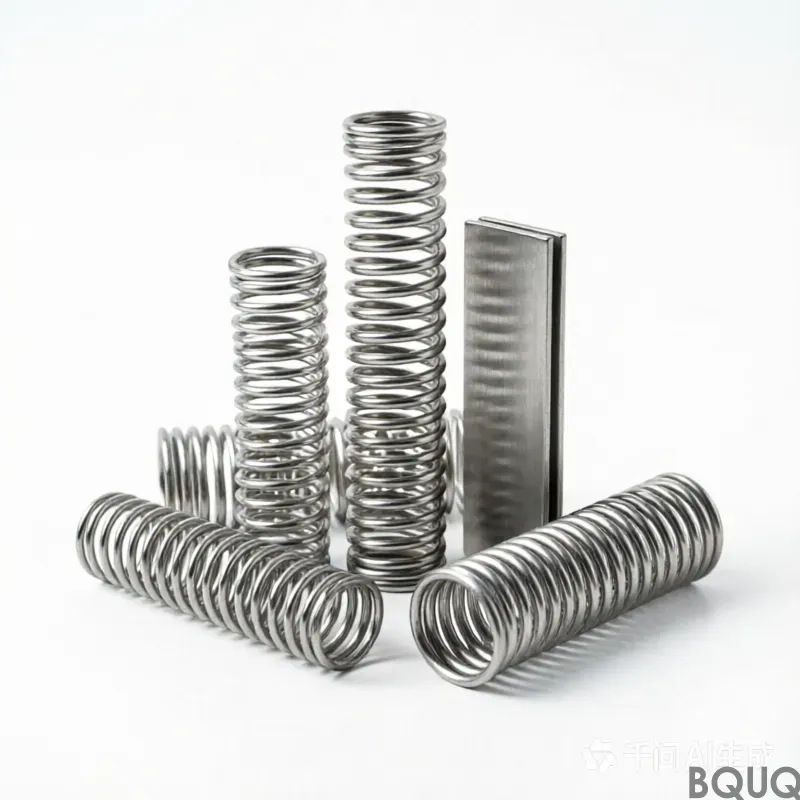
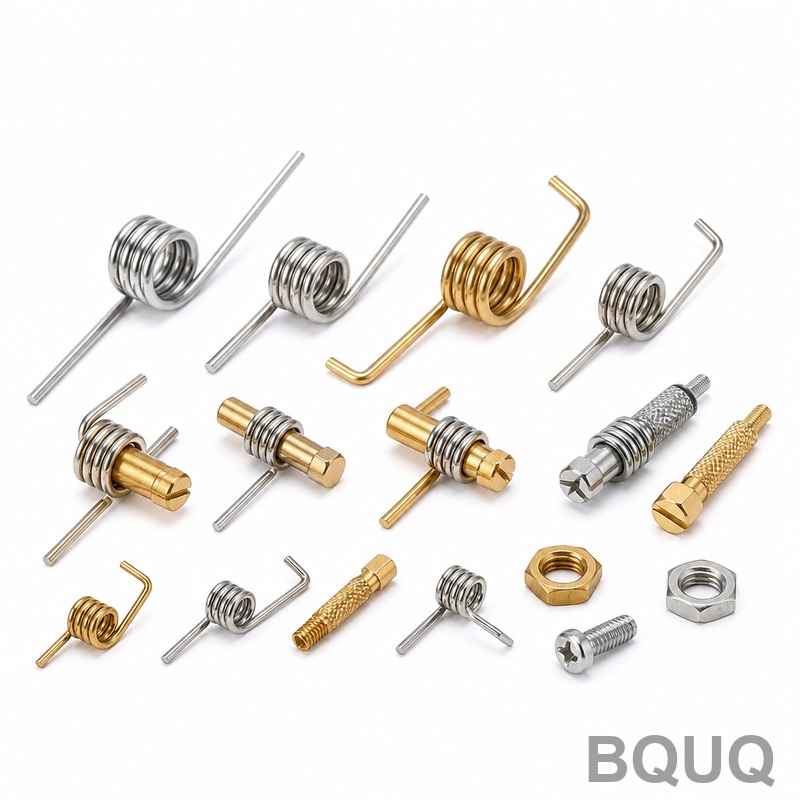
The spring manufacturing industry, governed by ASTM A125 and ISO 26909 standards, recognizes four fundamental end configurations. The **plain (open) end** features a continuous helix that terminates without any modification, leaving a gap between the last coil and the adjacent coil. The **plain-ground end** has the same open geometry but with the last coil flattened and squared by a grinding operation. The **closed (squared) end** is produced by pressing the last coil flat against the adjacent coil, reducing the overall free length while creating a flat seating surface, though the end remains unground. The **closed and ground end** combines the squaring operation with a subsequent grinding pass, producing a flat, square surface perpendicular to the spring axis. For custom applications, manufacturers can also provide reduced OD ends, extended ends, or pigtail ends for torsion or extension springs, but these are non-standard and require custom tooling.
How Does Each End Type Affect Spring Free Length and Solid Height?
The end type fundamentally alters two critical dimensional parameters: free length (the unloaded length) and solid height (the length when all coils are compressed together). For a spring with a given wire diameter (d), number of active coils (Na), and total coils (Nt), the free length and solid height change predictably. A plain end spring has a free length calculated as (Nt + 1) × d, while a closed end spring has a free length of Nt × d. A closed and ground end spring uses (Nt - 1) × d for free length estimation. Solid height also varies: plain ends yield a solid height of (Nt + 1) × d, closed ends give Nt × d, and closed and ground ends provide (Nt - 1) × d. For example, a spring with 8 total coils and 2 mm wire diameter has a free length of 18 mm for plain ends, 16 mm for closed ends, and 14 mm for closed and ground ends. This 4 mm difference (22%) directly impacts the available working travel range and the maximum force the spring can store.
Why Are Closed and Ground Ends Preferred for Precision Compression Springs?
Closed and ground ends are the default specification for any spring used in load-bearing applications such as engine valves, suspension systems, and precision mechanical assemblies. The grinding operation achieves a flatness tolerance of 0.05 mm and a squareness tolerance of 1 to 2 degrees relative to the spring axis. This ensures the spring sits perpendicular to its seating surfaces, preventing buckling and lateral deflection under load. The load tolerance for closed and ground springs is typically ±5% of the specified force at a given deflection, compared to ±15% for plain end springs. In high-cycle applications exceeding 1 million cycles, the flat seating surface distributes stress uniformly, reducing fatigue failure risk. The cost penalty for grinding is approximately $0.10 to $0.30 per part for wire diameters under 5 mm, which is negligible compared to the reliability gained in critical applications.
Which Spring End Type Should You Choose for Different Application Loads?
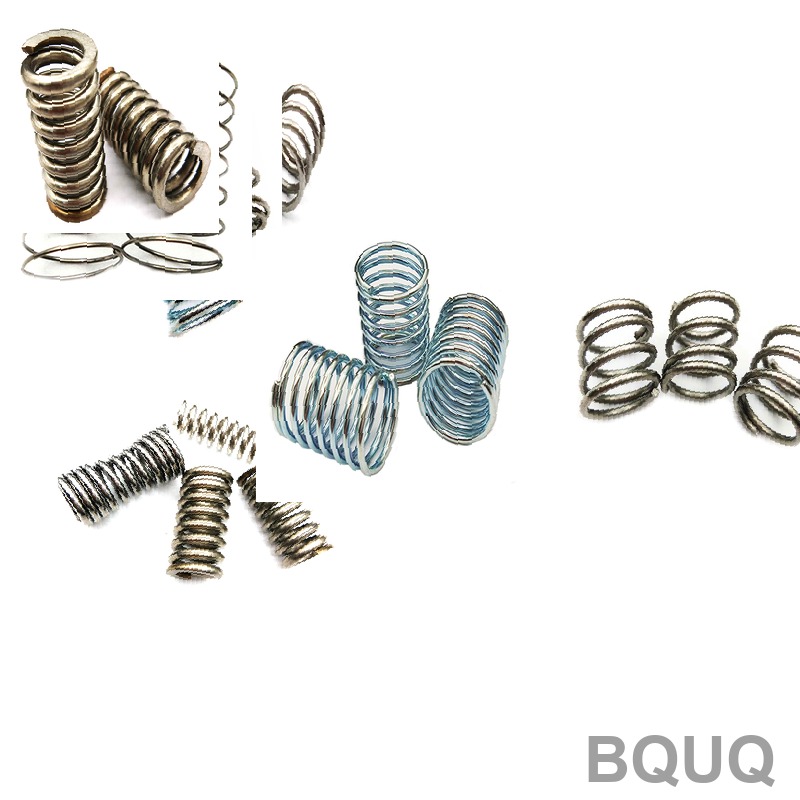
For static or low-cycle applications (under 10,000 cycles) where cost is the primary driver, plain open ends are acceptable. This includes simple return mechanisms, toy mechanisms, and non-critical consumer goods where a spring operates in a loose cavity with no alignment requirement. For medium-duty applications with moderate loads and 10,000 to 100,000 cycles, closed ends without grinding provide a flat seating surface at about 60% of the cost of ground ends. This suits applications like latch mechanisms and industrial equipment where slight load variation is tolerable. For high-performance applications exceeding 100,000 cycles, heavy loads, or where spring length must be precisely controlled, closed and ground ends are mandatory. Aerospace, automotive suspension, and medical device springs always use closed and ground ends. When space is constrained, custom reduced OD ends can minimize the spring's outer diameter footprint, but this increases tooling costs by 15-25%.
How Much Does Each End Type Cost Per Part in Low-Volume Production?
End type cost varies based on wire diameter, material, and production volume. The table below provides realistic per-part pricing for music wire (ASTM A228) springs in quantities of 1,000 pieces, reflecting typical Dongguan factory rates.
| End Type | Free Length Change | Load Tolerance | Squareness Tolerance | Cost per Part (1,000 pcs) | Lead Time |
| Plain Open | +1 wire diameter | ±15% | Not controlled | $0.08 - $0.15 | 3-5 days |
| Plain Ground | +1 wire diameter | ±10% | 3 degrees | $0.15 - $0.25 | 5-7 days |
| Closed (Squared) | 0 (base) | ±10% | 3 degrees | $0.12 - $0.20 | 4-6 days |
| Closed and Ground | -1 wire diameter | ±5% | 1-2 degrees | $0.25 - $0.45 | 6-9 days |
| Custom (Reduced OD) | Varies by design | ±5% | 1-2 degrees | $0.40 - $0.70 | 10-15 days |
The price difference of $0.17 to $0.30 per part between plain and closed ground ends becomes significant at high volumes. For 100,000-piece orders, the cost gap narrows to $0.05 to $0.10 per part due to automated grinding line efficiencies. However, the tooling cost for custom ends ranges from $300 to $800, which is amortized over the production run.
Can Spring Ends Be Customized for Specific Installation Geometries?
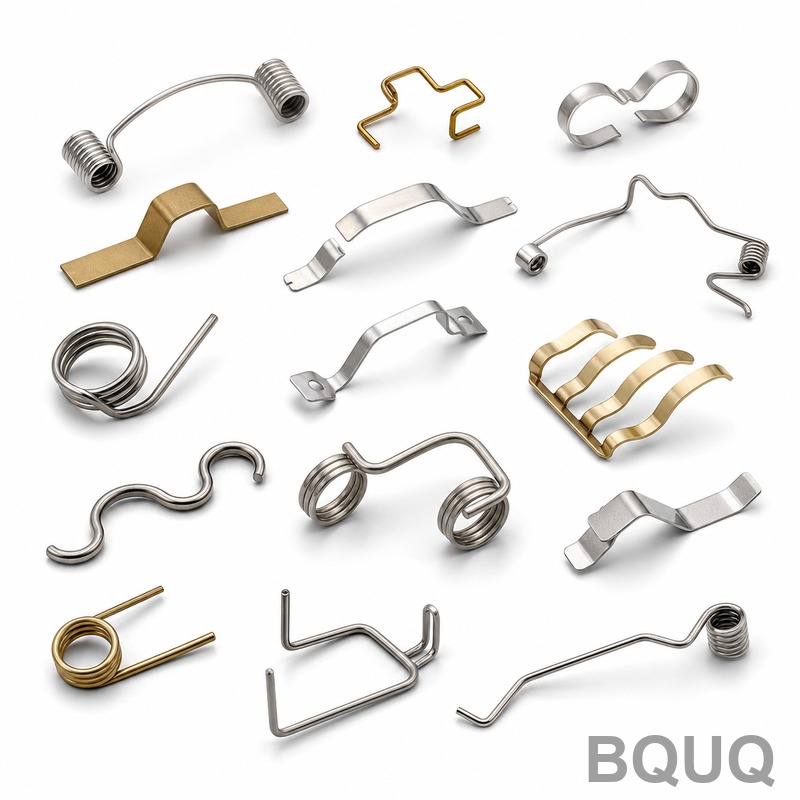
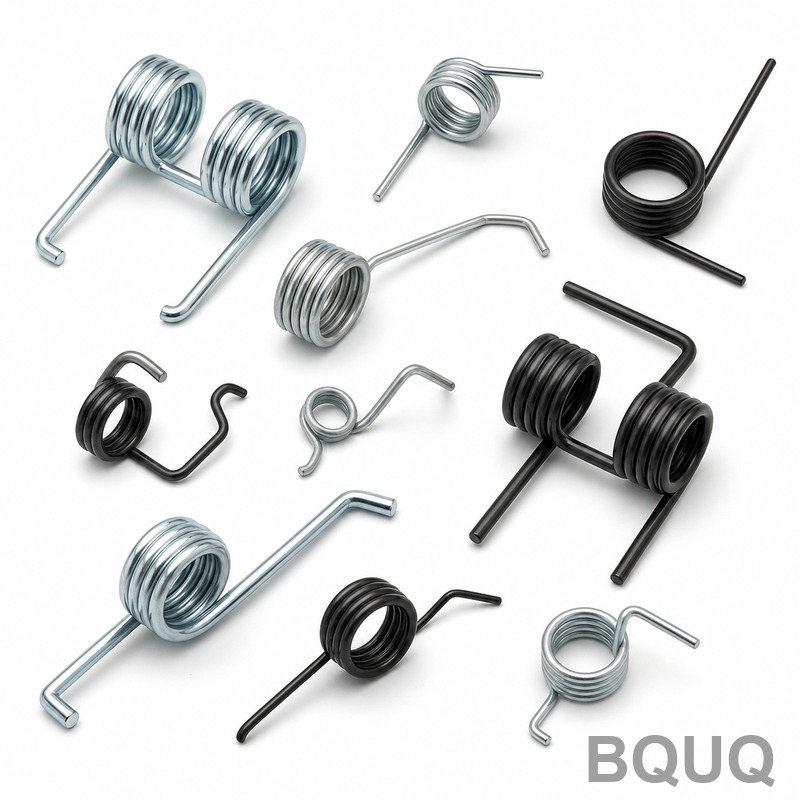
Yes, custom end configurations are available and often necessary for unique installation envelopes. The most common customizations include reduced outside diameter ends, where the last coil is wound with a smaller diameter to fit into a pocket or counterbore; this reduces the effective OD by 10-20% at the end. Extended ends, used in extension springs, add a hook or loop that can be oriented at specific angles (0, 90, or 180 degrees). Pigtail ends provide a closed, flat coil used for spring seating in vibration isolators. For torsion springs, straight torsion ends can be bent to custom angles with a tolerance of ±2 degrees. Each customization requires a dedicated forming tool or CNC coiling machine setup, adding $50 to $150 in setup cost per batch. The minimum order for custom ends is typically 500 pieces to justify tooling amortization.
How Do End Types Impact Fatigue Life and Maximum Operating Temperature?
End geometry directly influences stress concentration at the terminal coils. Plain ends have open gaps that create stress risers, reducing fatigue life by up to 40% compared to closed and ground ends under identical load conditions. The grinding process removes surface defects and creates a smooth, continuous surface that distributes stress evenly, extending fatigue life beyond 10 million cycles for properly designed springs. For high-temperature applications, end type interacts with material selection. Chrome silicon steel (ASTM A401) maintains its elastic properties up to 250°C, and closed and ground ends are essential above 150°C because uneven seating causes localized overheating and premature relaxation. Stainless steel 302 (ASTM A313) can operate up to 290°C, but its lower modulus means the end type must be specified carefully to avoid excessive solid height reduction. In cryogenic applications down to -40°C, closed ends prevent brittle fracture initiation at the sharp edges of open coils.
What Are the Common Quality Inspection Methods for Spring Ends?
Inspection of spring ends follows ISO 26909 and includes three primary measurements. Free length is measured with a height gauge under a light preload to seat the ends; tolerance is typically ±0.25 mm for closed ground springs. Squareness is measured by standing the spring on a surface plate and using a square to check the angle between the end plane and the spring axis; acceptable deviation is 1 degree for ground ends and 3 degrees for unground closed ends. Solid height is verified by compressing the spring coil-bound in a fixture and measuring the resulting height. For ground ends, surface roughness is also checked, with an Ra value of 1.6 micrometers or better required to prevent micro-crack initiation. Statistical process control (SPC) on production lines typically samples 5 parts per hour for these dimensions, with Cpk values greater than 1.33 required for automotive-grade parts.
What Is the Difference Between Closed and Closed Ground Ends?
Closed ends are simply squared by pressing the last coil flat, creating a flat seating surface but leaving the end unground. Closed and ground ends undergo an additional grinding operation that creates a perfectly flat, smooth surface with a squareness tolerance of 1-2 degrees, compared to 3 degrees for unground closed ends. The grinding process also reduces free length by one wire diameter, which must be accounted for in the spring design.
Can Open End Springs Be Used in High-Precision Applications?
Open end springs are not recommended for high-precision applications because they lack a flat seating surface, causing lateral deflection and inconsistent load distribution. The load tolerance of ±15% is too loose for applications requiring repeatable force output. If your design requires precise force or alignment, specify closed and ground ends even if the cost is 2-3 times higher.
How Much Does Grinding Add to the Manufacturing Time?
Grinding adds approximately 2-4 seconds per part in an automated double-disc grinder, which is the main reason for the higher cost. For a batch of 10,000 parts, this adds 6-11 hours of machine time plus setup. However, for wire diameters under 3 mm, grinding can be performed in a centerless grinder at speeds of 1,500 parts per hour, minimizing the time impact.
Which Spring Material Works Best with Ground Ends?
Music wire (ASTM A228) and oil-tempered chrome silicon (ASTM A401) are ideal for ground ends due to their high hardness and good grindability. Stainless steel 302 is harder to grind and requires specialized wheels to avoid burning, increasing cost by 20%. Beryllium copper, used in electrical applications, is too soft for grinding and should use closed ends only.
When Should You Specify Custom End Configurations?
Specify custom ends when the standard four types cannot fit your installation envelope, such as when the spring must sit in a counterbored hole (reduced OD end) or when an extension spring needs a specific hook angle. Custom ends are also necessary when the spring must mate with a non-flat surface, such as a conical seat. Always prototype custom ends in quantities of 50-100 pieces to verify fit before committing to full production.
Why Is Squareness Tolerance Critical for Spring Performance?
Squareness tolerance determines how perpendicular the spring end plane is to the spring axis, which directly affects load direction and buckling behavior. A spring with poor squareness (greater than 3 degrees) will deflect laterally under compression, causing it to bow and potentially contact adjacent components. This lateral force can also cause premature wear on the spring's seating surfaces and reduce fatigue life by up to 30%.
How Does End Type Affect the Spring Rate Calculation?
The spring rate (k) is calculated using the number of active coils, which changes with end type. A plain end spring with 8 total coils has 8 active coils, while a closed end spring has 7.5 active coils and a closed ground end spring has 7 active coils. This 12.5% reduction in active coils increases the spring rate by the same percentage, meaning a closed ground spring is stiffer than a plain end spring with identical wire and diameter.
For your next precision spring project, our engineering team can recommend the optimal end type based on your load, cycle, and cost requirements. We provide free design review within 12 hours of receiving your drawings. Contact us at sc@bquq.com or WhatsApp +86 13713157787, or visit www.bquq.com to request a quote.
Related Articles
- Where to Buy Custom Metal Springs Online: Top 7 Suppliers
- Hardware spring fatigue failure analysis and life prediction technology
- In-depth analysis of technology and process in the hardware spring industry in 2026: a full-dimensional interpretation of high stress, functional integration and engineering certification