What Are the Standard Shapes and Custom Options for Extrusion Heat Sink Profiles?
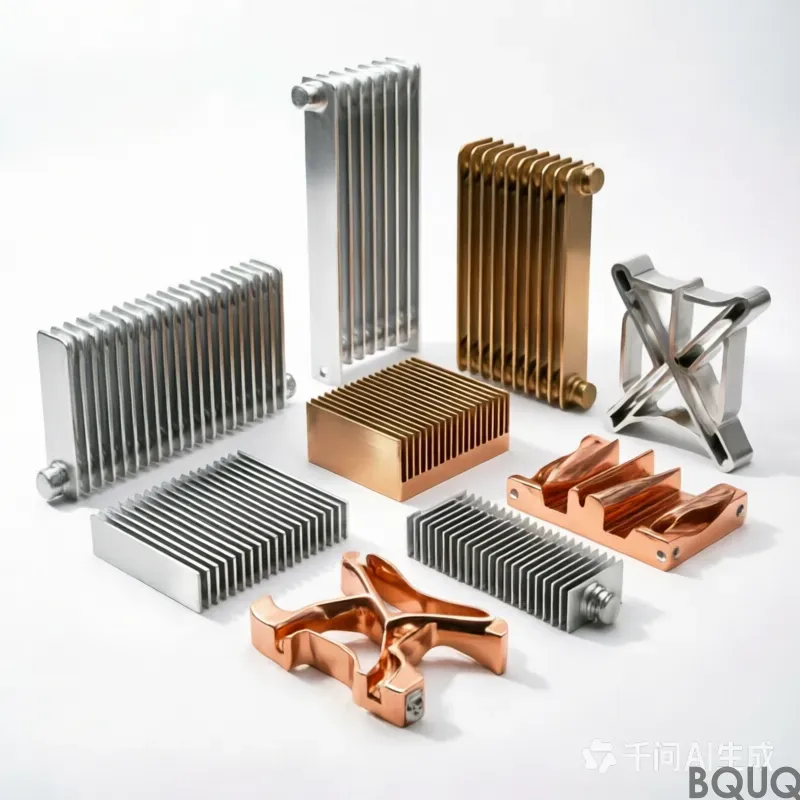
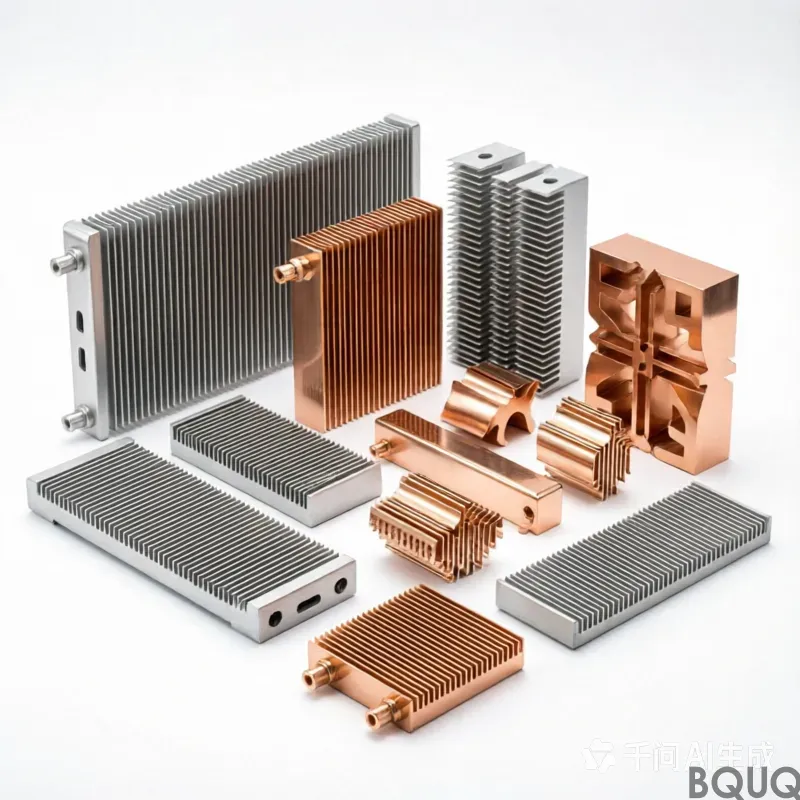
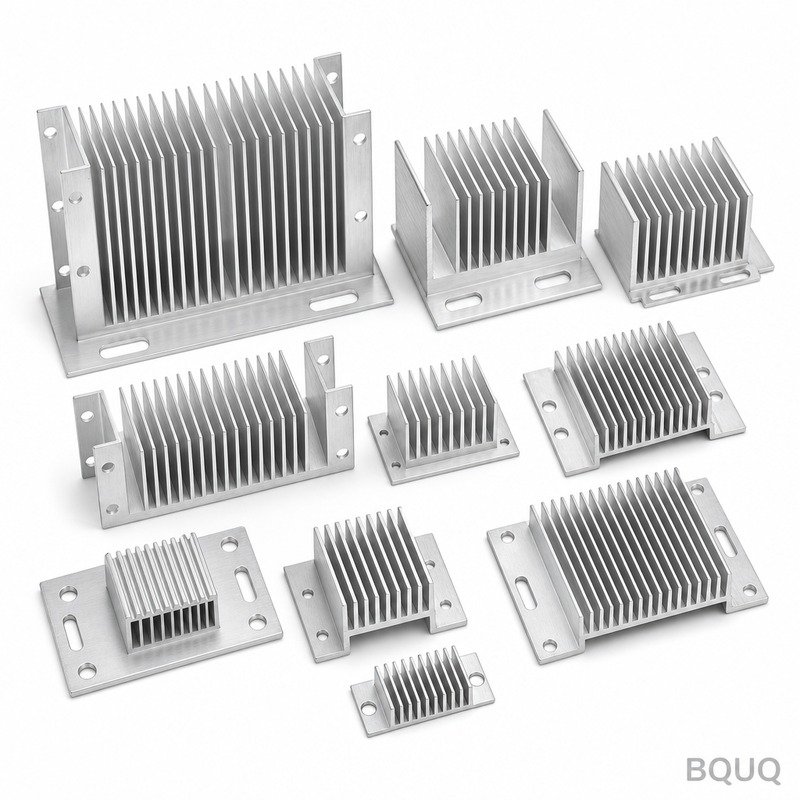
Extrusion heat sink profiles are primarily categorized into standard shapes—flat plate, single-fin, double-fin, and pin-fin—and fully custom geometries, with the choice depending on thermal load, airflow direction, and available envelope. Standard profiles offer lower tooling costs (USD 500–2,000) and faster lead times (2–3 weeks), while custom profiles require dedicated dies (USD 1,500–5,000) but can improve thermal performance by 15–30% through optimized fin density and aspect ratios. The maximum practical extrusion size for aluminum 6063-T5 is a circumscribed circle diameter of 200 mm, with fin height-to-gap ratios up to 8:1 for vertical fins and 6:1 for horizontal fins.
What Are the Standard Extrusion Heat Sink Profile Shapes?
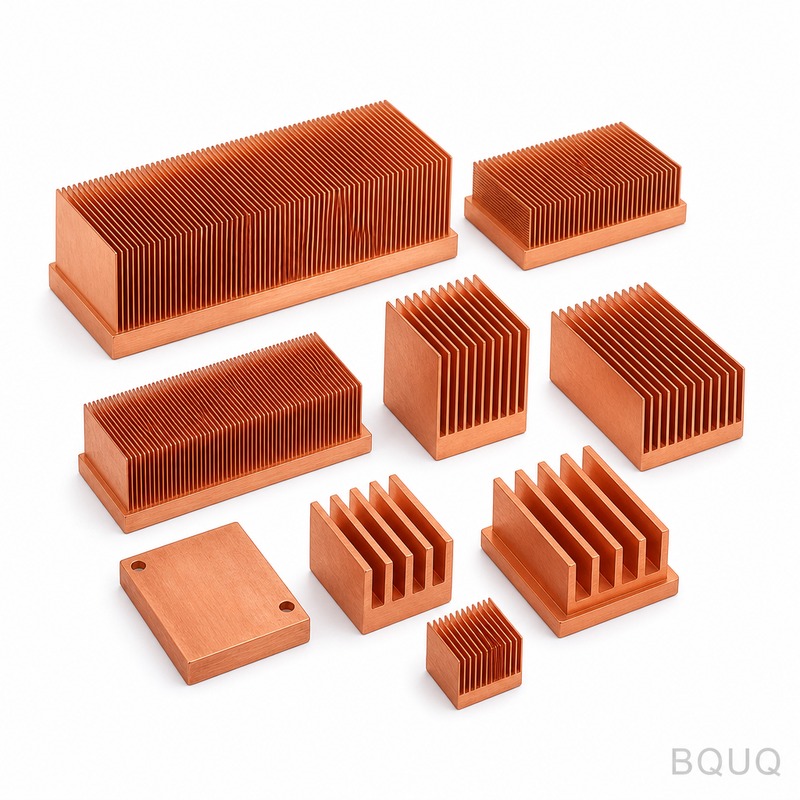
Standard shapes are defined by the Aluminum Extruders Council (AEC) and cover roughly 80% of general-purpose cooling applications. The flat plate profile (no fins) is used for simple heat spreading and has a tolerance of ±0.15 mm on thickness and ±0.30 mm on width. Single-fin profiles have parallel vertical fins on one side, with typical fin thickness of 1.2–2.5 mm, fin pitch of 4–8 mm, and fin height of 10–40 mm. Double-fin profiles have fins on both sides, increasing surface area by 60–80% versus single-fin at the same footprint, and are common in forced-convection chassis cooling. Pin-fin profiles use cylindrical or square pins (2–5 mm diameter) instead of continuous fins, which improves performance in multi-directional airflow but increases extrusion complexity and tooling wear.
The table below summarizes the key specifications for standard extrusion profiles:
| Profile Type | Fin Thickness (mm) | Fin Pitch (mm) | Max Fin Height (mm) | Typical Surface Area Increase vs Flat Plate | Tooling Cost (USD) | Lead Time (weeks) |
| Flat Plate | N/A | N/A | N/A | 0% | 500–800 | 2 |
| Single-Fin | 1.2–2.5 | 4–8 | 40 | 300–500% | 800–1,200 | 2–3 |
| Double-Fin | 1.0–2.0 | 4–7 | 35 (each side) | 500–800% | 1,000–1,500 | 2–3 |
| Pin-Fin | 2–5 (pin dia.) | 5–10 | 20 | 400–600% | 1,500–2,000 | 3–4 |
How Do Custom Extrusion Profiles Differ From Standard Designs?
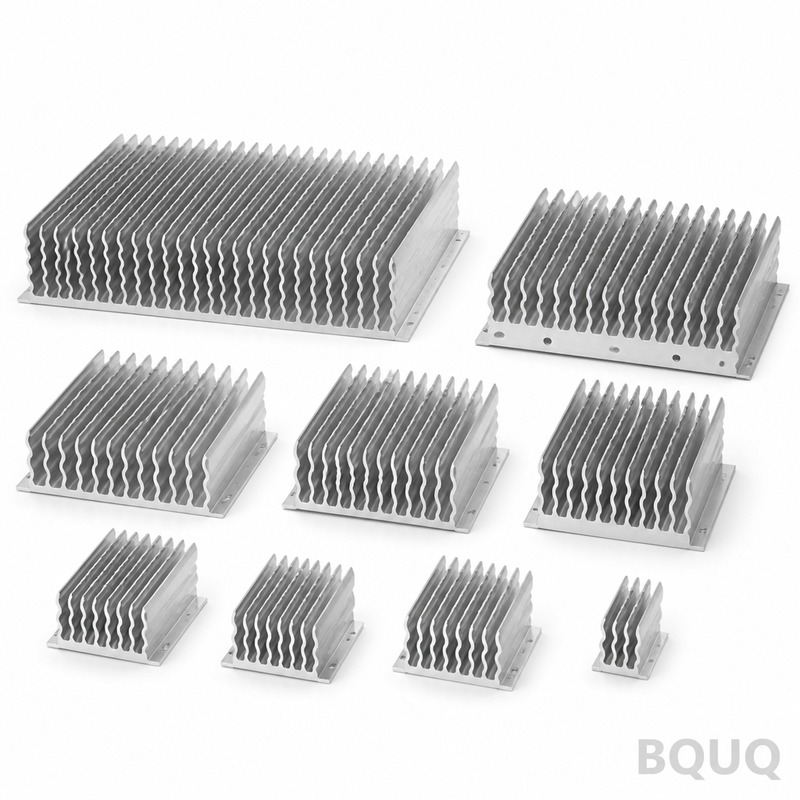
Custom profiles are designed around a specific thermal budget, airflow path, and mechanical interface, rather than picking from a catalog. The key difference is that custom dies are machined from H13 tool steel using wire EDM, allowing fin thickness down to 0.8 mm (versus 1.2 mm standard) and fin pitch down to 2.5 mm (versus 4.0 mm standard). This finer geometry increases surface area by up to 40% compared to a standard profile with the same base dimensions, but it requires a tighter extrusion press tolerance of ±0.05 mm on fin thickness and ±0.10 mm on fin pitch. Custom profiles can also integrate mounting features—such as dovetail slots, threaded holes, or spring clips—directly into the extrusion, eliminating secondary machining operations and reducing assembly cost by 20–35%.
Which Aluminum Alloy Should You Choose for Extrusion Heat Sinks?
Aluminum 6063-T5 is the default choice for heat sinks because it offers a thermal conductivity of 200 W/m·K, good extrudability, and a yield strength of 145 MPa. For higher thermal performance, 6061-T6 provides 167 W/m·K but is harder to extrude, limiting fin aspect ratios to 5:1 and increasing die wear by 30%. For cost-sensitive applications, 6060-T5 has a thermal conductivity of 190 W/m·K and is 10–15% cheaper than 6063, but its strength is lower (120 MPa yield), making it unsuitable for profiles with cantilevered fins above 30 mm. In rare high-temperature environments (above 150°C sustained), 6063-T6 can be specified, but it reduces thermal conductivity to 180 W/m·K and increases lead time by 1 week due to additional aging treatment.
How Much Does Custom Extrusion Tooling Cost and What Is the Payback?
Custom extrusion tooling costs range from USD 1,500 for a simple single-cavity die to USD 5,000 for a multi-cavity die with complex internal features. The die cost is amortized across the production quantity—at 1,000 pieces, the tooling adds USD 1.50–5.00 per part, while at 10,000 pieces, it drops to USD 0.15–0.50 per part. The payback calculation must compare the thermal improvement against the alternative of using a standard profile plus a larger fan or higher airflow. For example, if a custom profile reduces thermal resistance from 0.50°C/W to 0.35°C/W, it may allow a 20% smaller fan, saving USD 2.00 per unit in fan cost—at 5,000 units, that is a USD 10,000 savings versus a USD 3,000 die investment, yielding a 3.3x return.
What Is the Maximum Practical Size and Aspect Ratio for Extrusion Profiles?
The maximum circumscribed circle diameter for a single extrusion is 200 mm on a standard 1,800-ton press, with a maximum length of 4,000 mm. The fin aspect ratio (height-to-gap) is the critical limitation: for vertical fins, the maximum is 8:1, meaning a 40 mm fin height requires a minimum 5 mm gap between fins. For horizontal fins (used in natural convection), the maximum is 6:1 because the metal flow must fill the die cavity against gravity. Exceeding these ratios causes incomplete filling, thin fin edges (less than 0.6 mm), and a 50% increase in scrap rate. If your design requires a higher aspect ratio, consider a two-piece assembly—extrude the base and fins separately, then join with epoxy or mechanical fasteners—which can achieve aspect ratios up to 12:1.
How Do You Optimize Fin Geometry for Natural vs. Forced Convection?
For natural convection (no fan), the optimal fin pitch is 8–12 mm, fin height is 25–50 mm, and fin thickness is 2.0–3.0 mm, because the boundary layer is thick and wider gaps allow air to rise freely. For forced convection with a fan, the optimal fin pitch is 3–6 mm, fin height is 10–25 mm, and fin thickness is 1.0–1.8 mm, because the thinner boundary layer allows tighter packing and more surface area per volume. A common mistake is using forced-convection geometry in a natural-convection application, which reduces performance by 30–40% due to choked airflow. For dual-mode operation (natural and forced), use a fin pitch of 6–8 mm as a compromise, accepting a 10–15% reduction in peak forced-convection performance.
When Should You Specify a Custom Profile Instead of a Standard One?
Specify a custom profile when the thermal resistance requirement is below what standard profiles can achieve, when the mounting interface is non-standard, or when space constraints require a non-rectangular envelope. Quantitatively, if your target thermal resistance is above 0.40°C/W for a 100 mm x 100 mm base, a standard double-fin profile will suffice. If the target is below 0.30°C/W, you need a custom profile with finer fins or a larger height. Additionally, custom profiles are justified when the production volume exceeds 2,000 pieces per year, because the tooling amortization becomes negligible, and when the design must pass vibration testing (MIL-STD-810G) that requires integrated mounting bosses rather than glued-on brackets.
FAQ
What Is the Standard Tolerance for Extrusion Heat Sink Profiles?
Standard extrusion tolerances follow the AEC guidelines: ±0.15 mm on thickness, ±0.30 mm on width, and ±0.50 mm on length for profiles up to 200 mm. Fin thickness tolerances are tighter at ±0.10 mm for standard designs and ±0.05 mm for custom dies. These tolerances are achievable without post-machining, but if you need ±0.02 mm on critical surfaces, specify CNC machining after extrusion.
How Long Does a Custom Extrusion Die Last?
An H13 tool steel die typically produces 50,000–100,000 linear meters of extrusion before needing re-cutting. For heat sink profiles with fine fins (below 1.5 mm), die life drops to 30,000–50,000 meters due to increased wear on the fin edges. Re-cutting a die costs 30–40% of the original die price and restores full tolerance capability.
Can Extrusion Profiles Be Bent or Formed After Extrusion?
Yes, aluminum 6063-T5 can be bent after extrusion, but only across the length axis (not across the fin direction) with a minimum bend radius of 5 times the profile thickness. Bending after extrusion requires a temper of T5 or T6; if you bend in the T4 condition, you must re-age to T5, adding 3–5 days to lead time. For heat sinks, bending is rarely used because it disturbs the fin geometry; consider a custom die if you need a curved profile.
What Surface Finishes Are Available for Extrusion Heat Sinks?
The standard finish is mill finish (as-extruded) with a surface roughness of Ra 1.6–3.2 μm. For improved emissivity in natural convection, specify a black anodize (per MIL-A-8625 Type II), which increases emissivity from 0.1 to 0.85 and costs USD 2.50–4.00 per square meter. For corrosion resistance, a clear anodize (5–10 μm thickness) is recommended, adding USD 1.50–2.50 per square meter.
How Do You Calculate the Thermal Resistance of an Extrusion Profile?
The thermal resistance is calculated as R = L / (k x A), where L is the heat path length (base thickness plus half the fin height), k is the thermal conductivity (200 W/m·K for 6063-T5), and A is the total wetted surface area. For a standard double-fin profile with 100 mm width, 100 mm length, 20 mm fin height, and 5 mm fin pitch, the total surface area is approximately 0.12 m², giving a resistance of 0.42°C/W. Use CFD software (e.g., Flotherm or Icepak) for accurate predictions above 50 W heat loads.
Which Extrusion Profile Is Best for LED Lighting Heat Sinks?
For LED lighting, the best profile is a custom cylindrical or D-shaped extrusion with radial fins, because it allows uniform heat spreading around the LED module and natural convection in any orientation. Standard flat profiles are suboptimal because they create hot spots on the LED substrate. A typical LED profile has a 40–60 mm outer diameter, 8–12 radial fins, and a 2–3 mm wall thickness, achieving 0.20–0.30°C/W for a 20 W LED.
What Is the Minimum Order Quantity for Custom Extrusion Profiles?
The minimum order quantity for a custom extrusion is typically 300 kg or 500 meters, whichever is greater, due to the minimum run length on the extrusion press. For a typical heat sink profile weighing 1.5 kg/m, this translates to approximately 200 pieces. If you need fewer pieces, consider a standard profile with secondary machining, or a 3D-printed metal prototype (SLS) for quantities under 50 pieces.
Conclusion
Choosing between a standard and custom extrusion heat sink profile is a cost-performance trade-off that hinges on thermal resistance targets, production volume, and envelope constraints. Standard profiles deliver 300–800% surface area increase at tooling costs under USD 2,000, while custom profiles can push fin density and aspect ratios to the physical limits of aluminum extrusion, improving performance by up to 30% at tooling costs of USD 1,500–5,000. The engineering rule is simple: use standard profiles for thermal resistance above 0.40°C/W and volumes under 2,000 units; invest in custom dies when performance targets are tighter and volumes justify the amortization. At BQUQ, our 20 years of extrusion and CNC machining experience allows us to provide design-for-manufacturability feedback within 24 hours. For a free DFM review and a firm quote on your heat sink profile, contact us at sc@bquq.com or WhatsApp +86 13713157787, and we will respond within 12 hours. Visit www.bquq.com for more technical resources and case studies.