What Is a Skived Heat Sink and When Should You Use One?
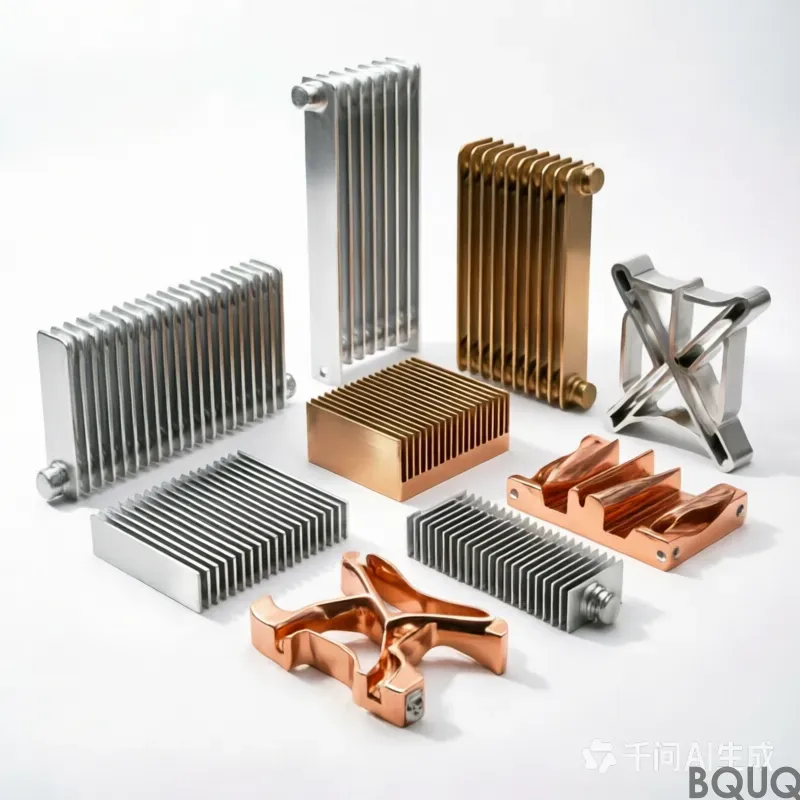
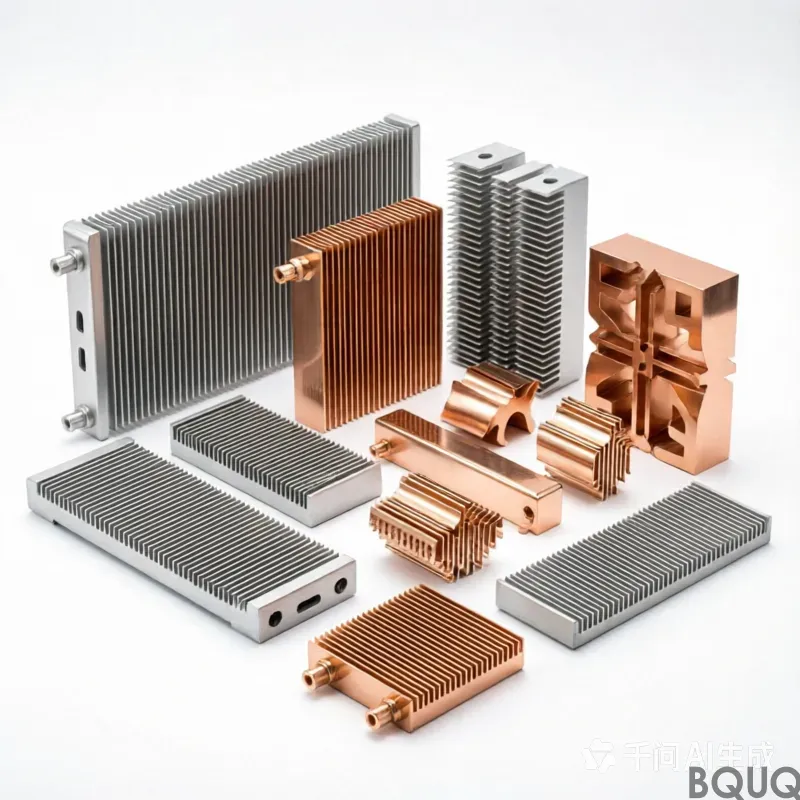
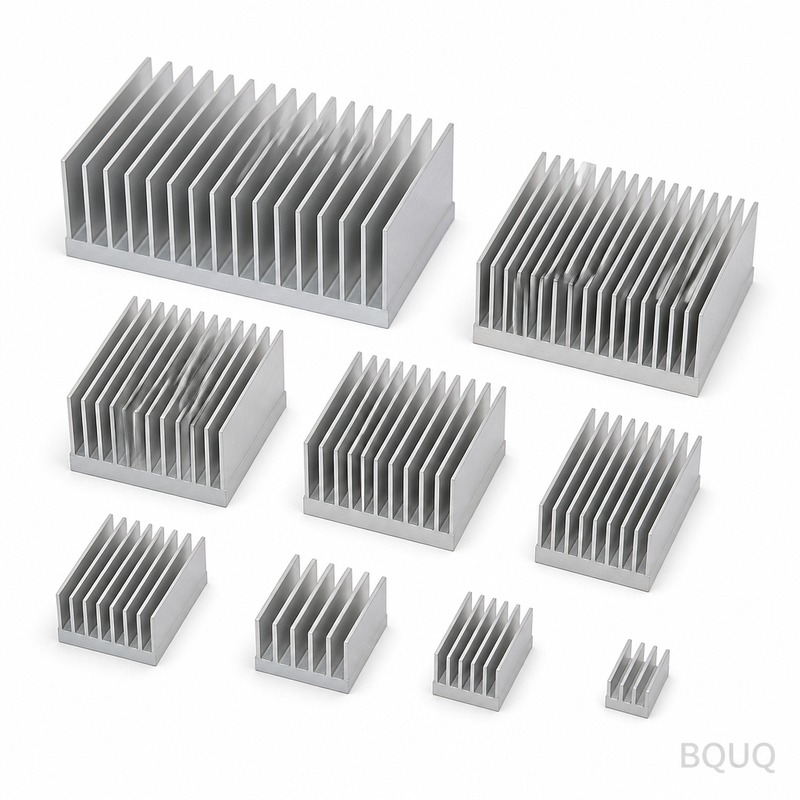
A skived heat sink is a cooling component manufactured by shaving thin layers of metal—typically copper or aluminum—from a solid block to form continuous, monolithic fins with no joints or interfaces. You should use one when your application demands maximum thermal conductivity, extremely high fin density, or operation in harsh environments where bonded or folded fin assemblies would fail. Skived heat sinks excel in high-power electronics, aerospace, and military systems where reliability outweighs the higher manufacturing cost compared to stamped or extruded alternatives.
How Does the Skiving Process Differ from Extrusion or Bonded Fins?
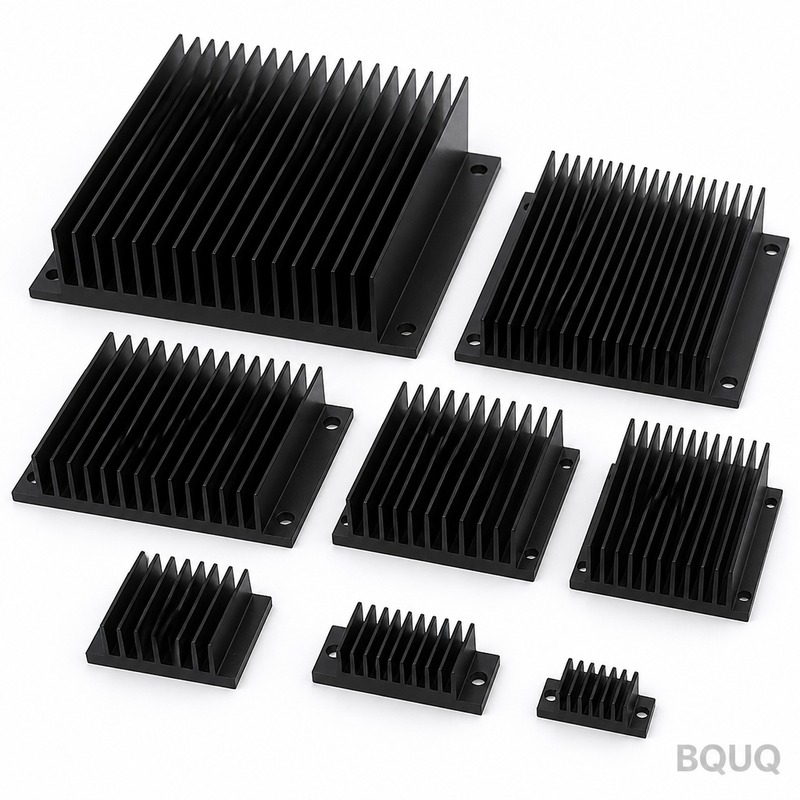
The skiving process uses a specialized machine with a sharp cutting tool that peels a thin layer, typically 0.2 to 1.5 mm thick, from a solid block of copper or aluminum. The tool lifts and bends each layer upward to form a fin, creating a single-piece structure where the fin and base are the same material with no thermal interface resistance. Extrusion forces heated metal through a die, which limits fin height-to-width ratios to about 8:1, while skiving achieves ratios up to 40:1. Bonded fin heat sinks attach individual fins to a base using epoxy or solder, introducing a thermal barrier with a conductivity loss of 5% to 15% across the joint. Skiving eliminates this barrier entirely, making it superior for heat fluxes above 50 W/cm².
What Thermal Performance Can a Skived Heat Sink Achieve?
A copper skived heat sink can achieve a thermal resistance as low as 0.05°C/W for a 100 mm by 100 mm base with 60 fins, compared to 0.12°C/W for an equivalent extruded aluminum design. The continuous grain structure of skived fins provides thermal conductivity of 385 W/m·K for copper and 200 W/m·K for aluminum, versus 150 to 180 W/m·K for epoxy-bonded assemblies. Fin density ranges from 8 to 40 fins per inch (FPI), with fin thickness from 0.2 mm to 1.0 mm and fin heights from 5 mm to 75 mm. This geometry allows natural convection cooling of 50 to 150 watts and forced convection cooling of 200 to 2000 watts, depending on airflow and baseplate size.
| Parameter | Skived Copper | Skived Aluminum | Extruded Aluminum | Bonded Fin Assembly |
| Thermal Conductivity (W/m·K) | 385 | 200 | 180 | 150-180 (joint limited) |
| Max Fin Height (mm) | 75 | 60 | 40 | 100 (separate fins) |
| Fin Thickness (mm) | 0.2-1.0 | 0.3-1.5 | 1.0-3.0 | 0.5-2.0 |
| Fin Density (FPI) | 15-40 | 10-30 | 4-10 | 8-20 |
| Thermal Resistance (°C/W) | 0.05-0.15 | 0.08-0.25 | 0.15-0.40 | 0.10-0.35 |
| Tooling Cost (USD) | 3,000-8,000 | 2,500-6,000 | 10,000-30,000 | 1,000-5,000 |
| Lead Time (weeks) | 2-4 | 2-4 | 4-8 | 3-6 |
| Operating Temperature (°C) | -200 to 400 | -200 to 400 | -200 to 300 | -50 to 150 (epoxy limit) |
When Should You Choose a Skived Heat Sink Over Other Types?
You should choose a skived heat sink when your thermal design requires fin height-to-gap ratios exceeding 10:1, which extrusion cannot produce. Skiving is also the correct choice when the heat sink will experience thermal cycling from -55°C to 150°C, because bonded fins can delaminate due to coefficient of thermal expansion mismatch between fin material and adhesive. For applications with high vibration levels, such as military vehicles or aircraft, the monolithic structure prevents fin fatigue failure at the bond line. However, for low-cost consumer electronics with heat loads under 50 watts, stamped or extruded heat sinks are more cost-effective. Skiving becomes economically justified when the heat flux exceeds 30 W/cm² or when system reliability requirements mandate zero solder or epoxy joints.
How Much Does a Skived Heat Sink Cost Compared to Alternatives?
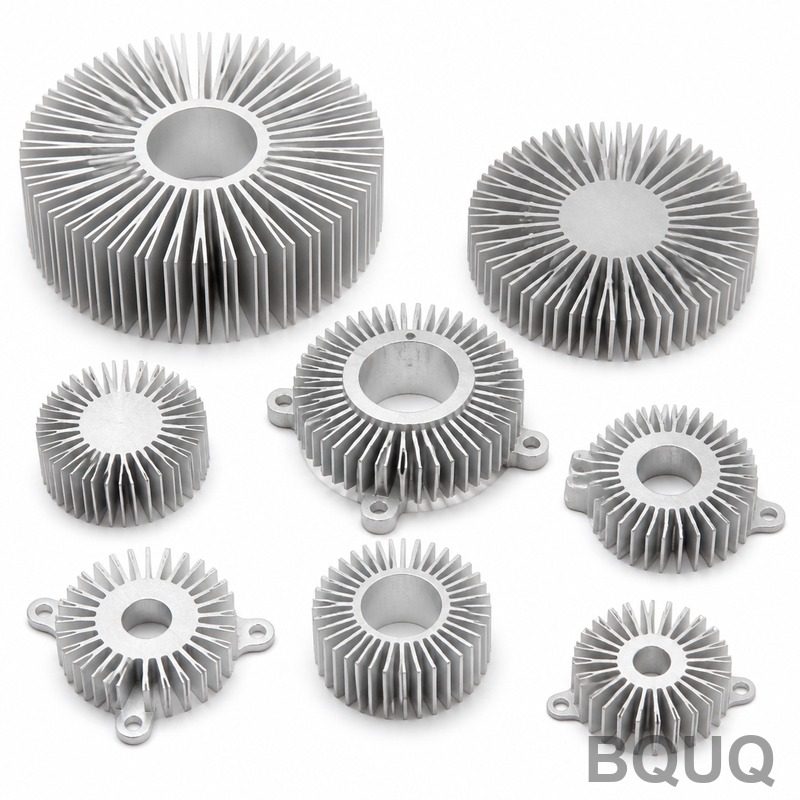
A skived aluminum heat sink with a 100 mm by 100 mm base and 20 mm fin height costs between $15 and $40 per unit in quantities of 1,000 pieces, depending on fin density and secondary operations. A comparable copper skived heat sink costs $35 to $80 per unit due to raw material prices of $8 to $12 per kilogram for copper versus $3 to $5 per kilogram for aluminum. Tooling for skiving is moderate at $2,500 to $8,000, significantly less than extrusion dies which range from $10,000 to $30,000. For a production run of 10,000 units, the total cost per skived heat sink is 20% to 40% higher than a stamped fin assembly, but the thermal performance gain of 25% to 50% often justifies the premium in high-reliability sectors.
Which Industries and Applications Benefit Most from Skived Heat Sinks?
The aerospace and defense sectors are the largest users of skived heat sinks because their thermal management systems require operation under extreme shock, vibration, and temperature variations. Radar systems, avionics, and power converters for aircraft use copper skived heat sinks to dissipate 500 to 2000 watts from IGBT modules and GaN transistors. The medical device industry uses skived heat sinks in CT scanners and laser surgical equipment where compact form factors and high reliability are mandatory. Telecommunications infrastructure, particularly 5G base stations, uses aluminum skived heat sinks for remote radio heads that generate 200 to 400 watts of heat in outdoor enclosures. Electric vehicle power electronics, including inverters and onboard chargers, increasingly adopt skived copper heat sinks for battery management systems operating at 400 to 800 volts.
Why Is Material Selection Critical for Skived Heat Sinks?
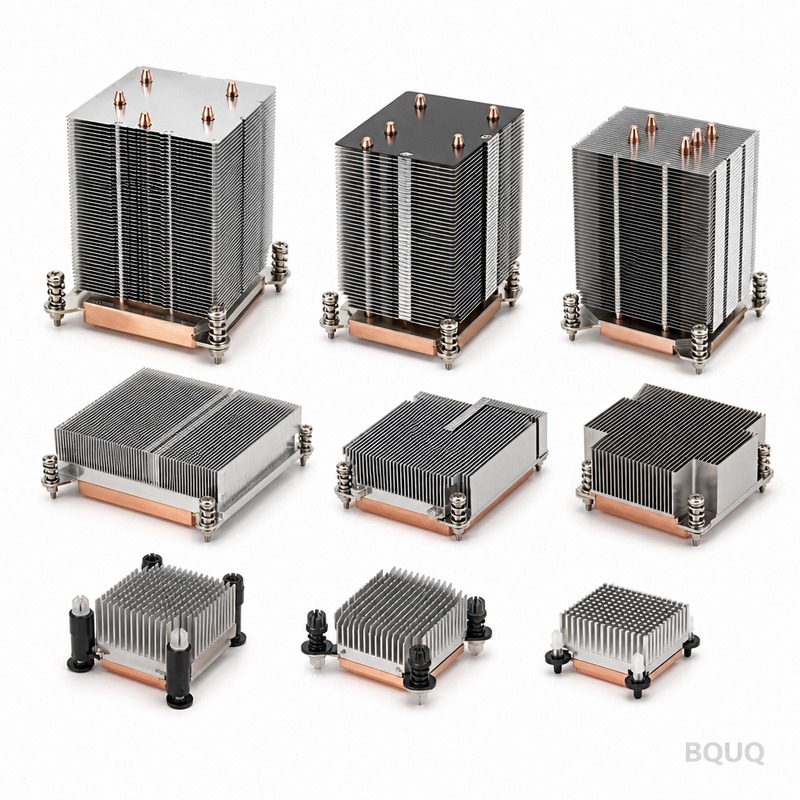
Material selection determines the maximum heat dissipation capability and the operating temperature range of the skived heat sink. Copper provides the highest thermal conductivity at 385 W/m·K but adds 50% to 100% more weight than aluminum, making it unsuitable for weight-sensitive aerospace applications. Aluminum alloys such as 6063-T5 offer a good balance of thermal performance and cost, with a density of 2.7 g/cm³ versus copper's 8.96 g/cm³. The skiving process works best with softer, ductile materials; harder alloys like 7075-T6 cause excessive tool wear and produce brittle fins that crack during bending. For high-temperature applications above 200°C, copper is the only practical choice because aluminum loses 20% of its strength at elevated temperatures. Nickel-plated copper skived heat sinks are specified for corrosive environments such as offshore oil platforms and chemical processing plants.
How Do You Validate a Skived Heat Sink Design for Your Application?
You validate a skived heat sink design by performing computational fluid dynamics (CFD) simulations to predict thermal resistance and pressure drop at your specified airflow rate, typically 1 to 5 m/s for forced convection. Prototype samples should be tested in a wind tunnel with thermocouples attached to the base and fin tips to measure temperature gradients. The critical validation parameter is the junction-to-ambient thermal resistance, which should be within 10% of the simulated value. Accelerated life testing at 85°C and 85% relative humidity for 500 hours ensures the fins maintain their mechanical integrity without corrosion or stress relaxation. Vibration testing per MIL-STD-810G with random vibration from 20 to 2000 Hz at 10 g RMS confirms that the monolithic fin structure withstands operational loads. Always request a thermal impedance report from the manufacturer, including infrared thermography images, to verify uniform heat spreading across the baseplate.
What Are the Limitations and Trade-offs of Skived Heat Sinks?
The primary limitation of skived heat sinks is the maximum fin height of about 75 mm, which restricts their use in very tall heat sink applications that would require stacked assemblies. The skiving process creates a radius at the fin base of 0.5 to 1.0 mm, which reduces the effective fin surface area by 5% to 10% compared to an ideal rectangular fin. Fin pitch is limited to a minimum of 0.5 mm, below which the cutting tool cannot operate reliably without breaking fragile fins. Secondary operations such as machining mounting holes, adding threaded inserts, or applying surface coatings increase the total cost by 15% to 30%. Skived heat sinks are also heavier than hollow extruded designs because the solid base is typically 5 to 10 mm thick to provide structural rigidity during the cutting process.
FAQ
What Is the Minimum Fin Thickness for a Skived Heat Sink?
The minimum practical fin thickness for skived heat sinks is 0.2 mm for copper and 0.3 mm for aluminum. Thinner fins risk tearing during the cutting and bending process, and they offer diminishing thermal returns because the fin efficiency drops below 70%.
Can Skived Heat Sinks Be Used with Liquid Cooling?
Yes, skived heat sinks are often paired with cold plates for liquid cooling systems, where the skived fins are placed in a sealed channel with water or dielectric coolant flowing through them. This configuration achieves thermal resistances below 0.02°C/W for high-power laser diodes and power modules.
How Do Skived Heat Sinks Compare to Vapor Chambers?
Skived heat sinks provide directional heat spreading in one plane, while vapor chambers spread heat in two dimensions using phase-change fluid. For heat sources larger than 50 mm by 50 mm, a vapor chamber combined with skived fins offers the best performance, but at 2 to 3 times the cost.
What Surface Finishes Are Available for Skived Heat Sinks?
Standard finishes include bare aluminum with a clear anodize coating (5 to 10 µm), black anodize for improved emissivity of 0.85, and electroless nickel plating for copper to prevent oxidation. These finishes are applied after skiving and do not affect the fin-to-base thermal joint because the structure is monolithic.
What Is the Typical Lead Time for Custom Skived Heat Sink Samples?
Custom skived heat sink samples are typically delivered in 5 to 7 working days for standard aluminum alloys and 7 to 10 days for copper. Production quantities of 1,000 units require 2 to 4 weeks due to material procurement and secondary machining operations.
Can Skived Heat Sinks Be Machined After the Skiving Process?
Yes, the baseplate can be milled, drilled, or tapped after skiving to add mounting features, but the fins themselves should not be machined because they are thin and flexible. All fin-side operations must be completed during the skiving process itself.
How Does the Cost of Skived Heat Sinks Scale with Production Volume?
Tooling costs are amortized over the production run, so the per-unit price drops significantly from around $80 for a single prototype to $25 for 100 units and $15 for 1,000 units. Beyond 10,000 units, the cost stabilizes because material and machining time dominate the final price.
What Is the Final Verdict on Skived Heat Sinks?
Skived heat sinks are the premium choice for applications requiring the highest thermal performance, mechanical reliability, and resistance to harsh environmental conditions. They are not the cheapest option, but their monolithic construction eliminates the failure modes of bonded or soldered fins, making them indispensable for aerospace, defense, medical, and high-end industrial electronics. For heat loads above 200 watts or thermal cycling requirements beyond 100°C, skived heat sinks offer the lowest risk and the best long-term performance. When in doubt, evaluate your heat flux, operating temperature range, and vibration profile against the data in this article, and contact a manufacturer for a thermal simulation of your specific design.
For a detailed thermal analysis and a custom skived heat sink quotation within 12 hours, contact our engineering team at BQUQ. Email us at sc@bquq.com or send your drawings via WhatsApp at +86 13713157787. Visit www.bquq.com to download our thermal design guide and request free samples for your prototype validation.
Related Articles
- Thermal Management for High Brightness LEDs with Heat Sinks
- Best Copper Heat Sinks for CPU Overclocking in 2025
- New energy vehicle IGBT heat dissipation, heat sink reliability engineering, heat pipe and temperature plate integrated heat sink, surface treatment and heat radiation enhancement: anodic oxidation, black coating and micro-nano structure, graphene/3D printing/intelligent thermal management: 2030 heat sink technology roadmap