What Is a Transfer Die? High-Speed Stamping for Complex Parts
A transfer die is a multi-station stamping tool that physically transfers a metal workpiece from one station to the next using mechanical fingers, rails, or suction cups, allowing for the creation of complex parts that cannot be produced in a single progressive die. Unlike progressive dies, where the strip remains attached to the carrier web, transfer dies completely separate the part from the strip at the first station, enabling deeper draws, side actions, and more intricate geometries. At BQUQ, we use transfer dies for high-volume production of parts requiring tolerances of ±0.05 mm at speeds up to 60 strokes per minute.
How Does a Transfer Die Differ from a Progressive Die?
The fundamental difference lies in how the material is handled between stations. In a progressive die, the metal strip remains connected to a carrier ribbon throughout the entire process, and the part is only cut free at the final station. In a transfer die, the blank is cut or drawn from the strip at the very first station, then physically picked up by transfer rails, fingers, or vacuum cups and moved independently through each subsequent forming station. This separation allows for forming operations that require access to the entire perimeter of the part, including reverse drawing, side piercing, and complex bending that would be impossible with a continuous strip. The transfer system also permits the use of thicker materials and deeper draws because there is no carrier web restriction, but it requires more precise synchronization and typically runs at lower speeds, generally 30 to 60 strokes per minute versus 100 to 800 for progressive dies.
What Types of Parts Are Best Suited for Transfer Die Stamping?
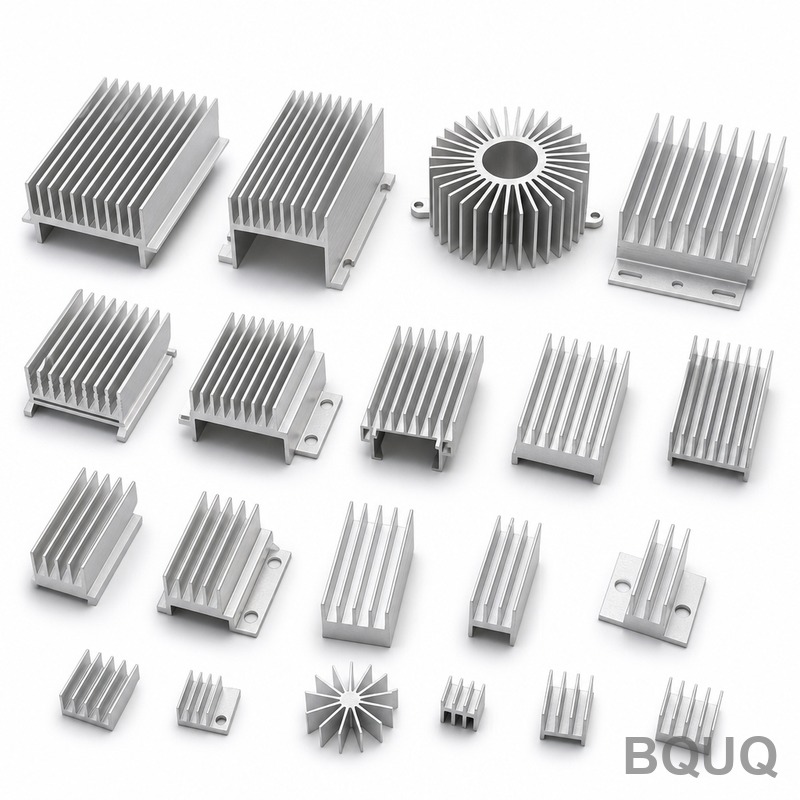
Transfer die stamping excels at producing parts with high depth-to-width ratios, complex three-dimensional shapes, and those requiring multiple forming axes. Typical examples include automotive exhaust flanges, fuel tank straps, door hinge brackets, and deep-drawn housings for electric motors. The process is also ideal for parts where material utilization is critical, since the blank is separated first, allowing for more efficient nesting and reducing scrap by up to 15% compared to progressive dies. Parts with side holes, undercuts, or threaded features that require rotation or angular punching are also strong candidates. In our experience at BQUQ, parts with a draw depth exceeding 50% of their diameter or width are almost always better suited for transfer dies, as progressive dies would require an excessively wide carrier strip to prevent tearing.
How Much Does Transfer Die Tooling Cost and What Is the Lead Time?
Transfer die tooling costs are significantly higher than progressive dies due to the added complexity of the transfer mechanism, which includes cam-driven fingers, grippers, and synchronization systems. For a typical medium-complexity part, such as a heat sink base or a motor housing, a transfer die will cost between 25,000 and 80,000 USD, depending on the number of stations, material thickness, and required tolerances. This compares to 15,000 to 50,000 USD for an equivalent progressive die. Lead time for transfer die design and fabrication at BQUQ ranges from 6 to 10 weeks, with an additional 2 to 3 weeks for tryout and adjustment. However, the per-part cost is often lower for high volumes exceeding 100,000 units per year, as the transfer process allows for more aggressive forming in fewer stations, reducing total cycle time and secondary operations.
What Tolerances and Speeds Can Transfer Die Stamping Achieve?
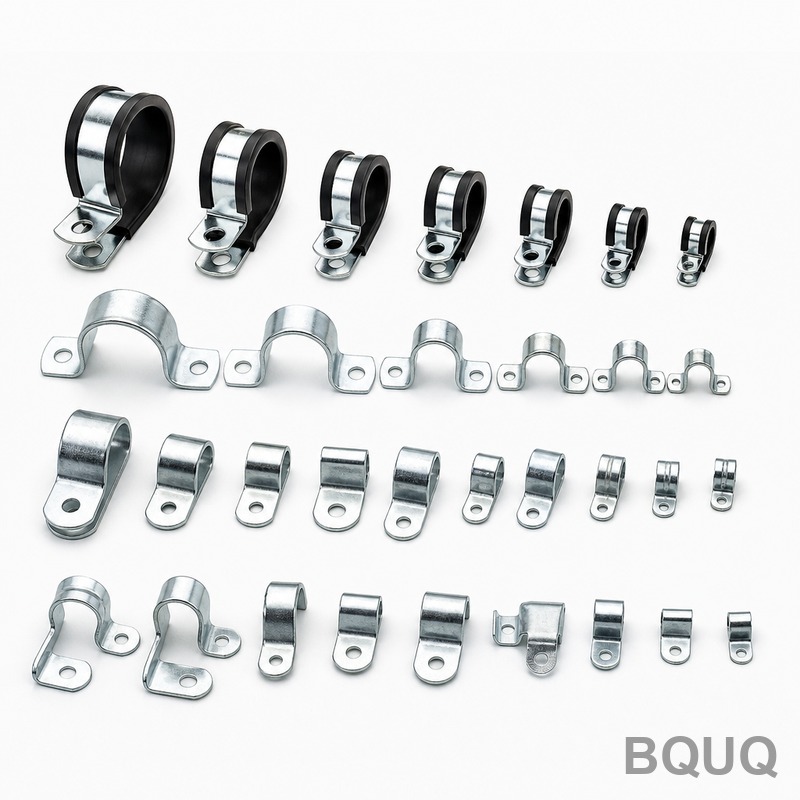
Transfer die stamping can achieve dimensional tolerances of ±0.05 mm for critical dimensions and ±0.10 mm for general features, provided the material thickness is consistent and the press is properly maintained. Positional tolerances between features on different sides of the part can be held to ±0.08 mm when using precision transfer rails. Surface finish typically ranges from Ra 0.8 to 1.6 micrometers depending on the tool steel grade and lubrication. In terms of speed, a well-designed transfer die on a 250-ton press can run at 40 to 60 strokes per minute for parts up to 150 mm in length, while smaller parts under 50 mm can reach 80 strokes per minute. Material thickness capability ranges from 0.3 mm to 6.0 mm in steel, and up to 4.0 mm in aluminum. The table below shows typical specifications for transfer die stamping at BQUQ.
| Parameter | Typical Range | Best Case | Unit |
| Dimensional Tolerance | ±0.10 | ±0.05 | mm |
| Positional Tolerance | ±0.15 | ±0.08 | mm |
| Surface Finish | Ra 1.6 | Ra 0.8 | micrometers |
| Max Draw Depth | 60% of part width | 80% of part width | ratio |
| Material Thickness Steel | 0.5 to 4.0 | 0.3 to 6.0 | mm |
| Strokes Per Minute | 30 to 60 | 80 | SPM |
| Tooling Cost | 25,000 to 60,000 | 80,000 | USD |
| Tooling Lead Time | 8 to 10 | 6 | weeks |
Why Use Transfer Die Stamping for Heat Sinks and High-Conductivity Parts?
Heat sinks and other thermal management components benefit from transfer die stamping because the process allows for the creation of tall fins, complex louver patterns, and deep drawn bases without work-hardening fractures. For aluminum alloys such as 6061-T6 or 5052-H32, transfer dies can produce fin heights up to 25 mm with thicknesses of 0.8 mm, maintaining thermal conductivity of 150 to 200 W/m·K. The independent blanking step allows better control of grain flow, which improves the structural integrity of the fins and reduces the risk of cracking during subsequent bending. At BQUQ, we have produced stamped heat sinks with a fin density of 8 fins per centimeter and a base thickness of 3 mm, achieving flatness of 0.05 mm over a 100 mm length. The ability to perform side punching in the same die also allows for mounting holes and clip slots to be added in one pass, eliminating secondary machining and reducing cost per part by roughly 30% compared to CNC machining.
Which Materials Are Compatible with Transfer Die Stamping?
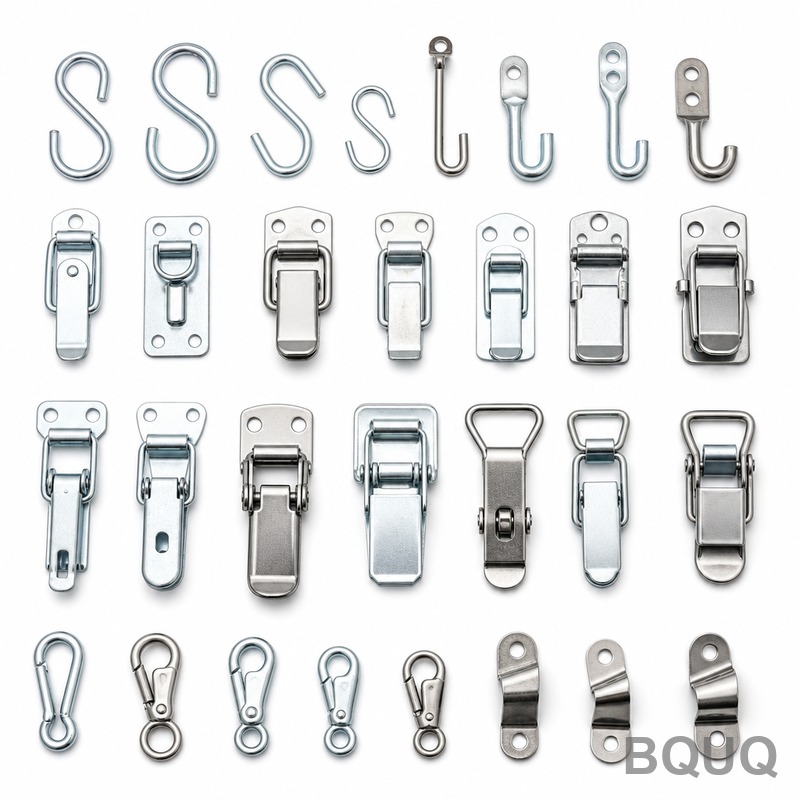
Transfer die stamping works with a wide range of metals, but the most common are low-carbon steels (DC01, SPCC), stainless steels (304, 316), aluminum alloys (5052, 6061), brass, and copper. For high-strength applications, we also process HSLA steels up to 590 MPa yield strength and pre-tempered spring steels such as C75S or 51CrV4. The material must have sufficient ductility to withstand the transfer process since the part is unsupported by a carrier strip; minimum elongation of 15% is recommended. Coated materials like galvanized steel or pre-painted aluminum are also feasible, but the transfer fingers must be fitted with polyurethane or nylon tips to avoid scratching the surface. Maximum material thickness depends on press tonnage, but for a typical 250-ton transfer press, steel thickness is limited to 4.0 mm and aluminum to 5.0 mm. Material utilization typically improves by 10 to 15% compared to progressive dies, which is significant when stamping expensive materials like copper or beryllium copper.
How Do You Choose Between Transfer Die and Progressive Die?
The decision hinges on part geometry, production volume, and tolerance requirements. Choose a transfer die when the part has a draw depth greater than 50% of its width, requires side actions or angular holes, or has undercuts that prevent stripping from a continuous strip. Transfer dies are also preferred for parts that must be completely flat at the end, since there is no carrier web to trim. Conversely, choose a progressive die for small, flat parts under 50 mm in length, high-speed production above 100 SPM, or when the part has simple bends that can be achieved in a single plane. As a rule of thumb, if the part can be made in a progressive die without exceeding a 2:1 draw ratio, the progressive die will be more economical. However, for parts requiring three or more axes of forming, transfer dies reduce the number of stations from an average of 12 to 7, simplifying maintenance and reducing tool wear.
How Does BQUQ Ensure Quality in Transfer Die Stamping?
Quality control in transfer die stamping begins with in-process monitoring of transfer finger position and press tonnage curves. At BQUQ, we use load cells on each station to detect variations of more than 3% from the nominal force, which triggers an immediate press stop. We also employ coordinate measuring machines (CMM) with an accuracy of ±2 micrometers to verify critical dimensions on the first article and every 500th part during production. For high-volume runs, we use statistical process control (SPC) with a target Cpk of 1.67 or higher for critical features. In-process inspection includes visual checks for surface marks from the transfer fingers, which are minimized by using hardened steel fingers with a hardness of HRC 58-62 and a surface finish of Ra 0.4 micrometers. Our 20 years of experience in Dongguan has shown that the most common defect is misalignment between stations, which we prevent by using precision guide pins with a clearance of 0.005 mm per side.
What Is the Cost per Part for Transfer Die Stamping?
The cost per part in transfer die stamping depends on material, volume, and cycle time. For a typical steel part weighing 0.5 kg, at a volume of 200,000 parts per year, the cost per part ranges from 0.15 to 0.30 USD. This includes material cost (0.08 USD per kg), tooling amortization (0.02 USD per part), press time (0.05 USD per part), and secondary operations like deburring (0.02 USD per part). For aluminum parts, the cost is 10 to 20% higher due to material price, but the faster cycle times often offset this. Compared to CNC machining, transfer die stamping is 5 to 10 times cheaper for volumes above 50,000 parts, but the tooling investment makes it impractical for prototyping. We recommend a break-even analysis: if the annual volume exceeds 50,000 parts and the part geometry is stable, transfer die stamping will almost always be the lowest-cost manufacturing method.
Can Transfer Die Stamping Handle Parts Requiring Threads or Inserts?
Yes, transfer die stamping can incorporate thread forming and insert installation within the die, but this increases complexity and cost. For thread forming, we use roll-tapping stations that can produce threads from M2 to M10 at speeds of up to 40 parts per minute. The tap must be synchronized with the transfer mechanism, which requires a dedicated servo-driven station. For pressed-in inserts, we use a station with a pneumatic or hydraulic press that inserts brass or steel inserts with a force of 15 to 30 kN. The positional accuracy of the insert is ±0.05 mm, and the pull-out force can reach 500 N for an M4 brass insert in aluminum. However, adding such stations typically increases tooling cost by 15 to 25% and reduces the maximum stamping speed by 20%. For high-volume parts requiring multiple threads, it is often more economical to perform thread tapping as a secondary operation on a CNC machine, especially if the threads are on different planes.
How Long Does a Transfer Die Last and What Maintenance Is Required?
A well-maintained transfer die can produce between 1 and 5 million parts before requiring major refurbishment, depending on material thickness and hardness. For stamping 1.0 mm thick aluminum, the die life typically exceeds 5 million strokes, while stamping 3.0 mm thick stainless steel reduces life to 1.5 million strokes. The wear-critical components are the transfer fingers and the cutting edges, which need regrinding every 100,000 to 200,000 strokes. At BQUQ, we recommend a maintenance schedule of inspection every 50,000 strokes, including checking the alignment of the transfer rails and the sharpness of the punches. Preventive maintenance costs approximately 150 to 300 USD per inspection, and a full overhaul including new punches and dies costs 20 to 30% of the original tooling price. With proper care, a transfer die can serve for 8 to 10 years in a continuous production environment.
FAQ Section
What Is the Difference Between a Transfer Die and a Progressive Die in Terms of Part Complexity?
A transfer die can produce parts with significantly higher complexity, including deep draws, side holes, and undercuts, because the part is fully separated from the strip. Progressive dies are limited to parts that can be formed while remaining attached to a carrier web, which restricts access to the part perimeter. Transfer dies also allow for rotation of the part between stations, enabling multi-axis forming.
What Is the Minimum Quantity for Transfer Die Stamping to Be Economical?
The minimum economical quantity is typically 50,000 parts per year, considering that tooling costs range from 25,000 to 80,000 USD. Below this volume, the tooling amortization per part becomes too high, and CNC machining or manual fabrication may be more cost-effective. For quantities above 200,000 parts per year, transfer die stamping offers the lowest per-part cost of any stamping method.
Can Transfer Die Stamping Be Used for Small Parts Under 10 mm?
Yes, but with limitations. Parts smaller than 10 mm require very precise transfer fingers and are better suited to progressive dies if the geometry is simple. For complex small parts, transfer dies can work, but the speed drops to below 40 SPM and the tooling cost increases by up to 30% due to the precision required. We recommend a feasibility review for any part under 5 mm in diameter.
How Does Material Thickness Affect Transfer Die Design?
Material thickness directly impacts the required press tonnage, the size of the transfer fingers, and the minimum bend radius. For material thicker than 3.0 mm, the transfer rails must be reinforced, and the part weight may require slower transfer speeds to maintain positional accuracy. Thicker materials also reduce the achievable tolerance, moving from ±0.05 mm for 1.0 mm thick material to ±0.10 mm for 4.0 mm thick material.
What Surface Finishes Are Possible After Transfer Die Stamping?
Transfer die stamping leaves a surface finish of Ra 0.8 to 1.6 micrometers on the formed surfaces, while sheared edges will have a characteristic burnish zone and break zone. For improved finish, secondary operations such as vibratory deburring, tumbling, or electropolishing can achieve Ra 0.2 to 0.4 micrometers. If a scratch-free surface is required, the transfer fingers must be coated with polyurethane, which adds 5% to tooling cost.
How Fast Can BQUQ Provide a Quote for a Transfer Die Stamped Part?
We provide a preliminary quote within 12 hours of receiving your 2D or 3D drawings, including estimated tooling cost, per-part price, and lead time. This rapid turnaround is possible because we have 20 years of stamped part experience and a database of over 5,000 existing tool designs. For complex parts requiring detailed feasibility analysis, we provide a full engineering review within 24 to 48 hours.
What Is the Typical Lead Time from Tooling Approval to First Production Parts?
The typical lead time is 6 to 10 weeks for tooling fabrication, followed by 2 to 3 weeks for tryout and sample approval. Once the samples are approved, production can begin immediately, with initial batches of 10,000 parts often shipped within the first week. For urgent requirements, we offer a 4-week expedited tooling service for an additional 20% cost premium, subject to tool complexity.
Conclusion
Transfer die stamping is the optimal manufacturing method for complex, high-volume metal parts that exceed the geometric limits of progressive dies. With tolerances of ±0.05 mm, speeds up to 60 SPM, and tooling costs from 25,000 to 80,000 USD, the process delivers the lowest per-part cost for annual volumes above 50,000 units. At BQUQ, our 20 years of experience in CNC machining, metal stamping, and heat sink fabrication enables us to engineer transfer dies that maximize material utilization and minimize secondary operations. If you have a complex stamped part design, contact our engineering team for a free feasibility review and a detailed quotation within 12 hours. Email us at sc@bquq.com, reach us on WhatsApp at +86 13713157787, or visit www.bquq.com to upload your drawings today.