What Is Die Maintenance and Why Does It Matter for Stamping Quality?
Die maintenance is the systematic process of inspecting, cleaning, repairing, and refurbishing stamping tools to restore them to their original geometric accuracy and surface condition. It matters because a worn or damaged die directly transfers defects to every stamped part, causing dimensional drift, burrs, and surface scratches that lead to scrap rates exceeding 5% and unscheduled downtime costing CNY 800–1,500 per hour. For a factory like BQUQ with 20 years in precision stamping, a proactive maintenance schedule is not an overhead cost—it is the primary control variable for holding tolerances like ±0.02 mm on progressive dies.
What Specific Wear Patterns Occur on Stamping Dies and How Do They Affect Parts?
The most common wear mechanisms are abrasive wear, adhesive wear (galling), and fatigue cracking. Abrasive wear rounds the cutting edges of the punch and die button; after 50,000–100,000 strokes on 1.0 mm SPCC steel, the edge radius grows from a sharp 0.01 mm to 0.08 mm, increasing burr height from 0.02 mm to 0.15 mm. Galling occurs when aluminum or stainless steel particles cold-weld onto the die surface, creating a rough texture that scratches the strip and produces visible surface marks on every subsequent part. Fatigue cracks typically initiate at sharp internal corners of the die profile after 200,000–500,000 cycles, leading to progressive chipping that changes the blank contour and causes flash or incomplete shearing.
How Often Should a Stamping Die Be Inspected and Maintained?
Inspection frequency depends on stroke rate and material abrasiveness, but a practical baseline is: daily visual checks, weekly dimensional checks on critical features, and full preventative maintenance every 100,000 strokes for mild steel. For high-speed stamping at 400–600 SPM (strokes per minute) on 0.3 mm brass, the die should be pulled for cleaning and lubrication every 8 hours of operation because fine debris accumulates rapidly. BQUQ recommends a three-tier schedule: (1) daily 10-minute visual scan for loose screws, cracks, or excessive slug buildup; (2) monthly precision measurement of the die's critical dimensions using a CMM, with a tolerance band of ±0.005 mm; (3) major overhaul every 500,000 strokes or every 6 months, whichever comes first, for dies running 24/7.
What Are the Standard Maintenance Procedures and Their Cost Implications?
A standard maintenance cycle includes five steps: disassembly, cleaning with solvent or ultrasonic bath, inspection with magnification and measurement, repair by grinding or wire EDM, and reassembly with fresh lubrication. Surface grinding of a punch face removes 0.02–0.05 mm of material to restore flatness; this operation costs CNY 150–300 per die set and adds 10,000–20,000 strokes of life. Replacing a worn punch costs CNY 80–200 per piece, while a full die refurbishment (including new springs, guide pins, and reground inserts) ranges from CNY 3,000–8,000 for a typical progressive die. The table below summarizes typical maintenance actions, frequencies, and costs:
| Maintenance Action | Frequency (strokes) | Typical Cost (CNY) | Impact on Part Tolerance |
| Visual inspection | Every 10,000 | 0 (in-house labor) | Detects gross damage early |
| Edge sharpening (grind) | Every 100,000 | 150–300 | Restores burr height to <0.03 mm |
| Punch replacement | Every 150,000–200,000 | 80–200 per punch | Maintains hole diameter within ±0.02 mm |
| Full die overhaul | Every 500,000 | 3,000–8,000 | Resets all dimensions to new die spec |
| Guide pin/bushing replacement | Every 300,000 | 400–700 | Restores alignment to ±0.005 mm |
Why Does Die Maintenance Directly Control Stamping Dimensional Accuracy?
The die is the master mold; any deviation in its geometry transfers at a 1:1 ratio to the stamped part. If the die clearance between punch and die button wears from the recommended 5% of material thickness (0.05 mm for 1.0 mm steel) to 8%, the shear zone changes, producing a torn edge and increasing the hole diameter by 0.03–0.05 mm. Likewise, worn guide pins introduce play that causes the die halves to shift laterally; a clearance of 0.02 mm in the guide bushing results in a positional error of the same magnitude on the part's hole pattern. Thermal effects also matter: running a die for 2 hours at 300 SPM heats the tool steel to 60–80°C, causing thermal expansion of approximately 0.01 mm per 100 mm of die length; proper maintenance includes checking coolant flow and lubrication to stabilize this temperature.
Which Inspection Tools and Methods Are Essential for Effective Die Maintenance?
Precision measurement is non-negotiable. BQUQ uses a coordinate measuring machine (CMM) with a resolution of 0.001 mm to check critical die dimensions after every major maintenance event. Surface roughness testers verify the die finish; a polished die should read Ra 0.2–0.4 micrometers, while a worn die showing Ra 1.0 or higher requires re-polishing to avoid scratching parts. For edge condition, optical comparators at 20x–50x magnification reveal micro-chipping invisible to the naked eye. Dye penetrant testing is performed every 200,000 strokes to detect subsurface cracks in the die steel, because a hidden crack can propagate to catastrophic failure within 10,000 strokes. Additionally, a simple feeler gauge check of die clearance at four corner positions verifies uniform alignment before the die is returned to the press.
How Does Preventative Maintenance Reduce Total Cost per Stamped Part?
Preventative maintenance reduces cost by minimizing unplanned downtime and scrap. The total cost of a stamping operation includes tooling cost per part, which is calculated as (die cost + maintenance cost) divided by total parts produced. A die costing CNY 150,000 that produces 5 million parts without major overhaul yields a tooling cost of CNY 0.03 per part; without maintenance, the die may fail at 2 million parts, increasing tooling cost to CNY 0.075 per part and adding scrap costs of CNY 0.05–0.10 per rejected part. Furthermore, emergency repairs cost 2–3 times more than scheduled maintenance due to expedited machining and overtime labor. BQUQ's data from 2023 shows that customers who adopt a strict 100,000-stroke maintenance interval report scrap rates below 0.8%, whereas those with reactive maintenance report scrap rates of 3–5%.
Can Die Maintenance Be Scheduled Based on Real-Time Monitoring Data?
Yes, modern presses can integrate sensors to trigger condition-based maintenance rather than fixed intervals. Strain gauges on the die holder detect changes in stamping force; a 10–15% increase in peak force indicates tool wear or lubrication failure, prompting an inspection before defects occur. Acoustic emission sensors pick up the high-frequency signature of galling or cracking, providing an early warning 5,000–10,000 strokes before visible part defects appear. However, for most mid-volume production runs, time-based scheduling remains more economical because sensor systems add CNY 20,000–50,000 to the press setup. BQUQ recommends a hybrid approach: fixed-interval maintenance as the baseline, with force monitoring as a safety net for high-value, high-speed dies.
What Are the Most Common Die Maintenance Mistakes and How to Avoid Them?
The most frequent mistake is over-grinding, where operators remove 0.10 mm or more from the die face to remove light wear, which reduces the die's shut height and changes the part's bend angle. Always grind only the minimum required (0.02–0.03 mm) and record the cumulative removal to track remaining die life. A second mistake is improper lubrication—using the wrong viscosity oil can cause slug pulling or galling; use a chlorine-free stamping oil with a viscosity of 20–40 cSt at 40°C for steel. A third error is neglecting to check the press alignment after die installation; misalignment of even 0.01 mm between the press slide and die base causes uneven wear and premature edge dulling. Finally, do not store dies without a rust-preventive coating; a thin film of anti-rust oil (costing CNY 5 per die) prevents corrosion that would otherwise require regrinding.
FAQ
How Long Does a Typical Stamping Die Last With Proper Maintenance?
A well-maintained progressive die for mild steel can produce 5–10 million parts before requiring major rebuild. High-speed dies for thin brass or phosphor bronze can exceed 20 million strokes with regular punch replacement and edge sharpening every 100,000 strokes.
What Is the Cost of a Full Die Maintenance Service at BQUQ?
A standard maintenance service for a small progressive die (under 300 mm length) costs CNY 800–1,500, including disassembly, cleaning, inspection, and reassembly with new springs if needed. A full overhaul with regrinding and replacement of worn components ranges from CNY 3,000–8,000 depending on die complexity.
Can Die Maintenance Fix Dimensional Drift in Stamped Parts?
Yes, dimensional drift caused by wear is fully correctable. By regrinding the die surface and replacing worn punches, the part dimensions can be restored to within the original tolerance of ±0.02 mm. However, if the die has been over-ground repeatedly, the shut height may be beyond adjustment, requiring new die components.
How Does Material Type Affect Die Maintenance Frequency?
Abrasive materials like stainless steel (e.g., SUS304) and carbon steel with scale increase wear rate by 2–3 times compared to aluminum or brass. For stainless steel, maintenance intervals should be halved to every 50,000 strokes, and the use of advanced coatings like TiCN on punches can extend life by 40%.
What Is the Typical Lead Time for Emergency Die Repair?
For a simple punch replacement or edge regrind, BQUQ can complete the repair within 24–48 hours, including reassembly and test stamping. For complex repairs requiring new die inserts or wire EDM work, lead time extends to 3–5 days. Preventative maintenance avoids this downtime entirely by scheduling repairs during planned production stops.
How Do I Know When a Die Needs Maintenance Versus Replacement?
A die needs maintenance when burr height exceeds 0.05 mm, surface roughness on parts exceeds Ra 1.6, or dimensional deviation exceeds 50% of the specified tolerance. Replacement is required when the die base is cracked, guide pins cannot be realigned within ±0.01 mm, or total regrinding has consumed more than 2 mm of the die height.
Does Die Maintenance Affect the Consistency of Heat Sink or Connector Stamping?
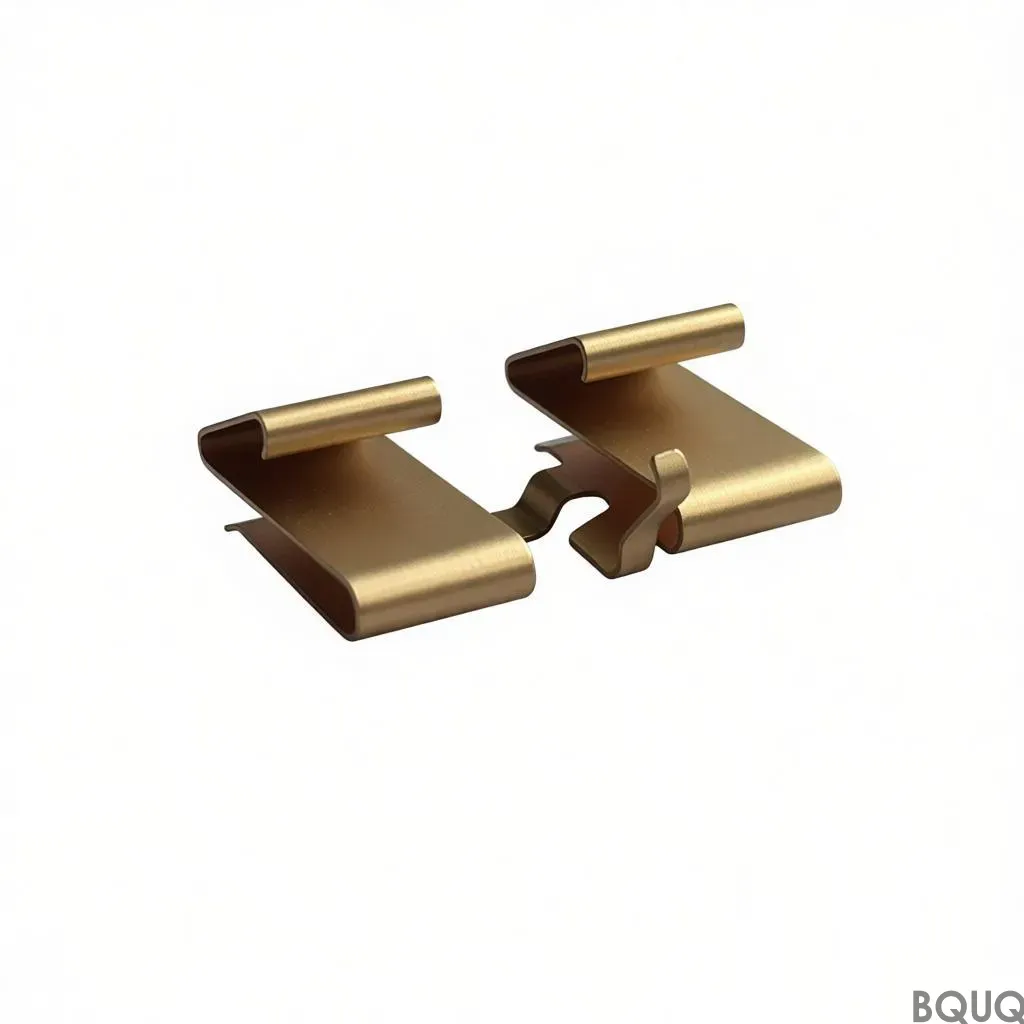
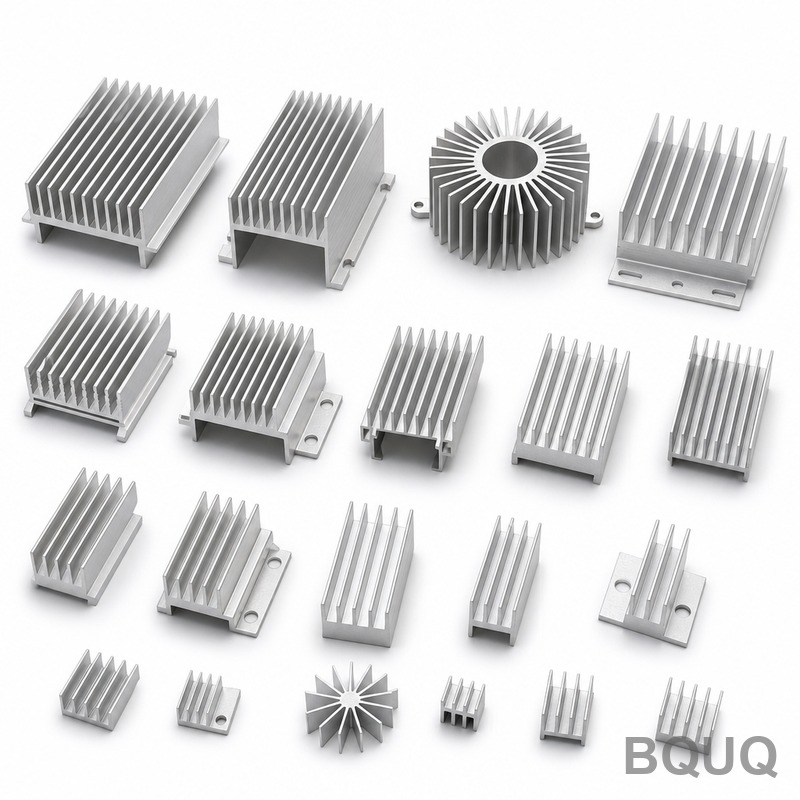
Absolutely. For heat sinks and electrical connectors with tight tolerances of ±0.03 mm, consistent die geometry is critical for mating surfaces and thermal performance. Regular maintenance ensures that every batch of parts has identical flatness and hole positions, reducing assembly failures and warranty returns.
Conclusion
Die maintenance is the single most effective lever for ensuring stamping quality, directly controlling dimensional accuracy, surface finish, and scrap rate. By implementing a disciplined schedule—daily visual checks, monthly CMM verification, and full overhauls every 500,000 strokes—you can hold tolerances of ±0.02 mm and keep scrap below 1%. At BQUQ, our 20 years of precision stamping experience translate into robust maintenance protocols that extend die life by 30–50% and reduce your total cost per part. For a free evaluation of your current die condition or to discuss a preventative maintenance plan, contact our engineering team for a 12-hour quote: Email sc@bquq.com, WhatsApp +86 13713157787, or visit www.bquq.com.