What Is Driving the Demand for Robot Actuator Springs?
Direct answer: The collaborative robot (cobot) boom is driving demand for robot actuator springs because these components are essential for torque sensing, gravity compensation, and passive compliance in human-safe joints. Specifically, the shift from rigid industrial robots to force-limited cobots has increased the need for high-precision wave springs and helical compression springs with strict linearity and fatigue life exceeding 10 million cycles. As global cobot sales are projected to grow from approximately 55,000 units in 2023 to over 150,000 units by 2027, the corresponding spring content per actuator (ranging from 4 to 12 springs) creates a compounding demand spike for precision manufacturers.
How Many Springs Does a Typical Collaborative Robot Actuator Use?
A typical collaborative robot joint actuator uses between 4 and 12 springs, depending on the architecture. For example, a direct-drive torque sensor module for a 7-axis cobot arm commonly employs 6 to 8 wave springs arranged in a stacked configuration to achieve a compact axial force profile. Harmonic drive actuators, which are standard in cobots like the Universal Robots UR series, integrate at least one large-diameter wave spring for preload on the flexspline, plus two smaller helical springs for the friction brake mechanism. This translates to roughly 35 to 70 springs per complete 6-axis cobot, excluding the gripper or end-effector.
What Spring Types Are Most Critical for Cobot Actuator Performance?
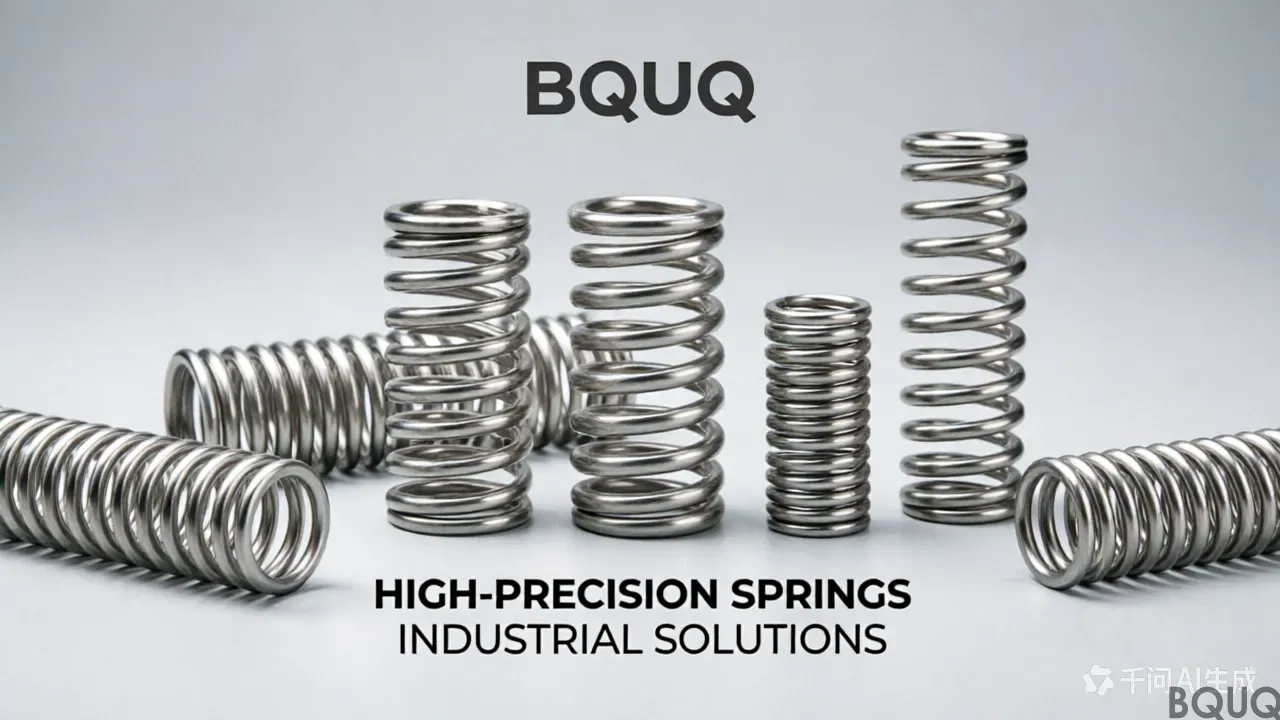
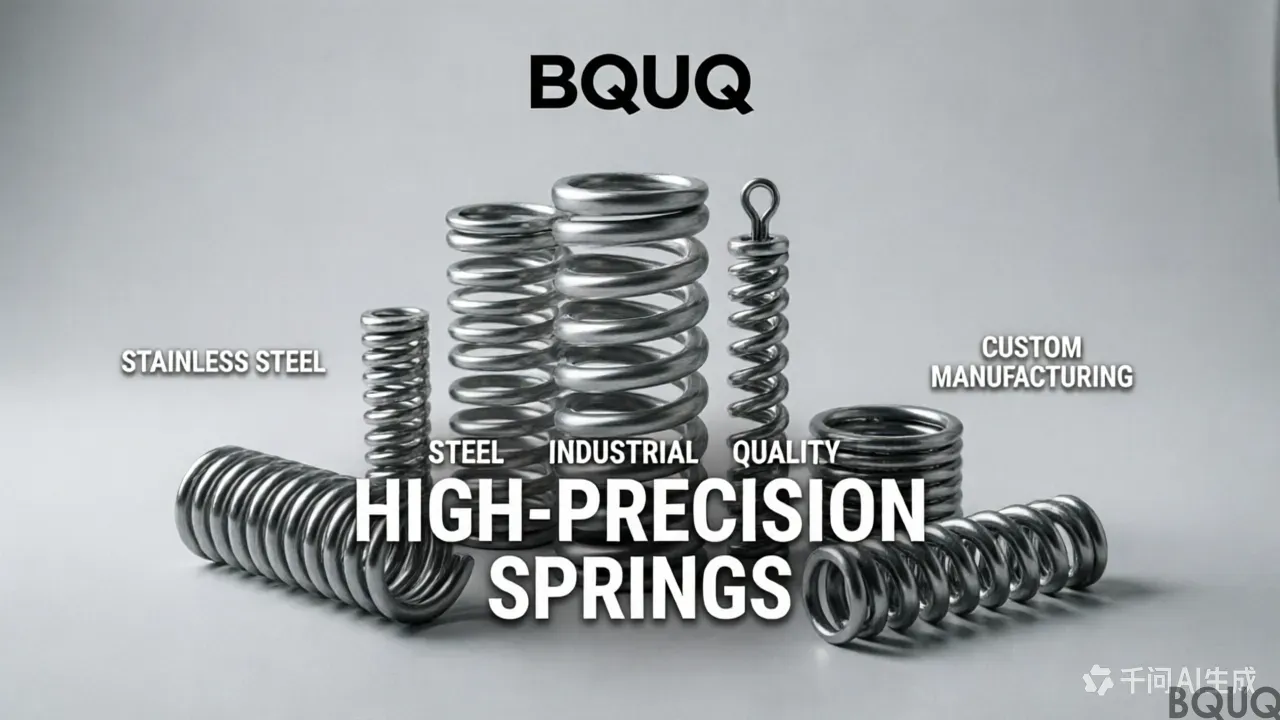
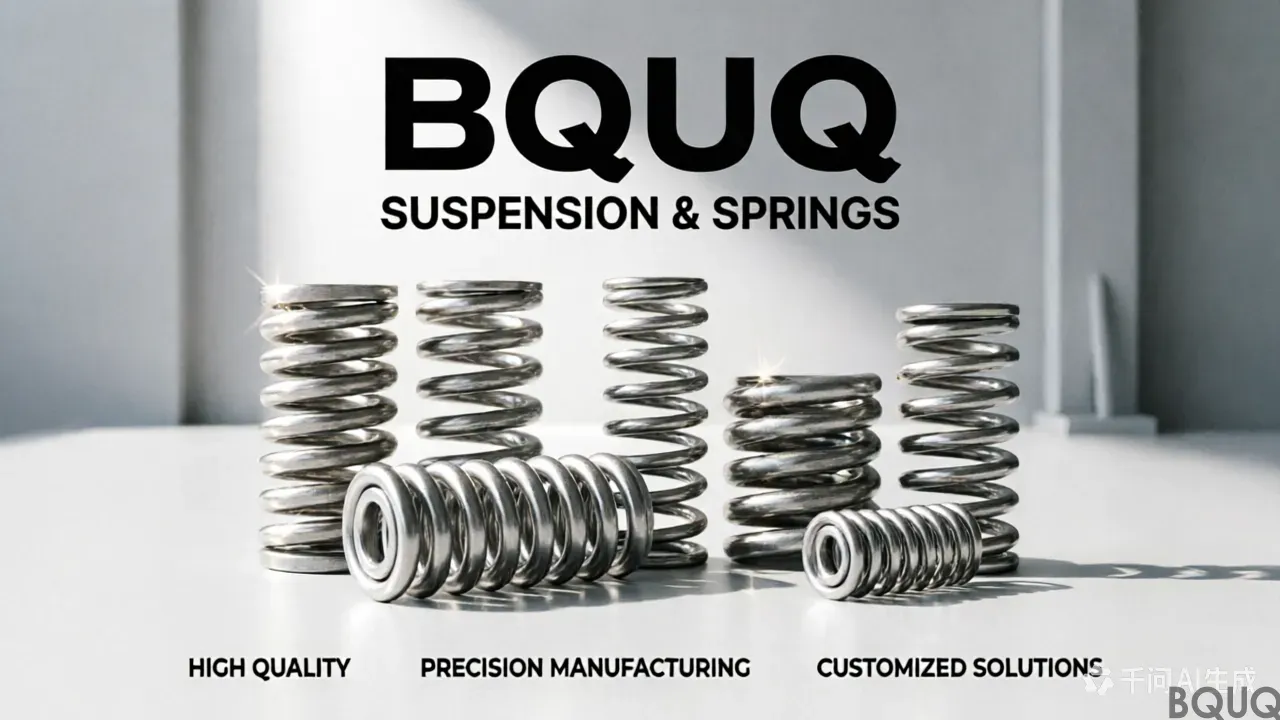
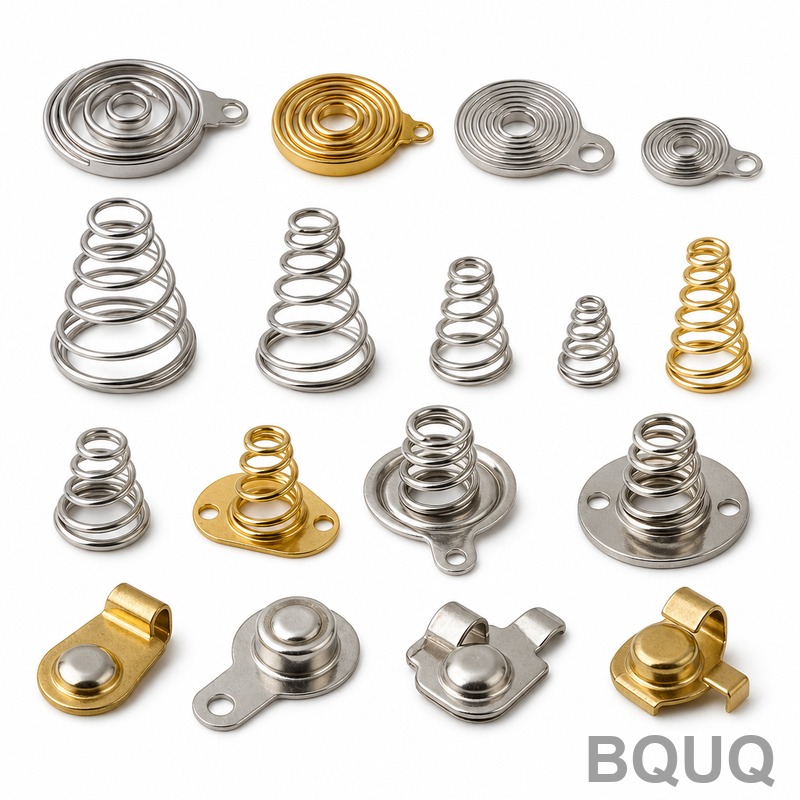
The most critical spring types are precision wave springs, die springs, and small-diameter helical compression springs, each serving distinct functions. Wave springs dominate in torque sensor applications because they provide a predictable, non-linear spring rate over a short deflection range—typically 0.5 mm to 3 mm—with tolerances of ±0.02 mm on free height. Die springs are used in fail-safe braking systems where they must deliver a consistent force of 80 N to 150 N over 100,000 cycles without significant set. Helical springs are reserved for position feedback mechanisms and preload applications where linearity within 1% of theoretical rate is mandatory.
Why Is Spring Fatigue Life a Critical Specification for Cobot Actuators?
Spring fatigue life is critical because cobot actuators are rated for continuous operation at 6 to 8 hours per shift, which translates to over 1 million load cycles per year for a spring operating at 1 Hz. A spring that fails at 5 million cycles will require actuator replacement in under three years, causing unacceptable downtime in production lines. For this reason, BQUQ specifies spring steel grades like 17-7PH stainless steel or oil-tempered chrome silicon wire (ASTM A401) for cobot actuator springs, with a design target of 10 million cycles at 80% of the material's ultimate tensile strength. Shot peening is applied to all wave springs to induce compressive residual stress, improving fatigue life by 30% to 50% compared to unpeened parts.
How Much Does a Precision Robot Actuator Spring Cost per Unit?
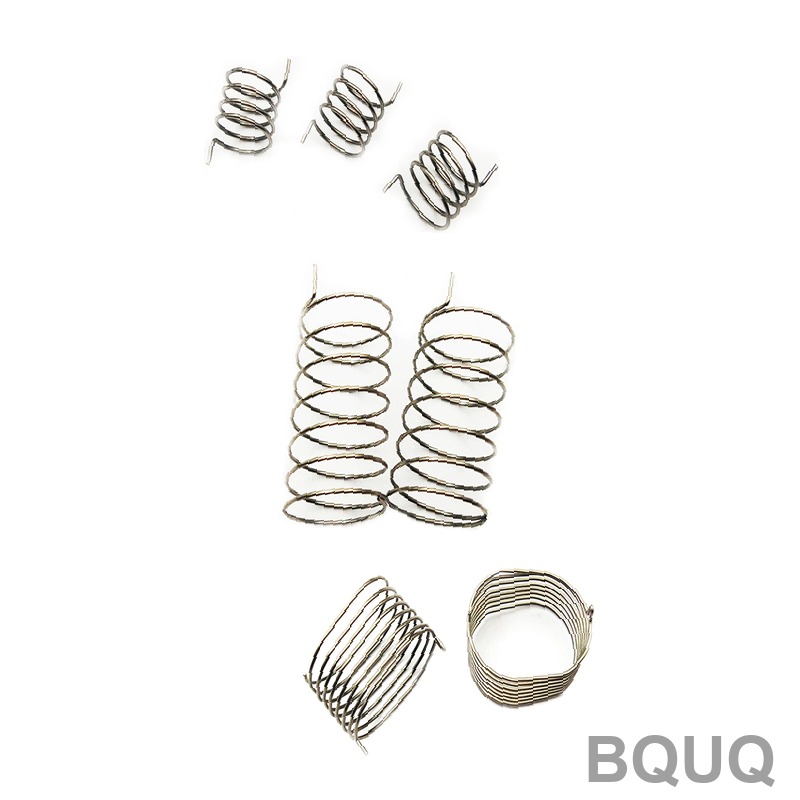
A precision robot actuator spring costs between $0.80 and $4.50 per unit for medium-volume production (10,000 to 100,000 parts per year), depending on complexity and material. A simple helical compression spring with 0.5 mm wire diameter and ±0.05 mm tolerances costs approximately $0.80 to $1.20. A wave spring with 40 mm outer diameter, multi-turn wave height, and critical flatness requirements of 0.03 mm costs $2.50 to $4.50. For low-volume prototyping (100 to 1,000 pieces), per-unit costs increase 3 to 5 times due to tooling amortization; however, BQUQ can reduce this by using CNC coiling without dedicated tooling for runs under 5,000 pieces.
What Manufacturing Tolerances Are Achievable for Cobot Actuator Springs?
Manufacturing tolerances for cobot actuator springs are significantly tighter than standard industrial springs, reflecting the precision demands of force control. For wire diameters below 1.0 mm, BQUQ achieves free length tolerances of ±0.05 mm and outer diameter tolerances of ±0.03 mm. On spring rate, we hold a tolerance of ±3% for helical springs and ±5% for wave springs, which is critical because a 5% rate deviation can cause a torque measurement error of 0.2 N·m in a 20 N·m actuator. Surface finish is held to Ra 0.4 micrometers on active coils, and all springs are 100% inspected for cracks using eddy current testing when the application requires it.
Which Quality Tests Must Robot Actuator Springs Pass Before Shipping?
Robot actuator springs must pass a battery of tests including load deflection verification, fatigue testing, and dimensional inspection at controlled temperatures. Load testing is performed at 23°C ±2°C, measuring force at 25%, 50%, and 75% of rated deflection with a digital force gauge calibrated to ISO 7500-1. Fatigue testing is conducted on a high-speed compression tester at 10 Hz for at least 100,000 cycles to validate the design; full validation runs to 10 million cycles are performed on sample lots. Additionally, temperature cycling from -20°C to +80°C is applied to verify spring rate stability, as a 10°C shift can alter the modulus of elasticity of spring steel by 0.03%.
| Spring Type | Typical Application | Material Grade | Load Tolerance | Fatigue Life Target | Unit Cost (10k pcs) |
| Wave Spring | Torque sensor preload | 17-7PH Stainless | ±5% | 10 million cycles | $2.50 - $4.50 |
| Helical Compression | Brake mechanism | Chrome Silicon ASTM A401 | ±3% | 5 million cycles | $0.80 - $1.50 |
| Die Spring | Fail-safe brake | Oil-tempered 6150 | ±4% | 100,000 cycles | $1.50 - $3.00 |
| Conical Spring | Space-constrained sensor | Music wire ASTM A228 | ±3% | 3 million cycles | $1.00 - $2.00 |
| Torsion Spring | Return mechanism | 302 Stainless | ±5% | 500,000 cycles | $1.20 - $2.80 |
How Can You Select a Spring Supplier for Cobot Actuator Production?
Selecting a spring supplier for cobot actuators requires verifying three capabilities: precision manufacturing at tight tolerances, material certification traceability, and in-house fatigue testing. You should request a PPAP (Production Part Approval Process) submission that includes a material certificate with heat number, dimensional reports with Cpk values above 1.33, and fatigue test data from an accredited lab. Evaluate the supplier's ability to handle mixed material types—specifically 17-7PH and chrome silicon—as these are not standard inventory items for general spring shops. Finally, confirm that the supplier can provide statistical process control (SPC) data on every lot, not just on initial samples, to ensure long-term consistency.
FAQ
What Is the Standard Spring Rate for a Cobot Torque Sensor Spring?
The standard spring rate for a cobot torque sensor wave spring ranges from 10 N/mm to 50 N/mm, depending on the torque rating of the joint. For a 20 N·m torque sensor, a spring rate of 25 N/mm with a preload of 200 N is typical. The spring rate must be stable within ±5% across the operating temperature range of 0°C to 50°C.
Can Standard Compression Springs Be Used in Cobot Actuators?
No, standard compression springs are generally unsuitable because they lack the precision and fatigue life required for force control applications. Cobot actuator springs require tighter tolerances (often half of standard commercial tolerances) and higher-grade materials to survive repeated loading. Standard springs also have higher batch-to-batch variation, which complicates actuator calibration.
Which Spring Material Offers the Best Corrosion Resistance for Food-Grade Cobots?
For food-grade cobots, 17-7PH stainless steel in the RH 950 condition offers the best combination of corrosion resistance and high strength, with a tensile strength of approximately 1,450 MPa. Alternatively, Elgiloy (a cobalt-based alloy) provides superior corrosion resistance but at roughly 10 times the material cost. For most applications, passivated 302 stainless steel is adequate if the actuator is not exposed to continuous washdown.
When Should You Use a Wave Spring Instead of a Helical Spring in an Actuator?
Use a wave spring when axial space is limited because it occupies only 50% of the height of a conventional helical spring for the same deflection. Wave springs are also preferred when a non-linear force-deflection curve is needed to match a torque sensor's output. Use a helical spring when you require a precise linear rate over a long travel distance (more than 5 mm).
How Does Shot Peening Improve the Fatigue Life of Actuator Springs?
Shot peening introduces compressive residual stress on the spring surface, which counteracts the tensile stresses that cause crack initiation during cyclic loading. This process can improve fatigue life by 30% to 50% for wave springs and 20% to 40% for helical springs. For cobot actuators, shot peening is mandatory for any spring rated above 5 million cycles.
What Lead Time Should You Expect for Custom Cobot Actuator Springs?
Custom cobot actuator springs typically require a lead time of 2 to 3 weeks for prototypes and 4 to 6 weeks for production quantities of 10,000 pieces or more. Prototype tooling can be completed in 5 to 7 working days if no specialized coating is required. Production lead time increases by 1 week if the springs require shot peening and magnetic particle inspection.
Can You Provide Springs with a Linear Rate Over a Wide Deflection Range?
Yes, but achieving a linear rate over a wide deflection range (greater than 30% of free length) requires a carefully designed spring geometry and a material with a consistent modulus. In practice, BQUQ recommends limiting the operating deflection to 20% of free length for helical springs to maintain linearity within 1%. For wider ranges, consider using a machined spring or a Belleville washer stack, which can be tuned for a near-constant force.
Conclusion: The collaborative robot boom is fundamentally changing spring requirements from simple machine components to precision mechatronic elements with strict fatigue, tolerance, and material specifications. For engineers designing cobot actuators, partnering with a manufacturer that combines 20 years of precision stamping and spring experience with modern SPC practices is essential for achieving reliable force control and long service life. BQUQ in Dongguan, China, offers 12-hour quoting for custom robot actuator springs, with full PPAP documentation and fatigue test reports included. Contact us at sc@bquq.com, WhatsApp +86 13713157787, or visit www.bquq.com to discuss your actuator spring requirements.
Related Articles
- Spring Testing Methods in 2024: Load, Fatigue, and Dimensional Inspection Guide
- Spring manufacturing technology innovation: CNC numerical control coil spring and cutting-edge breakthrough in camless forming
- Asian Spring Manufacturing Landscape: From China Production Hub to Emerging Hub in South East Asia