What Is Spring Preload and How Does It Affect Performance?
Spring preload is the deliberate compressive force applied to a spring before it experiences its operational load, setting its initial installed height and tension. Preload directly determines a spring’s effective stiffness curve, its resonant frequency, and the system’s ability to maintain contact under vibration or thermal cycling. In precision engineering, incorrect preload causes premature fatigue, noise, or loss of function, while correct preload ensures predictable deflection and force output within a specified tolerance band.
How Is Spring Preload Calculated in a Coil Spring System?
Preload is calculated using Hooke’s Law, where force (F) equals spring rate (k) multiplied by deflection (x), with preload force being the force at the initial compressed height. For a typical compression spring with a free length of 50.0 mm and a spring rate of 10.0 N/mm, installing it at 40.0 mm creates a preload of 100 N (10 N/mm × 10 mm deflection). The installed height is normally specified as a dimension with a tolerance of ±0.5 mm, which translates to a preload force variation of ±5 N in this example. Engineers must also account for the solid height limit; if preload compression approaches 80% of the maximum deflection, the spring will coil bind and lose its linear response.
What Is the Difference Between Preload and Spring Rate?
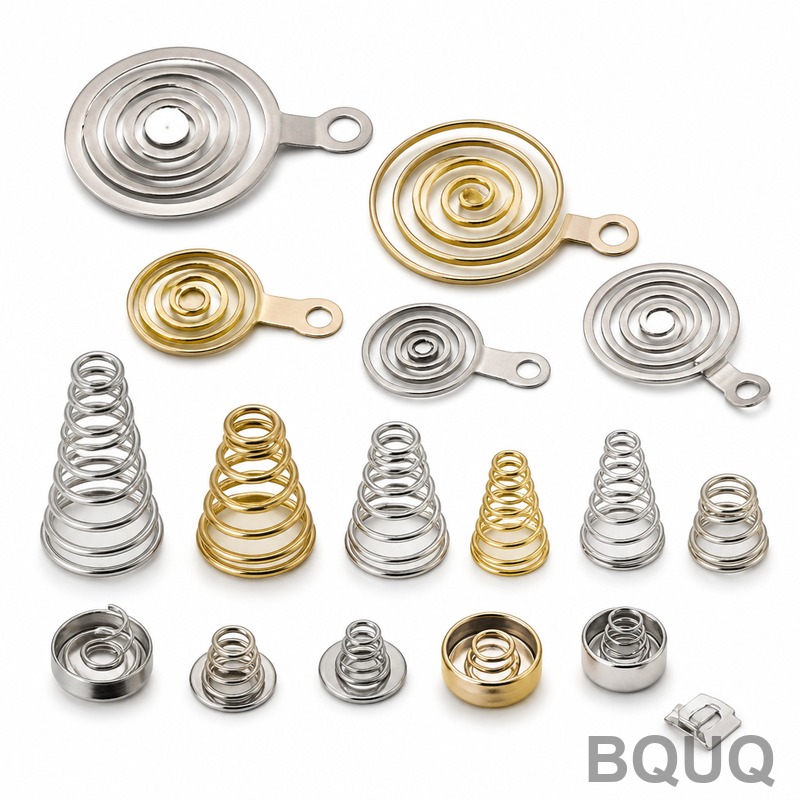
Preload is the initial force at the installed position, while spring rate is the change in force per unit of additional deflection, expressed in N/mm or lbf/in. For example, a valve spring with a preload of 50 N and a rate of 25 N/mm will produce 150 N at 4 mm of additional lift, but a spring with the same preload and a rate of 15 N/mm will produce only 110 N at the same lift. Preload sets the baseline, but spring rate controls how quickly force escalates with travel. In applications like clutch assemblies, increasing preload without changing the rate shifts the entire force-deflection curve upward, which can alter engagement torque without changing the pedal feel gradient.
Why Does Preload Affect Fatigue Life and Material Stress?
Higher preload increases mean stress on the spring material, which reduces fatigue life according to the Goodman or Soderberg criteria. For a music wire spring (ASTM A228) with a tensile strength of 2,300 MPa, operating at a preload stress of 600 MPa and an alternating stress of 300 MPa, the predicted fatigue life is approximately 1 million cycles; reducing preload stress to 400 MPa extends life to over 10 million cycles. Conversely, too little preload can cause surging or impact loading, where the spring loses contact with its seat and creates stress spikes above the designed alternating stress. The optimal preload typically keeps the mean stress below 45% of the material’s ultimate tensile strength for dynamic applications, and below 60% for static applications.
Which Industries Require the Most Precise Spring Preload Control?
Automotive valve train systems demand preload control within ±2% to maintain valvetrain stability at engine speeds up to 7,000 RPM, where resonance can cause valve float. Aerospace actuators, such as those used in flight control surfaces, require preload accuracy of ±1% because a 5% error can shift the actuator’s neutral position by 0.2 mm, affecting aerodynamic balance. Medical device springs, like those in insulin pumps, need preload repeatability of ±0.5 N to ensure consistent dosing over 10,000 cycles. In contrast, general industrial springs for vibration isolation can tolerate ±10% preload variation without functional compromise.
How Do Temperature and Environmental Factors Change Preload?
Temperature alters spring modulus of elasticity, typically reducing stiffness by 0.03% per degree Celsius for steel, meaning a spring preloaded at 20°C will lose approximately 3% of its preload force at 120°C. Similarly, stainless steel springs (302 grade) exhibit a modulus drop of about 12% from 20°C to 300°C, requiring preload adjustment for high-temperature service. Corrosion or surface treatments, such as zinc plating, add up to 8 microns of coating thickness, which can change the effective wire diameter and thus the spring rate by up to 1.5%. Creep and stress relaxation also reduce preload over time; a spring held at 200°C for 1,000 hours may lose 10-15% of its initial preload, so engineers must specify a higher initial preload or use a material like Inconel X-750 for elevated temperature stability.
What Are the Common Methods for Adjusting Spring Preload?
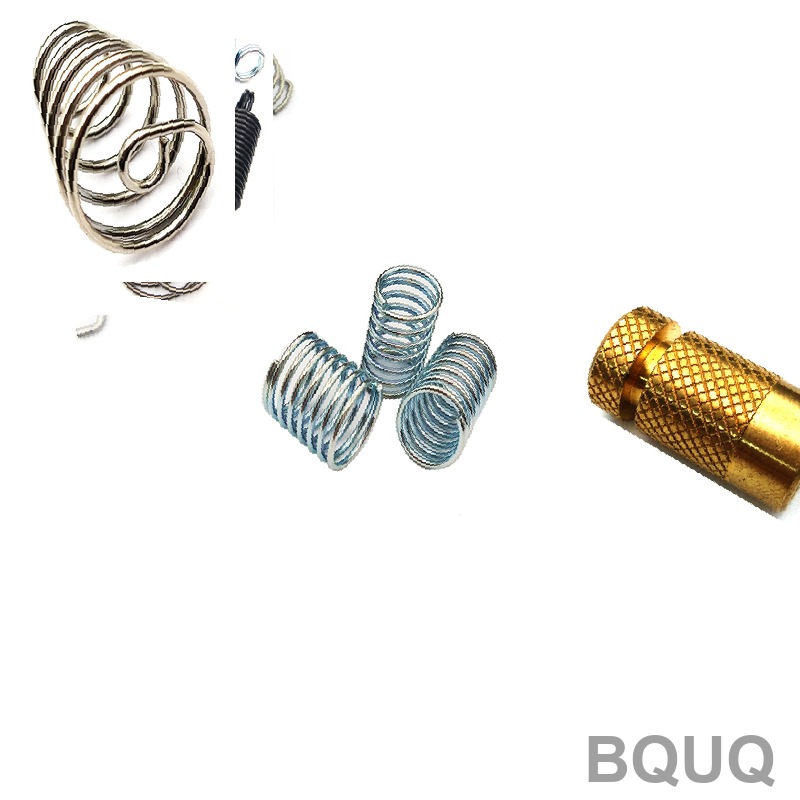
Mechanical adjustment via threaded retainers, shims, or set screws is the most common method, allowing incremental changes of 0.1 mm for fine-tuning. In a typical CNC-machined spring seat, a threaded adjuster with a 1.0 mm pitch provides a preload change of 5 N per full turn when the spring rate is 5 N/mm. Hydraulic or pneumatic preload systems are used in heavy-duty suspensions, where pressure changes of 1 bar can alter preload force by 200-500 N. For production environments, shim packs of 0.1 mm, 0.2 mm, and 0.5 mm thickness allow rapid preload adjustment without machining; a stack of shims can achieve a resolution of 0.1 mm, corresponding to a force resolution of 0.5-2.5 N depending on spring rate.
How Does Preload Affect System Resonance and Dynamic Stability?
Preload increases the natural frequency of a spring-mass system because frequency (f) is proportional to the square root of stiffness divided by mass, and preload can effectively stiffen the system by reducing the free length. For a mass of 0.5 kg on a spring with a rate of 20 N/mm, the natural frequency is approximately 31.8 Hz without preload; adding a preload that compresses the spring to 80% of free length can increase the effective frequency to 35.5 Hz if the spring rate increases due to coil contact. However, excessive preload that causes coil binding creates a non-linear stiffness, introducing harmonics that can excite other system resonances. In high-speed applications, such as camshaft followers operating at 5,000 RPM (83 Hz), preload must be tuned to keep the natural frequency at least 1.5 times the excitation frequency to avoid resonance amplification.
| Spring Application | Typical Preload Force | Preload Tolerance | Fatigue Life Expectancy | Operating Temperature Range |
| Automotive Valve Spring | 150-250 N | ±2% (±3-5 N) | 100-300 million cycles | -30°C to 150°C |
| Aerospace Actuator Spring | 50-500 N | ±1% (±0.5-5 N) | 1-10 million cycles | -55°C to 200°C |
| Medical Device Spring | 1-10 N | ±0.5 N | 10,000-100,000 cycles | 20°C to 40°C |
| Industrial Vibration Isolator | 500-5,000 N | ±10% (±50-500 N) | 1-5 million cycles | -10°C to 80°C |
| High-Temperature Spring (Inconel) | 100-1,000 N | ±5% (±5-50 N) | 500,000-2 million cycles | 200°C to 650°C |
Which Preload Value Should Be Selected for a New Design?
Select preload based on the minimum force required to maintain contact or sealing under worst-case conditions, then add a safety margin of 15-20% for tolerance stack-up and relaxation. For a gasket sealing application, calculate the minimum seating stress (typically 7 MPa for a compressed fiber gasket), multiply by the gasket area, and set preload 20% higher to account for creep. For a return spring in a solenoid, start with a preload equal to 10% of the maximum force to ensure positive return, but verify that the preload stress does not exceed 40% of the material yield strength at maximum operating temperature. Always validate preload with a force-deflection test on a calibrated fixture, measuring force at the installed height with a tolerance of ±1% of full scale.
FAQ
What happens if spring preload is too high?
Excessive preload causes premature fatigue failure, coil binding, and increased wear on mating components. It also raises the mean stress, reducing the allowable alternating stress and potentially causing the spring to take a permanent set at elevated temperatures.
What happens if spring preload is too low?
Insufficient preload allows the spring to lose contact with its seat, causing impact loading, noise, and vibration. It can also lead to valve float in engines or insufficient sealing force in gaskets, resulting in leaks or system malfunction.
Can spring preload be adjusted after installation?
Yes, most systems use threaded adjusters, shims, or set screws that allow external adjustment without disassembly. However, the adjustment range is limited by the spring’s free length and solid height, so the design must provide adequate clearance for the intended adjustment range.
Does spring preload affect the spring rate?
No, preload does not change the spring rate itself; it only shifts the starting point of the force-deflection curve. The rate remains constant until the spring reaches coil bind or the material exceeds its elastic limit.
How is preload measured in a production environment?
Preload is measured using a spring tester that applies a known deflection and records the force, or by using a load cell with a height gauge. For high-volume production, automated testing with a tolerance of ±1% is standard, with sample testing per AISI or ASTM standards.
What materials are best for high-preload applications?
Chrome silicon steel (ASTM A401) offers high tensile strength up to 1,900 MPa and good fatigue resistance for preloads above 500 N. For elevated temperatures above 200°C, Inconel X-750 or 17-7 PH stainless steel are preferred due to their resistance to stress relaxation.
How often should preload be re-verified in service?
For dynamic applications, verify preload at every scheduled maintenance interval, typically every 10,000 operating hours or 1 million cycles. For static applications, check annually or after any thermal excursion above the design temperature, as stress relaxation can silently reduce preload.
In summary, spring preload is a fundamental design parameter that influences force output, fatigue life, dynamic stability, and system reliability. Proper preload selection requires balancing the minimum functional force against material stress limits, temperature effects, and tolerance stack-up. For critical applications, always specify preload with a defined tolerance, verify it with testing, and include adjustment features in the design. BQUQ provides precision spring manufacturing with preload verification and custom tooling for your exact requirements. For a quote within 12 hours, contact us at sc@bquq.com, WhatsApp +86 13713157787, or visit www.bquq.com.
Related Articles
- Where to Buy Custom Metal Springs Online: Top 7 Suppliers
- Size control and online intelligent detection technology of precision spring
- In-depth analysis of technology and process in the hardware spring industry in 2026: a full-dimensional interpretation of high stress, functional integration and engineering certification