What Is the Difference Between Stamping and Deep Drawing? Process Comparison Guide
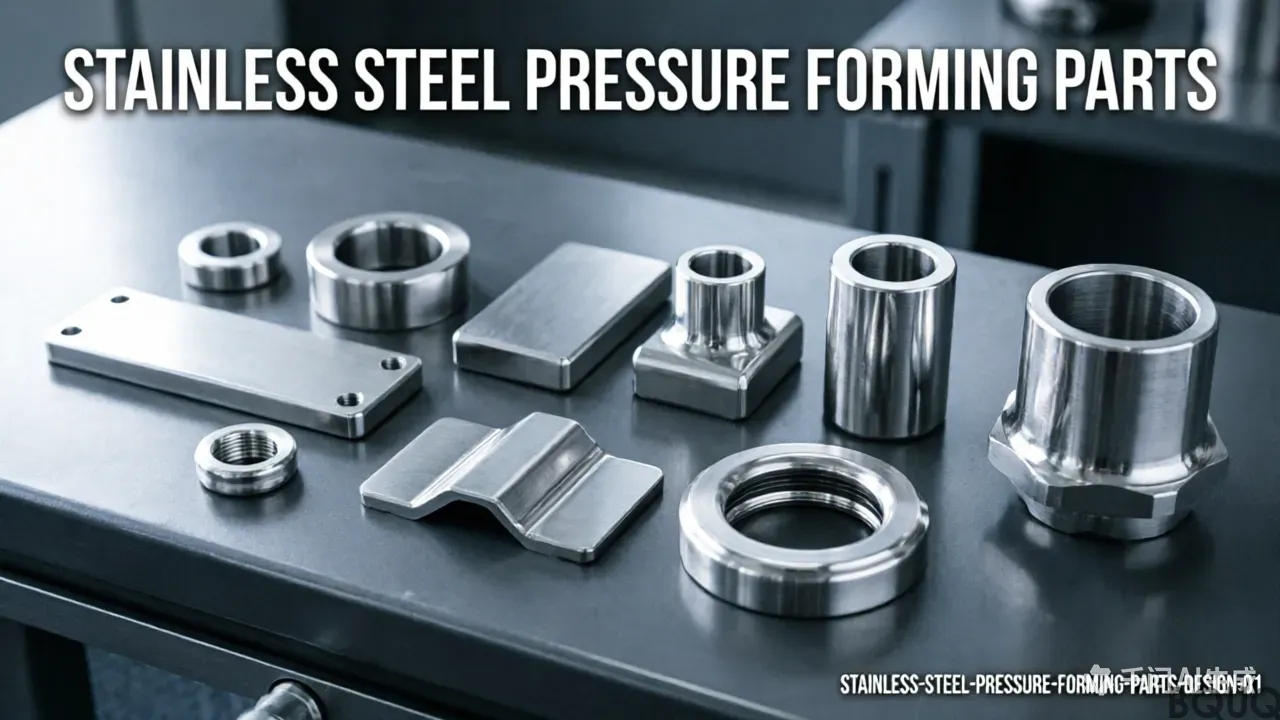
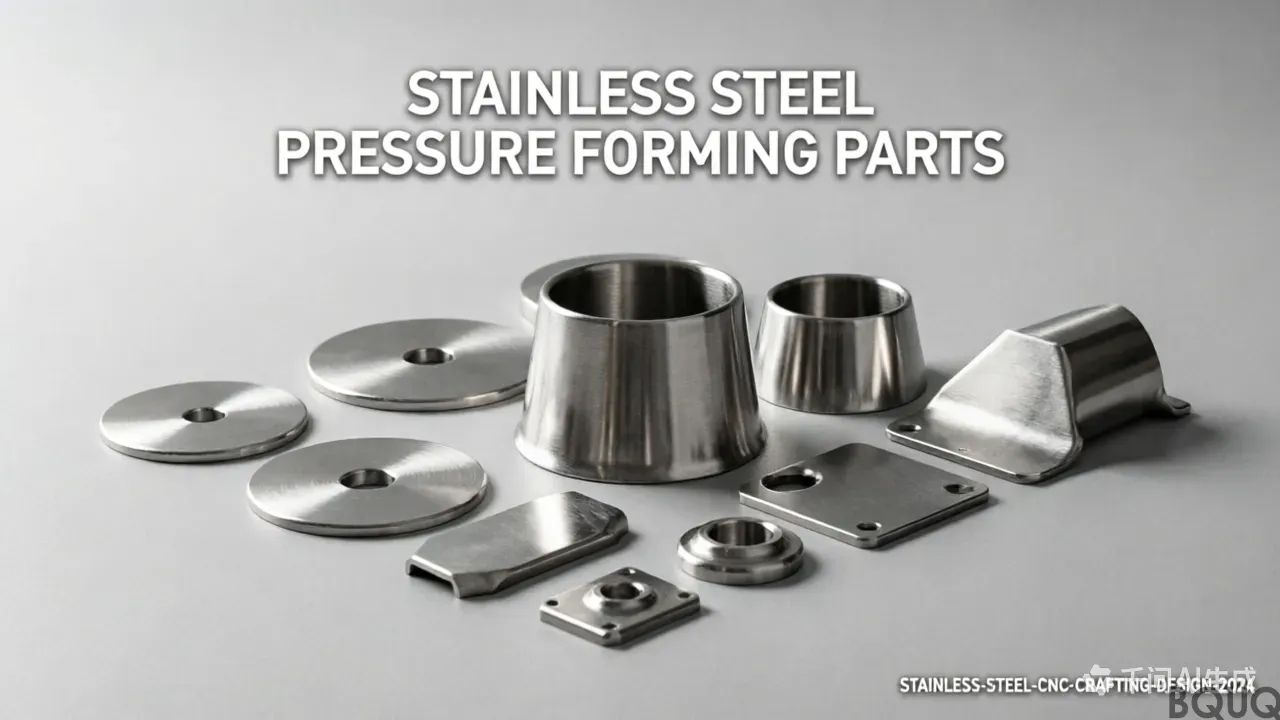
Stamping and deep drawing are both sheet metal forming processes, but they differ fundamentally in mechanics and outcome: stamping cuts or forms flat sheet metal into shape using a die, while deep drawing pulls sheet metal into a die cavity to create a hollow, three-dimensional part. In short, stamping is primarily a cutting or shallow forming operation, whereas deep drawing is a tensile-compressive forming process that produces seamless cups, housings, and enclosures. This guide explains the exact process parameters, cost implications, and application differences so you can select the right method for your production run.
What Is the Core Mechanical Difference Between Stamping and Deep Drawing?
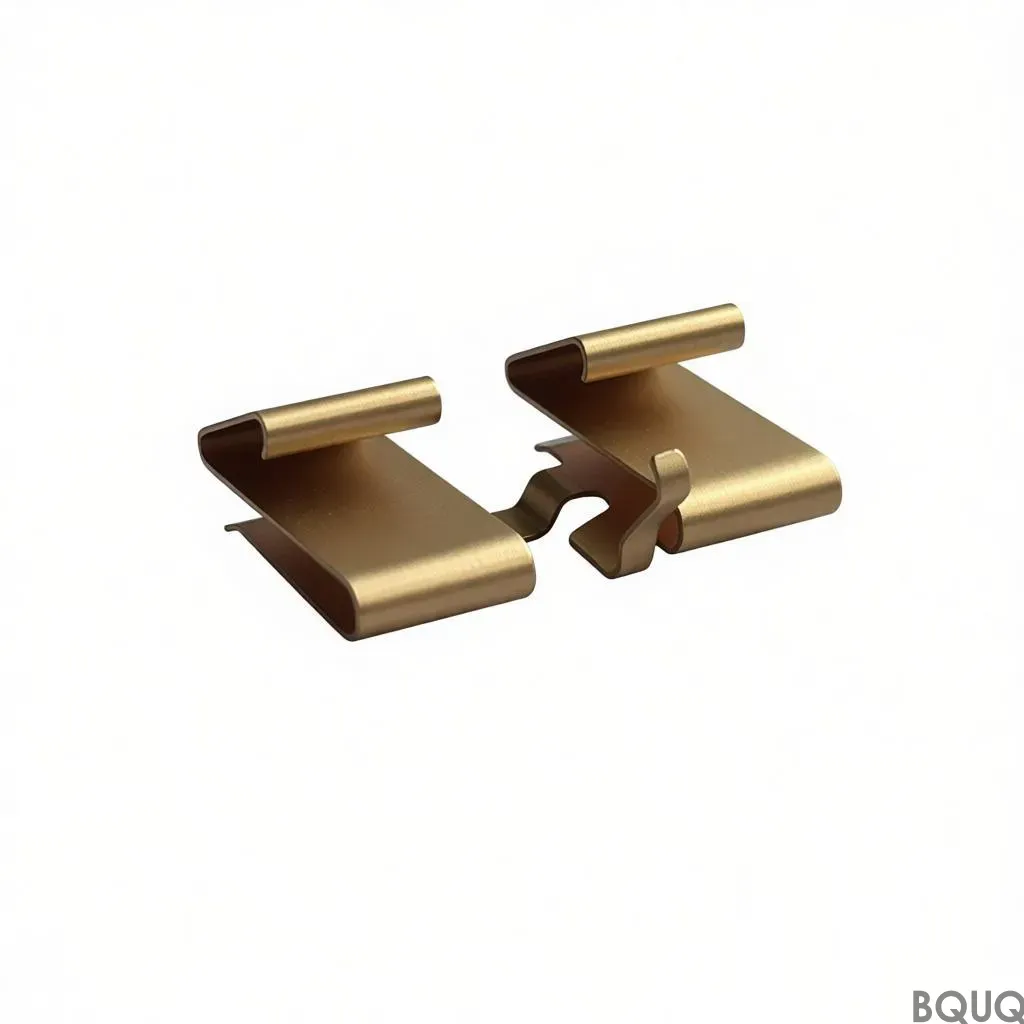
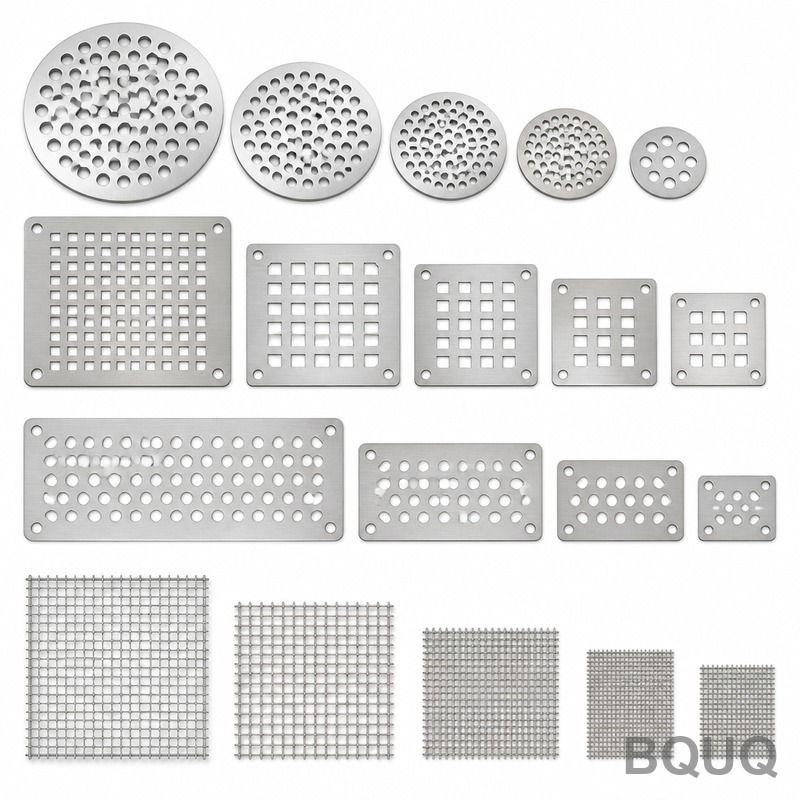
Stamping encompasses a family of operations—blanking, punching, bending, embossing, and coining—where a punch forces sheet metal against a die, either shearing it (cutting) or bending it along a straight axis. The material thickness remains essentially constant, and the deformation is localized to the bend or cut line. Typical stamping tolerances range from ±0.05 mm to ±0.13 mm for precision parts, and the process operates at speeds of 30 to 1,500 strokes per minute depending on press size and part complexity.
Deep drawing, by contrast, uses a punch to push a flat blank into a die cavity while a blank holder controls material flow, causing the flange to compress circumferentially as the wall stretches axially. This creates a seamless hollow part with a significant depth-to-diameter ratio, often exceeding 1:1. The material undergoes plastic flow, and thickness variations of 10% to 20% are normal. Deep drawing depths can reach 300 mm or more on hydraulic presses, with draw ratios (blank diameter to punch diameter) of 1.8 to 2.2 for a single draw and up to 4.0 with multiple redraws.
How Do Tooling and Die Costs Compare Between the Two Processes?
Tooling cost is often the deciding factor for low-volume production. Stamping dies are generally less expensive because they can be simpler—a blanking die with a punch and die button costs between $2,000 and $15,000 depending on size and material. Progressive dies, which combine multiple stamping operations in one stroke, range from $10,000 to $100,000 for complex parts with 10 or more stations.
Deep drawing dies are more costly due to the need for a punch, die ring, blank holder, and often a pressure pad or cushion system. A single-action deep drawing die for a small part (50 mm diameter) costs $5,000 to $20,000, while a double-action die for larger automotive components (300 mm diameter) can exceed $80,000. Additionally, deep drawing dies require premium tool steels like D2 or A2, hardened to 58-62 HRC, to withstand the high surface pressures of 200 to 400 MPa during forming.
What Materials Are Suitable for Stamping Versus Deep Drawing?
Stamping works with almost any ductile metal, including stainless steel grades 304 and 316, aluminum alloys 5052 and 6061, copper, brass, and even high-carbon steels up to 1,200 MPa tensile strength. Material thickness ranges from 0.05 mm for foil to 6.0 mm for structural components. Because stamping relies on shearing and bending, materials with lower elongation (below 10%) can still be processed successfully.
Deep drawing requires materials with high elongation and low yield strength ratio. Cold-rolled steel (DC01, DC04) with elongation above 32% is ideal, as are aluminum alloys 3003 and 5052 with elongation of 18% to 25%. Stainless steel 304 with 50% elongation draws well but requires higher blank holder forces. The maximum draw depth is directly proportional to the material's Lankford coefficient (r-value); for example, DC04 steel has an r-value of 1.6 to 2.0, enabling deeper draws than aluminum (r-value 0.6 to 0.8) at the same thickness.
Which Industries and Applications Prefer Stamping or Deep Drawing?
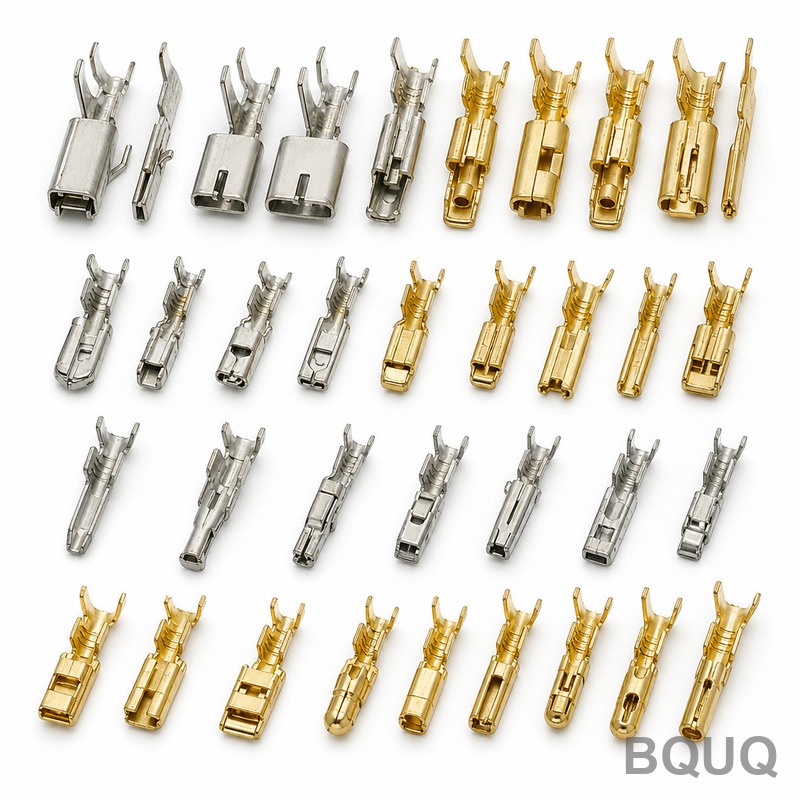
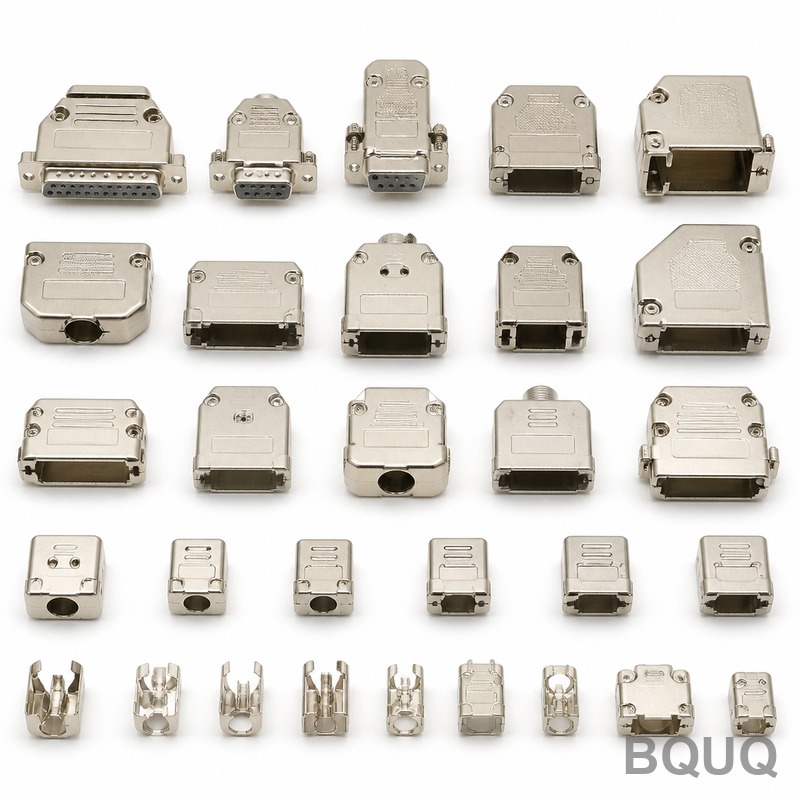
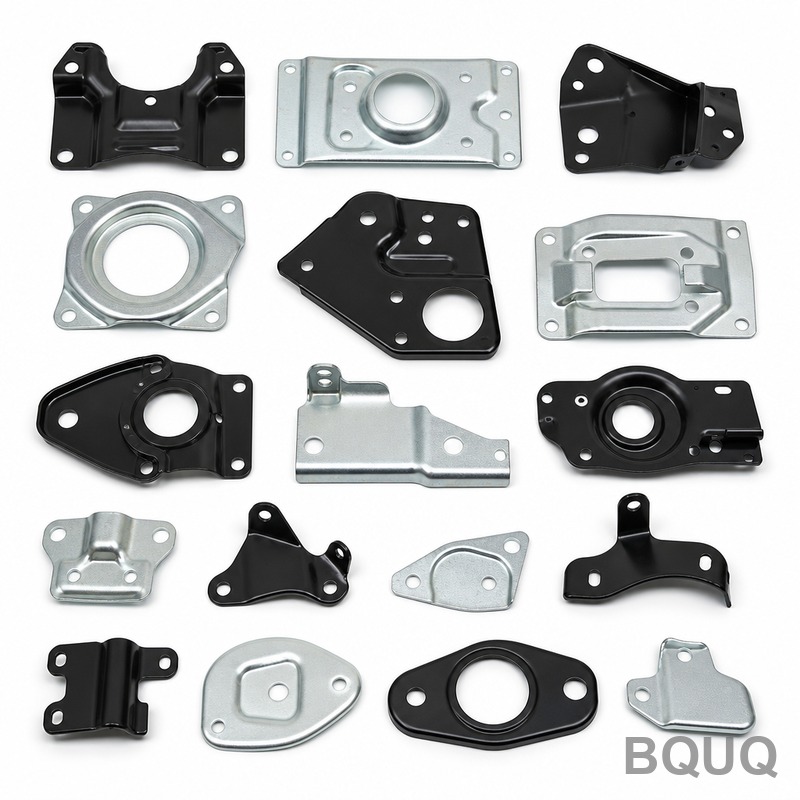
Stamping dominates high-volume flat or bent components: electrical connectors (copper alloy thickness 0.1-0.5 mm), automotive brackets and mounting plates (steel 1.0-3.0 mm), heat sink fins (aluminum 0.4-1.0 mm), and appliance chassis parts. The process produces millions of parts annually at per-piece costs as low as $0.01 to $0.50 for simple components.
Deep drawing is essential for seamless hollow parts requiring structural integrity and leak-proofness: battery housings (aluminum 0.3-0.8 mm thick, drawn to 120 mm depth), kitchen sinks (stainless steel 0.8-1.2 mm), automotive fuel tanks and oil pans, pressure vessel ends, and medical aerosol canisters. Deep drawn parts exhibit 30% to 50% higher strength in the walls due to work hardening, making them superior for pressure applications. For example, a deep drawn 304 stainless steel cup with 0.5 mm wall thickness can withstand internal pressures up to 20 bar.
What Production Speeds and Lead Times Can You Expect?
Stamping is inherently faster. A single-station press operates at 30 to 300 strokes per minute, while a high-speed press can reach 1,500 strokes per minute for small parts like terminals. Tooling fabrication lead time is typically 2 to 4 weeks for simple dies and 6 to 10 weeks for progressive dies. Setup time for a stamping press is 15 to 60 minutes, enabling quick changeovers between jobs.
Deep drawing is slower due to the need for controlled punch velocity. Mechanical presses run at 10 to 60 strokes per minute, while hydraulic presses operate at 5 to 20 strokes per minute to prevent wrinkling and tearing. Deep drawing die fabrication takes 4 to 8 weeks for single-action tools and 10 to 16 weeks for complex multi-stage tools. A typical deep drawn part with a 2:1 draw ratio requires 3 to 5 seconds per part on a hydraulic press, versus less than 0.5 seconds for a similar stamped bracket.
Which Process Offers Better Dimensional Accuracy and Surface Finish?
Stamping provides superior flatness and hole positioning accuracy. Blanked edges have a characteristic burnished band (about one-third of material thickness) and a die roll on the cut edge. Dimensional tolerances of ±0.05 mm are achievable for hole diameters and outer contours. Surface finish on stamped flat areas is as-supplied from the coil, typically Ra 0.4 to 1.6 micrometers.
Deep drawing produces parts with excellent surface finish on the outer wall (Ra 0.2 to 0.8 micrometers) because the material slides against the polished die surface under high pressure. However, thickness variation is inherent: the bottom is full thickness, the side walls thin by 10% to 20%, and the top edge may be thicker than the blank. Diameter tolerances are ±0.10 mm for small parts and ±0.25 mm for larger diameters. The punch side (inside) surface can exhibit orange peel or galling if lubrication is inadequate.
How Do Costs and Minimum Order Quantities Compare?
Per-part cost is a function of tooling amortization, material utilization, and cycle time. Stamping has lower per-part cost at high volumes because material utilization is 60% to 80% with nested layouts, and cycle times are fractions of a second. For a simple bracket (50 mm x 30 mm), stamping cost is $0.05 to $0.20 per part at 100,000 units annually.
Deep drawing has higher per-part cost due to slower cycle times and lower material utilization (50% to 70% because the blank must be circular or rectangular with rounded corners). However, for hollow parts that would otherwise require machining or welding, deep drawing is 40% to 60% cheaper than fabrication. Minimum order quantities are typically 1,000 to 5,000 pieces for stamping and 2,000 to 10,000 pieces for deep drawing to justify tooling investment.
| Parameter | Stamping | Deep Drawing |
| Primary mechanism | Shearing, bending, shallow forming | Tensile-compressive flow into die cavity |
| Typical part geometry | Flat, bent, or shallow (depth < 1x diameter) | Hollow, seamless (depth > 1x diameter) |
| Material thickness range | 0.05 mm to 6.0 mm | 0.2 mm to 3.0 mm (single draw) |
| Achievable tolerance | ±0.05 mm to ±0.13 mm | ±0.10 mm to ±0.25 mm |
| Tooling cost (simple part) | $2,000 to $15,000 | $5,000 to $20,000 |
| Production speed | 30 to 1,500 strokes/min | 5 to 60 strokes/min |
| Material utilization | 60% to 80% | 50% to 70% |
| Typical lead time for tooling | 2 to 10 weeks | 4 to 16 weeks |
| Minimum order quantity | 1,000 to 5,000 pieces | 2,000 to 10,000 pieces |
| Surface finish (Ra) | 0.4 to 1.6 micrometers | 0.2 to 0.8 micrometers on outer wall |
| Work hardening in walls | Minimal | Significant (30% to 50% strength increase) |
What Are the Common Defects and How Can You Prevent Them?
Stamping defects include burrs (excessive die clearance), springback (elastic recovery after bending), and edge cracking (low ductility material). Burr height should be kept below 10% of material thickness; use sharper dies and reduce clearance to 5% to 8% of thickness per side. Springback compensation requires over-bending by 2 to 5 degrees or using coining operations.
Deep drawing defects are more complex: wrinkling in the flange (insufficient blank holder force), tearing near the punch nose (excessive force or sharp radius), and earing (anisotropic material flow creating uneven top edges). Wrinkling is prevented by increasing blank holder pressure to 2 to 3 MPa, while tearing requires increasing punch and die corner radii to at least 4 to 6 times material thickness. Earing can be minimized by using materials with low planar anisotropy (delta r below 0.5).
When Should You Choose Stamping Over Deep Drawing?
Choose stamping when the part is fundamentally flat or bent, when you need tight tolerances on holes and cut edges, or when production volume exceeds 50,000 pieces per year. Stamping is also preferred for materials thinner than 0.5 mm or harder than 500 MPa tensile strength, where deep drawing would cause cracking. If the part has complex holes, slots, or louver features, stamping with progressive dies integrates these features in one pass.
Choose deep drawing when the part requires a seamless hollow body, when pressure-tightness or leak-proofness is critical, when the depth-to-diameter ratio exceeds 0.5, or when you want the strength benefit of work hardening. Deep drawing is also the economical choice for producing 5,000 to 100,000 cylindrical or box-shaped parts per year, where machining or welding would cost 3 to 5 times more per part.
FAQ
Can Deep Drawing Be Combined with Stamping in One Process?
Yes, compound dies and progressive dies commonly combine deep drawing with blanking, piercing, and trimming operations. For example, a progressive die can blank a circular disc, draw it to a cup, then pierce side holes and trim the flange in a single press stroke sequence at 20 to 40 strokes per minute.
What Is the Maximum Draw Depth in a Single Operation?
For steel with good formability (DC04), the maximum draw depth is approximately 0.7 times the punch diameter in a single draw without intermediate annealing. With redrawing operations, total depth can reach 3 to 4 times the diameter, but each redraw requires a new die set and increases tooling cost by 30% to 50%.
How Does Lubrication Affect Deep Drawing Quality?
Lubrication reduces friction between the blank and die, lowering required punch force by 20% to 30% and preventing galling. Use chlorinated or sulfurized oils for steel (film thickness 5 to 15 micrometers) and dry film lubricants for aluminum. Inadequate lubrication causes tearing at the punch nose radius, while excessive lubrication causes wrinkling due to uncontrolled material flow.
What Is the Typical Cost Difference Between a Stamped and a Deep Drawn Part?
For the same volume of 10,000 parts, a stamped bracket costs $0.10 to $0.30 per piece, while a deep drawn cup of similar size costs $0.30 to $0.80 per piece. However, if the part must be hollow, comparing stamping plus welding to deep drawing shows deep drawing is 40% to 60% cheaper because it eliminates the weld seam and secondary finishing.
Which Metals Are Not Suitable for Deep Drawing?
Materials with elongation below 15%, such as high-carbon spring steel (C75S), cast aluminum, and magnesium alloys at room temperature, are not suitable for deep drawing. These materials crack at the die radius due to insufficient plastic flow. If required, they must be heated to 200 to 400 degrees Celsius for warm deep drawing, which increases cycle time and tooling cost.
How Does Tool Wear Differ Between Stamping and Deep Drawing?
Stamping dies wear primarily on cutting edges, requiring re-sharpening every 100,000 to 500,000 strokes depending on material hardness. Deep drawing dies wear on the die radius and blank holder surface due to continuous sliding contact; with proper lubrication, a D2 tool steel die can produce 200,000 to 500,000 parts before requiring re-polishing to restore the Ra 0.2 micrometer surface finish.
What Is the Minimum Wall Thickness for a Deep Drawn Part?
The minimum wall thickness is typically 0.2 mm for small parts (under 30 mm diameter) and 0.5 mm for larger parts, limited by the blank's ability to flow without tearing. For thinner walls, consider impact extrusion or hydroforming, which can achieve 0.1 mm walls but require more expensive tooling and slower cycle times.
Conclusion
Stamping and deep drawing serve distinct manufacturing niches: stamping excels at high-speed, low-cost production of flat or bent components with tight tolerances, while deep drawing produces seamless hollow parts with superior strength and leak-proof integrity. Your material choice, part geometry, and annual volume should drive the decision—use the data table above to compare tolerances, costs, and lead times directly. For parts with depth less than half the diameter and high hole density, stamping is the clear winner; for anything requiring a seamless body, deep drawing is the only rational choice. BQUQ has 20 years of experience in both processes, with in-house tooling design and 14 CNC machining centers for die fabrication. We provide free DFM feedback within 24 hours and can produce prototypes in 5 business days. For a detailed quote with process recommendations, email our engineering team at sc@bquq.com or message us on WhatsApp at +86 13713157787. Visit www.bquq.com to upload your CAD files and receive a 12-hour response on cost and manufacturability.