What Is the Minimum Order Quantity for Custom Metal Stamping Parts?
The minimum order quantity (MOQ) for custom metal stamping parts typically ranges from 500 to 5,000 pieces for progressive die stamping, while prototype and short-run stamping can start at just 50 to 100 pieces. The exact MOQ depends on part complexity, material thickness, tooling cost, and the specific stamping process used (progressive, transfer, or four-slide). For most standard precision parts, BQUQ offers a practical MOQ of 1,000 pieces for production runs, with lower quantities available for initial sampling and validation.
How Does Part Complexity Affect the Minimum Order Quantity?
Part complexity is the single largest factor influencing MOQ because it dictates tooling design, number of stations, and secondary operations. A simple flat washer with a single hole and 0.5 mm thickness can be produced in a 2-station progressive die, allowing an MOQ as low as 500 pieces. In contrast, a complex heat sink with 20 fins, drawn bosses, and tight 0.05 mm flatness requires a 12-station die with CNC-machined inserts, pushing the practical MOQ to 3,000 pieces to amortize the 45,000 USD tooling cost.
Complex parts also require more frequent die maintenance and inspection stops. For example, a part with multiple bends and coining features may need 100% dimensional inspection on a CMM, adding 0.02 USD per part in quality cost. When this inspection cost is spread over a small batch, the per-piece price becomes prohibitive. Therefore, engineers must assess feature count: each additional bend, form, or tapped hole typically increases the minimum viable order quantity by 15% to 25%.
What Is the Difference Between Prototype and Production MOQ?
Prototype stamping MOQ is 50 to 200 pieces, while production MOQ is 1,000 to 5,000 pieces. Prototype runs use soft tooling made from aluminum or low-carbon steel, which costs 3,000 to 8,000 USD but lasts only 5,000 to 20,000 hits. Production runs use hardened D2 or M2 tool steel, costing 15,000 to 60,000 USD, with die life exceeding 500,000 hits.
The material thickness also shifts the prototype versus production split. For thin materials under 1.0 mm, prototype MOQ can drop to 50 pieces because the die is simpler and stamping forces are lower. For thick materials over 3.0 mm, such as 304 stainless steel spring plates, the prototype MOQ rises to 200 pieces due to higher tonnage requirements and the need for progressive trimming stages. BQUQ recommends ordering prototype quantities first to validate geometry, then scaling to production MOQ once the part passes first-article inspection.
How Does Material Type Influence the MOQ for Stamping?
Material type directly affects MOQ because harder and more expensive materials require higher tooling grade and slower stamping speeds, increasing the minimum economical batch. For example, 1100 aluminum (soft, low cost) can be stamped at 400 strokes per minute, allowing an MOQ of 800 pieces. In contrast, Inconel 625 (hard, high-strength) requires 50 strokes per minute and carbide tooling, pushing the MOQ to 2,500 pieces to justify tool wear.
Material cost also sets a floor on MOQ. A 0.8 mm thick cold-rolled steel sheet costs about 0.80 USD per kg, while 0.8 mm beryllium copper costs 45 USD per kg. For a part weighing 5 grams, the material cost difference is 0.004 USD versus 0.225 USD per piece. If tooling amortization is 0.10 USD per piece, the beryllium copper part needs a higher MOQ to keep the total piece price competitive. A practical rule: if material cost per piece exceeds 0.50 USD, consider an MOQ of at least 2,000 pieces to negotiate better coil pricing.
What Tooling Costs Are Associated with Different MOQ Levels?
Tooling cost is the primary driver of MOQ, and the relationship is non-linear. For an MOQ of 500 pieces, a simple blanking die costs 2,500 USD, meaning tooling adds 5.00 USD per piece. For an MOQ of 5,000 pieces, the same die adds only 0.50 USD per piece. The table below shows typical tooling costs and corresponding MOQ tiers for progressive die stamping.
| Stamping Type | Tooling Cost (USD) | Typical MOQ (pieces) | Die Life (hits) | Lead Time (weeks) |
| Prototype soft die | 3,000 - 8,000 | 50 - 200 | 5,000 - 20,000 | 2 - 3 |
| Simple production die | 8,000 - 20,000 | 500 - 1,500 | 100,000 - 250,000 | 4 - 5 |
| Medium complexity die | 20,000 - 40,000 | 1,500 - 3,000 | 250,000 - 500,000 | 5 - 7 |
| High complexity progressive die | 40,000 - 60,000 | 3,000 - 5,000 | 500,000 - 1,000,000 | 7 - 9 |
| Four-slide (wire forming) | 5,000 - 15,000 | 1,000 - 2,000 | 200,000 - 400,000 | 3 - 4 |
For high-volume parts exceeding 100,000 pieces annually, the MOQ can be set at 10,000 pieces to reduce per-piece tooling amortization to under 0.10 USD. For low-volume aerospace or medical parts, BQUQ accepts an MOQ of 250 pieces if the customer accepts a 30% higher piece price to cover setup and inspection time.
Why Do Tolerances Impact the Minimum Order Quantity?
Tighter tolerances require slower stamping speeds, additional die maintenance, and 100% inspection, all of which increase the minimum economical batch size. A standard tolerance of ±0.10 mm allows stamping at 300 strokes per minute with sampling inspection every 50 pieces, supporting an MOQ of 1,000. A precision tolerance of ±0.02 mm requires 80 strokes per minute, in-process optical inspection, and die re-polishing every 2,000 hits, making an MOQ below 2,000 uneconomical.
Tolerance also affects the number of die stations. A part with a critical hole position tolerance of ±0.05 mm needs a fine-blanking station or a secondary reaming operation, adding 15,000 USD to tooling. This added cost must be spread across more parts. For every 0.01 mm reduction in tolerance, the practical MOQ increases by approximately 10% to 20%. Engineers should relax non-critical tolerances to ±0.15 mm where possible to lower MOQ and piece price.
Which Stamping Process Allows the Lowest MOQ?
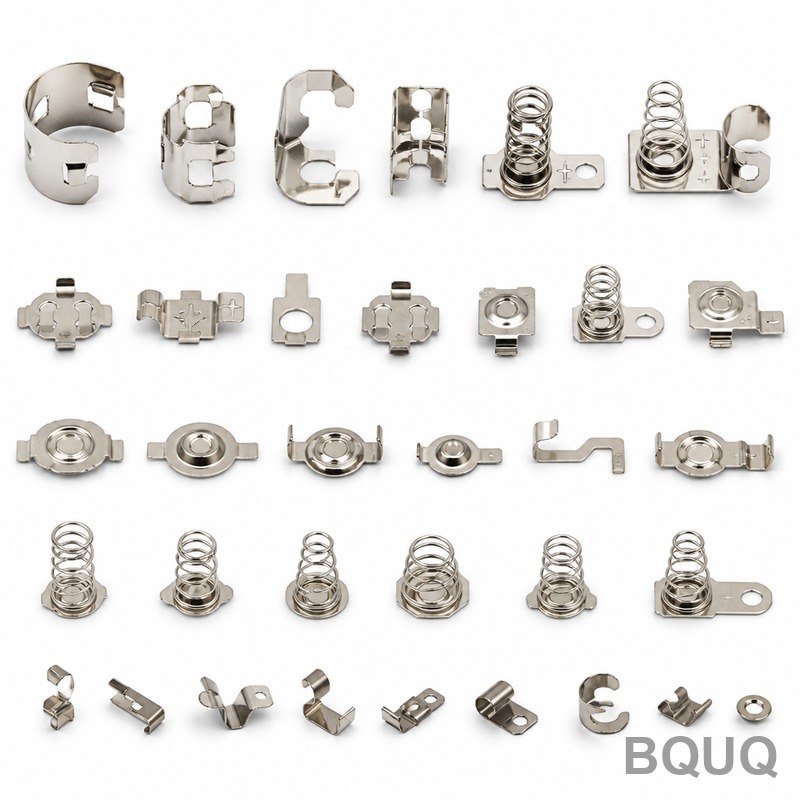
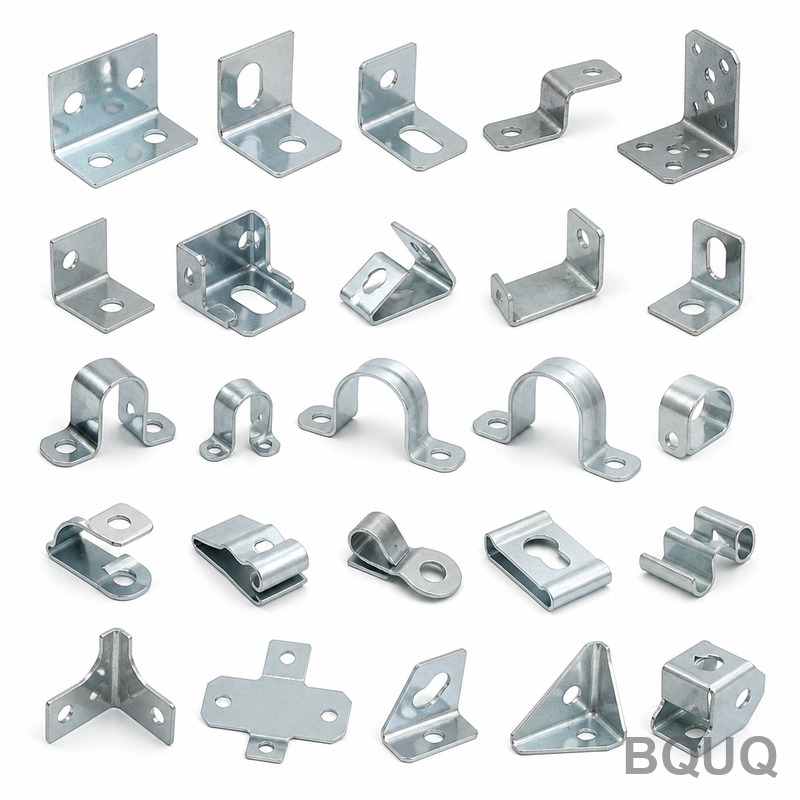
Four-slide stamping and short-run punch press stamping allow the lowest MOQ, typically 100 to 500 pieces, because they use simpler, less expensive tooling. A four-slide machine can form wire and strip material using cam-actuated slides, with tooling costs from 5,000 to 15,000 USD and setup times under 2 hours. This makes it ideal for springs, clips, and contacts where production volumes are 500 to 20,000 pieces.
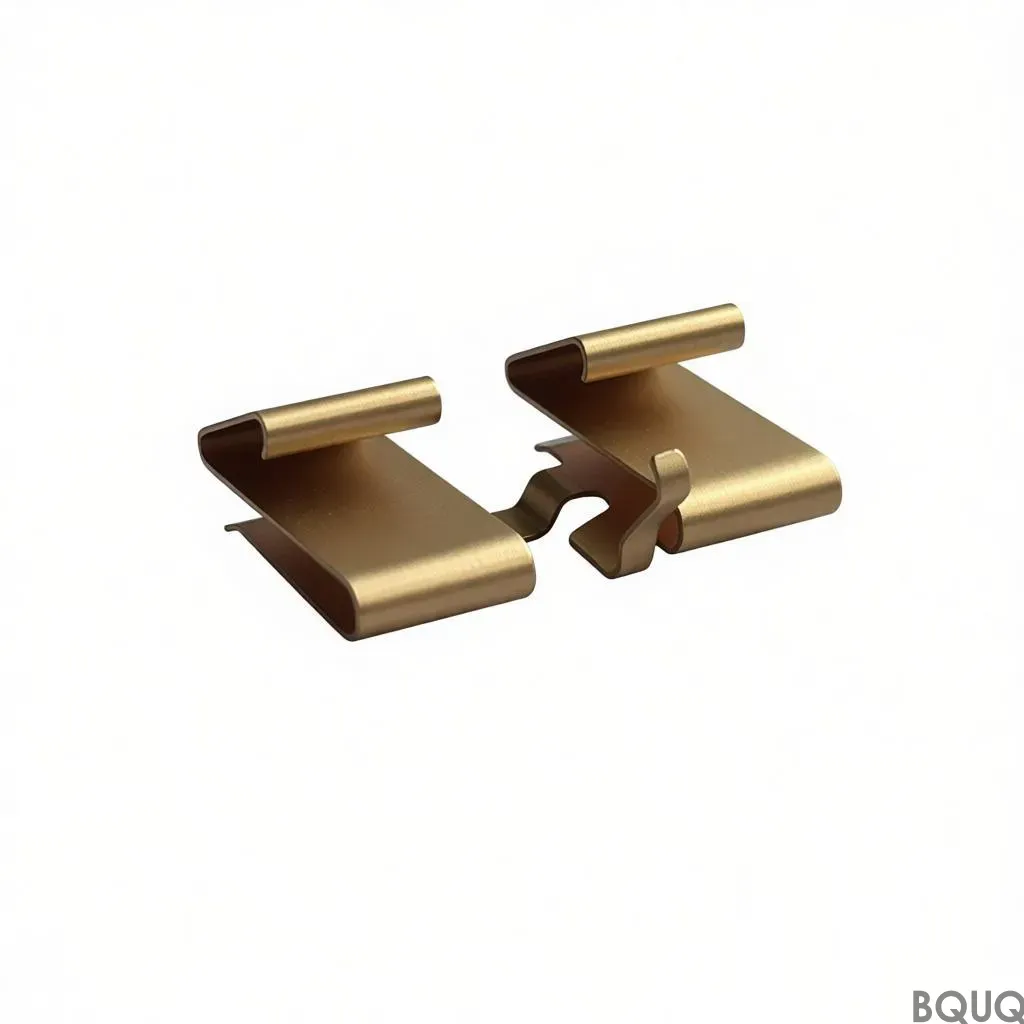
Progressive die stamping, while offering the lowest per-piece cost at high volume, requires the highest MOQ due to complex multi-station tooling. For a capacitor clip made of 0.3 mm phosphor bronze, four-slide stamping can achieve an MOQ of 300 pieces at 0.12 USD per piece. The same part on a progressive die would require an MOQ of 2,000 pieces but drop to 0.04 USD per piece at 10,000 units. If your annual demand is below 5,000 pieces, choose four-slide or short-run stamping to avoid excessive tooling investment.
How Can Engineers Reduce the MOQ for Custom Stamping?
Engineers can reduce MOQ by simplifying part geometry, relaxing tolerances, and selecting standard material thicknesses. Removing one bend or converting a tapped hole to a self-clinching nut can reduce the number of die stations from 8 to 6, lowering tooling cost by 25% and MOQ by 20%. Using standard stock widths (e.g., 50 mm, 100 mm coil widths) eliminates custom slitting fees and allows smaller production runs.
Another effective method is to phase production: order 500 pieces for pilot testing at a 30% higher piece price, then commit to 2,000 pieces for the first full production run. BQUQ also offers a "tooling sharing" program where multiple customers with similar part families share a common die base, reducing tooling cost by up to 40%. Finally, combining multiple part numbers into one die (family tooling) can achieve an effective MOQ of 300 pieces per part number while maintaining a total run of 1,200 pieces.
Frequently Asked Questions
What Is the MOQ for a Simple Flat Metal Stamping?
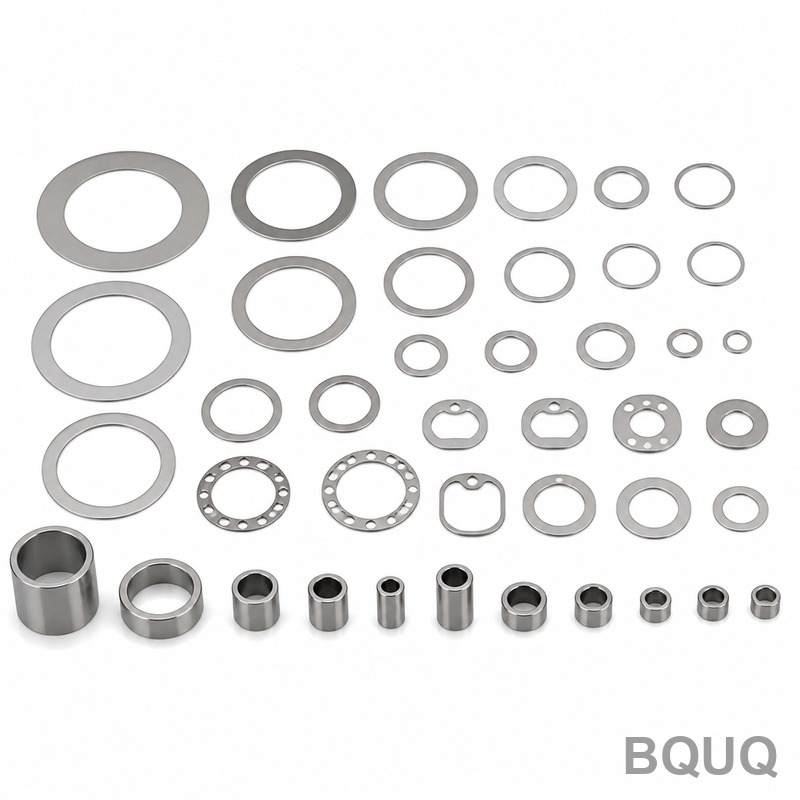
For a flat part with no bends, such as a shim or washer, the MOQ is 500 pieces with simple die tooling costing 8,000 USD. If you only need 100 pieces for a prototype, BQUQ can use wire EDM to cut them without dedicated tooling at a higher per-piece cost. Lead time for the 500-piece run is 4 weeks.
Can I Order Less Than the MOQ for Testing?
Yes, BQUQ accepts 50 to 200 pieces for first-article inspection and functional testing at a 25% to 40% surcharge over the production piece price. This testing batch uses temporary soft tooling and slower manual feeding. The cost per piece for a 100-piece test run is typically 1.5 to 2.5 times the 5,000-piece production price.
How Long Does Tooling Take for a New Stamping Part?
Simple tooling takes 2 to 3 weeks, while complex progressive dies take 6 to 8 weeks. Design review and DFM analysis add 3 to 5 days before tooling starts. BQUQ can expedite a simple die to 10 working days for an additional 20% rush fee.
What Is the Price Difference Between 1,000 and 10,000 Pieces?
For a typical brass terminal stamped at 0.15 USD per piece at 10,000 pieces, the price at 1,000 pieces is approximately 0.28 USD per piece. This 87% increase covers tooling amortization, setup time (2 hours per run), and reduced material purchasing power. The price difference narrows to 15% when comparing 5,000 to 50,000 pieces.
Does the MOQ Include Secondary Operations Like Tapping or Plating?
No, secondary operations such as tapping, heat treatment, and plating are quoted separately and do not reduce the stamping MOQ. However, BQUQ can combine stamping and secondary operations into a single MOQ of 1,000 finished parts. For example, a stamped spring with heat treatment and zinc plating has a combined MOQ of 1,500 pieces.
Can I Use the Same Tooling for Multiple Orders?
Yes, tooling is owned by the customer after the first production run and can be reused for repeat orders without additional tooling cost. BQUQ stores tooling for free for 24 months in a climate-controlled warehouse. Reorders with the same tooling have a reduced MOQ of 300 pieces, as the tooling cost is already amortized.
Conclusion
The minimum order quantity for custom metal stamping parts is not a fixed number but a function of part geometry, material, tolerance, and tooling cost. For most production parts, an MOQ of 1,000 to 3,000 pieces is standard, while prototype runs can start at 50 pieces using soft tooling. By simplifying designs and relaxing non-critical tolerances, engineers can effectively reduce MOQ by 20% to 40%. BQUQ, with 20 years of CNC machining, metal stamping, and heat sink manufacturing experience in Dongguan, provides transparent MOQ quotes within 24 hours. For a specific part evaluation, send your 2D or 3D drawings to sc@bquq.com or contact us on WhatsApp at +86 13713157787. Visit www.bquq.com to request a quote and receive a detailed DFM report within 12 hours.