What Is the Standard Heat Sink Size for TO-220, TO-247 and Other Packages?
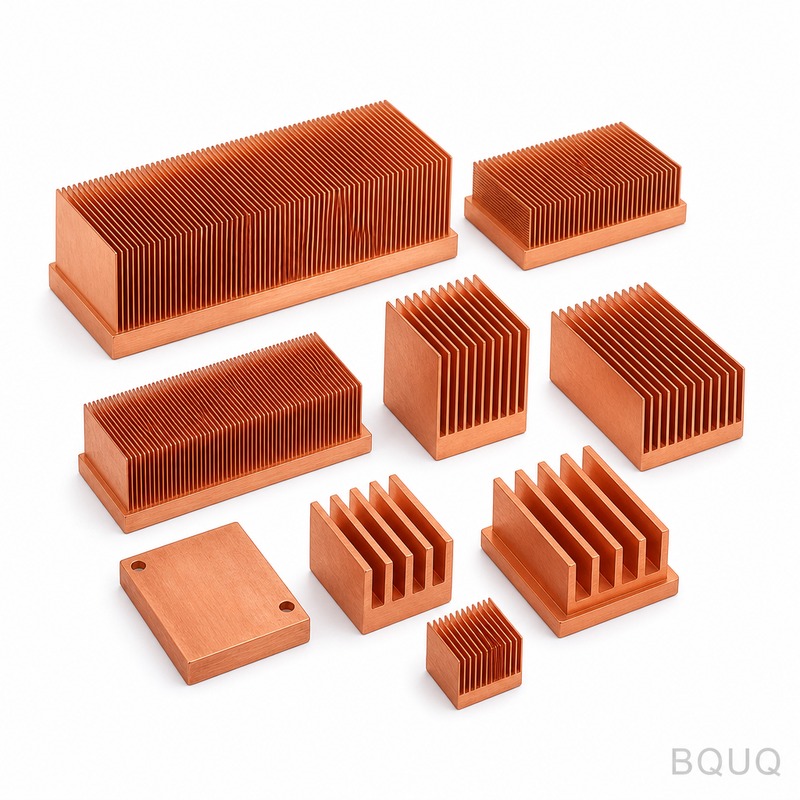
The standard heat sink size for a TO-220 package is typically 19.0 mm wide by 12.7 mm deep by 10.0 mm tall, while a TO-247 package commonly requires a larger footprint of 25.4 mm by 15.2 mm with a height of 15.0 mm. These dimensions are not universal standards but rather baseline specifications that must be adjusted based on power dissipation, airflow, and thermal resistance requirements. For a typical 10-watt TO-220 application with natural convection, a 30.0 mm by 20.0 mm aluminum heat sink with a thermal resistance of 8.0 °C/W is the minimum practical size to maintain a junction temperature below 125 °C.
What Are the Exact Mounting Dimensions for TO-220 and TO-247 Heat Sinks?
The mounting hole patterns are the primary constraint when selecting a heat sink. For TO-220 packages, the standard mounting hole spacing is 2.54 mm between the two leads and 5.08 mm between the mounting hole and the center lead. The typical mounting hole diameter is 3.2 mm to accommodate an M3 screw, with the hole centers spaced 10.0 mm apart. For TO-247 packages, the mounting hole spacing increases to 5.08 mm between leads, and the hole diameter is 4.2 mm for an M4 screw, with a center-to-center spacing of 15.2 mm. The thickness of the mounting tab is 1.2 mm for TO-220 and 1.5 mm for TO-247, which directly affects the required heat sink slot depth, usually 1.5 mm and 2.0 mm respectively.
How Much Heat Sink Surface Area Do You Need for a Given Power Dissipation?
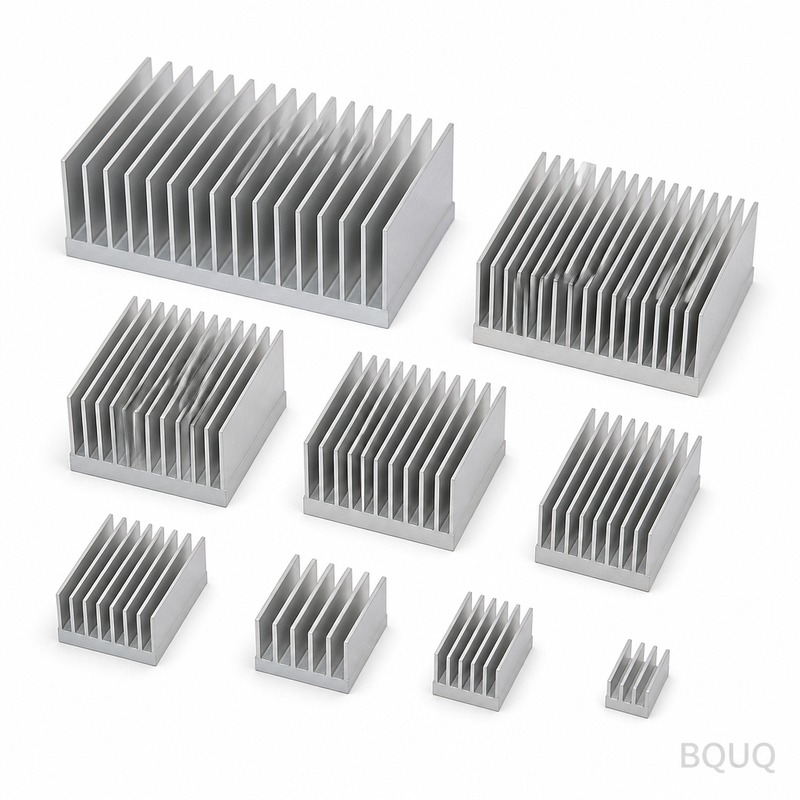
The required surface area depends on the thermal resistance budget, which is calculated by dividing the temperature difference by the power dissipated. For a TO-220 package with a junction-to-case thermal resistance of 3.0 °C/W and a maximum junction temperature of 150 °C, operating at 25 °C ambient, a 10-watt load requires a heat sink with a thermal resistance of no more than 9.5 °C/W. A natural convection aluminum heat sink with a surface area of approximately 50 cm² will provide about 10 °C/W, while a forced-air heat sink with a 2 m/s airflow can achieve the same thermal resistance with only 20 cm² of surface area. As a rule of thumb, for every additional 5 watts of power dissipation, you must double the surface area when using natural convection.
Which Heat Sink Profile Shapes Offer the Best Performance for These Packages?
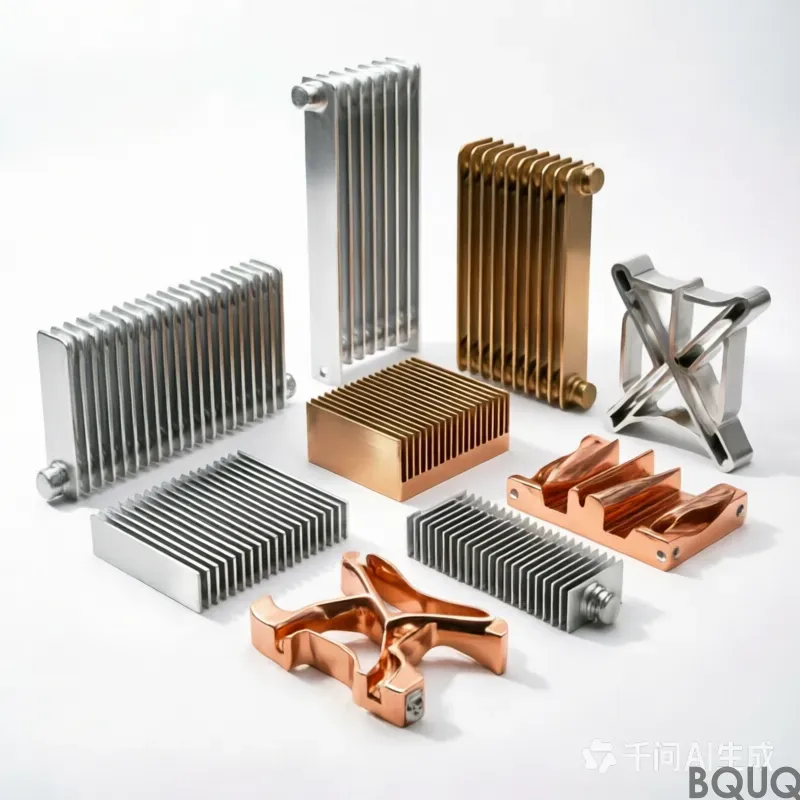
The extruded aluminum fin profile is the most efficient shape for TO-220 and TO-247 packages, offering a 30 to 40 percent improvement in thermal performance over a flat plate of the same footprint. A standard 25.0 mm wide extrusion with 6 fins, each 1.5 mm thick and 10.0 mm tall, provides a thermal resistance of 6.5 °C/W at 75 mm length for a TO-220 package. For TO-247 packages, a wider profile of 40.0 mm with 8 fins, each 2.0 mm thick and 15.0 mm tall, yields 4.0 °C/W at the same length. Stamped aluminum heat sinks with a folded fin design are acceptable for low-power applications below 5 watts, but they typically have a 20 percent higher thermal resistance than extruded profiles of the same dimensions.
What Are the Standard Thermal Resistance Values for Common Heat Sink Sizes?
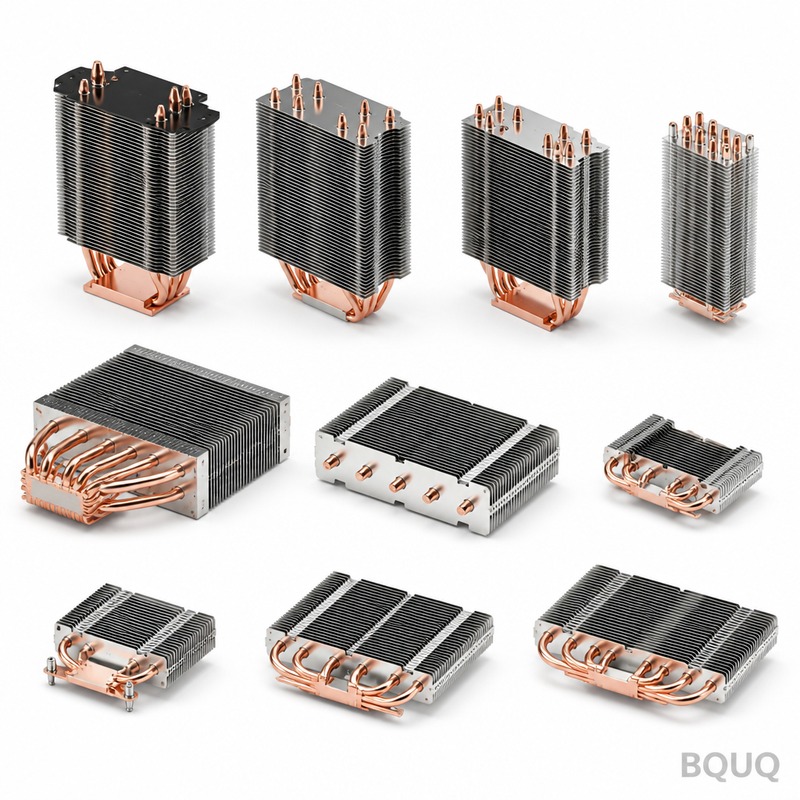
The following table provides typical thermal resistance values for standard aluminum heat sink sizes used with TO-220 and TO-247 packages under natural convection. These values assume a black anodized finish, which improves emissivity from 0.1 to 0.9 and reduces thermal resistance by approximately 15 percent compared to bare aluminum.
| Package | Heat Sink Size (mm) | Surface Area (cm²) | Thermal Resistance (°C/W) | Max Power at 75 °C Rise |
| TO-220 | 19 x 12.7 x 10 | 15 | 15.0 | 5 W |
| TO-220 | 25 x 20 x 15 | 30 | 9.0 | 8 W |
| TO-220 | 30 x 25 x 20 | 50 | 6.0 | 12 W |
| TO-247 | 25.4 x 15.2 x 15 | 35 | 8.0 | 9 W |
| TO-247 | 40 x 30 x 20 | 80 | 4.5 | 16 W |
| TO-247 | 50 x 40 x 30 | 140 | 3.0 | 25 W |
Why Does the Thermal Interface Material Change the Required Heat Sink Size?
The thermal interface material (TIM) adds a contact resistance that directly increases the total thermal resistance, thereby requiring a larger heat sink for the same power dissipation. A dry mica insulator with grease has a thermal resistance of 0.5 °C/W, while a silicone pad with a thickness of 0.25 mm offers 1.0 °C/W, and a phase-change material provides 0.2 °C/W. If you use a silicone pad instead of grease, the heat sink must have a 10 percent lower thermal resistance to compensate, which translates to a 15 percent increase in surface area. For high-power TO-247 applications above 15 watts, we recommend using a phase-change material or direct mounting without insulation to minimize the TIM contribution to less than 0.3 °C/W.
When Should You Choose a Custom Heat Sink Instead of a Standard Size?
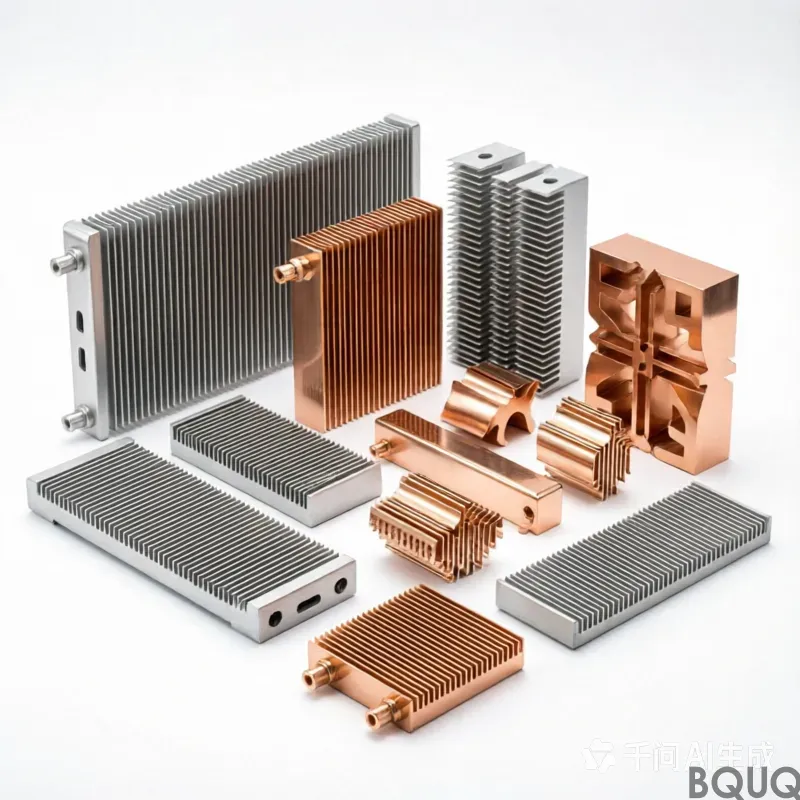
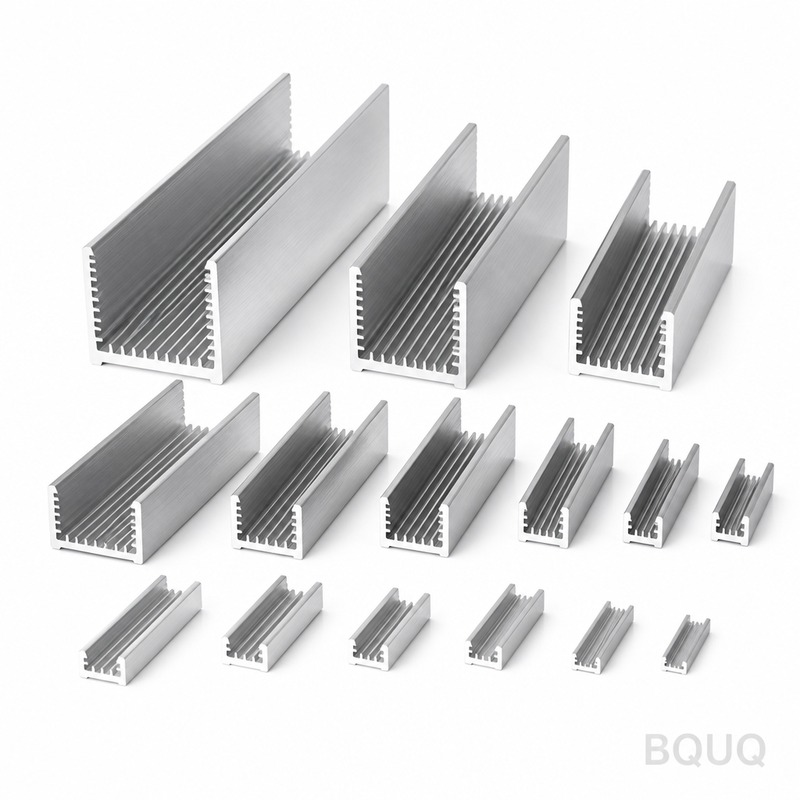
You should choose a custom heat sink when your application requires a non-standard mounting hole pattern, an odd shape to fit a specific enclosure, or a thermal resistance below 2.0 °C/W that standard extrusions cannot meet. Custom extruded heat sinks have a tooling cost of 800 to 1,500 USD for a new profile die, with a minimum order quantity of 500 pieces and a lead time of 3 to 4 weeks. Stamped custom heat sinks are more economical for high volumes above 10,000 pieces, with tooling costs between 500 and 2,000 USD and piece prices as low as 0.05 USD. For quantities below 100 pieces, machining a custom heat sink from a standard block is the most cost-effective option, with a typical price of 3 to 8 USD per piece and a lead time of 5 days.
How Do Airflow and Orientation Affect the Standard Heat Sink Size?
Forced air cooling dramatically reduces the required heat sink size, with a 2 m/s airflow lowering thermal resistance by 50 to 60 percent compared to natural convection. A heat sink that measures 40 x 30 x 20 mm with a thermal resistance of 4.5 °C/W in free air will drop to 2.0 °C/W at 2 m/s airflow, allowing the same TO-247 package to dissipate 20 watts instead of 9 watts. The orientation also matters: vertical fin alignment with airflow improves performance by 10 percent over horizontal fins, and a 45-degree tilt reduces natural convection performance by 15 percent. When mounting a heat sink on a vertical PCB, ensure the fins run vertically to promote chimney effect airflow, which can improve thermal performance by 20 percent.
What Are the Common Mistakes in Selecting a Heat Sink for These Packages?
The most common mistake is ignoring the thermal resistance of the mounting interface, which can add 30 to 50 percent to the total thermal resistance if not properly accounted for. Another frequent error is using a heat sink that is too small for the peak power dissipation, not the average power, which can cause junction temperatures to exceed the 150 °C maximum during transient loads. Engineers also overlook the effect of altitude, where natural convection performance degrades by 1 percent for every 100 meters above sea level, requiring a 15 percent larger heat sink at 1,500 meters. Finally, using an uncoated aluminum heat sink in a humid environment can lead to corrosion at the mounting interface, increasing thermal resistance by 20 percent over time.
FAQ
What Is the Minimum Heat Sink Size for a TO-220 Package at 5 Watts?
The minimum practical heat sink size for a TO-220 package at 5 watts with a 75 °C temperature rise is 19.0 mm by 12.7 mm by 10.0 mm, providing a thermal resistance of 15.0 °C/W. This size is suitable for applications with 25 °C ambient temperature and natural convection, resulting in a junction temperature of approximately 115 °C with a 3.0 °C/W junction-to-case resistance. If the ambient temperature exceeds 40 °C, you must increase the heat sink surface area by 30 percent.
Can You Use the Same Heat Sink for TO-220 and TO-247 Packages?
You cannot directly use the same heat sink for both packages because the mounting hole spacing differs (10.0 mm for TO-220 versus 15.2 mm for TO-247) and the tab thickness varies (1.2 mm versus 1.5 mm). However, you can use a heat sink with multiple mounting hole patterns, which are available with both 10.0 mm and 15.2 mm spacing, or use a universal clip that accommodates both package widths. The thermal performance will differ, with the TO-247 package having a lower junction-to-case resistance, so a heat sink sized for TO-220 will be oversized for TO-247 at the same power.
What Is the Cost Difference Between Stamped and Extruded Heat Sinks for These Packages?
Stamped heat sinks cost between 0.03 and 0.15 USD per piece for volumes above 10,000 units, while extruded heat sinks cost between 0.15 and 0.50 USD per piece for the same volume. The tooling cost for a stamped heat sink is 500 to 2,000 USD, whereas an extrusion die costs 800 to 1,500 USD, making stamped parts more economical for very high volumes. For prototype quantities below 100 pieces, machined aluminum heat sinks are the most practical option at 3 to 8 USD per piece.
How Do You Calculate the Heat Sink Size for a TO-247 Package at 20 Watts?
For a TO-247 package at 20 watts with a maximum junction temperature of 150 °C and an ambient of 25 °C, the total thermal resistance must be 6.25 °C/W. Subtracting the junction-to-case resistance of 0.5 °C/W and the TIM resistance of 0.2 °C/W leaves a required heat sink resistance of 5.55 °C/W. A heat sink of 40 x 30 x 20 mm with a thermal resistance of 4.5 °C/W, or a 50 x 40 x 30 mm unit at 3.0 °C/W, will provide adequate cooling with a safety margin.
Which Heat Sink Finish Provides the Best Thermal Performance?
A black anodized finish provides the best thermal performance, reducing thermal resistance by 15 percent compared to bare aluminum due to increased emissivity from 0.1 to 0.9. A clear anodized finish has a negligible effect on performance, while a painted finish can reduce thermal resistance by 20 percent but adds a layer that may flake off. For outdoor or corrosive environments, a chromate conversion coating is recommended, though it offers no thermal benefit over bare aluminum.
When Should You Use a Heat Sink with a Fan Instead of a Larger Passive Heat Sink?
You should use a fan-cooled heat sink when the available board space is limited, as a 20 x 20 x 10 mm heat sink with a 5 V fan can dissipate 10 watts, whereas a passive heat sink needs at least 50 cm² of surface area for the same power. Fan-cooled heat sinks are also preferred when the ambient temperature is high or when the device experiences frequent transient loads that require rapid cooling. However, fans introduce reliability concerns with a mean time between failures of 40,000 hours, so for applications requiring 10-year life without maintenance, a passive heat sink is mandatory.
What Is the Lead Time for Custom Extruded Heat Sinks in Small Quantities?
The lead time for custom extruded heat sinks in small quantities of 100 to 1,000 pieces is 3 to 4 weeks, including one week for die fabrication and two to three weeks for extrusion, cutting, and finishing. If you require a custom length of a standard extrusion profile, the lead time is 1 to 2 weeks with no tooling cost and a minimum order quantity of 50 pieces. For urgent requirements, we offer a 5-day express service for machined custom heat sinks in quantities up to 50 pieces.
For your specific heat sink requirements, we provide a 12-hour quoting service with free thermal simulation and design recommendations. Contact us at Email: sc@bquq.com, WhatsApp: +86 13713157787, or visit www.bquq.com to discuss your TO-220, TO-247, or custom package cooling needs.