What Materials Can Be Metal Stamped? A 2024 Guide to 12 Key Alloys
What Materials Can Be Metal Stamped? A 2024 Guide to 12 Key Alloys
Metal stamping is a high-speed manufacturing process that transforms flat sheet metal into precise components using dies and presses. The short answer: almost any ductile metal can be stamped, but the practical choice depends on thickness, hardness, corrosion resistance, and cost. In this guide, we break down the 12 most common materials used in production stamping, with real tolerances, price indices, and application data from our 20 years of CNC and stamping experience in Dongguan.
The Core Criteria for Stampable Materials
Not every metal is suitable for stamping. The material must exhibit sufficient ductility to flow into the die without cracking, and a consistent thickness (typically 0.1 mm to 6.0 mm) to maintain dimensional accuracy. Hardness, measured on the Rockwell B or C scale, directly impacts tool wear. For example, stamping 304 stainless steel (Rockwell B85) will wear a die 3x faster than stamping 1008 steel (Rockwell B55). Additionally, the material's tensile strength determines the press tonnage required. A rule of thumb: required tonnage (in tons) equals 0.5 times the material thickness (mm) times the shear perimeter (mm) times the tensile strength (kg/mm²) divided by 1000.
Carbon Steels: The Workhorse of Stamping
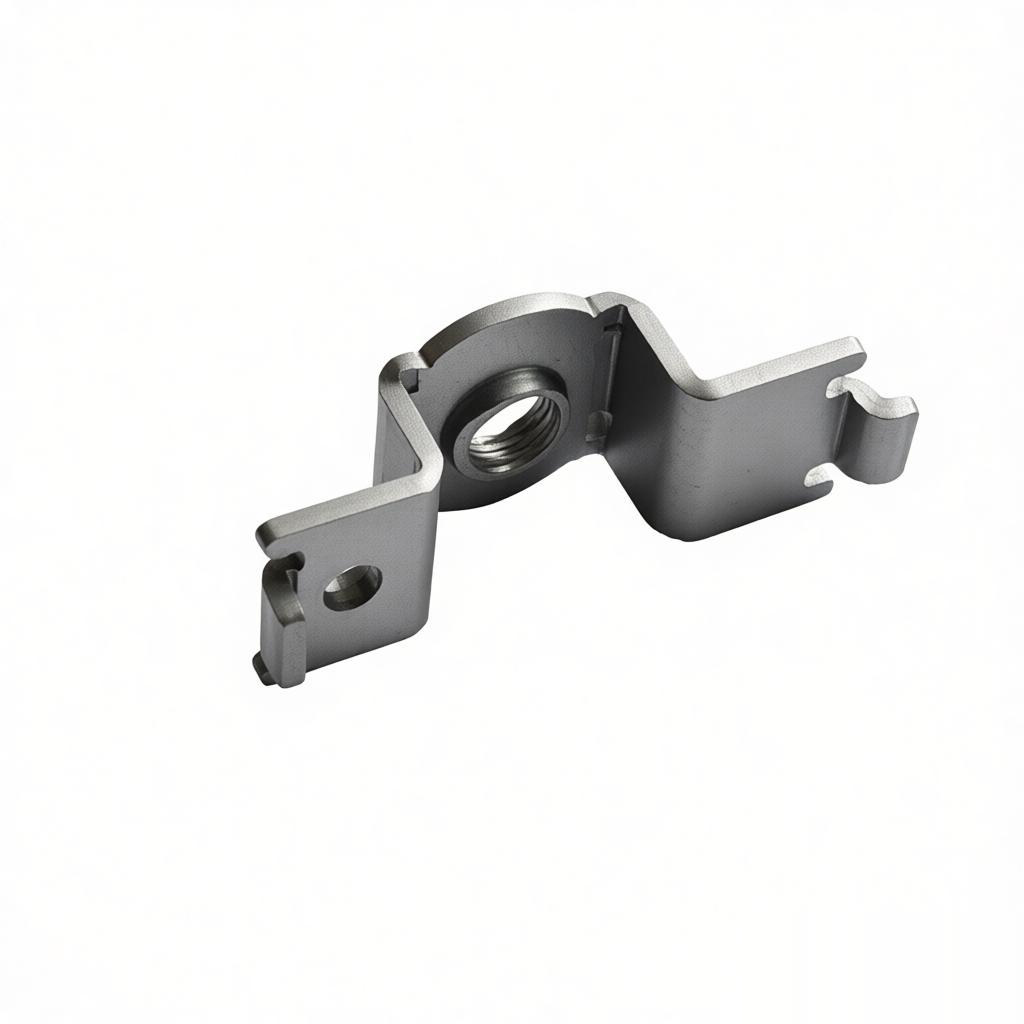
Low-carbon steels (1008, 1010, 1018) dominate the stamping industry, accounting for roughly 60% of all stamped parts. These materials offer excellent formability, weldability, and low cost. Typical tolerance for stamped carbon steel parts is +/-0.05 mm for features under 25 mm. Material cost runs between $0.60 and $0.90 per kilogram. For structural applications requiring higher strength, high-carbon steels (1050, 1095) are used but require annealing before stamping to prevent cracking. Medium-carbon steels (1045) offer a balance but reduce die life by approximately 20% compared to low-carbon grades.
Stainless Steels: Corrosion Resistance vs. Cost
Stainless steel stamping is critical for medical, food processing, and marine applications. The two main families are austenitic (304, 316) and ferritic/martensitic (430, 410). Austenitic grades are more ductile but work-harden rapidly, requiring more powerful presses and frequent die maintenance. A 316L stainless part with a thickness of 0.8 mm can be stamped to +/-0.08 mm tolerance, but the material cost is $2.50 to $3.50 per kilogram, and tooling wear is 3-4x higher than carbon steel. Ferritic 430 is cheaper ($1.80/kg) and magnets-friendly but loses ductility below 0.5 mm thickness, making it prone to tearing in deep draws.
Aluminum Alloys: Lightweight and Fast
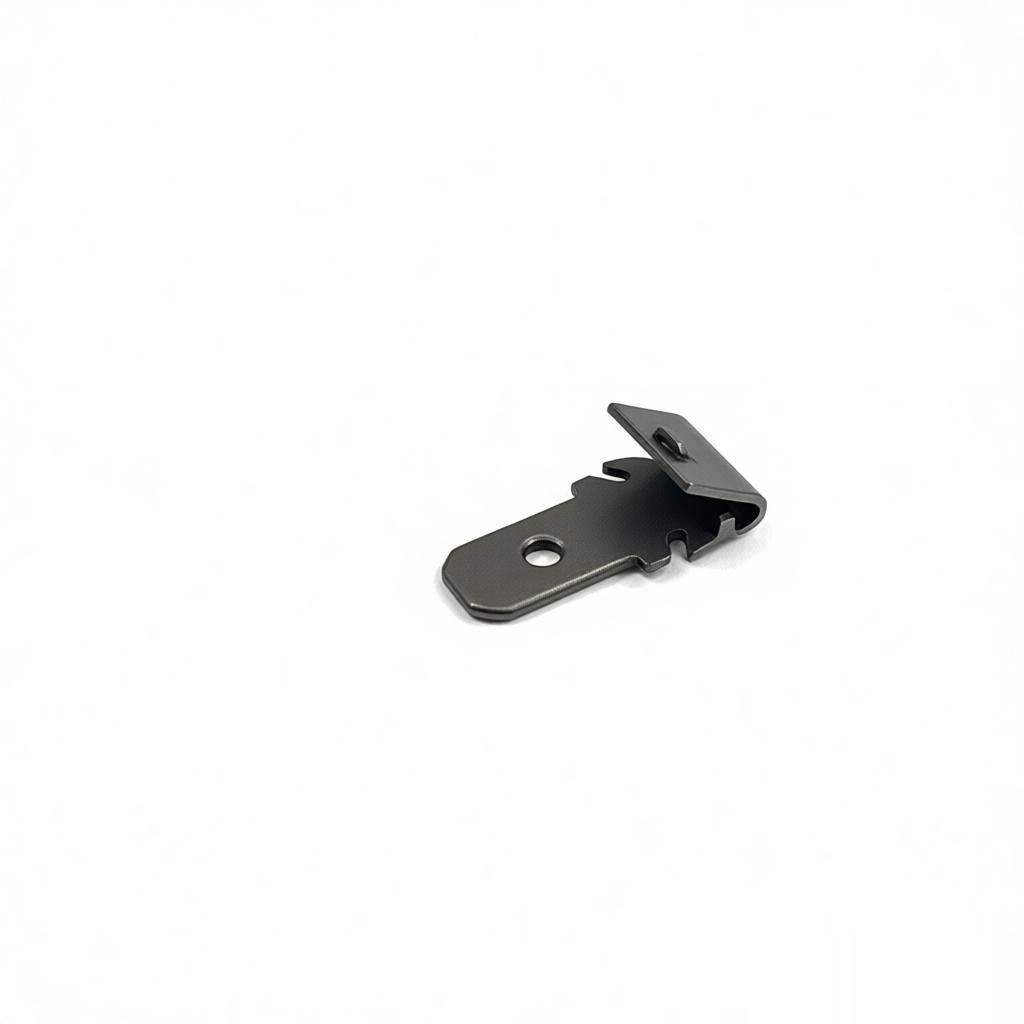
Aluminum stamping is essential for automotive and electronics heat sinks. Alloys 5052 and 6061 are most common. 5052 offers superior formability and corrosion resistance, while 6061 provides higher strength after heat treatment. Stamping aluminum runs 30% faster than steel due to lower press loads, but surface scratching is a constant issue. To mitigate this, we recommend using polyurethane die coatings or lubricants with EP (extreme pressure) additives. Material cost is $2.20 to $3.00 per kilogram. Critical note: aluminum has no fatigue limit, so stamped parts in vibration applications require careful radius design (minimum bend radius should be 1x material thickness).
Copper and Brass: Conductivity and Aesthetics
Copper (C11000) and brass (C26000, C26800) are stamped for electrical terminals, connectors, and decorative hardware. Copper's electrical conductivity is 100% IACS, making it the default for high-current contacts. However, copper is expensive ($8-10/kg) and soft, requiring slower press speeds to prevent galling. Brass offers a lower cost ($5-7/kg) with better spring-back characteristics. Tolerance for copper stampings is typically +/-0.04 mm. A critical consideration: copper and brass cannot be stamped at thicknesses above 3.0 mm without significant burr formation. For thicker parts, use progressive stamping with a shaving operation.
Specialty Alloys: Copper-Nickel, Beryllium Copper, and Titanium
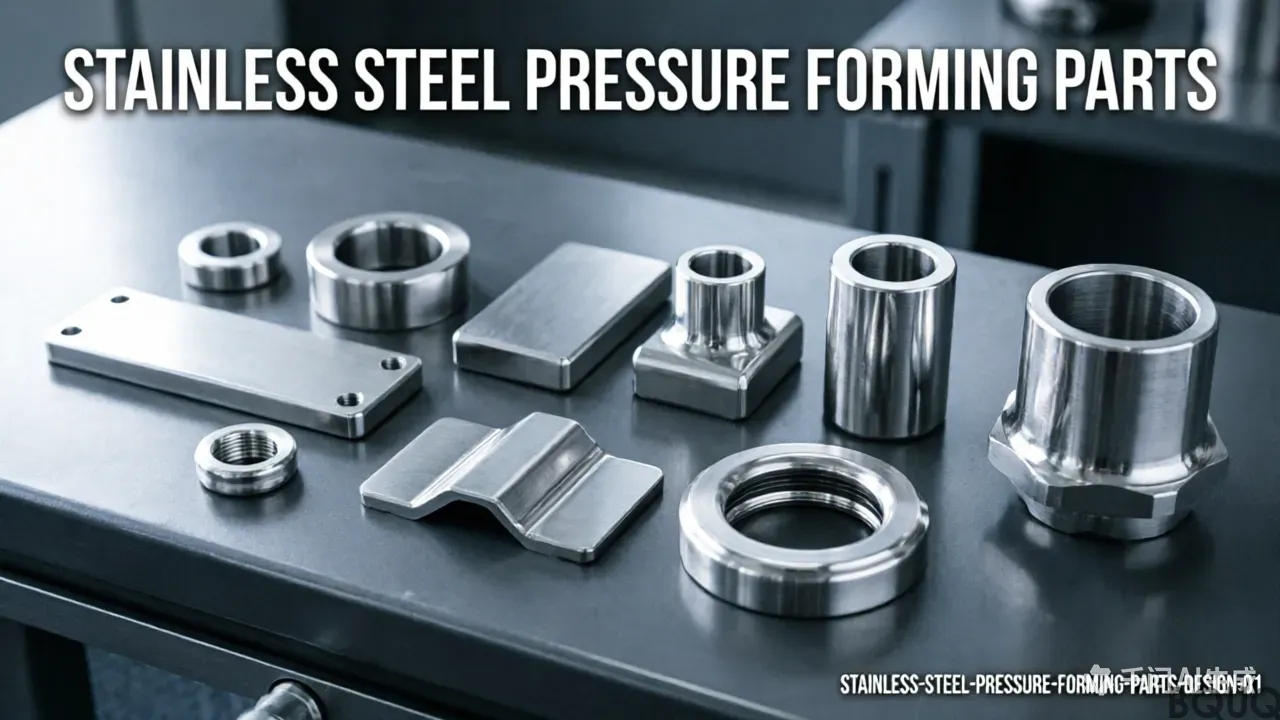
For demanding applications, we stamp three specialty alloys: - Copper-nickel (C70600, C71500): Excellent seawater corrosion resistance, used in marine fittings. Cost $12-15/kg, stamping speed reduced by 40% vs. brass. - Beryllium copper (C17200): High strength and conductivity, used in aerospace connectors. Cost $25-30/kg, requires solution annealing before stamping. - Titanium (Grade 2, Grade 5): Exceptional strength-to-weight ratio but extremely difficult to stamp. Grade 2 can be stamped at 0.5-2.0 mm thickness, but dies must be made of D2 tool steel with TiN coating. Cost $35-50/kg.
Data Table: Material Comparison for Stamping
| Material | Thickness Range (mm) | Typical Tolerance (mm) | Cost Index (1.0 = Steel) | Max Tensile Strength (MPa) | Typical Application | ---------- | --------------------- | ------------------------ | -------------------------- | ---------------------------- | --------------------- | Low-Carbon Steel (1008) | 0.2 - 6.0 | +/-0.05 | 1.0 | 330 | Brackets, enclosures | High-Carbon Steel (1095) | 0.3 - 4.0 | +/-0.06 | 1.3 | 650 | Springs, blades | Stainless 304 | 0.2 - 4.0 | +/-0.08 | 3.0 | 620 | Medical, food equipment | Stainless 430 | 0.3 - 3.0 | +/-0.08 | 2.2 | 480 | Trim, appliance panels | Aluminum 5052 | 0.3 - 6.0 | +/-0.07 | 2.5 | 260 | Heat sinks, fuel tanks | Aluminum 6061 | 0.5 - 6.0 | +/-0.09 | 2.8 | 310 | Structural parts | Copper C11000 | 0.1 - 3.0 | +/-0.04 | 9.0 | 220 | Bus bars, terminals | Brass C26000 | 0.1 - 3.0 | +/-0.04 | 6.0 | 400 | Connectors, hardware | Beryllium Copper | 0.1 - 2.0 | +/-0.03 | 25.0 | 1280 | Spring contacts | Titanium Grade 2 | 0.5 - 2.0 | +/-0.10 | 35.0 | 345 | Aerospace, chemical | Inconel 625 | 0.3 - 3.0 | +/-0.10 | 40.0 | 930 | High-temp components | Galvanized Steel (G90) | 0.4 - 4.0 | +/-0.07 | 1.5 | 380 | Automotive, HVAC |
|---|
FAQ-Style Tips for Material Selection
- Q: What is the cheapest material for high-volume stamping? A: Low-carbon steel (1008) is the most economical, with die costs amortizing quickly. For runs above 100,000 parts, use a progressive die with carbide inserts. - Q: Can I stamp pre-painted or coated materials? A: Yes, but only with low-friction coatings. Pre-painted steel requires a minimum bend radius of 2x material thickness to avoid cracking the paint. Avoid stamping galvanized steel below 0.5 mm thickness to prevent zinc flaking. - Q: How does material thickness affect tolerance? A: Thinner materials (under 0.5 mm) give tighter tolerances (+/-0.03 mm) because the punch has less material to deflect. Thicker materials (above 3.0 mm) expand tolerance to +/-0.10 mm due to die deflection and spring-back. - Q: What material offers the best corrosion resistance at a moderate cost? A: Stainless steel 430 or aluminum 5052 with anodizing. Both are under $3.00 per kilogram and handle saltwater exposure for 500+ hours in salt spray tests.
Conclusion: Matching Material to Function and Budget
The correct material choice for metal stamping is a three-variable equation: mechanical requirements, environmental exposure, and unit cost. For standard structural parts, low-carbon steel remains the default. For corrosion or conductivity, upgrade to stainless 304 or copper. Never specify titanium or Inconel unless the operating temperature exceeds 300°C or weight is a critical design constraint. Always request a material certificate and confirm the hardness range with your stamper before tooling begins.
At BQUQ, we have stamped over 200 million parts across these exact materials in the last two decades. Our engineers will review your drawing, suggest the most cost-effective material grade, and simulate the stamping process before any tooling commitment. For a 12-hour quotation, send your 2D or 3D files to sc@bquq.com or reach us on WhatsApp at +86 13713157787. Visit www.bquq.com to download our material selection chart and stamping design guidelines.
Related Articles
- Why Low Volume Metal Stamping is Ideal for Prototyping
- Stamping Lubricant Selection 2024: Balancing Die Life, Part Quality, and Environmental Compliance
- CNC Lathe vs Stamping: Which Precision Part Method Wins?
Frequently Asked Questions
What materials can be metal stamped?
Almost any ductile metal can be stamped, but practical choices depend on thickness, hardness, corrosion resistance, and cost. Common materials include low-carbon steels (1008, 1010, 1018), high-carbon steels (1050, 1095), stainless steels (304, 316, 430, 410), and aluminum alloys (5052, 6061). The article covers 12 key alloys used in production stamping.
What tolerances can be achieved in metal stamping?
Typical tolerance for stamped carbon steel parts is +/-0.05 mm for features under 25 mm. A 316L stainless part with a thickness of 0.8 mm can be stamped to +/-0.08 mm tolerance. Material thickness typically ranges from 0.1 mm to 6.0 mm to maintain dimensional accuracy.
How does material choice affect tool wear and cost?
Stamping 304 stainless steel (Rockwell B85) wears a die 3x faster than stamping 1008 steel (Rockwell B55). Stainless steel tooling wear is 3-4x higher than carbon steel. Material costs: carbon steel $0.60-$0.90/kg, ferritic 430 stainless $1.80/kg, and 316L stainless $2.50-$3.50/kg.
Why is aluminum stamping faster than steel?
Stamping aluminum runs 30% faster than steel due to lower press loads. Alloys 5052 and 6061 are most common, with 5052 offering superior formability and corrosion resistance, while 6061 provides higher strength after heat treatment. Surface scratching is a constant issue with aluminum stamping.