What Precision Machining Standards Apply to Oil and Gas Components?
Direct answer: Oil and gas machining demands adherence to API Q1, ISO 9001, and NORSOK M-650 standards, with typical tolerances of ±0.01 mm for critical sealing surfaces and material certifications per NACE MR0175 for sour service. Components must withstand temperatures from -46°C to 260°C and pressures up to 15,000 psi, requiring CNC machining, metal stamping, and spring manufacturing processes that BQUQ has refined over 20 years in Dongguan. The key differentiator is not just achieving tight tolerances but ensuring traceability and repeatability across batches for downhole tools, valves, and subsea connectors.
What Are the Primary Materials Used in Oil and Gas Machining?
The selection of materials in this sector is governed by corrosion resistance, mechanical strength, and compliance with NACE MR0175/ISO 15156 for hydrogen sulfide (H2S) environments. We commonly machine 316L and 17-4 PH stainless steel, Inconel 718, Hastelloy C-276, and duplex stainless steel (UNS S31803). For non-magnetic drill collars and measurement-while-drilling (MWD) housings, we use austenitic stainless steels like 15-5 PH and beryllium copper (C17200), which offer yield strengths above 110 ksi. Each material requires specific cutting parameters: Inconel 718 must be machined at surface speeds of 30-60 m/min with ceramic inserts, while 316L runs at 120-180 m/min with carbide tooling to prevent work hardening.
How Does CNC Machining Handle Complex Geometries for Downhole Tools?
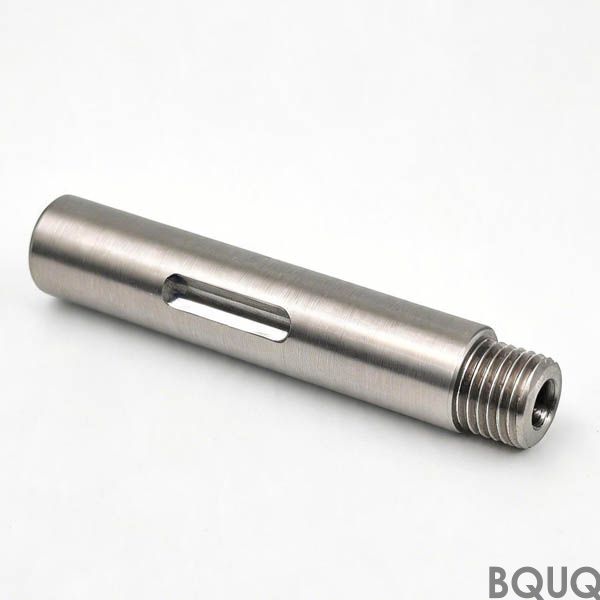
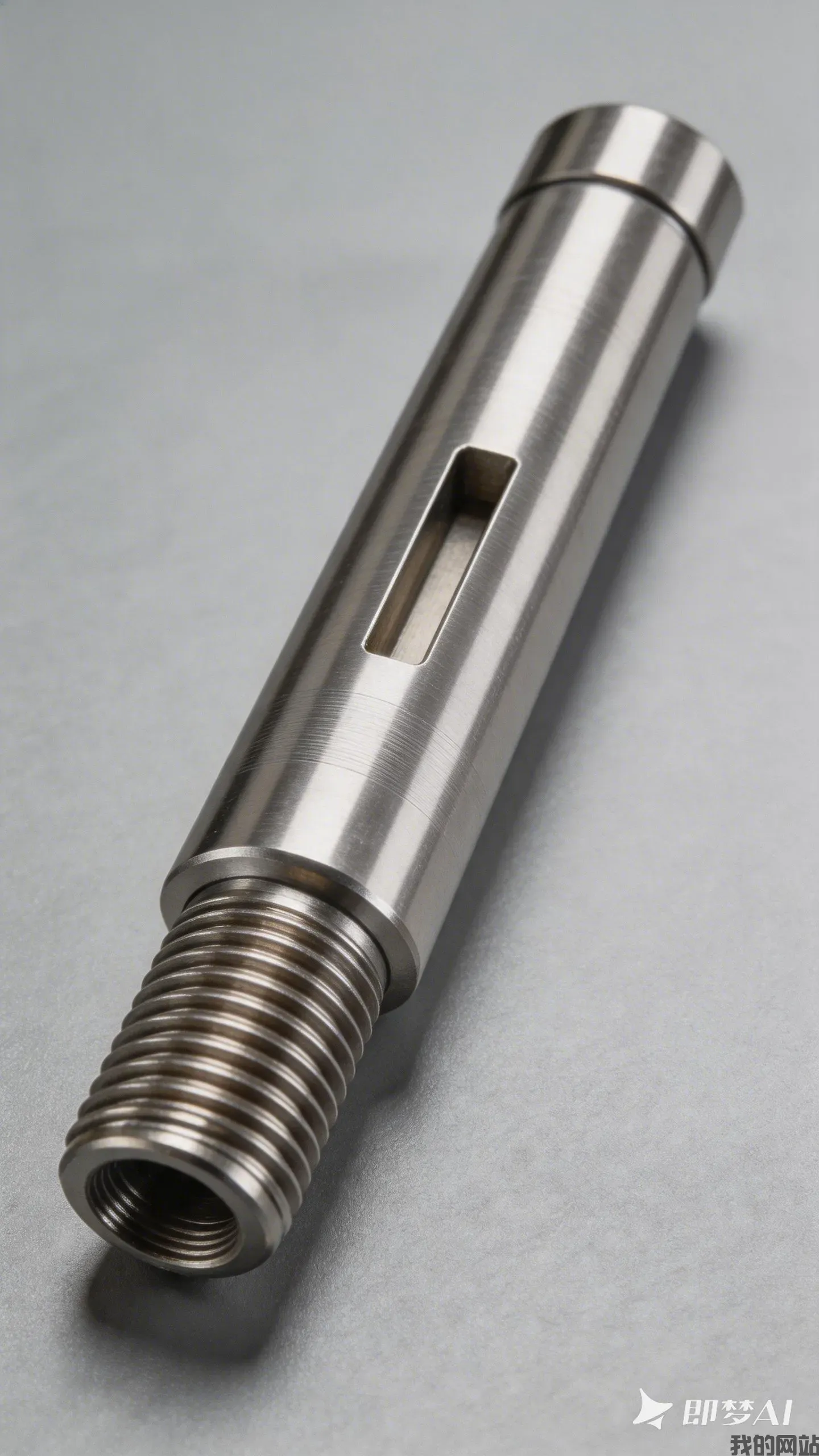
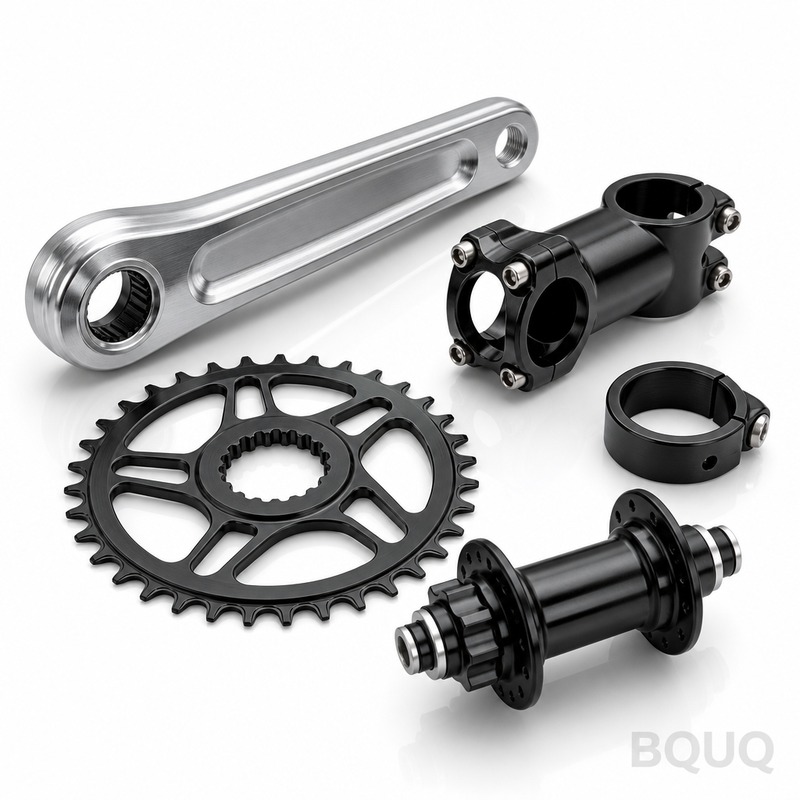
Our 5-axis CNC machining centers produce complex geometries like spiral grooves for mud motors and tapered threads (API 5B and 7-2) with a positional tolerance of ±0.005 mm. For downhole tools, we achieve a surface finish of Ra 0.2 µm on sealing areas using high-pressure coolant (70 bar) and CBN tooling. A typical subsea connector body requires 12 to 15 machining operations, including gun drilling for electrical feedthroughs with a depth-to-diameter ratio of 30:1. We use in-process probing to correct thermal expansion errors, ensuring that a 300 mm long valve body maintains a straightness of 0.01 mm over its entire length. The cycle time for a complex Christmas tree component is 45-60 minutes, with a first-article inspection report (FAIR) delivered within 24 hours of sample production.
Which Tolerances and Surface Finishes Are Critical for Harsh Environments?
The most critical tolerances are on pressure-containing boundaries and dynamic sealing surfaces. For metal-to-metal seals in gate valves, we hold a flatness of 0.002 mm and a surface finish of Ra 0.1 µm to prevent leak paths at 15,000 psi. Threads for casing and tubing are machined to an API 8-round or buttress profile with pitch diameter tolerance of ±0.05 mm. For springs used in safety valves, we control the wire diameter to ±0.005 mm and the free length to ±0.1 mm, ensuring a consistent load of 50 N at a deflection of 10 mm. Our CMM (coordinate measuring machine) with a resolution of 0.0001 mm verifies these features, and we provide SPC data showing a Cpk value of 1.67 or higher for critical dimensions. For high-temperature applications above 200°C, we also specify a surface roughness of Ra 0.4 µm on all wetted parts to prevent stress corrosion cracking.
Why Is Material Traceability and Certification Non-Negotiable?
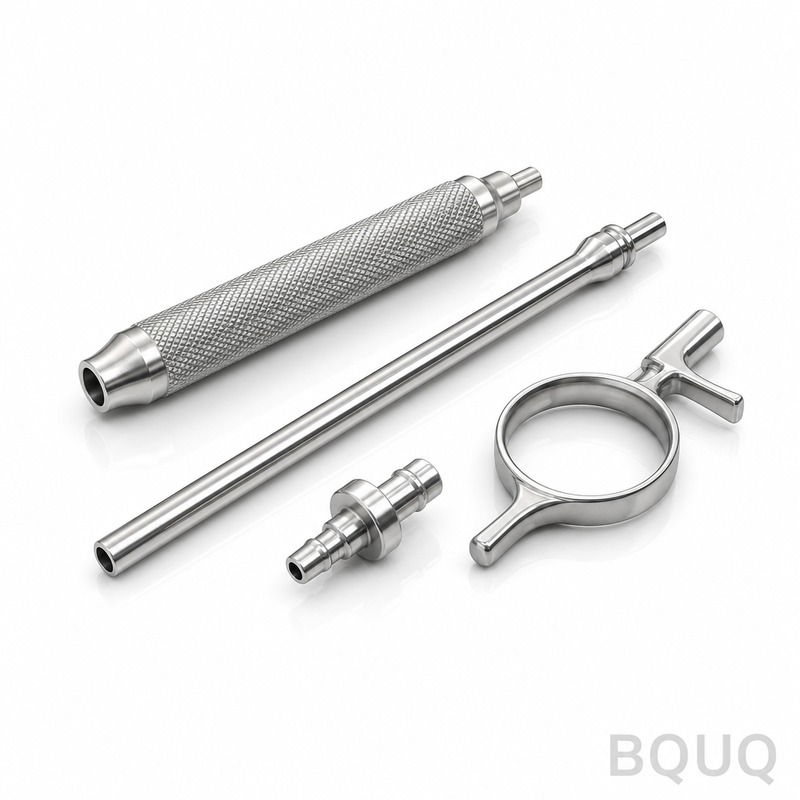
Without full traceability, a single batch of components can be rejected, causing weeks of downtime on a drilling rig. We implement a full material traceability system where each billet is assigned a unique heat number, and we maintain records of chemical composition, mechanical properties, and heat treatment cycles for 10 years. For sour service, we provide PMI (Positive Material Identification) test reports for 100% of parts, verifying the alloy grade within ±0.05% for elements like molybdenum and nickel. Our quality system aligns with ISO 9001:2015 and API Q1, and we routinely undergo third-party audits from companies like SGS and Bureau Veritas. For every order, we issue an EN 10204 3.1 certificate, and for critical parts, a 3.2 certificate with independent inspection is available at a premium of 5-8% on the unit price.
How Does BQUQ Validate Performance for High-Pressure and High-Temperature Service?
We perform hydrostatic testing on machined housings and valve bodies at 1.5 times the working pressure, up to 22,500 psi, using a water-glycol mixture. For temperature validation, we use a thermal cycling chamber that subjects components to -46°C to 260°C for 100 cycles to simulate downhole conditions. For springs, we conduct stress relaxation testing at 230°C for 48 hours to ensure the load loss remains under 2%. We also use finite element analysis (FEA) during the design review phase to simulate burst pressure and fatigue life. A typical FEA report for a wellhead connector shows a safety factor of 1.5 against yield and a predicted fatigue life of 10 million cycles at 60% of the yield stress.
What Are the Typical Lead Times and Cost Drivers for Oil and Gas Parts?
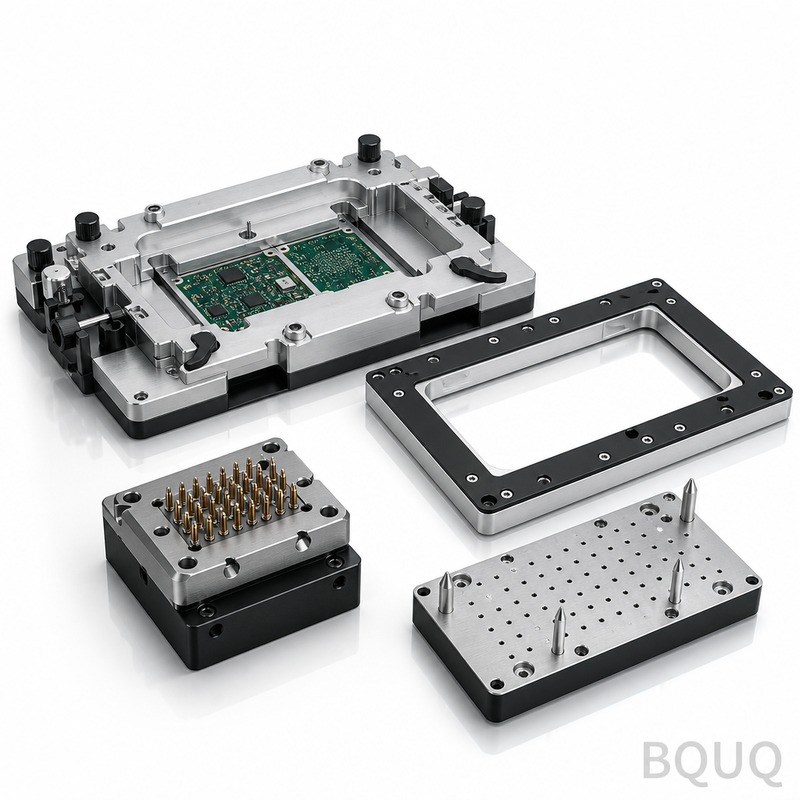
Lead times vary significantly based on material availability and complexity. Standard 316L components with simple geometries have a lead time of 3-4 weeks, while Inconel 718 parts with complex threading require 6-8 weeks. The cost per part is driven by material cost (40-50%), machining time (30-35%), and quality assurance (10-15%). For example, a simple valve stem in 17-4 PH costs $85 per unit for a batch of 500, while a complex subsea manifold block in Hastelloy C-276 costs $4,200 per unit for a batch of 20. Our tooling cost for a custom metal stamping die for spring washers ranges from $2,500 to $8,000, with a lead time of 3 weeks for the die itself.
| Component Type | Material | Tolerance (mm) | Surface Finish (Ra µm) | Lead Time (Weeks) | Unit Price (USD) |
| Valve Stem | 17-4 PH | ±0.01 | 0.2 | 4 | $85 |
| Downhole Connector | Inconel 718 | ±0.005 | 0.1 | 7 | $1,250 |
| Spring Washer | 301 SS | ±0.02 | 0.8 | 3 | $0.60 |
| Subsea Manifold Block | Hastelloy C-276 | ±0.02 | 0.4 | 8 | $4,200 |
| MWD Housing | 15-5 PH | ±0.01 | 0.4 | 6 | $2,800 |
Which Finishing Processes Extend Component Life in Corrosive Environments?
Electroless nickel plating (ENP) at a thickness of 25-50 µm is applied to carbon steel components to provide a hardness of 48-52 HRC and excellent corrosion resistance. For components exposed to seawater, we recommend hard anodizing (for aluminum) or tungsten carbide coating applied by HVOF (High-Velocity Oxy-Fuel) spray, which achieves a bond strength of 70 MPa and a porosity of less than 1%. Passivation of stainless steel per ASTM A967 is standard, using a 20% nitric acid solution at 49°C for 30 minutes. We also offer brazing of tungsten carbide inserts onto valve seats, which increases wear life by 300% in abrasive slurry applications.
Can You Machine Components from Castings or Forgings?
Yes, we routinely machine from investment castings and closed-die forgings. Forging provides better grain flow, increasing fatigue strength by 20-30% compared to bar stock. We recommend forgings for high-pressure valve bodies (above 10,000 psi) and castings for low-stress housings. Our machining allowances are designed for a minimum of 1.5 mm on each side to ensure complete removal of the decarburized layer.
What Is the Minimum Order Quantity for Custom Machined Parts?
For CNC machining, our MOQ is 1 piece for prototypes and 10 pieces for production runs, with no additional setup charge for quantities above 50. For metal stamping, the MOQ is 500 pieces due to die amortization, but we can offer lower quantities if the customer accepts a higher per-piece cost. For example, a stamped spring clip costs $0.40 per piece at 5,000 units but $1.20 per piece at 500 units.
How Do You Ensure Quality for Small Batch Production?
We use a zero-defect sampling plan (C=0) per ANSI/ASQ Z1.4 for small batches, meaning any defect in the sample rejects the entire lot. For batches under 100 pieces, we perform 100% dimensional inspection on all critical features. Our machinists are certified to GD&T (Geometric Dimensioning and Tolerancing) per ASME Y14.5, and we provide a full inspection report for every shipment.
Are You Compliant with International Standards for Oil and Gas?
Yes, our factory holds ISO 9001:2015 and ISO 14001:2015 certifications. We follow API 6A and API 17D specifications for wellhead and subsea equipment, and we can provide documentation for NORSOK M-650 compliance if required. For materials, we source from mills that are certified to PED 2014/68/EU and NACE MR0175.
Can You Perform Non-Destructive Testing (NDT) In-House?
We perform ultrasonic testing (UT) and dye penetrant testing (PT) in-house for every batch of pressure-containing parts. UT is used to detect internal cracks with a sensitivity of 1.2 mm flat-bottom hole, and PT is applied to all machined surfaces. For radiographic testing (RT), we outsource to a certified partner with a 24-hour turnaround.
How Does BQUQ Manage Urgent Breakdown Orders?
We maintain a stock of common materials like 316L and 17-4 PH bar stock in diameters from 10 mm to 200 mm. For emergency orders, we can begin machining within 24 hours of receiving a purchase order and a CAD file. We have successfully delivered a critical valve stem in 72 hours, including heat treatment and surface finishing, by dedicating a 5-axis machine to the job.
What Information Do You Need for a Quotation?
Please send a 2D drawing (PDF or DWG) and a 3D model (STEP or IGES) with the material grade, required quantity, and any specific standards. If you do not have drawings, we can reverse-engineer a sample part with a 3D scanner with an accuracy of ±0.02 mm. We provide a formal quotation within 12 hours of receiving complete documentation.
In conclusion, precision machining for oil and gas is not just about tight tolerances; it is about a complete quality ecosystem that includes material science, process control, and rigorous validation. At BQUQ, we combine 20 years of manufacturing experience with modern CNC, stamping, and spring technologies to deliver components that survive the harshest downhole conditions. Our engineering team is ready to review your drawings and recommend the most cost-effective manufacturing route, whether it is a single prototype or a high-volume production run. For a rapid response, contact us at sc@bquq.com or WhatsApp +86 13713157787, and visit www.bquq.com to download our capability statement. We guarantee a 12-hour quote turnaround and a transparent discussion on tolerances, materials, and lead times.