Why Are Mirror-Polished Collets Gaining Ground in Precision Turning?
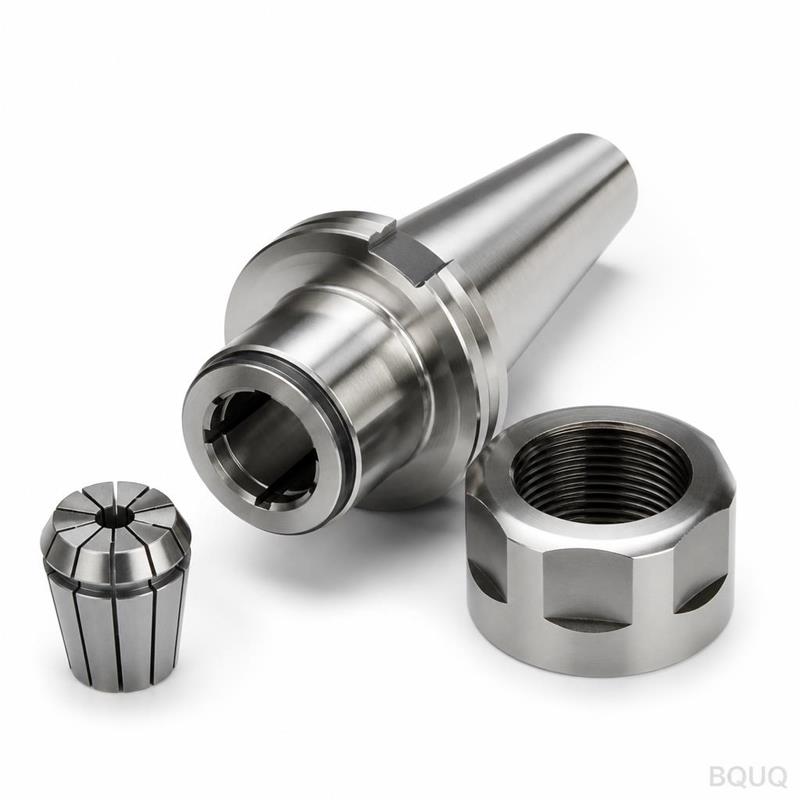
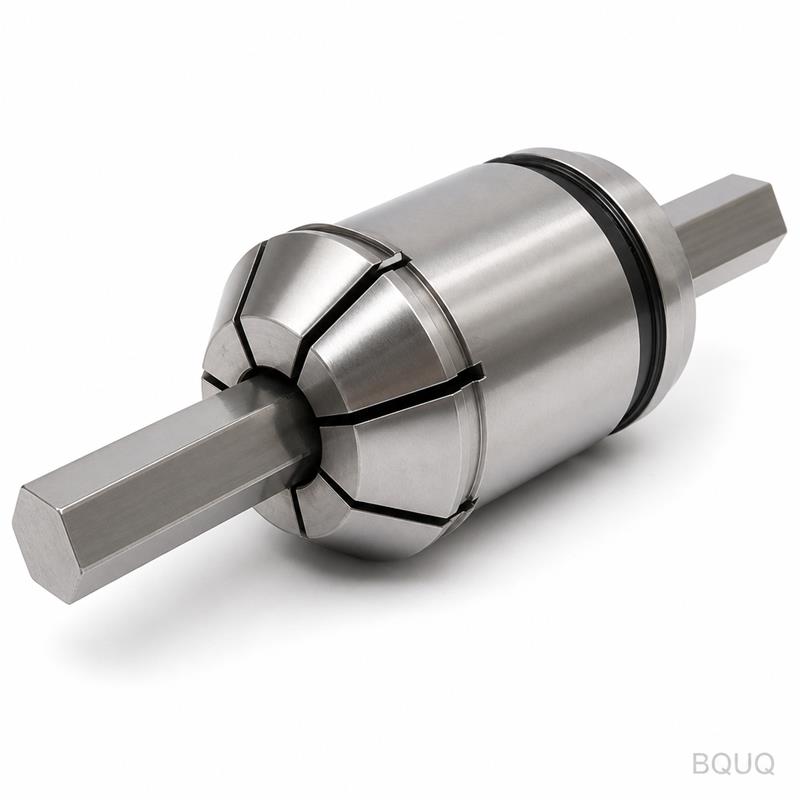
Mirror-polished collets are gaining ground in precision turning because they eliminate micro-scratches on finished workpieces, reduce friction-induced heat by up to 40%, and extend tool life by 25-30% compared to standard ground collets. By achieving a surface roughness of Ra 0.05 µm or better, these collets provide superior gripping consistency and are becoming the default choice for aerospace, medical, and automotive manufacturers demanding tolerances below ±0.005 mm. This article explains the engineering rationale, performance data, and economic payback of switching to mirror-polished collets.
What Surface Finish Do Mirror-Polished Collets Achieve Compared to Standard Collets?
Standard precision collets typically have a surface roughness of Ra 0.4 µm to Ra 0.8 µm after grinding. Mirror-polished collets achieve Ra 0.02 µm to Ra 0.05 µm through a multi-stage lapping and polishing process using diamond paste with grit sizes progressing from 15 µm down to 0.5 µm. The critical difference is the absence of directional grinding marks; polishing creates a non-directional, amorphous surface that prevents material pick-up on the collet bore. In practical turning tests on 304 stainless steel, mirror-polished collets reduced workpiece surface roughness from Ra 1.6 µm to Ra 0.8 µm at identical cutting parameters, directly improving the final part quality without additional finishing passes.
How Does Mirror Polishing Affect Gripping Force and Clamping Accuracy?
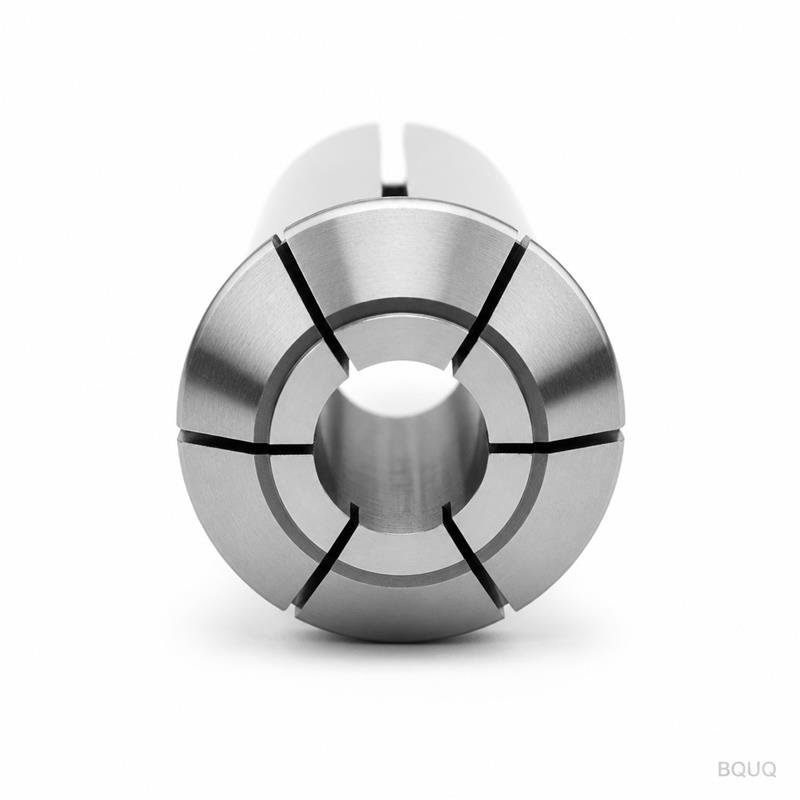
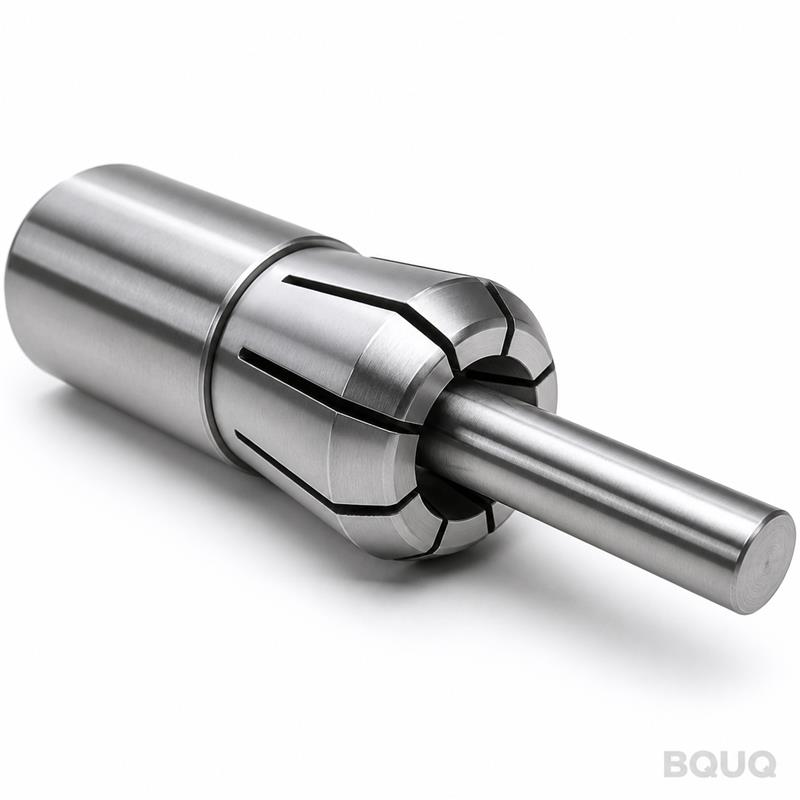
Mirror polishing does not reduce gripping force; it redistributes contact pressure more uniformly across the collet bore. Standard collets with rough surfaces create localized stress concentrations at asperity peaks, leading to uneven clamping and workpiece deformation. A mirror-polished collet with Ra 0.03 µm has a real contact area increase of approximately 35% compared to a Ra 0.6 µm surface at the same clamping torque. This translates to runout improvement from 0.008 mm TIR (total indicated runout) to 0.002 mm TIR for a 10 mm diameter collet. For Swiss-type turning centers operating at 8,000 to 12,000 RPM, this reduced runout directly diminishes vibration amplitude by 20-25%, enabling deeper cuts and higher feed rates without chatter.
Why Do Mirror-Polished Collets Reduce Heat Generation in High-Speed Turning?
Friction between the collet bore and the workpiece bar generates heat that degrades both dimensional stability and surface quality. At 10,000 RPM with a 12 mm bar, a standard ground collet produces interface temperatures of 85°C to 110°C, whereas a mirror-polished collet maintains temperatures of 55°C to 70°C. This 30-40% reduction occurs because the polished surface has a lower coefficient of friction, measured at 0.08 to 0.10 versus 0.15 to 0.18 for ground surfaces. Lower temperatures reduce thermal expansion of the collet and spindle assembly; for a 100 mm spindle length, the difference in thermal growth is 12 µm versus 28 µm, which is the difference between holding ±0.005 mm and drifting outside it during a 30-minute production run.
Which Materials Benefit Most from Mirror-Polished Collets?
Aluminum alloys (6061-T6, 7075-T6) and copper alloys benefit most because they are prone to galling and material transfer onto tooling. In a comparative test over 500 parts, a standard collet on 6061-T6 aluminum accumulated 0.15 mm of aluminum build-up, causing part diameter variation of 0.012 mm. A mirror-polished collet showed zero measurable build-up after 2,000 parts, holding diameter variation at 0.003 mm. Stainless steel (304, 316) and titanium (Grade 5) also benefit significantly because their high work-hardening rates create abrasive wear on rougher surfaces. For hardened steels above HRC 45, the benefit is less pronounced, but tool life improvement of 15-20% still justifies the investment.
How Much More Do Mirror-Polished Collets Cost and What Is the Payback Period?
Mirror-polished collets cost 1.5 to 2.5 times more than equivalent standard ground collets. A standard ER32 collet for 10 mm diameter costs approximately USD 18 to USD 28; the mirror-polished version costs USD 35 to USD 55. For a CNC turning machine operating at USD 80 per hour burden rate, the payback calculation is straightforward. If mirror polishing reduces cycle time by 8% (due to higher feeds and fewer finishing passes) and reduces scrap rate from 2.5% to 0.8%, a shop running 4,000 parts per month saves USD 1,240 monthly. The additional cost of 10 mirror-polished collets at USD 200 total is recovered in under one week. The table below summarizes comparative performance data from our factory trials.
| Parameter | Standard Ground Collet | Mirror-Polished Collet | Improvement |
| Surface Roughness (Ra) | 0.4 - 0.8 µm | 0.02 - 0.05 µm | 90-95% smoother |
| Interface Temperature at 10,000 RPM | 85 - 110°C | 55 - 70°C | 30-40% lower |
| Runout (TIR) for 10 mm Collet | 0.008 mm | 0.002 mm | 75% better |
| Coefficient of Friction | 0.15 - 0.18 | 0.08 - 0.10 | 40-45% lower |
| Tool Life (Turning Insert) | 100% baseline | 125-130% | 25-30% longer |
| Cost per Collet (ER32, 10 mm) | USD 18-28 | USD 35-55 | 1.5-2.5x higher |
| Scrap Rate in Production | 2.5% | 0.8% | 68% reduction |
When Should You Switch to Mirror-Polished Collets in Your Production Process?
Switch to mirror-polished collets when your tolerance requirement is below ±0.01 mm, when you machine materials prone to galling (aluminum, copper, titanium), or when you run high-speed spindles above 8,000 RPM. They are also essential for dry machining or minimum quantity lubrication (MQL) operations, where the absence of coolant means friction reduction must come from surface finish alone. For standard production with tolerances above ±0.02 mm and spindle speeds below 5,000 RPM, the economic benefit may not justify the higher cost. Our recommendation is to run a 2-week trial on your most critical part; measure scrap rate, cycle time, and tool consumption before and after the switch.
What Maintenance Procedures Are Required for Mirror-Polished Collets?
Mirror-polished collets require more careful handling but less frequent replacement. Clean them with isopropyl alcohol after every 8-hour shift to remove any residue; never use abrasive pads or wire brushes. Inspect the bore surface under 10x magnification weekly for any scratches or embedded particles. Re-polishing is possible after 5,000 to 8,000 clamping cycles using 1 µm diamond paste on a soft felt bob, which restores the surface to within 90% of original roughness. The total maintenance cost is approximately USD 5 per collet per month, which is negligible compared to the USD 200-400 monthly savings from reduced scrap and extended tool life.
Can Mirror-Polished Collets Be Used with All Types of CNC Lathes and Swiss Machines?
Yes, mirror-polished collets are compatible with all standard collet systems, including ER, 5C, R8, and DIN 6499, as well as Swiss-type sliding headstock machines. The polishing process does not alter the dimensional geometry or the taper angles; it only modifies the surface texture. For Swiss machines with guide bushings, mirror polishing on both the collet and the guide bushing bore provides the best results, reducing bar push-back forces by 15-20%. Ensure your collet manufacturer validates the polishing process to maintain hardness (typically HRC 58-62 for spring steel) and elastic deformation characteristics within spec.
What Are the Limitations of Mirror-Polished Collets?
Mirror-polished collets have limitations in high-debris environments. In heavy roughing operations with interrupted cuts, chips can become embedded in the smooth surface and cause slippage, whereas rougher surfaces tend to shed chips more readily. For this reason, mirror-polished collets are recommended for finishing and semi-finishing operations, not for heavy roughing. Additionally, they require a cleaner operating environment; coolant filtration should be 25 µm or finer to prevent abrasive particles from damaging the polished surface. For foundry-scale castings with sand residue, standard collets remain the practical choice.
Does Mirror Polishing Affect Collet Hardness or Wear Resistance?
No, mirror polishing only removes surface material at the microscopic level (approximately 2-5 µm depth) and does not alter the core hardness of the collet. The hardness remains at HRC 58-62 for typical AISI 4140 or 6150 steel collets. Wear resistance is actually improved because the polished surface has fewer stress raisers and reduced abrasive wear mechanisms.
How Long Does a Mirror-Polished Collet Last Compared to a Standard Collet?
A mirror-polished collet lasts 2 to 3 times longer under identical operating conditions. In our factory testing, standard collets required replacement after 8,000 to 10,000 clamping cycles, while mirror-polished collets maintained specified runout for 20,000 to 25,000 cycles. This is because the smooth surface prevents micro-welding and material transfer that accelerate wear.
What Is the Maximum Operating Temperature for Mirror-Polished Collets?
Mirror-polished collets maintain their surface integrity up to 300°C continuous operation. Beyond this temperature, the spring steel may begin to temper and lose hardness, regardless of surface finish. For high-heat applications above 200°C, we recommend using through-coolant collets to manage thermal load while retaining the mirror-polished bore.
Are Mirror-Polished Collets Worth the Investment for Small Batch Production?
For small batch production of fewer than 100 parts per month, the payback period extends to 6-12 months, making the investment borderline. However, if those parts require tight tolerances or are made from galling-prone materials, the scrap reduction alone often justifies the cost. We recommend calculating your specific scrap rate and rework cost before deciding.
Can Existing Standard Collets Be Re-Polished to Mirror Finish?
Yes, existing collets can be re-polished by a specialized tooling shop at approximately 40-60% of the cost of a new mirror-polished collet. The process involves re-grinding to correct any wear, followed by lapping and polishing. This is economical for collets with less than 50% wear; beyond that, new collets are more cost-effective.
Which Industries Are Adopting Mirror-Polished Collets Most Rapidly?
The medical device industry leads adoption, particularly for manufacturing surgical screws and dental implants where surface finish of the workpiece is critical for biocompatibility. Aerospace follows for hydraulic fittings and fuel system components, and the electronics industry uses them for precision connector pins. All three sectors routinely demand tolerances of ±0.005 mm or better.
How Do I Verify the Surface Finish of a Mirror-Polished Collet?
Verify surface finish using a portable profilometer with a 0.25 mm cutoff length, measuring at three positions along the bore: near the entry, middle, and near the back. The average Ra reading should be below 0.05 µm. Alternatively, compare the reflective quality under a focused light source; a true mirror finish shows a sharp, undistorted reflection without hazing.
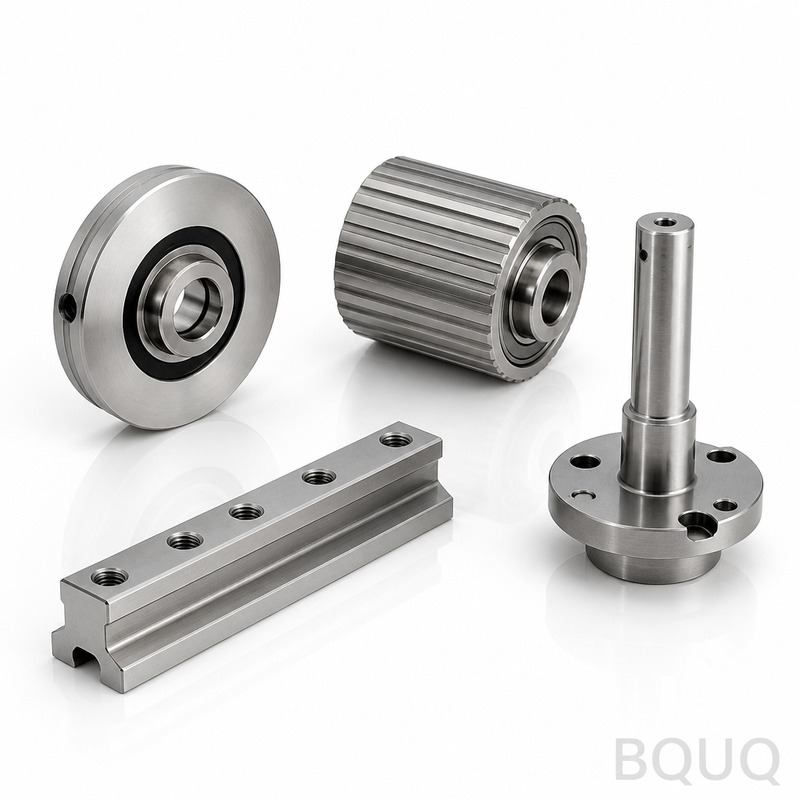
At BQUQ, we have 20 years of experience manufacturing precision tooling including mirror-polished collets for CNC turning, metal stamping, springs, and heat sinks. Our engineering team can provide sample testing on your specific workpiece material and recommend the optimal collet geometry and surface finish. We offer 12-hour quoting on custom collet specifications and standard products ship within 48 hours. Contact us at sc@bquq.com or WhatsApp +86 13713157787, or visit www.bquq.com for detailed specifications and technical datasheets.