Why Is 5-Axis CNC Machining Adoption Accelerating Across Manufacturing?
The direct answer is that 5-axis CNC machining adoption is accelerating because it reduces total production costs by 30% to 50% on complex parts while achieving tighter tolerances of ±0.005 mm, compared to the ±0.01 mm standard for 3-axis. This acceleration is driven by the simultaneous demand for lighter aerospace components, complex medical implants, and the falling price of 5-axis machines, which have dropped from over $500,000 in 2010 to roughly $150,000 today. Manufacturers are realizing that the higher hourly rate of 5-axis machining is offset by drastic reductions in setup time, fixturing costs, and manual labor, making it the most economical choice for any part requiring machining on more than one face.
What Defines a 5-Axis CNC Machine and How Does It Differ from 3-Axis?
A 5-axis CNC machine moves a cutting tool or workpiece across five axes simultaneously, adding two rotational axes (typically A, B, or C) to the standard X, Y, and Z linear axes. Unlike 3-axis machining, which requires multiple setups and custom fixtures to access different part faces, a 5-axis machine can reach nearly any angle in a single setup. This capability is categorized into two types: 3+2 machining, where the rotary axes position the part and lock before cutting, and full simultaneous 5-axis, where all axes move continuously during the cut. For example, a 3-axis operation on an impeller might require 8 separate setups and 12 hours of labor, while a 5-axis machine completes the same part in one setup and 3 hours, with a surface finish improvement from Ra 1.6 µm to Ra 0.4 µm.
How Much Does 5-Axis Machining Cost per Hour and per Part?
The machine-hour rate for 5-axis CNC machining ranges from $80 to $150 per hour, compared to $50 to $80 per hour for a standard 3-axis VMC. However, the per-part cost is often lower because cycle times are reduced by 40% to 60% and fixture costs are eliminated. For a typical aluminum housing with 6 machined faces, a 3-axis process might cost $450 per part (including $200 in fixture design and 4 hours of labor), while a 5-axis process costs $280 per part (2 hours at $120/hour plus a simple vise setup). The breakeven point is usually 10 to 20 parts; above this quantity, 5-axis tooling costs, which average $3,000 to $10,000 for a custom fixture, become negligible compared to the labor savings. Additionally, modern 5-axis machines with 15,000 to 30,000 RPM spindles and 40-tool magazines reduce non-cutting time by up to 70% through automated tool changes and optimized tool paths.
Why Does 5-Axis Machining Improve Part Accuracy and Surface Finish?
5-axis machining improves accuracy by allowing the cutting tool to remain perpendicular to the cutting surface, which eliminates the tool deflection and chatter common in 3-axis operations that use long, extended tool holders. This perpendicular orientation enables the use of shorter, more rigid cutting tools, increasing metal removal rates by up to 50% while maintaining a positional tolerance of ±0.005 mm and a repeatability of ±0.002 mm. Surface finish improves to Ra 0.2 µm in aluminum and Ra 0.4 µm in stainless steel, which often eliminates the need for secondary grinding or polishing operations. For example, a 5-axis machine can cut a titanium aerospace bracket with a 0.5 mm wall thickness without vibration, whereas a 3-axis machine would require a slower feed rate of 800 mm/min compared to 1,500 mm/min on 5-axis, risking scrap due to thermal distortion.
Which Industries Are Driving the Rapid Adoption of 5-Axis Technology?
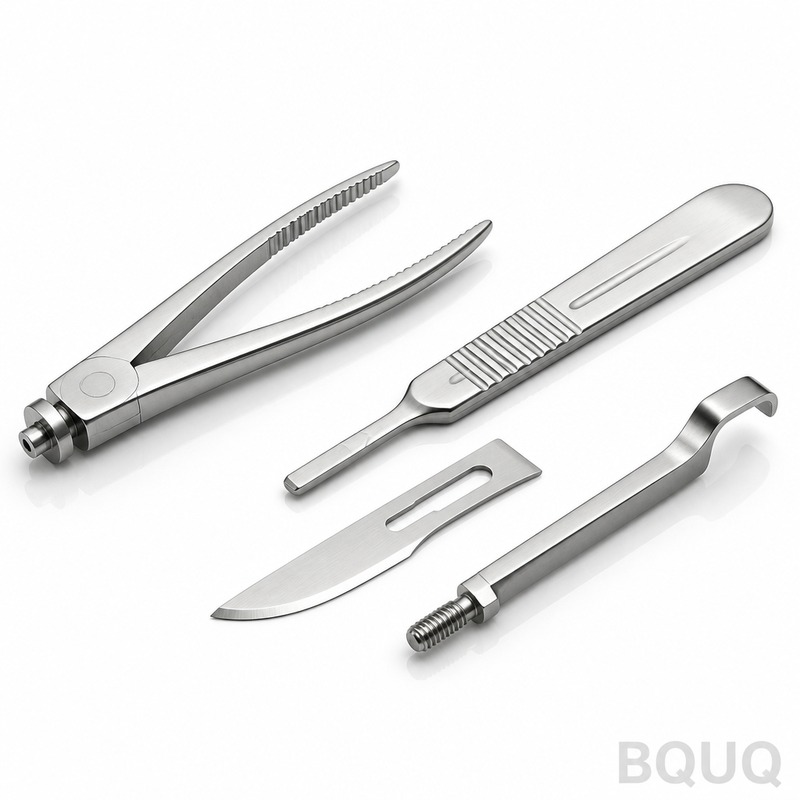
The aerospace industry is the primary driver, with over 70% of new 5-axis machines sold to aerospace suppliers for machining turbine blades, structural frames, and landing gear components from difficult-to-machine alloys like Inconel 718 and Ti-6Al-4V. Medical device manufacturers are the second-largest segment, using 5-axis for orthopedic implants and surgical instruments that require complex contours and biocompatible finishes, with tolerances of ±0.01 mm on titanium and PEEK. The automotive sector, particularly for electric vehicle (EV) components, is accelerating adoption for machining battery housings, motor casings, and turbocharger housings, where the reduction in setup time supports high-mix, low-volume production. Mold and die makers are also transitioning, as 5-axis reduces the hand-polishing time for injection molds by 60% due to superior step-over consistency, and the energy sector uses 5-axis for valve bodies and drill bits that must withstand pressures exceeding 15,000 PSI.
How Does 5-Axis Machining Reduce Lead Times and Increase Throughput?
5-axis machining reduces lead times by consolidating multiple operations into one setup, which directly cuts the queue time in a factory from an average of 5 days for 3-axis multi-setup jobs to less than 1 day for 5-axis jobs. The reduction in setup time is significant: a typical 3-axis job requiring 3 setups takes 2.5 hours of setup labor, while a 5-axis job requires only 30 minutes of fixture placement and probing. This efficiency increases the effective machine utilization rate from 65% on 3-axis to 85% on 5-axis, meaning a single 5-axis machine can replace 2.5 conventional 3-axis machines in terms of weekly output. For a factory producing 500 complex parts per month, switching to 5-axis can shorten the overall production cycle from 21 days to 9 days, allowing manufacturers to respond to rush orders and reduce inventory carrying costs by 30%.
What Are the Hidden Costs and Technical Challenges of 5-Axis Implementation?
The hidden costs of 5-axis adoption include CAM software licenses, which range from $10,000 to $50,000 for advanced modules like hyperMILL or NX CAM, and post-processor development, which costs $3,000 to $8,000 per machine. Operator training is a significant factor, as a skilled 5-axis programmer requires 6 to 12 months of specialized training, and the average salary for a 5-axis CNC programmer is $75,000 to $95,000 per year, versus $55,000 for a 3-axis programmer. Technical challenges include collision avoidance, as the rotary table and spindle can crash at speeds of 30 m/min, requiring simulation software that adds 10% to the programming time. Thermal stability is another concern; a 5-axis machine must be operated in a temperature-controlled environment of 20°C ± 1°C to maintain the ±0.005 mm tolerance, as a 5°C change can cause 0.02 mm of linear expansion in a 1-meter cast iron frame.
Which 5-Axis Machine Configuration Is Right for Different Part Geometries?
The choice of 5-axis configuration depends on the workpiece size and geometry: trunnion tables are ideal for parts under 600 mm cube and offer the highest rigidity for heavy cutting, while gantry machines are necessary for large aerospace parts exceeding 2 meters in length. A swivel-head configuration, where the spindle tilts rather than the table, is preferred for very heavy workpieces that cannot be rotated, such as engine blocks weighing over 500 kg. For small, intricate parts like dental implants or watch components, a compact 5-axis machine with a 100 mm rotary table provides the fastest cycle times, often under 2 minutes per part. When selecting a machine, engineers should evaluate the required axis travel, spindle torque (e.g., 100 Nm for steel cutting), and the accuracy of the rotary axes, which should have a positioning accuracy of ±5 arc-seconds for high-precision work.
| Machine Configuration | Typical Part Size | Axis Accuracy | Hourly Rate | Best Application | Setup Reduction |
| Trunnion Table | Up to 600 mm cube | ±0.005 mm | $120/hr | Aerospace brackets, molds | 70% |
| Swivel Head | Over 500 kg parts | ±0.010 mm | $140/hr | Engine blocks, large dies | 60% |
| Gantry | 2 to 10 meters | ±0.020 mm | $180/hr | Aircraft fuselage sections | 50% |
| Compact | Under 100 mm | ±0.003 mm | $90/hr | Dental, electronics | 80% |
How Do You Justify the ROI for a 5-Axis Machine Purchase?
The return on investment (ROI) for a 5-axis machine is typically realized within 12 to 18 months when the machine is utilized at 70% capacity or higher. To calculate ROI, compare the total cost of operations: a 3-axis setup requiring 4 setups per part at $75/hour with 1 hour of setup each, versus a 5-axis setup at $120/hour with 0.5 hours of setup. For a batch of 50 parts, the 3-axis cost is $15,000 (50 parts × 4 hours × $75), while the 5-axis cost is $9,000 (50 parts × 1.5 hours × $120), a savings of $6,000 per batch. If the factory processes 20 such batches per year, the annual savings are $120,000, which supports the purchase of a $350,000 machine within 3 years, including maintenance costs of $15,000 per year. Additionally, the ability to quote 5-axis capabilities often commands a 15% to 25% price premium on complex parts, further accelerating the payback period.
What Is the Future of 5-Axis Machining in the Next Five Years?
The future of 5-axis machining points toward automation and digital twin integration, with the number of installed 5-axis machines in China expected to grow from 80,000 units in 2023 to 150,000 units by 2028, a compound annual growth rate of 13%. Advances in in-process probing and adaptive control will allow machines to automatically compensate for tool wear and thermal growth, maintaining tolerances without operator intervention. The integration of 5-axis machines with robotic part loading and unloading systems will enable lights-out manufacturing, where a single operator supervises five machines, reducing labor costs by 80%. Furthermore, the development of faster spindle technology, with 40,000 RPM and 50 kW power, will enable the economical machining of hardened steels up to 62 HRC, eliminating the need for EDM in many mold applications.
FAQ
How Much More Expensive Is a 5-Axis Machine Compared to a 3-Axis?
A new 5-axis machine costs $150,000 to $600,000, while a comparable 3-axis VMC costs $60,000 to $150,000, making the 5-axis machine roughly 2.5 to 4 times more expensive. However, used 5-axis machines are available from $80,000, and financing options can spread the cost over 5 years. The higher price is justified by the elimination of additional fixtures and the reduction in floor space required.
Can a 5-Axis Machine Replace a Full Production Line?
A single 5-axis machine can replace up to three 3-axis machines for complex parts, but it cannot replace high-volume, dedicated transfer lines that produce simple parts at rates of 100 parts per hour. For parts with fewer than 6 machined faces and simple geometries, a 3-axis machine with indexing fixtures may still be more productive. The decision depends on part complexity and annual volume, with 5-axis being optimal for volumes between 1 and 5,000 parts per year.
What Is the Difference Between 3+2 and Full 5-Axis Machining?
3+2 machining uses the rotary axes to position the workpiece at a fixed angle, then performs standard 3-axis cutting, which is sufficient for drilling angled holes or machining flat faces. Full 5-axis machining moves all axes simultaneously during the cut, which is required for sculptured surfaces like turbine blades or impellers. Full 5-axis programming is more complex and requires more expensive CAM software, but it produces smoother surfaces and can reduce cycle times by 30%.
Which Materials Are Best Suited for 5-Axis Machining?
5-axis machining excels with difficult-to-machine materials that are prone to chatter or deformation, including titanium, Inconel, hardened tool steel, and aluminum alloys. Aluminum alloys like 6061-T6 and 7075-T6 are ideal because they allow high spindle speeds and feed rates, maximizing the machine's productivity. The process is also excellent for plastics like PEEK and Ultem, which require low cutting forces to prevent melting.
When Should I Choose 5-Axis Machining Over Other Processes?
Choose 5-axis machining when the part has multiple features on different planes, requires tight tolerances below ±0.01 mm, or has complex free-form surfaces that cannot be achieved with 3-axis or casting. It is also the right choice when you need to reduce lead times and inventory, as the single-setup capability shortens the production cycle. For simple parts with only two or three machined faces, traditional 3-axis or even stamping may be more cost-effective.
How Does 5-Axis Machining Affect Tool Life?
5-axis machining extends tool life by 20% to 40% because the tool maintains a constant chip load and avoids the interrupted cuts common in 3-axis operations. The ability to tilt the tool slightly (by 2 to 5 degrees) reduces the effective cutting force on the edge and prevents the center of the tool from rubbing, which is a major cause of wear. For example, a carbide end mill cutting Inconel may last 30 minutes on a 3-axis machine but 45 minutes on a 5-axis machine, reducing tool costs per part.
Is 5-Axis Machining Suitable for Small Batch Prototyping?
Yes, 5-axis machining is highly suitable for prototyping because it eliminates the need for custom fixtures, which often cost more than the prototype parts themselves. A prototype can be machined from a solid block in hours, with the ability to make design changes quickly by editing the CAM program. The single-setup approach also allows for rapid iteration, with typical delivery times of 3 to 5 business days for complex prototypes.
The acceleration of 5-axis CNC adoption is not a market trend but an engineering necessity driven by quantifiable improvements in tolerance, cost, and speed. Facilities that fail to integrate 5-axis capabilities risk being locked out of high-precision contracts in aerospace, medical, and EV sectors. At BQUQ, we have integrated 5-axis machining centers alongside our existing CNC, stamping, and spring manufacturing to offer you the lowest total cost for complex components.
If you have a complex part that is currently costing you too much in setups or scrap, send us your drawings today. Our engineering team will provide a 5-axis optimization analysis and a quotation within 12 hours. Contact us at Email: sc@bquq.com, WhatsApp: +86 13713157787, or visit www.bquq.com to get started.