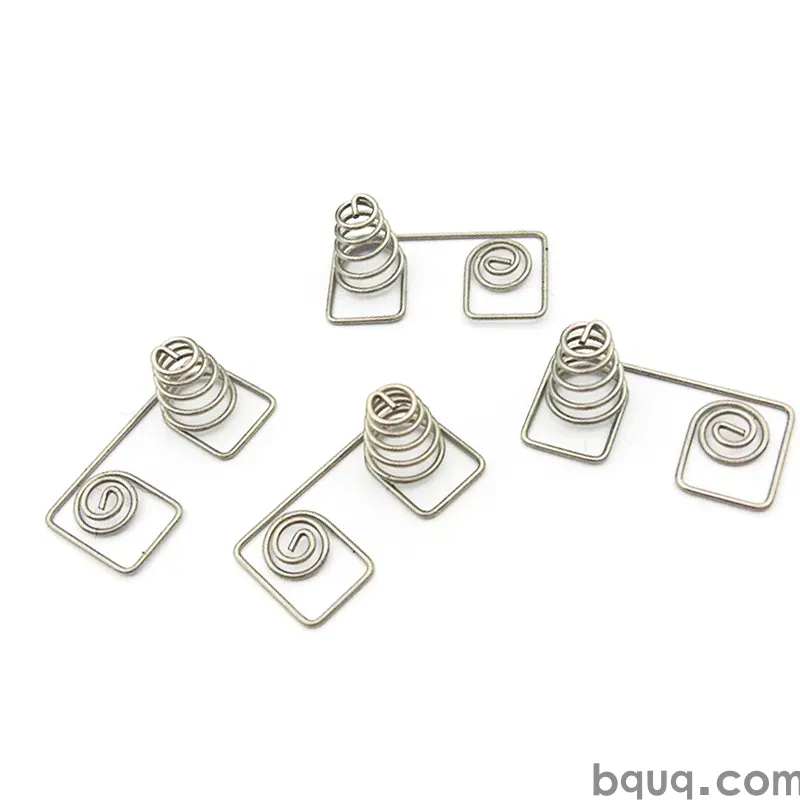
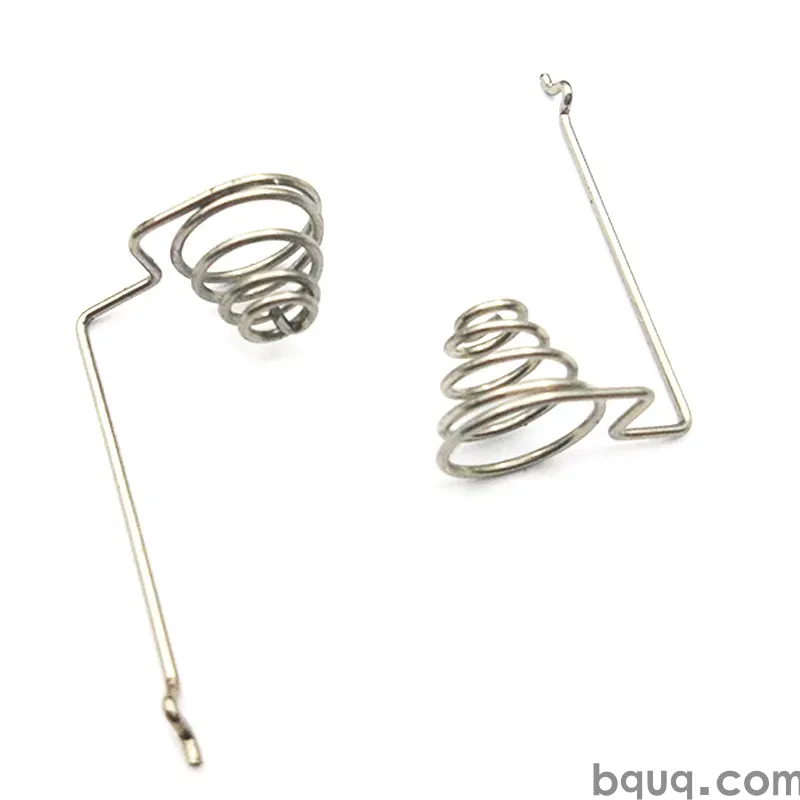
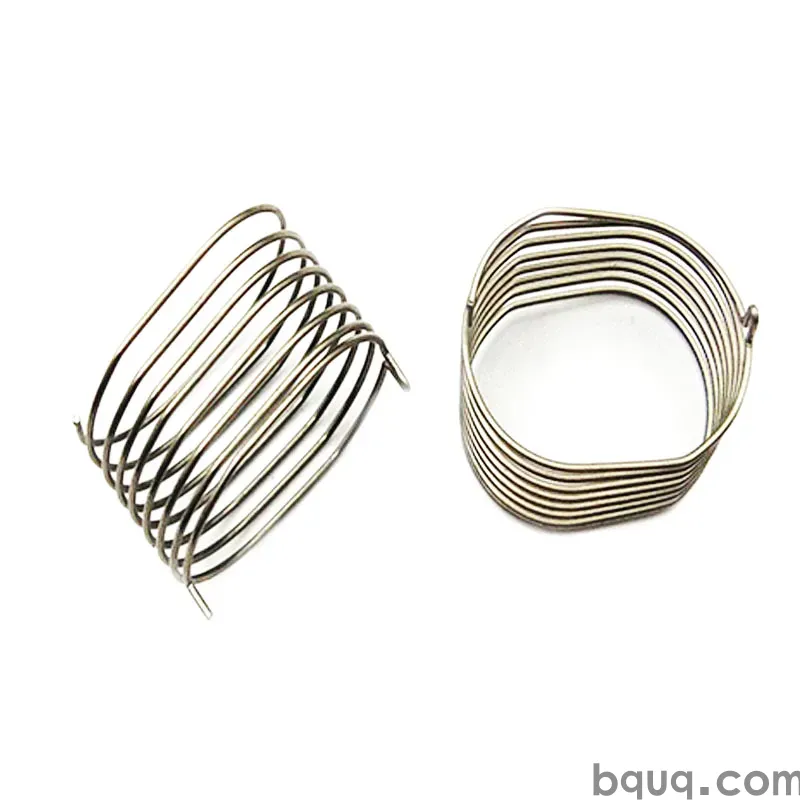
Micro stamping limits for parts under 5 mm: minimum hole, slot, bend and tolerance data from BQUQ, a Dongguan progressive-die stamping factory.
Micro Stamping: Real Limits for Parts Under 5 mm
Short answer: parts under 5 mm are stamped in production every day, and the practical limits are set by feature size against strip thickness, not by overall part size. On strip from 0.05 mm to 0.5 mm thick, a precision progressive die pierces holes down to roughly 0.10–0.20 mm, holds ±0.02–0.05 mm on critical features, and runs 4–16 parts per stroke. Tooling typically costs $3,000–$20,000, and a finished micro part usually lands at $0.005–$0.10 at volume. The failures happen when designers ask for features a given strip thickness cannot physically blank.
Micro stamping is how the world makes the small metal bits inside connectors, switches, relays, sensors, battery contacts and shielding cans: millions of pieces, all identical, out of strip metal moving through a progressive die at hundreds of strokes a minute. The word "micro" refers to the product, not the process — the dies are still precision-ground tool steel, but the features are tenths of a millimetre and the tolerances are a fraction of a human hair. What separates a shop that can actually deliver micro parts from one that quotes them is honesty about feature limits. This guide gives you the numbers.
What "Micro" Means in Stamping
In practice, micro stamping covers parts with an overall envelope under about 5 mm — connector pins and sockets, lead-frame segments, relay and switch contacts, micro-switch blades, encoder wheels, watch and instrument parts, and small spring contacts. Strip thickness runs from roughly 0.05 mm to 0.5 mm, with the thinnest foils used for leaf springs and EMI fingers and the thicker range used for power-carrying contacts and structural brackets.
Two things change when parts get this small. First, the strip is thin, so it behaves differently: thin material deflects, carries heat poorly during blanking, and needs dies with near-zero clearance to produce a clean edge. Second, every speck of dirt, every 0.005 mm of die wear, and every micron of strip thickness variation shows up in the part. That is why micro stamping is done on precision progressive dies with guided strippers, carbide or fine-ground tool steel sections, and in-process sensing, inside clean, temperature-stable presses.
Feature Limits: Holes, Slots, Bends and Tolerances
The single most useful rule in stamping is that a pierced hole should not be smaller than roughly the strip thickness — and never smaller than about 0.6× the thickness if you want a reliable, long-life die. Below that ratio, the punch becomes fragile and the hole edge quality degrades. The same logic governs slot widths and the distance between features: keep wall sections between holes at or above strip thickness.
| Strip thickness | Minimum hole Ø | Minimum slot width | Inner bend radius (min) | Typical stamped tolerance |
|---|---|---|---|---|
| 0.05–0.10 mm | 0.08–0.15 mm | 0.10–0.15 mm | 0.05–0.10 mm | ±0.02–0.05 mm |
| 0.10–0.20 mm | 0.15–0.20 mm | 0.15–0.25 mm | 0.10–0.20 mm | ±0.02–0.05 mm |
| 0.20–0.35 mm | 0.20–0.35 mm | 0.20–0.35 mm | 0.20–0.35 mm | ±0.03–0.05 mm |
| 0.35–0.50 mm | 0.35–0.50 mm | 0.30–0.50 mm | 0.30–0.50 mm | ±0.05 mm |
These are production numbers from our progressive-die lines in Dongguan, not laboratory bests. Can shops do better? Yes — a hole at 0.5× thickness is achievable with special punches, but die life falls and unit cost rises, so we quote it honestly when it appears. Bending is where most micro parts fail: bend the strip too tightly and the outside surface cracks, especially on spring-temper material. Treat minimum inner bend radius as roughly equal to strip thickness for soft alloys and 1.5–2× thickness for hardened spring temper, and always bend across the rolling direction when the bend is sharp.
Materials and Typical Micro Parts
Micro parts are stamped from the same alloys as their full-size relatives, but thin strip makes temper and flatness control more important. A spring contact that is 0.08 mm thick has no margin for soft spots, so strip is ordered to a specified temper and thickness band, and often pre-plated so the finish survives forming.
| Material | Typical thickness | Why it is chosen | Relative strip cost |
|---|---|---|---|
| Brass C260 | 0.08–0.40 mm | Forms easily, conducts well | 1.0× (baseline) |
| Phosphor bronze C5210 | 0.05–0.30 mm | Spring temper, fatigue resistance | 1.4–2.0× |
| Beryllium copper C172 | 0.05–0.25 mm | Highest strength spring + conductivity | 4–7× |
| Stainless 301/304 | 0.05–0.30 mm | Corrosion resistance, spring temper | 1.5–2.5× |
| Nickel silver | 0.05–0.30 mm | Solderable, tarnish-resistant contacts | 1.8–2.5× |
| Copper (C1100 etc.) | 0.08–0.40 mm | Conductivity for power paths | 1.2–1.6× |
Typical micro products by family: lead-frame segments (0.10–0.25 mm copper alloys), connector pins and sockets (0.08–0.30 mm brass or phosphor bronze), micro-switch and relay contacts (0.10–0.30 mm spring alloys), watch and instrument parts (0.05–0.20 mm), and the small stamped contacts behind buttons and slides. None of these need exotic tooling — they need disciplined toolmaking and process control, which is exactly what precision metal stamping services from a dedicated stamping factory are built around.
Tolerance, Burr and Flatness: What You Can Hold
On a well-built progressive die, blanked outline features hold ±0.02–0.05 mm in production, formed features (bends, drawn cups) hold ±0.05 mm or a little more, and hole-to-hole spacing holds within ±0.02–0.03 mm because every station registers off the same pilot holes. Strip thickness itself typically varies ±5% of nominal, and that variation shows up in formed dimensions — so call out the critical formed dimension, not just the material name.
Burr is the micro part's worst enemy and the most common rejection reason. Burr height on thin strip should hold under 10% of strip thickness on the punch side, and the die is designed so the burr side is predictable. Flatness and twist matter more than most drawings acknowledge: 0.05 mm strip will not lie dead flat without coining or forming-in features, so either call flatness on datums or accept a bow specification. If a feature set pushes past what stamping does economically — ultra-thin foil with no burr and 0.01 mm features, say — compare honestly against photo etching, which has lower tooling cost and no mechanical stress but slower cycle times and less crisp edges. The full tolerance story is in our metal stamping tolerances guide.
Verification is where micro stamping separates real suppliers from quoting shops. Because parts are too small for calipers to tell the whole story, we check micro features on vision measuring systems and toolmaker's microscopes, verify form on optical comparators, and confirm force or insertion behavior on sample lots when the part is a spring contact. A first-article report for a micro part should list feature dimensions against the drawing plus burr side and burr height; a supplier who cannot show you measured burr data has not controlled the process. That discipline is why a stamped micro part at $0.01 can be trusted inside a five-year product while a cheaper quote turns into a field failure.
Progressive Dies, Output and Cost
Micro parts are almost always run on progressive dies with multiple parts per stroke: four, eight, up to sixteen-out tooling is common, with strips of parts plated or formed in-die and separated at the end. Press speeds for micro work run from roughly 100 to 600 strokes per minute depending on feature density and feed length, so a 4-out die at 300 SPM produces 1,200 parts a minute — the reason micro stamping cost per piece collapses once tooling is paid.
| Die complexity | Indicative tooling range | Typical output | When it fits |
|---|---|---|---|
| Simple blank/form die, few stations | $2,000–$6,000 | 50–150 SPM | Low volume, simple geometry |
| Multi-station progressive, 2–4 out | $6,000–$15,000 | 200–400 SPM | Standard micro contact/terminal |
| High-precision progressive, 8–16 out | $12,000–$30,000 | 300–600 SPM | High volume lead-frames, micro contacts |
Piece price follows tooling complexity and material: simple micro blanks run $0.005–$0.02, formed spring contacts and terminals run $0.01–$0.06, and plated or high-precision parts can reach $0.10 at moderate volume. What you should never do is prototype a micro part by hand-folding and then expect the die to reproduce it: micro stamping economics depend on design-for-stamping, and a small DFM review before tooling usually removes the features that would have killed die life. For very low volumes, fine blanking and CNC micro-machining are honest alternatives we quote alongside stamping when the quantity does not justify a die.
Die life is the hidden cost in micro stamping. A micro punch that snaps after 100,000 strokes stops the line and re-opens the tooling budget, so dies for parts under 5 mm are built from carbide or powder-metal tool steel, run with guided strippers and tight clearances, and are maintained on a schedule rather than after failure. Sharpening intervals and spare punches belong in the quotation conversation, not in an afterthought. When two quotes for the same micro part differ widely, the gap is usually die quality and the process control around it, not markup.
What to Put on the Drawing
Send material grade and temper, strip thickness, burr side and maximum burr height, which edges are functional, and the formed dimensions that must hold. Flag any feature close to the limits above so the die designer can steer around it. Then send the drawing to sc@bquq.com or WhatsApp +86 13713157787 and get a stamped-part quotation within 12 working hours — including a straight answer on whether micro stamping, stamped terminals and contacts tooling or an alternative process fits your volume.
Frequently Asked Questions
Q: What is the smallest hole that can be stamped in thin metal?
A: In production, expect a minimum pierced hole of roughly 0.08–0.15 mm on 0.05–0.10 mm strip, and about one strip thickness on thicker material. Below that ratio the punch becomes fragile and die life drops sharply.
Q: What tolerance can you hold on micro stamped parts?
A: Blanked outline and hole-to-hole spacing typically hold ±0.02–0.05 mm on a precision progressive die, with formed features at ±0.05 mm or slightly more. Strip thickness variation of about ±5% carries into formed dimensions.
Q: When is micro stamping better than photo etching?
A: Above roughly 100,000–500,000 pieces a year, stamping wins on unit cost and speed, and gives crisper edges and tighter tolerances. Photo etching suits very thin foil, burr-free prototypes and low volumes where tooling cost cannot be justified.
Q: What is the minimum quantity for a micro stamped part?
A: Tooling cost dominates, so practical volumes start around 20,000–50,000 pieces a year for a simple die. Below that, prototypes and short runs are better folded, etched or machined until volume justifies the progressive die.
Q: Can micro parts be supplied pre-plated or with bent features?
A: Yes. Pre-plated strip (tin, nickel, gold flash) is formed in-die without cracking when bend radii respect the plating, and forming is done progressively so parts come off the press complete. Both are standard on our micro stamping lines.
Related Resources
- Precision metal stamping services in China — capabilities, tolerances and lead times from a Dongguan stamping factory.
- Stamped terminals and contacts — the connectors, pins, springs and micro contacts BQUQ stamps on progressive dies.
- About BQUQ — ISO9001-certified source factory in Dongguan running stamping, CNC, springs and heat sinks under one roof.
- Contact us — send the drawing and receive a stamped-part quote within 12 working hours.
Authored by the BQUQ Engineering Team. BQUQ is an ISO9001-certified source factory in Dongguan, China, running CNC machining, metal stamping, custom springs, heat sink and collet lines under one roof. Send drawings to sc@bquq.com or WhatsApp +86 13713157787 for a quote within 12 working hours. www.bquq.com