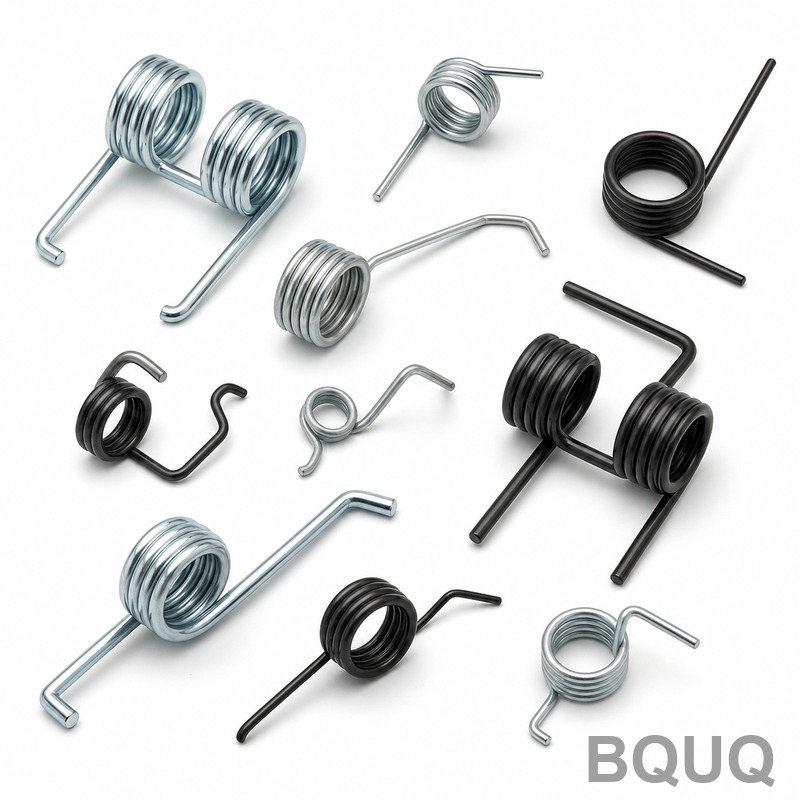
Injection Pen Torsion Spring: 302 Stainless, ±3% Torque, 5M-Cycle Tested
A torsion spring inside an injection pen is a tiny part with a hospital-grade job. It stores the energy that winds the dose dial, it has to release the same torque on dose one and on dose three thousand, and it lives in a device that touches patients, so every edge has to be clean. A few percent of torque drift is a complaint; a burr is a recall.
Project Background & Challenge
A medical device OEM came to us with an injection pen program moving into higher volume. The pen uses a torsion spring on the dose-setting mechanism: the user twists the dial to select a dose, the spring winds, and it returns the mechanism with a consistent feel. The existing spring met the drawing, but the OEM could not get the fatigue data or the torque consistency they needed to file for regulatory approval and scale to 300,000 units a month. Meeting a drawing and proving the part for a medical file are two different jobs.
The spring is 302 stainless steel, wound from wire in the 0.4mm range, with legs that engage the dial and the housing. Torque tolerance is ±3% at the working angle, tighter than a typical industrial spring, because patients judge dose feel and a mechanism that skips or drifts is a safety issue. The OEM also needed 5 million cycles of fatigue evidence, a clean burr-free surface with no loose particles, and material traceability that would survive an audit.
302 stainless was chosen because it gives corrosion resistance and fatigue strength in one material, with no plating that could shed particles in a clean environment. The catch is that 302 work-hardens sharply and is finicky in the forming and stress-relief steps, which is exactly where torque consistency is won or lost. The customer's earlier samples had passed first article and then drifted once the process was scaled, which is a classic 302 problem when stress relief is treated as a step rather than a control point. A spring that is beautiful at the sample stage can quietly fall out of band once it is made in the hundreds of thousands.
BQUQ Process Solution
Our approach: lock the torque in through wire selection, a controlled coiling and stress-relief recipe, and 100 percent functional testing of the finished part.
Wire Selection and Coiling
We work from a defined wire lot for 302 stainless, checking diameter and tensile properties on receipt, then coil on CNC spring formers so leg angle and body diameter repeat within microns. Tooling is deliberately set so the spring is wound slightly over-torque and then relaxed back to target during stress relief, which absorbs the natural scatter of the forming step instead of dumping it into the finished torque.
Stress Relief for Stable Torque
Low-temperature stress relief after coiling is what keeps torque from drifting across the 5 million cycle life. Time and temperature are fixed and recorded per lot, and torque is sampled before and after the treatment to confirm the shift is consistent. We also run a short accelerated cycle sequence on each lot before release, so a batch that would drift out of band later gets caught in the factory instead of at the customer. This step, more than any other, is where the ±3% window is actually held in production rather than just at first article.
Cleaning and Edge Quality
Legs are formed with radiused ends, then deburred and cleaned to remove loose particles and forming lubricant. Because this is a medical device, the finish requirement is a clean, burr-free surface with no plating. Loose-particle limits and the packing method were agreed with the OEM up front, since a clean spring that arrives in a dirty bag is not clean at all. Parts are handled and packed to stay clean through shipping, and wire lots are kept traceable from receipt to the shipped box so any spring can be traced back to its material.
Key Specifications
| Item | Specification |
|---|---|
| Material | 302 stainless steel spring wire |
| Wire diameter | 0.4mm nominal |
| Torque tolerance | ±3% at working angle |
| Fatigue life | 5,000,000 cycles verified, no torque loss beyond band |
| Surface finish | Burr-free, clean, no plating; traceable wire lot |
| Volume | 300,000 pcs/month |
| Inspection | 100% torque check, sample fatigue rig, CMM on critical features |
| Delivery | Samples in 5 days, first batch in 15 days |
Quality Control & Delivery
Torque is checked at the working angle on 100 percent of parts, with the batch statistic controlled against ±3%. Fatigue is proven on a cycling rig that runs to 5 million cycles with periodic torque checks, and the outcomes are documented for the OEM's regulatory file. Critical geometry is verified on a CMM, and material lots are traceable from wire receipt to shipped box. Because the parts are small and numerous, torque testing is handled as an in-line check rather than a slow offline audit, so 300,000 pieces a month can still ship fully tested.
Result: samples in 5 days, first production batch in 15 days, and steady output at 300,000 pieces per month with torque holding ±3% and 5 million cycles passed. Batch-to-batch torque stayed flat once stress relief was locked, which was the piece the OEM had never been able to get from a drawing-only supplier. The OEM moved the pen into volume with the fatigue documentation they needed, and the whole flow runs under an ISO9001:2015 quality system.
Related Products & Resources
To see more small precision springs like this one, browse our torsion spring and battery contact spring lines:
For another example of high-cycle micro spring work, read the case study on a Medical Micro Compression Spring in 0.2mm Wire with 500K Fatigue. To see how we run small-parts manufacturing, visit About BQUQ.
FAQ
How do you hold ±3% torque on a 0.4mm wire torsion spring?
By controlling the inputs, not by sorting the output. Wire lots are verified on receipt, coiling is CNC-controlled for leg angle and body diameter, and stress relief is fixed and logged. Torque is then checked on 100 percent of parts at the working angle before shipping, so the statistic stays inside ±3%.
Is 5 million cycles realistic for a medical pen spring?
Yes, when stress is kept below the endurance limit for 302 stainless and the surface is clean and burr-free. We prove it on a cycling rig that runs the full 5 million cycles with periodic torque checks, and the data package is documented for the customer's regulatory submission, including torque drift across the run.
Why 302 stainless instead of a plated spring steel?
302 gives corrosion resistance and fatigue strength in a single material, with no plating that could shed particles into a device that contacts patients. The trade-off is that 302 work-hardens quickly, so the forming and stress-relief steps have to be tightly controlled to keep torque inside ±3%.
Can you provide material traceability for audits?
Yes. Wire is tracked by heat lot from receipt to shipping, and inspection records ship with each batch. Sampling data, torque statistics, cleaning records and fatigue results are all retained under our ISO9001:2015 system, so a customer can trace any single spring back to its wire lot and its production batch.