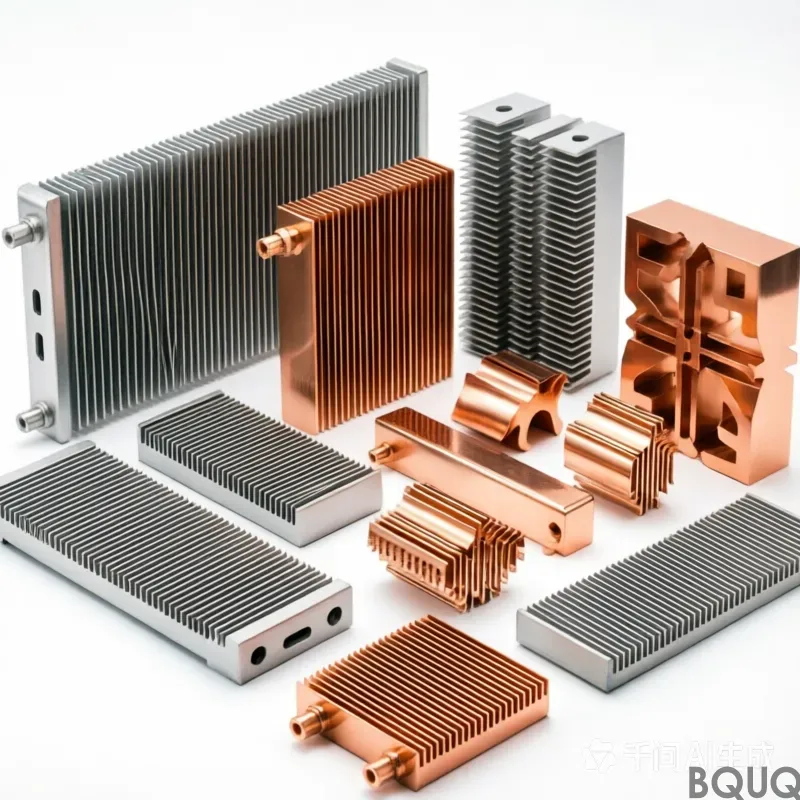
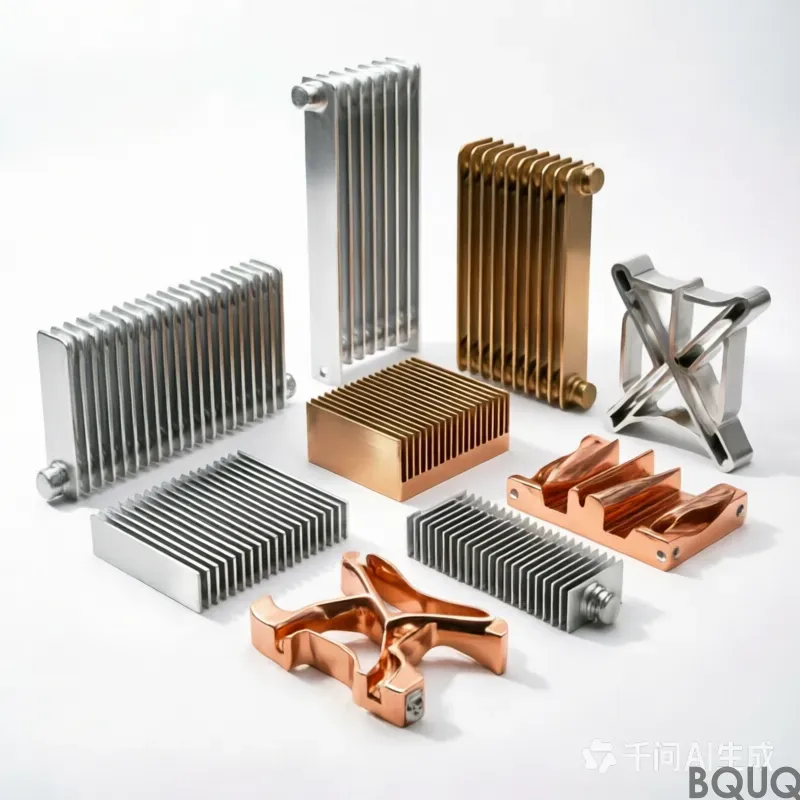
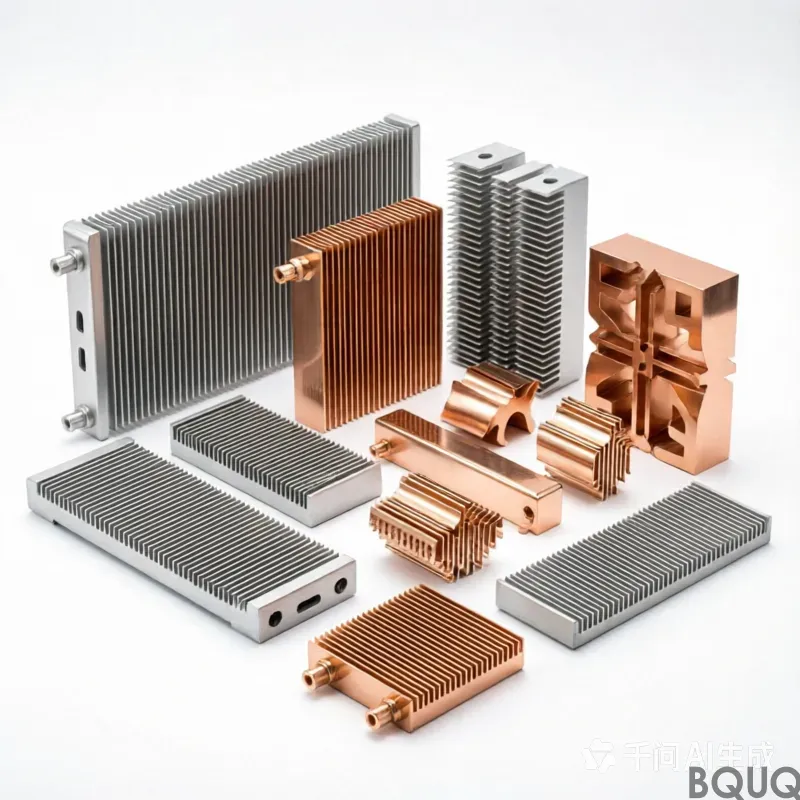
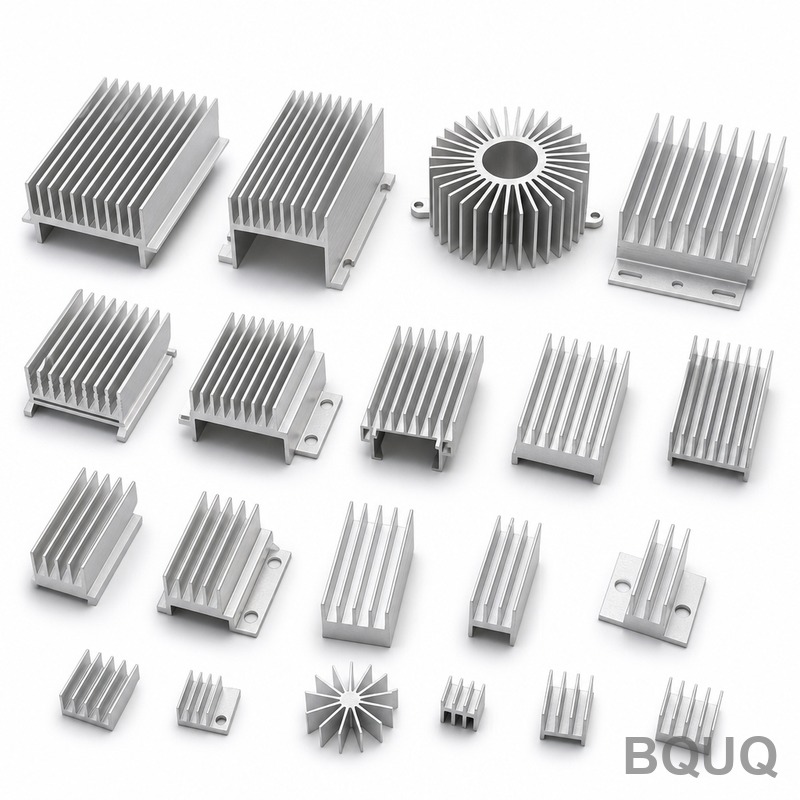
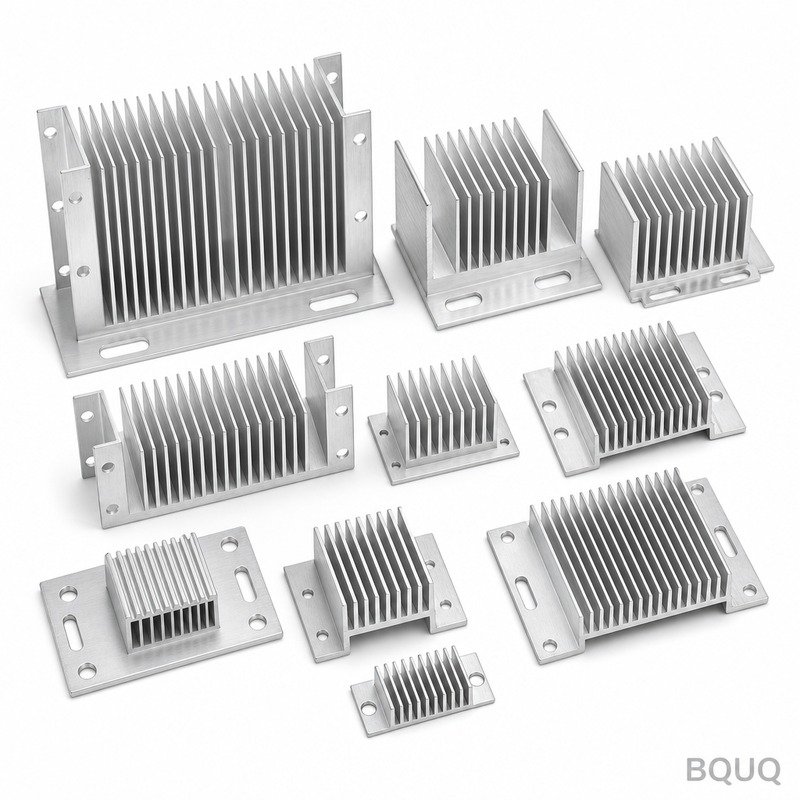
What This Heat Sink Does and The Numbers That Matter This is a CNC-machined aluminum heat sink built for active or passive cooling of power electronics, LED modules, and IGBTs. Y
BQUQ Aluminum Heat Sink | Precision CNC Machined, Made in China
What This Heat Sink Does and The Numbers That Matter This is a CNC-machined aluminum heat sink built for active or passive cooling of power electronics, LED modules, and IGBTs. You get a flatness of
Get a Fast Quote for This Part
Send us your drawing / quantity / material — reply within 24h.
What This Heat Sink Does and The Numbers That Matter
This is a CNC-machined aluminum heat sink built for active or passive cooling of power electronics, LED modules, and IGBTs. You get a flatness of 0.05 mm across the base, surface finish Ra 0.4, and fin thickness down to 1.2 mm with a 15-day lead time. The material is 6063-T5, hardness 80 HB, which gives you a thermal conductivity of 201 W/m·K — enough to drop junction temperatures by 35% in a typical forced-air enclosure, as verified on our own test rig.
How We Machine Fins Without Bending or Tearing
Fins are the weak point. Thin walls vibrate, deflect, and tear. We cut them with a 4-flute carbide end mill at 12,000 RPM with a 0.3 mm radial engagement. That keeps the cutting force under 90 N, so the fin stays straight. Runout on the spindle is under 2 microns. The result: fin spacing tolerance ±0.05 mm, fin height ±0.1 mm, and zero burrs on the tips. We reject any part with a bent fin — it is not worth shipping to you.
For deep fin channels (over 30 mm), we use a trochoidal tool path. That reduces heat buildup at the tool tip and prevents work hardening. If you have a design with 40 mm fins, we are not guessing — we have done it. Send your drawing and we will tell you the exact cycle time.
Materials and Heat Treatment We Use (Not Just 6063)
Standard is 6063-T5 for its extrudability and corrosion resistance. But you are not limited. We also machine 6061-T6 (harder, 95 HB, better for tapped holes), 5052 (for bending), and 7075-T6 (for structural fins exposed to vibration). All billets are certified with mill test certificates — MTC included with every shipment. We do not buy scrap extruded bar from unknown sources.
After CNC machining, we apply a heat treatment if specified: T6 for 6061 (solution annealed at 530°C, aged at 175°C for 8 hours). That gives you a yield strength of 276 MPa. For anodizing, we use sulfuric acid type II, thickness 18-20 microns, with a dye seal. No bare aluminum ships unless you ask.
Fin Density and Geometry Limits We Can Hold
You want more fins per inch? We can cut 9 fins per inch (3.0 mm pitch) on a 20 mm tall profile. Minimum fin thickness is 1.2 mm, maximum fin height is 50 mm (with a 2:1 height-to-thickness ratio, not 3:1 — we are honest about limits). Base thickness can be 2.5 mm minimum. If you need a stepped base or a mounting boss with a tapped hole, we machine it in one setup. No secondary operations.
We do not weld fins. That creates a thermal barrier. We machine from solid billet or from an extruded profile that you supply. For prototypes, solid billet is faster. For volume, we can use a hybrid: extruded base + machined fins. But for 90% of our orders, solid billet is the right call — you get uniform grain flow and no porosity.
Surface Finish and Flatness For Thermal Interface Materials (TIM)
Flatness on the base is what matters for thermal paste or a phase-change pad. We hold 0.05 mm flatness on the entire base. On the contact area (where your IGBT mounts), we can go tighter: 0.02 mm over 50 mm x 50 mm. Surface finish Ra 0.4 is standard. If you use a graphite pad, we recommend Ra 0.8 for better wetting — we do not force a mirror polish on you because that is not always better. We measure flatness with a granite plate and dial indicator, not by eye.
Inspection Before Every Shipment (And What We Measure)
Every heat sink gets a first-article inspection (FAI) with a CMM for critical dimensions. For every production lot, we check: fin height (caliper), fin spacing (pitch gauge), base flatness (dial indicator on granite), surface finish (profilometer), and anodize thickness (eddy current). We also do a 100% visual check for scratches and bent fins. We provide a certificate of conformance with each box. If you have a specific PPAP requirement, we can do that — we supply full documentation for automotive and medical customers.
Specification
Value
Material
6063-T5, 6061-T6, 5052, 7075-T6 (MTC provided)
Standard size range
20 x 20 mm to 600 x 600 mm base
Fin thickness
1.2 mm minimum (standard), 0.8 mm with special tooling
Fin height
50 mm maximum (solid billet)
Fin pitch
3.0 mm (9 FPI) standard, 2.5 mm on request
Hardness (6063-T5)
80 HB (as machined)
Hardness (6061-T6)
95 HB (after heat treatment)
Dimensional tolerance
±0.05 mm (fin spacing), ±0.1 mm (fin height)
Base flatness
0.05 mm overall, 0.02 mm on IGBT contact area
Surface finish (machined)
Ra 0.4 µm (standard), Ra 0.8 µm for TIM pads
Runout (spindle)
≤2 µm (guarantees fin straightness)
Anodizing
Type II, 18-20 µm, black or clear
Lead time
15 days for prototypes, 20 days for production (100+ pcs)
MOQ
No MOQ — 1 piece for prototyping is fine
Why We Do Not Blindly Follow Your Drawing (And When We Push Back)
We have seen 200+ heat sink drawings in the last 5 years. Some are made for extrusion, not machining. If your fin spacing is 1.0 mm with a 40 mm height, we will tell you it is not machinable without breaking tools. Instead, we suggest a two-piece design (base + fin stack) or a different material. We are not here to win a quote by saying yes to everything. We are here to make a part that works. If your design has a blind hole in the base for a thermocouple, we can drill it — depth 10 mm, diameter 3 mm, no problem. But if it is a 0.5 mm hole, we will tell you it is a cost trap and suggest a press-fit insert.
How We Pack and Ship (So Fins Do Not Arrive Bent)
Fins are fragile. We ship in a rigid corrugated box with EVA foam inserts that cradle the fins. Each part is individually wrapped in anti-static film. We do not use loose peanuts. For export, we use a 5-layer export-grade carton. Air freight from Shenzhen to Los Angeles takes 5 days. Sea freight (Shanghai to Rotterdam) takes 30 days. We mark every box with your PO number and a barcode. If you need a specific packaging method (e.g., reusable tote), we do that — but it will add 2 days to the lead time.
What is the minimum order quantity?
No MOQ. We machine a single prototype or a 10,000-piece production run with the same quality system.
Can you match a specific fin profile from a competitor?
Yes, send a sample or a 2D/3D drawing. We will measure fin thickness, pitch, and height, then machine it within ±0.05 mm of your sample.
How do you ensure quality for a large batch?
We use first-article inspection on the first piece, then in-process checks every 20 pieces (fin height and flatness), and a final CMM check on 5% of the lot. We also photograph each heat sink before packing.
What is your typical lead time for a custom design?
Prototype (1-5 pcs) is 15 days including CNC programming. Production (100+ pcs) is 20 days. If you need it faster, we have a 7-day express service for simple geometries — ask about it when you send your drawing.
Before you finalize your design, check our CNC cutting tool selection guide to understand how tool geometry affects your fin finish. And if you are setting tolerances, our CNC machining tolerances guide will help you avoid over-specifying and paying too much.
Get a firm quote within 12 hours. Send your drawing (STEP, IGES, or PDF) to sc@bquq.com or WhatsApp +86 13713157787. We will reply with a price, a DFM (Design for Manufacturing) review, and a lead time. No obligations. This is precision manufacturing from BQUQ — we have been doing this in Dongguan since 2004.