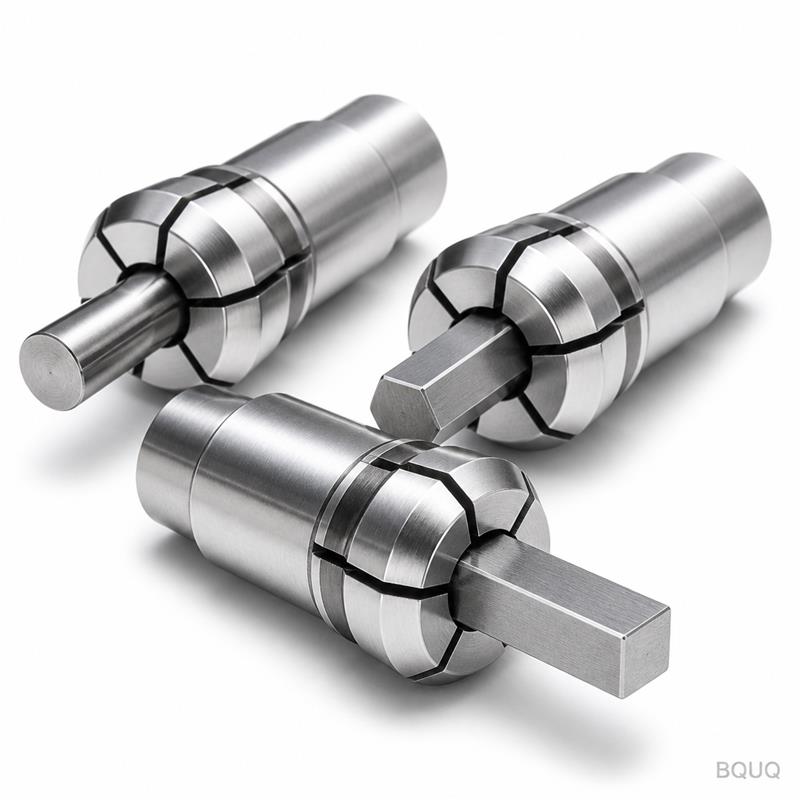
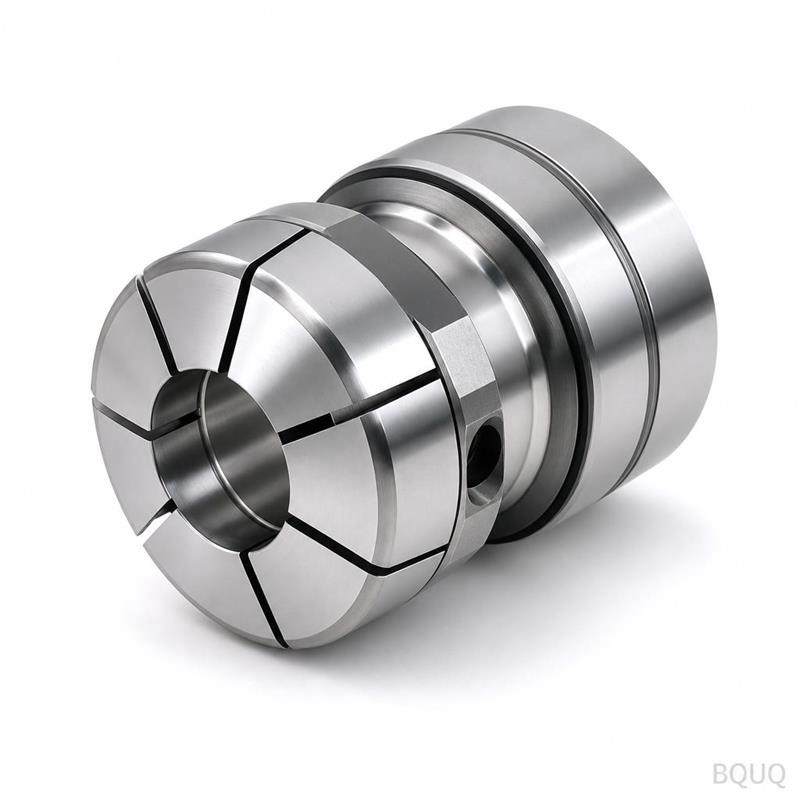
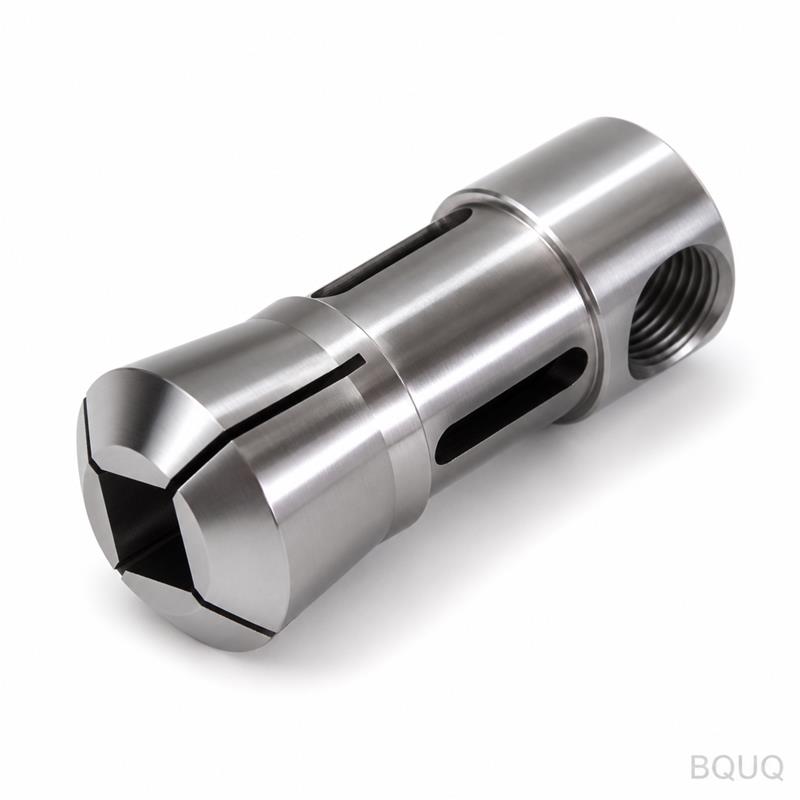
What This Chuck Does and Why It Costs You Less Per Part This is a CNC machined auto lathe 22 type round bore spring collet chuck, built for high-speed turning and grinding spindl
BQUQ CNC Machined Auto Lathe 22 Type Round Bore Spring Collet Chuck
What This Chuck Does and Why It Costs You Less Per Part This is a CNC machined auto lathe 22 type round bore spring collet chuck, built for high-speed turning and grinding spindles where round stock
Get a Fast Quote for This Part
Send us your drawing / quantity / material — reply within 24h.
What This Chuck Does and Why It Costs You Less Per Part
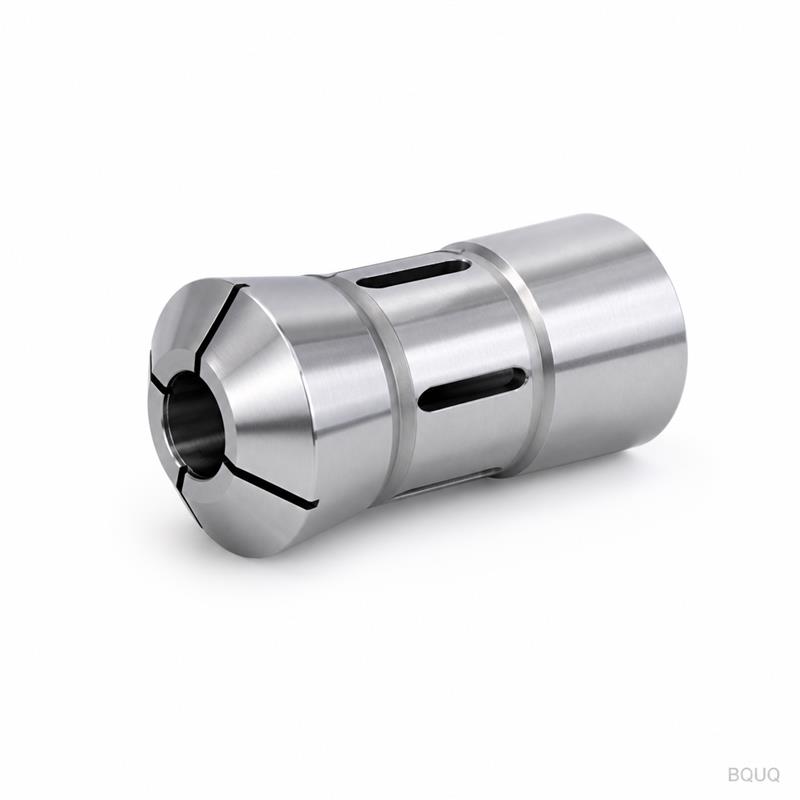
This is a CNC machined auto lathe 22 type round bore spring collet chuck, built for high-speed turning and grinding spindles where round stock must be gripped dead-center. The concrete benefit: you get 0.005 mm TIR (total indicated runout) at the nose, a hardness of 58–60 HRC on the gripping surface, and a surface finish of Ra 0.4 µm on the bore. That means fewer rejected parts, longer tool life, and a lead time of 15 days from drawing approval to your dock. We are a precision manufacturing factory in Dongguan, China, with 20 years of CNC machining, stamping, and spring experience — this chuck is not a side product, it is our core competency.
How the 22 Type Round Bore Grips Without Distorting Thin-Walled Tubing
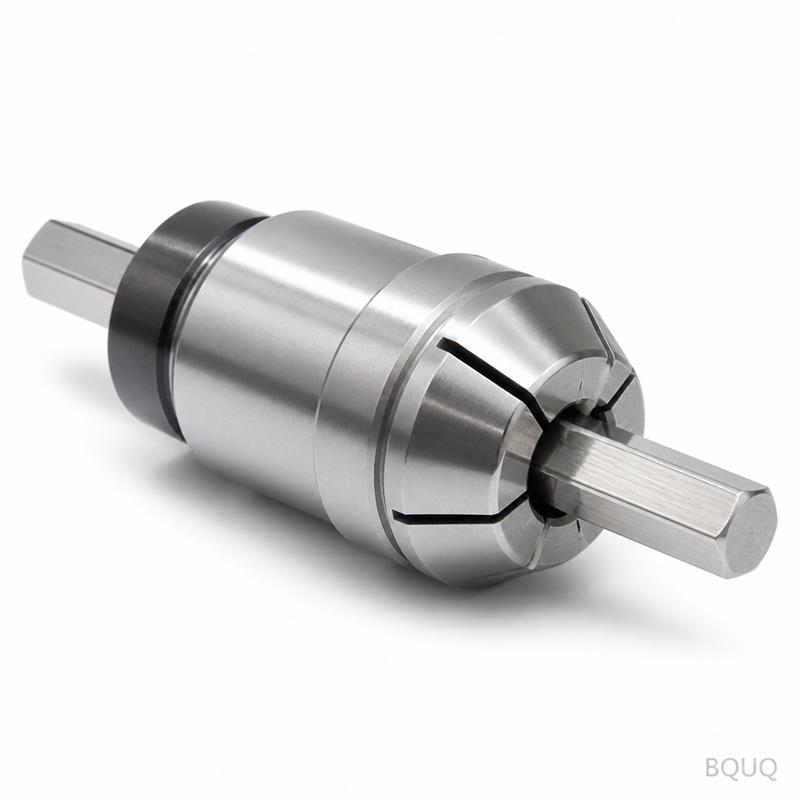
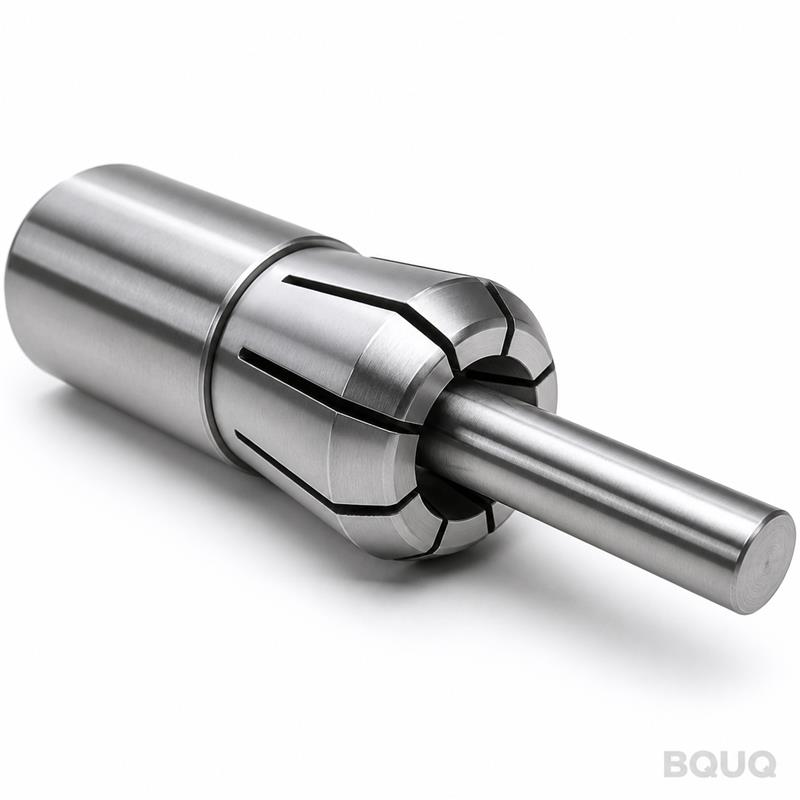
The 22 type refers to the collet series with a 22 mm nominal head diameter and a bore range from 3 mm to 20 mm in 1 mm increments. Unlike ER collets that use a tapered external surface, this spring collet chuck uses a straight round bore with three longitudinal slots cut by wire EDM. When the drawbar pulls the collet into the mating taper (16° included angle), the slots close uniformly. The result: even clamping force around the entire circumference. For thin-walled tubing (wall thickness down to 0.5 mm), this prevents ovalization that would otherwise ruin your concentricity. We machine the slots with a 0.15 mm radius at the root to eliminate stress risers, so the collet does not crack after 100,000 cycles.
Materials and Heat Treatment We Use for 20,000+ Clamping Cycles
We start with 40CrMo4 (AISI 4140) steel, not cheaper 45# carbon steel, because the chrome-molybdenum alloy gives us through-hardening without brittleness. After CNC turning and milling, we heat-treat in a vacuum furnace to 58–60 HRC, then temper twice at 180°C to relieve internal stress. The bore is then ground with a CBN wheel to achieve the Ra 0.4 µm finish and the 0.005 mm TIR. For the spring element — the slotted portion — we use 65Mn spring steel with a hardness of 44–48 HRC, which gives the elastic recovery needed for fast part loading and unloading. Every batch is tested for hardness on a Rockwell tester, and we reject any piece outside the 58–60 HRC window. This is why our chucks hold their gripping force for over 20,000 cycles, not the 5,000 cycles you get from case-hardened parts.
Specifications That Matter for Your Spindle Nose and Bar Feeder
Below are the exact numbers we quote on every RFQ. If your spindle uses a different taper angle or thread pitch, we can adjust the back end to match your machine — we have done this for Citizen, Star, and Tsugami Swiss lathes.
Parameter
Value
Collet series
22 Type (22 mm head diameter)
Bore diameter range
3 mm – 20 mm (round, stepped bores optional)
Gripping taper angle
16° included
Hardness (gripping surface)
58–60 HRC
Hardness (spring section)
44–48 HRC (65Mn spring steel)
Runout (TIR at nose)
0.005 mm
Surface finish (bore)
Ra 0.4 µm
Max recommended RPM
8,000 RPM (balanced)
Lead time
15 days after drawing approval
MOQ
No MOQ (single piece accepted)
Inspection Before Every Shipment: Not Just a Paper Certificate
We do not ship a chuck without a physical inspection report. Each unit is checked on a Zeiss CMM for bore diameter, taper angle, and slot width. Then we mount it on a test spindle and measure TIR with a 0.001 mm dial indicator at three positions: near the nose, mid-grip, and 20 mm inside the bore. The report includes the raw readings, not just a pass/fail stamp. We also do a 500-cycle fatigue test on one sample from every batch of 50 pieces. If the sample cracks or loses more than 5% of its clamping force, we scrap the entire batch and remanufacture. You receive the report as a PDF with the serial number laser-engraved on the chuck body. This is what precision manufacturing means when you buy from BQUQ — you are not gambling on a third-party inspection.
Why Our 15-Day Lead Time Beats Local Machine Shop Quotes
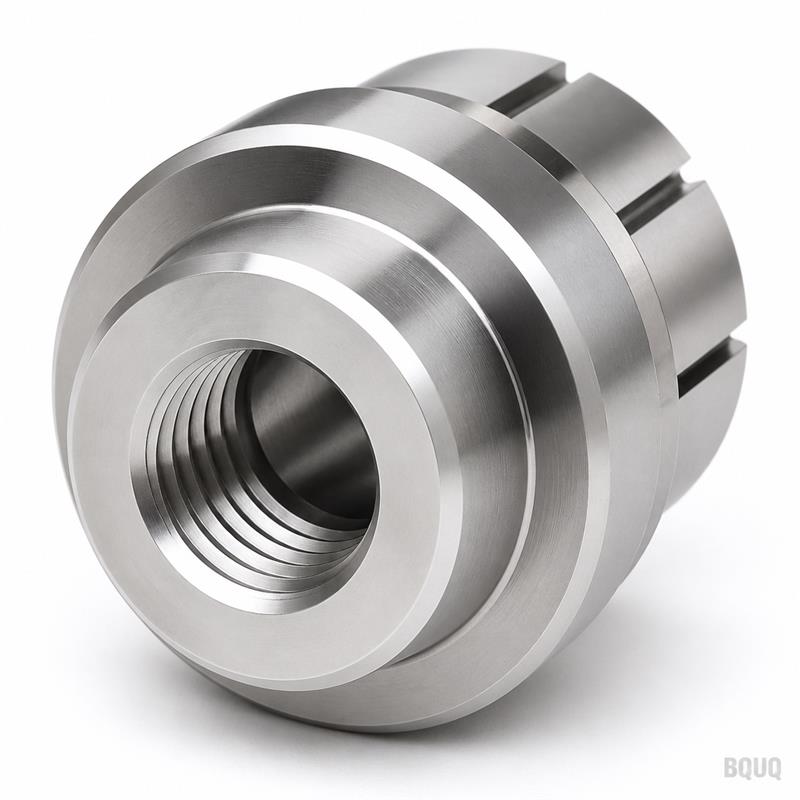
Most machine shops quote 4–6 weeks for a custom collet chuck because they batch orders to justify setup. We keep a stock of pre-hardened 40CrMo4 blanks in 22 mm, 25 mm, and 30 mm head sizes. When your drawing arrives, we only need to cut the bore, the slots, and the back-end thread. This reduces our machining time to 3 days per piece. The remaining 12 days are for heat treatment, grinding, and inspection. If you need a rush order, we can do 7-day delivery at a 10% surcharge — we have done this for a medical device customer who had a line down. No MOQ means you can order one prototype chuck, test it on your spindle, and then order 100 units once you are satisfied. We do not lock you into a minimum quantity, which is rare for made in China precision parts.
What is the minimum order quantity for this collet chuck?
No MOQ — we accept single-piece orders for prototyping or replacement, and volume pricing kicks in at 10 pieces.
Can you customize the bore to a non-standard diameter like 12.7 mm?
Yes, we machine any round bore from 3 mm to 20 mm in 0.1 mm increments, including inch sizes like 0.5" or 12.7 mm, with the same 0.005 mm TIR guarantee.
How do you verify runout before shipping?
Each chuck is mounted on a calibrated test spindle and measured with a 0.001 mm dial indicator at three axial positions, and the raw readings are included in the inspection report.
What is your standard lead time and can you rush it?
Standard lead time is 15 days after drawing approval; rush orders are 7 days with a 10% surcharge, subject to material blank availability.
Choosing the Right Cutting Tools and Tolerances for This Chuck
To get the full 0.005 mm runout from this collet chuck, your cutting tools and workpiece tolerances must match. If you are using a worn end mill or a drill with a bent shank, the chuck cannot compensate. We recommend reviewing our CNC cutting tool selection guide to match tool shank tolerances (h6 is ideal) with the bore diameter. Also, understand that the 0.005 mm TIR is measured at the nose with a calibrated master bar. If your workpiece itself has a tolerance looser than ±0.01 mm, the chuck will not improve it. For a deeper dive into what tolerances are achievable on different machines, read our CNC machining tolerances guide — it explains the difference between positioning accuracy and repeatability in plain terms.
Your Firm Quote in 12 Hours — Send the Drawing, Not a Full RFQ
Stop waiting a week for a quote that comes back with vague "estimated" pricing. Send us your part drawing or a simple sketch with the bore diameter, back-end thread type, and spindle model. Our engineers will reply within 12 hours with a firm price per piece, a confirmed lead time, and a PDF of our proposed manufacturing process. No MOQ, no hidden tooling charges, no surprises. Email your drawing to sc@bquq.com or send it via WhatsApp at +86 13713157787. If you are in a hurry, call the same number — we answer 24/6 (closed Sunday). We are a precision manufacturing factory in Dongguan, China, and we have shipped over 40,000 collet chucks since 2005. Your spindle is waiting.